Сергей Жадан - Mesopotamia
Здесь есть возможность читать онлайн «Сергей Жадан - Mesopotamia» весь текст электронной книги совершенно бесплатно (целиком полную версию без сокращений). В некоторых случаях можно слушать аудио, скачать через торрент в формате fb2 и присутствует краткое содержание. Город: New Haven, Год выпуска: 2018, ISBN: 2018, Издательство: Yale University Press, Жанр: Современная проза, на английском языке. Описание произведения, (предисловие) а так же отзывы посетителей доступны на портале библиотеки ЛибКат.
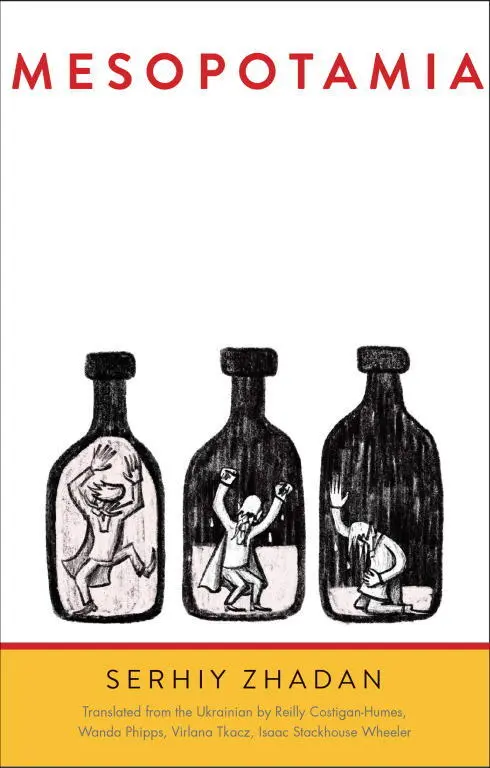
- Название:Mesopotamia
- Автор:
- Издательство:Yale University Press
- Жанр:
- Год:2018
- Город:New Haven
- ISBN:978-0-300-22335-4
- Рейтинг книги:4 / 5. Голосов: 1
-
Избранное:Добавить в избранное
- Отзывы:
-
Ваша оценка:
Mesopotamia: краткое содержание, описание и аннотация
Предлагаем к чтению аннотацию, описание, краткое содержание или предисловие (зависит от того, что написал сам автор книги «Mesopotamia»). Если вы не нашли необходимую информацию о книге — напишите в комментариях, мы постараемся отыскать её.
This captivating book is Serhiy Zhadan’s ode to Kharkiv, the traditionally Russian-speaking city in Eastern Ukraine where he makes his home. A leader among Ukrainian post-independence authors, Zhadan employs both prose and poetry to address the disillusionment, complications, and complexities that have marked Ukrainian life in the decades following the Soviet Union’s collapse. His novel provides an extraordinary depiction of the lives of working-class Ukrainians struggling against an implacable fate: the road forward seems blocked at every turn by demagogic forces and remnants of the Russian past. Zhadan’s nine interconnected stories and accompanying poems are set in a city both representative and unusual, and his characters are simultaneously familiar and strange. Following a kind of magical-realist logic, his stories expose the grit and burden of stalled lives, the universal desire for intimacy, and a wistful realization of the off-kilter and even perverse nature of love.
Mesopotamia — читать онлайн бесплатно полную книгу (весь текст) целиком
Ниже представлен текст книги, разбитый по страницам. Система сохранения места последней прочитанной страницы, позволяет с удобством читать онлайн бесплатно книгу «Mesopotamia», без необходимости каждый раз заново искать на чём Вы остановились. Поставьте закладку, и сможете в любой момент перейти на страницу, на которой закончили чтение.
Интервал:
Закладка:
Lying on a top bunk in the train, wrapped in a carpet, feeling birds’ wings rustling and snakes’ wise hissing, occasionally picking eggs out of nests and soothing the troubled sheep, playing cards with the trapeze artists and catching cheerful macaques as they raced between the cars, Valera could only think about one thing—he had to get back, return to the city that was waiting for him, nestled between the two rivers, up in the hills, open to the sky, buried under blue snow. You have to go back because there’s no happiness on the road or common ground among outlanders. Everything falls into place at home: the timing is good, and everything feels right. You always have to return, otherwise what was the point of venturing away in the first place? Everything rests between the rivers and everything—everyone’s stories and loves—starts here. The sojourner’s alcohol fire trickled from lung to lung, leaving indelible marks, flashing and disappearing, vowing to return someday and serve as a constant reminder.
In the morning, Yura came back to the ward and packed his things, nodding at the young guy, as if to say, “Let’s go have a chat.” He was reluctant to step outside; they stood by the window.
“Hey,” Yura started, “I’m getting out of here, and I don’t want there to be any bad blood between us.”
“What do you mean you’re getting out of here? You haven’t finished your treatment.”
“I’ll finish it somehow,” Yura assured him. “Don’t be goin’ berserk in here, all right?”
“Whatever you say,” the young guy assured him right back. “It was my own fault. I just snapped.”
“When are they putting you back on the roster?”
“There’s no roster to be on. The sponsor disbanded the team and sank all his dough into some hotel.”
“Gotcha.” Yura didn’t know what else to say. “What now?”
“Don’t know,” the young guy said. “I’ll finish up school… well, maybe.”
“Sounds good. My old man’s still riding me about not finishing school. I can’t blame him, either. Why don’t you write down my number? Call me up if you need a studio.”
“Will do,” the young guy reassured him yet again.
Yura quickly made a deal with the doctor, who obviously had misgivings, saying that was just not how things were done around here, that they were breaking the rules, that it would be unsafe and detrimental to his health. “All right, fine,” he conceded. “But I won’t be held responsible. Just make sure you come back for your pills.”
He caught Alla in the hallway. They stepped outside, turned the corner, and found a sports bar. There were a few Arabs sitting there, watching replays of yesterday’s soccer game. The bartender was talking with someone. A waitress came over—boyish haircut, attentive gaze. Yura asked her to turn it down a little. The Arabs protested, but the waitress coldly told them to give it a rest. Yura sent a thank you at her back; she turned around and nodded faintly, seemingly expressing her support.
“Why don’t I give you my number?” Yura said.
“Okay,” Alla consented quickly.
He took her cell and punched in his number, just in case.
“Will you call me?”
“I will.”
“Are you sure you won’t forget?”
“I won’t.”
“All right, looking forward to it.”
While he was gone, the food in his kitchen had gone bad, even the canned stuff, and his flowers had dried out, neither of which was much of a loss. Yura milled around his apartment, turned on the electric kettle, took a shower, walked from room to room wrapped in a towel, leaving wet tracks on the linoleum, passing the mirror, and glancing at it—a veiny, battered, and scarred body, sparse hair, busted-up nose, resilient boxer’s chin. He’d gotten pretty skinny, but not dangerously so. Missing finger on his left hand—the reason he quit playing guitar. Burns on his right leg. Dry, chapped skin. An angry, self-assured gaze. Same old, same old. Not much had changed over the past twenty years. He thought of Alla, took out his phone, turned it on, and started waiting. It rang five minutes later. Black Devil’s number popped up on the screen. Yura hesitated for a split second, then jerked it up to his ear.
“Hello,” he said.
THOMAS
Everybody needs a good job, but nobody likes employers. Everybody hates paying taxes, but the first guy who actually suggests evading them gets put in jail. So what can liberate us? Well, maybe faith can liberate us, but that’s about it. More often than not, religion is precisely what brings atheists together. Generally speaking, it’s speculators and socialists who feed off of religion, so all the rest of us can do is pray. And make sure we balance our books. Thomas had those thoughts whenever he was struggling to set up meetings with potential clients, talking to them forever and waiting for them just as long. “What’s the point of setting up a meeting in the first place?” he thought, disgruntled. “What’s the point of checking and rechecking addresses, making sure my watch is accurate, and getting all anxious? Nobody shows up on time, nobody wants to pick up their feet, nobody keeps their word. Business is a crapshoot, you work for money then your money works for you, and we’re all abandoned and lonely in this world—everybody needs love, everybody needs attention, and everybody needs a good job.”
Thomas ran a small chain of mobile coffee stands (those brightly colored gas vans parked outside university campuses all over the country), managed poorly trained employees (students attending those same universities, who parked themselves at the controls of the gas chambers and sold brown poison in little cups), worked hard, and couldn’t stand freeloaders. “There’s so much work to be done in the world,” he would say to his staff. “How can you just not have a job?” He had seriously high turnover. He didn’t even have time to learn his subordinates’ names. Nameless, they disappeared.
This time his clients suggested meeting at a restaurant. Over the phone they said it was nice and cozy, and that it’d be empty in the morning. Thomas knew the place they were talking about; it was two blocks from his apartment. He’d occasionally drive by that shady joint and see the owner walking down the street in his pink kimono and talking on his little girly cellphone. “Well, all right,” he thought. “That place’ll do.” He arrived well in advance and parked, only to find that the restaurant was closed, and it wouldn’t be open for two more hours. Thomas called his clients.
“Oof, is that right, it’s not open yet?” they asked, surprised. “Well, wait for us somewhere around there. We’re running a bit late, but we’ll be there soon.”
Thomas took stock of his surroundings. Empty street. Sunny July. There was a sports bar next door. “Oh, that’s perfect,” he thought. He’d been there a few times, he knew the owners and the bartender. One of the owners was doing some time for first-degree murder (he ran over his brother-in-law, but claimed it was an accident—first he hit him right outside his house, then he supposedly went back to administer first aid and wound up backing over him), so the convict’s wife was struggling to keep the lights on at their business and cover all the legal fees. The bar was in a cold basement. Downtown Kharkiv, next to the metro, right on the way to some university buildings, always loads of students around. Painted walls, two plasma TVs. A pirate flag hanging under the sign outside. The patrons were a motley crew—college juniors and seniors who had afternoon classes, so they could bum around in the bar all morning, Arabs who weren’t always allowed into classier establishments on account of how they looked, and a few neighborhood alcoholics who’d mosey on over in time for the second half of the evening’s soccer match, since paying bar prices for two halves’ worth of drinks would impose an unacceptably heavy financial burden. The bartender’s name was Anton; he served drinks, waited tables, and called the police if things got out of hand. Thomas would say hello, and he’d always just nod in response. A man of few words who never seemed to be in a hurry, he kept track of everything, meticulous when he added up tabs and genteel when he handled the alcoholics. He had a weird fashion sense, though, sporting orange shirts with green jeans, or white dress shirts with short shorts, or ripped sweaters with striped pants. Oh yeah, and he wore earrings in both ears, rarely shaved, and almost never smiled. The customers thought the bartender was a fag. The bartender held the same opinion of them.
Читать дальшеИнтервал:
Закладка:
Похожие книги на «Mesopotamia»
Представляем Вашему вниманию похожие книги на «Mesopotamia» списком для выбора. Мы отобрали схожую по названию и смыслу литературу в надежде предоставить читателям больше вариантов отыскать новые, интересные, ещё непрочитанные произведения.





Обсуждение, отзывы о книге «Mesopotamia» и просто собственные мнения читателей. Оставьте ваши комментарии, напишите, что Вы думаете о произведении, его смысле или главных героях. Укажите что конкретно понравилось, а что нет, и почему Вы так считаете.