William McGivern - Savage Streets
Здесь есть возможность читать онлайн «William McGivern - Savage Streets» весь текст электронной книги совершенно бесплатно (целиком полную версию без сокращений). В некоторых случаях можно слушать аудио, скачать через торрент в формате fb2 и присутствует краткое содержание. Город: New York, Год выпуска: 1959, ISBN: 1959, Издательство: Dodd, Mead & Company, Жанр: Современная проза, на английском языке. Описание произведения, (предисловие) а так же отзывы посетителей доступны на портале библиотеки ЛибКат.
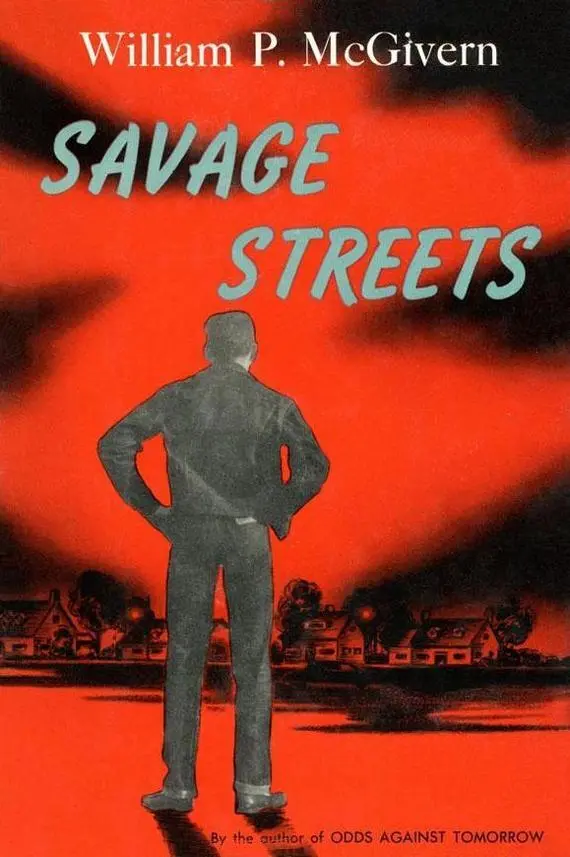
- Название:Savage Streets
- Автор:
- Издательство:Dodd, Mead & Company
- Жанр:
- Год:1959
- Город:New York
- ISBN:978-1-125-15174-7
- Рейтинг книги:4 / 5. Голосов: 1
-
Избранное:Добавить в избранное
- Отзывы:
-
Ваша оценка:
Savage Streets: краткое содержание, описание и аннотация
Предлагаем к чтению аннотацию, описание, краткое содержание или предисловие (зависит от того, что написал сам автор книги «Savage Streets»). Если вы не нашли необходимую информацию о книге — напишите в комментариях, мы постараемся отыскать её.
The adults recognized the danger signals. It was obvious their children’s values and safety were being threatened. This was a time for calmness, for issues to be clearly defined. But the parents failed to realize that their own values were also put to test in this explosive situation. A conviction of righteousness swept through the community like a grass fire, and with it an impatience with the law and a disregard for the rights of anyone beyond the threatened portals of Faircrest. What man, what individual life is ever strong enough to survive such a spell of riot?
Here, in a tense and unusual book, is a sobering picture of what could happen in any modern American community.
Savage Streets — читать онлайн бесплатно полную книгу (весь текст) целиком
Ниже представлен текст книги, разбитый по страницам. Система сохранения места последней прочитанной страницы, позволяет с удобством читать онлайн бесплатно книгу «Savage Streets», без необходимости каждый раз заново искать на чём Вы остановились. Поставьте закладку, и сможете в любой момент перейти на страницу, на которой закончили чтение.
Интервал:
Закладка:
Detweiller grabbed his arm. “It doesn’t matter. Let’s get out of here.”
Malleck went out first and disappeared with Sam Ward up the stairs into the darkness.
“You okay?” Detweiller said anxiously.
“Sure. Get going.”
Detweiller’s feet clattered on the stairs. Farrell stood in the open door gulping in the cold damp air, the wind whipping his flushed face. He looked down at Jerry’s sprawled body, and rubbed a hand over his forehead.
Norton was still holding Cleo. She was no longer struggling.
“I’ve got my car,” Norton whispered to Farrell. “You go on. We can’t leave together. Go on, beat it.”
Farrell went slowly up the stairs, moving like an old man and tasting the salty bite of blood on his lips. At the top, with one hand on the iron railing, he almost stumbled and fell; the light below him had winked out, and in the sudden darkness he nearly lost his footing. For an instant he rested, breathing with care. The street was still empty, the wind battering noisily against garbage cans set out on the curbing. Farrell straightened himself with an effort and went slowly across the wet street to his car.
Chapter Ten
He received a call from Norton the following afternoon. “Is it okay to talk on this line?” Norton asked in a guarded voice. “You know what I mean?”
Farrell was in his office. “Yes, it’s okay,” he said and lit a cigarette. He had lived with a cold feeling of guilt since last night and he suspected he wouldn’t shake it for a long time. Norton’s cautious tone, conspiring and anonymous, sharpened the feeling.
“Are you okay?” Norton asked him.
“Sure, I’m fine,” Farrell said. There was a strip of adhesive tape over his left eye covering a lumpy discoloration; it was the only evidence of the fight. “What’s on your mind?”
“There wasn’t anything about it in the papers,” Norton said. “I went through all of them carefully. That means he didn’t go to the police, I guess. There would have been something in the papers if he’d reported it. Isn’t that right, John?”
“I suppose so.”
“It’s all over then, isn’t it?”
“I don’t know,” Farrell said wearily.
“I mean, well, there won’t be any trouble about it — it’s over and done with.”
“I just don’t know.” Farrell looked out at a slate-gray sky. Was it all over? Something was finished and done with, but Farrell didn’t know what it was. He had talked to Barbara at the hospital this morning and it had been like talking to a stranger.
“John?” Norton recalled him to the present.
“Yes?” Farrell said.
“Look, here’s why I called,” Norton continued. “Janey’s mother is at our house and I told them to go ahead and have dinner without me. I told them not to wait. I said I had some work to catch up with.” He laughed nervously. “That’s true enough, but I don’t feel like working tonight. Do you have time for a drink? I... I’d like to talk to you.”
“Yes, I guess so,” Farrell said. In his brief talk with Barbara there had been no mention of dinner; Jimmy was staying with the Wards and Barbara would probably eat at the hospital with Angey. Farrell was sick of his own thoughts. He was glad to talk to anyone. “Around five-thirty, okay? Do you know Ragoni’s? It’s on Forty-fifth around the comer from Third.”
“I can find it. Thanks, John. I’ll see you at five-thirty.”
Ragoni’s was a current favorite of the TV and advertising crowd, celebrated for its Martinis and pastas; with a canopied entrance, black and silver décor, and comfortable red leather banquettes it was indistinguishable from fifty similar restaurants in the East Forties. Farrell gave his hat and coat to a smiling hat-check girl, said hello to Max Ragoni and took a stool at the end of the bar. He ordered Scotch on the rocks.
Norton came in a few minutes later and looked around the room, blinking his eyes. He removed his hat and coat with a certain reluctance, as if he weren’t sure of getting them back. Then he saw Farrell and smiled with quick relief. He took the stool beside him and said, “First time I’ve ever been here.” The smile was still on his lips, fixed and white. “The cab driver knew about it though. I started to tell him the address and he said, ‘Buddy, if I had a buck for every fare I delivered to Ragoni’s I could retire.’” He caught the bartender’s eye and ordered a Martini. “He was a character. The cab driver, I mean. He told me something pretty interesting. He said tips didn’t mean half as much as lots of people think. It’s getting people on short hauls, that’s where the money is. Because of the twenty-five cents that registers when he throws the flag down. That’s pretty much gravy if the fare is just going a few blocks.” Norton glanced around, and then took a long swallow from his Martini. “This is a nice place. Do you eat here all the time?”
“Once or twice a week as a rule. The ravioli is good, and Max makes bouillabaisse on Fridays.”
“That’s a fish stew, isn’t it? I’ll have to try it some time.”
“It’s very good.”
“How do you feel about last night?” Norton said abruptly. Without waiting for Farrell to answer he went on in a low, tense voice: “It’s nothing to be worried about, John. It’s over, of course. If he intended to report it to the police he would have done it by this time. They knew they had it coming. I was just wondering how you felt, that’s all.” He finished his drink and signaled the bartender. “How about you, John? Ready?”
Farrell pushed his empty glass across the bar. “Why not? And since you ask, I feel like hell about last night.”
Norton was silent then, staring at the backs of his well-cared-for hands. “That’s funny,” he said at last. “I mean I guess I should feel that too. But I don’t. That makes me pretty much of a heel, I suppose.”
“People react differently,” Farrell said. “Don’t worry about it.”
“I’m not worrying about it,” Norton said. “I’m not worried at all. That’s strange, isn’t it?” He lifted his second drink. “Well, here’s mud in your eye, or whatever they say in this place.”
“Mud in your eye will do as well as anything else,” Farrell said.
“God, I hate those corny toasts, don’t you? I lunch every now and then with one of our vice presidents, and he always says: ‘Here’s to all good Democrats — the dead ones.’ Then he laughs as if he’d just said it for the first time.” Norton shook his head. “I’m a Democrat but that wouldn’t occur to him, I suppose.”
Norton seemed to be in a hurry to get tight, Farrell thought; he was taking his second Martini in deliberate swallows, grimacing a bit, but finishing it off as if he were in a drinking contest. It was an incongruous role for him to be playing. He looked a prototype of respectability in his dark suit and tightly knotted tie; his neatly handsome features, as a rule politely and gravely devoid of expression, scarcely suggested a potential of compulsive or reckless behavior. Farrell realized that he had never seen Norton behave with abandon. Until now, Farrell thought, amending his judgment as Norton called for a third drink.
“Those aren’t salted peanuts,” he said. “Those are Martinis.”
“I’m all right,” Norton said, smiling quickly at him. “I just want to relax, ease up a little. Don’t you ever feel like doing that?”
“Sure,” Farrell said.
“Don’t worry, I’m all right,” Norton said. He shifted closer to Farrell to make room for a group of men standing beside him. The place was filling up and the air was thick with laughter and smoke and the clatter of ice and glasses. It was a friendly hiatus for most of the drinkers, one that reduced the tensions of the day and prepared them for the train ride to the suburbs. Occasionally this relaxing interval ended in disaster; in the exegesis of office gossip the last quick one for the road could easily become two or three, and finally trains would be missed, dinners turn cold in far-away homes, and as alibis were constructed and phone calls made, the friendly atmosphere would curdle with the flavor of guilt and wifely disapproval. But everyone was betting that this wouldn’t happen to him, and this lent spice to the game; it wasn’t illicit drinking, but it might well turn into that, and at the instant of judicial equipoise it seemed a way of having the best of both worlds.
Читать дальшеИнтервал:
Закладка:
Похожие книги на «Savage Streets»
Представляем Вашему вниманию похожие книги на «Savage Streets» списком для выбора. Мы отобрали схожую по названию и смыслу литературу в надежде предоставить читателям больше вариантов отыскать новые, интересные, ещё непрочитанные произведения.





Обсуждение, отзывы о книге «Savage Streets» и просто собственные мнения читателей. Оставьте ваши комментарии, напишите, что Вы думаете о произведении, его смысле или главных героях. Укажите что конкретно понравилось, а что нет, и почему Вы так считаете.