Уолтер Мосли - John Woman
Здесь есть возможность читать онлайн «Уолтер Мосли - John Woman» весь текст электронной книги совершенно бесплатно (целиком полную версию без сокращений). В некоторых случаях можно слушать аудио, скачать через торрент в формате fb2 и присутствует краткое содержание. Город: New York, Год выпуска: 2018, ISBN: 2018, Издательство: Atlantic Monthly Press, Жанр: Современная проза, на английском языке. Описание произведения, (предисловие) а так же отзывы посетителей доступны на портале библиотеки ЛибКат.
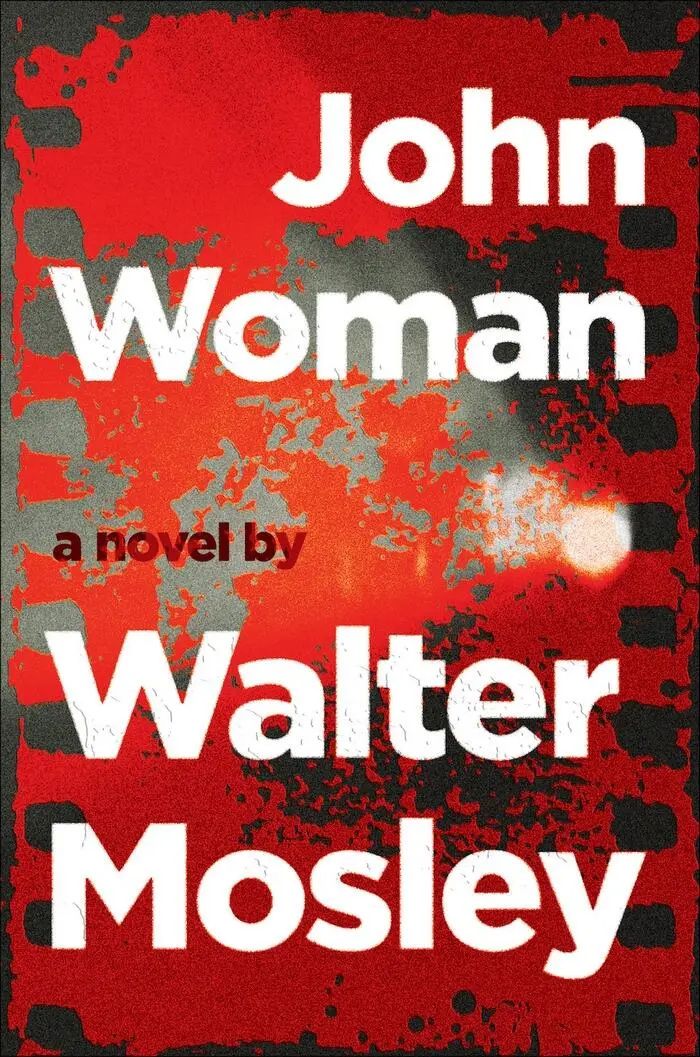
- Название:John Woman
- Автор:
- Издательство:Atlantic Monthly Press
- Жанр:
- Год:2018
- Город:New York
- ISBN:978-0-8021-2841-6
- Рейтинг книги:5 / 5. Голосов: 1
-
Избранное:Добавить в избранное
- Отзывы:
-
Ваша оценка:
John Woman: краткое содержание, описание и аннотация
Предлагаем к чтению аннотацию, описание, краткое содержание или предисловие (зависит от того, что написал сам автор книги «John Woman»). Если вы не нашли необходимую информацию о книге — напишите в комментариях, мы постараемся отыскать её.
At twelve years old, Cornelius, the son of an Italian-American woman and an older black man from Mississippi named Herman, secretly takes over his father’s job at a silent film theater in New York’s East Village. Five years later, as Herman lives out his last days, he shares his wisdom with his son, explaining that the person who controls the narrative of history controls their own fate. After his father dies and his mother disappears, Cornelius sets about reinventing himself — as Professor John Woman, a man who will spread Herman’s teachings into the classrooms of his unorthodox southwestern university and beyond. But there are other individuals who are attempting to influence the narrative of John Woman, and who might know something about the facts of his hidden past.
Engaging with some of the most provocative ideas of recent intellectual history, John Woman is a compulsively readable, deliciously unexpected novel about the way we tell stories, and whether the stories we tell have the power to change the world.
John Woman — читать онлайн бесплатно полную книгу (весь текст) целиком
Ниже представлен текст книги, разбитый по страницам. Система сохранения места последней прочитанной страницы, позволяет с удобством читать онлайн бесплатно книгу «John Woman», без необходимости каждый раз заново искать на чём Вы остановились. Поставьте закладку, и сможете в любой момент перейти на страницу, на которой закончили чтение.
Интервал:
Закладка:
“You were saying, Ms. Weiner?” John asked.
“We know that there was a Civil War, that all those people died.”
“Excuse me, but why was that war fought?”
“Over slavery,” a student in the front row said.
This was the only male student who was formally dressed. He wore a blue blazer, tan slacks and a white dress shirt. The only thing missing, John thought, was a tie. His hair was black and his eyes might have been green.
The young man smiled and said, “Jack Burns. I’m from right up the highway in Phoenix.”
“So, Mr. Burns,” John said. “You don’t subscribe to the notion that the war was waged over a disagreement concerning economic questions and the southern states’ sovereign right of secession?”
“Well,” a sweatshirted black student said. “Micah Short, here. Maybe the war had other causes, but they seceded because Lincoln was going to free the slaves.”
“But he said that he wouldn’t demand freedom for the slaves,” the professor argued, “only that new states could not be slaveholders.”
“But they thought he would.”
“I see,” the professor said doubtfully; “they thought... Let me ask you this. Was there a Holocaust in which six million Jews were exterminated?”
Voices sprouted among the class without identification and maybe, John thought, without volition.
“Yes.”
“Of course.”
“Sure there was.”
“Well maybe not all that many,” one dark-haired girl said.
“And who are you?” John asked gently.
“Tamala Marman. I want to be a history major.”
“What do you mean?” a girl in the second row challenged. She was Asian, possibly Japanese. “We know the number. The records have been counted.”
John thought of asking her name but didn’t want to slow the interaction.
“It was a big war,” Tamala Marman argued. “A lot of people got away. And people overreact when they see horrible things. Somebody could say that they saw a thousand bodies when really there were only a couple of hundred.”
“Only a couple of hundred?” Pete Tackie shouted. “What are you? A Nazi?”
“I’m just talking about the numbers. Maybe there were only three million dead. It’s possible. That’s all I’m saying.”
“No,” said a male student with a deep commanding voice. “There were more than six million killed. They have the names and Nazi records. The families have remembered them.”
Following this claim silence filled the room.
“And you are?” John asked the handsome young man in the center seat of the first row.
“Justin Brown.” He had a tanned complexion and steady gray eyes. “I’m a chem major, senior. This is an elective course for me.”
“And so,” Professor John Woman said after an appreciative silence, “we have learned from Justin Brown that the Holocaust really did occur and that the number, approximately six million, is an accurate count.”
One or two heads nodded. Every eye in the room was on John.
“What proof has he put forth?”
“The proof is in—” Justin Brown began.
“Please, Mr. Brown, allow some of the other students to reply.”
“Sandra Levy,” a walnut-haired woman chimed in, “transfer from BU. We believe him because he said it with conviction and passion.”
“That is correct,” John allowed.
“But what I say is true,” the chem major complained.
“Of course it is, Justin. Of course. It’s true on many levels. You know because of your reading of books, Allied reports, and the trials at Nuremburg. You know because of the state of Israel and its commitment to Jewish peoples around the world. But...” John Woman paused and gazed around the classroom. Through the bank of tinted windows that made the outer wall he could see the desert under cloudless skies. “But does that make it a true history or simply something that many of us believe? I say this to you not because I want to negate your beliefs. Really the opposite is true. I’m teaching this course because history is being rewritten, reenvisioned and reedited every day, every hour of every day. There are people out there who would like to tell you that there was no Holocaust whatsoever. They write books, give speeches, make arguments that sway especially those who have no passion for the subject. Deconstructionist history is not a spurious branch of study. It is what every enemy of everything you believe practices day and night. Who killed the two million Cambodians and the Argentine Aborigines? Who was responsible for the slaughter of the Hutu and Tutsi, Congolese and Somali? Who profited from the slave routes to the Caribbean, North and South America?”
“Those are things we don’t know,” Justin Brown said with disgust in his voice. “It’s not the same as Nazi Germany.”
A few mutterings agreed.
“I know the names of the men who assassinated Julius Caesar but I cannot know the companies, extant today, that profited from four centuries of slavery?”
The class went silent again. Even Justin Brown seemed a little daunted.
“The sugar companies,” Woman said. “The rum distillers, shipping lines and banks that underwrote thousands of slaving expeditions; the plantation masters, many of whose children today are wealthy landowners.
“You can’t have it both ways, Mr. Brown. You can’t pick and choose your way through history taking what you want to believe and relegating the rest to the limbo of ignorance. You must take a stand, commit yourself to the truth, while understanding that the ground beneath your feet is nothing more than shifting sand.
“One day America may be vilified in the annals of history. We may be seen as an aggressive imperialist nation bent upon the subjugation and domination of the rest of the globe. Our capitalism may be as reviled as Hitler’s anarchy. And who are we to say which version will make it into the history books, into futuristic vid-classes and, most dangerous of all, into the language we speak?
“Who remembers that the Vandals were a people before they became an evil noun?”
“So you don’t believe that there was a Civil War or a Holocaust?” Justin Brown asked.
“Belief, my friend, is the right word,” John Woman said. “History is only, is always little more than an innuendo, a suggestion that we decide to believe, or not. Of course you are right about the list of the dead read aloud day and night in Jerusalem. But in positing one thing you call another into question. Where is the list for the millions of Armenians slaughtered, the Cambodians, Nicaraguans or Vietnamese? If their names are not registered then did they really suffer and die? These questions are the ones we shall address in this class. Questions, I might add, that have no answers, no complete and certainly no permanent answers. We shall fail because history is that unsteady ground I spoke of. It is not a rigid truth but an ever-changing reality. If it were an ironclad actuality then we would be able to learn from it. But all we can do is learn about its edges, insinuations and negative spaces.”
Some of the better students wrote down this last quote.
“But, Professor,” the young woman he met at the door said.
“Yes?”
“Carlinda Elmsford,” she said. “I’m a second-year student and this is my third school.”
“Yes, Miss Elmsford.” John, for some reason, didn’t use the term Ms. for her.
“The name of the class refers to historical devices,” Carlinda said. “That would indicate you believe there are tools we could use to unlock the secrets of history.”
The question put the professor off balance. He was surprised, not only by the sophistication and insight of the query, but also by the gracelessly elegant student who, he now realized, he’d been wrong about. Because of her indecision at the doorway he assumed that she was unfocused, flighty. He dismissed her potential and now had to fight down the desire to start a completely new lecture on the rigor that any investigators have to go through to rid their minds of prejudices and cultural assumptions.
Читать дальшеИнтервал:
Закладка:
Похожие книги на «John Woman»
Представляем Вашему вниманию похожие книги на «John Woman» списком для выбора. Мы отобрали схожую по названию и смыслу литературу в надежде предоставить читателям больше вариантов отыскать новые, интересные, ещё непрочитанные произведения.


Обсуждение, отзывы о книге «John Woman» и просто собственные мнения читателей. Оставьте ваши комментарии, напишите, что Вы думаете о произведении, его смысле или главных героях. Укажите что конкретно понравилось, а что нет, и почему Вы так считаете.