Уолтер Мосли - John Woman
Здесь есть возможность читать онлайн «Уолтер Мосли - John Woman» весь текст электронной книги совершенно бесплатно (целиком полную версию без сокращений). В некоторых случаях можно слушать аудио, скачать через торрент в формате fb2 и присутствует краткое содержание. Город: New York, Год выпуска: 2018, ISBN: 2018, Издательство: Atlantic Monthly Press, Жанр: Современная проза, на английском языке. Описание произведения, (предисловие) а так же отзывы посетителей доступны на портале библиотеки ЛибКат.
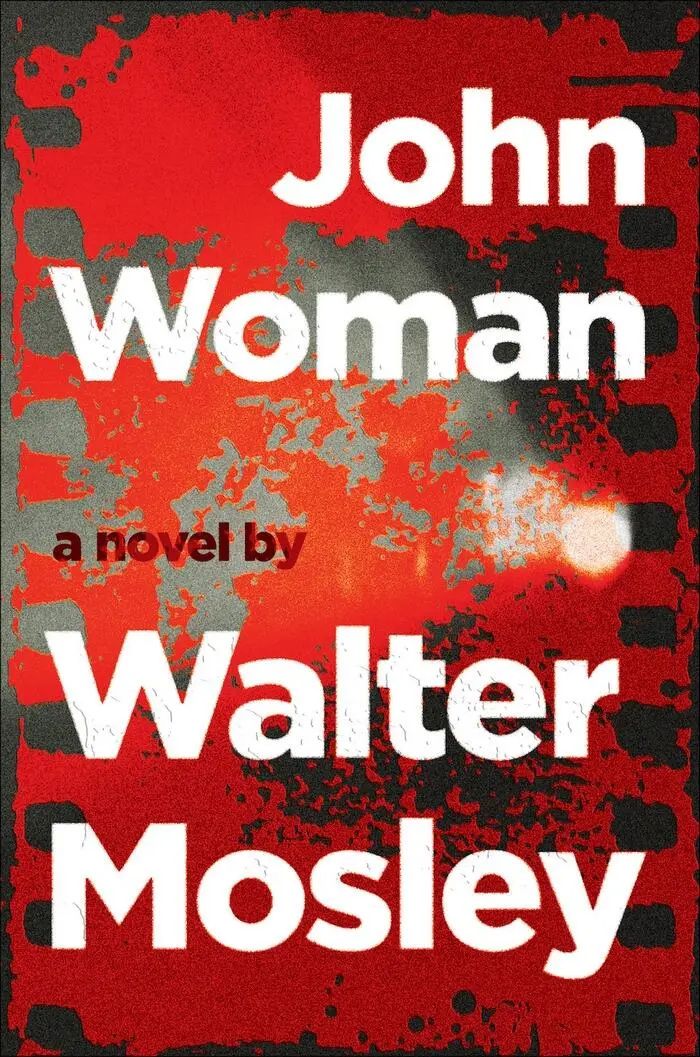
- Название:John Woman
- Автор:
- Издательство:Atlantic Monthly Press
- Жанр:
- Год:2018
- Город:New York
- ISBN:978-0-8021-2841-6
- Рейтинг книги:5 / 5. Голосов: 1
-
Избранное:Добавить в избранное
- Отзывы:
-
Ваша оценка:
John Woman: краткое содержание, описание и аннотация
Предлагаем к чтению аннотацию, описание, краткое содержание или предисловие (зависит от того, что написал сам автор книги «John Woman»). Если вы не нашли необходимую информацию о книге — напишите в комментариях, мы постараемся отыскать её.
At twelve years old, Cornelius, the son of an Italian-American woman and an older black man from Mississippi named Herman, secretly takes over his father’s job at a silent film theater in New York’s East Village. Five years later, as Herman lives out his last days, he shares his wisdom with his son, explaining that the person who controls the narrative of history controls their own fate. After his father dies and his mother disappears, Cornelius sets about reinventing himself — as Professor John Woman, a man who will spread Herman’s teachings into the classrooms of his unorthodox southwestern university and beyond. But there are other individuals who are attempting to influence the narrative of John Woman, and who might know something about the facts of his hidden past.
Engaging with some of the most provocative ideas of recent intellectual history, John Woman is a compulsively readable, deliciously unexpected novel about the way we tell stories, and whether the stories we tell have the power to change the world.
John Woman — читать онлайн бесплатно полную книгу (весь текст) целиком
Ниже представлен текст книги, разбитый по страницам. Система сохранения места последней прочитанной страницы, позволяет с удобством читать онлайн бесплатно книгу «John Woman», без необходимости каждый раз заново искать на чём Вы остановились. Поставьте закладку, и сможете в любой момент перейти на страницу, на которой закончили чтение.
Интервал:
Закладка:
John checked his father’s Timex wristwatch at one minute to one. He took a deep breath and strode toward Lecture Hall Two feeling both excitement and confidence.
He stopped at the doorway, blocked by a willowy young woman with fairly short auburn hair. Motionless at the threshold she seemed to be lost, as if maybe this was the wrong class. Her flimsy gold jacket was more like a shirt with sleeves that didn’t quite achieve the wrists. Likewise the legs of her turquoise-colored trousers hovered a few inches above the ankles. She wore straw sandals and the bag slung across her shoulder was white Naugahyde marked by a solitary blue ink spot, a few abrasions and a black skid-mark that ran along the bottom.
The young woman was tall but John was taller. Over her shoulder he could see the twenty or so students who had staked out the first three rows of the classroom that could have easily seated two hundred.
“Excuse me,” John said.
The young woman gasped and turned. While not pretty, she was, at least to his eye, handsome in the extreme. With butterscotch skin, a strong jaw and tawny eyes the crystalline hue of topaz marbles; she had the long fingers of a pianist. The eyes slanted up just a bit. Her thick hair was crinkled.
“Sorry,” she said taking half a step to the side. “You trying to get in?”
“Yes I am,” John said with a smile.
“You’re taking this class too?”
He shrugged, tilting his head to the side. It was no surprise the undergraduate hadn’t identified him as a professor. He was only a few years past thirty. His Asian-cut, soft-milled black cotton jacket and loose coal gray trousers were not professorial — neither was his slightly faded scarlet T-shirt.
“I heard it was hard,” the young woman said, anxiety eeling its way across her lips.
“New ideas seem hard at first,” he said, “but challenge is why we’re here.”
With that John crossed the red doorsill and went to the semitransparent emerald green polymer lectern at the front of the class. Any talking that had been going on petered out and, a few seconds later, the uncertain young woman made her way to a seat in the third row.
Professor Woman waited for the last gangly student to be seated before he started talking.
“I am Associate Professor John Woman,” he announced, “and this class is Introduction to Deconstructionist Historical Devices.”
A hand went up in the second row.
“You will be able to ask questions in a few minutes,” he said and the hand went down. “But first I’d like to explain what will happen, what you might learn and what you cannot learn, in this seminar.
“It is my position that history is an unquestionable certainty, the absolute outcome of an incontrovertible string of ontological events. It, history, reaches all the way back to the origin of the race and beyond through the chaotic unfolding of existence. In our history, our one indisputable history, are contained assassinations, inspiration, instinctual urges, friendships, conflicts, the multiplicities of gravity and material, black holes and supernovas. Our bodies are formed from the fabric of the universe and so consequently there is a touch of the divine in each of us. You and I are part and parcel of history, slaves of history, playing out our willing and unwilling roles — and so it has been for every living being, every species on earth and, quite possibly, life elsewhere.
“Accepting, for a moment, this position as accurate it is easy to see that the true understanding of history, or any major aspect thereof, requires knowledge that is currently beyond human ken. We are like the blind prophets guessing at the nature of an elephant — only the elephant is in another room, situated on the opposite side of the globe, while we still believe the world is flat.”
John stopped for a moment. He had not planned this lecture. He hardly ever worked from notes or predetermined arguments.
Our lives are just one long series of ad hoc debates, Herman Jones used to say. In the end everybody loses the argument.
“We cannot comprehend the vastness that is history,” the man called Woman continued. “Our capacity for knowledge is mortal even if our bodies are deified. We are incapable of knowing with certainty what has happened while at the same time we are unable to stop ourselves from wondering why we are here and from whence we have come. This is the stimulus, the incentive for the study of and the belief in history.
“We, you and I, have been propelled to this moment by nothing less than the conspiracy of eternity. The attempt to understand this scheme is the object of our study like a carrot is the goal of the work-weary mule dragging the plow and imagining something sweet.
“Those of us who crave the carrot of historical knowledge must be aware that we will never achieve this goal but that in our wake we will create something beautiful, fertile and, quite possibly, terrible. We must, as scholars of an impossible study, realize that while history is definite, the human investigation of the past can only be art, the one truly deconstructionist art — because the only way to capture the essence of history is to make it up.”
John stopped at that point not so much for dramatic effect as a natural pause in this improvised discourse.
“My first lecture is often brief. Later on we may go overtime. That said, are there any questions so far?”
Five or six hands went up. John studied the faces of his students. They seemed engaged.
“When you speak,” he said, “I’d like you to give us your name and any other information you deem pertinent. In this way I’ll get to know you and you will further identify yourself with your query.
“Yes,” he said, pointing. “The woman in the red blouse.”
“Star Limner,” said a twentysomething white woman whose black hair was heavy and damp from a recent shower. She sat in the second row on John’s right. “Second-year poli-sci major.”
“What’s your question, Ms. Limner?”
“Excuse me, Professor Woman, but it sounds like you’re saying that nothing has ever happened in the past and that we can’t believe anything we study.”
“Yeah,” a brutish young man from the third row chimed in.
“And your name is?” John asked the heavy-muscled student who was clad in overalls and a black-and-white-check T-shirt.
“Pete.”
“Pete what?”
“Tackie.”
Pete Tackie was also white with straight brown hair that came down to his ears. He wasn’t fat but rather beefy with small eyes and a frown that John imagined never relaxed, even in sleep.
“And what would you like us to know about you, Mr. Tackie?”
“I wasn’t askin’ a question,” the dour young man complained.
“I asked,” John said, “for anyone speaking to give us their name and anything else we should know.”
Pete Tackie rubbed his face with broad, strong fingers.
“I play rugby,” he said. “I came here from Dearborn.”
“Michigan?”
“Yeah.”
Smiling, the young associate professor held Pete Tackie’s gaze for a few seconds. He had learned how to keep order by sticking to the promises and requests he made.
“No to the first part of your question, Ms. Limner,” John said, still looking at the rugby player. Then he turned to her. “Quite the opposite — everything has happened. This much is apparent. So you’re right, I’m saying you cannot believe anything you study because it is, necessarily, incomplete speculation... albeit, sometimes quite convincing speculation.”
“But how can that be?” another young woman asked. When John turned toward her she shrugged and said, “Beth Weiner from Santa Monica, California. I haven’t declared a major yet but it’ll probably be business or maybe economics.”
Читать дальшеИнтервал:
Закладка:
Похожие книги на «John Woman»
Представляем Вашему вниманию похожие книги на «John Woman» списком для выбора. Мы отобрали схожую по названию и смыслу литературу в надежде предоставить читателям больше вариантов отыскать новые, интересные, ещё непрочитанные произведения.





Обсуждение, отзывы о книге «John Woman» и просто собственные мнения читателей. Оставьте ваши комментарии, напишите, что Вы думаете о произведении, его смысле или главных героях. Укажите что конкретно понравилось, а что нет, и почему Вы так считаете.