Mari Saat - The Saviour of Lasnamäe
Здесь есть возможность читать онлайн «Mari Saat - The Saviour of Lasnamäe» весь текст электронной книги совершенно бесплатно (целиком полную версию без сокращений). В некоторых случаях можно слушать аудио, скачать через торрент в формате fb2 и присутствует краткое содержание. Город: Glasgow, Год выпуска: 2015, ISBN: 2015, Издательство: Vagabond Voices, Жанр: Современная проза, на английском языке. Описание произведения, (предисловие) а так же отзывы посетителей доступны на портале библиотеки ЛибКат.
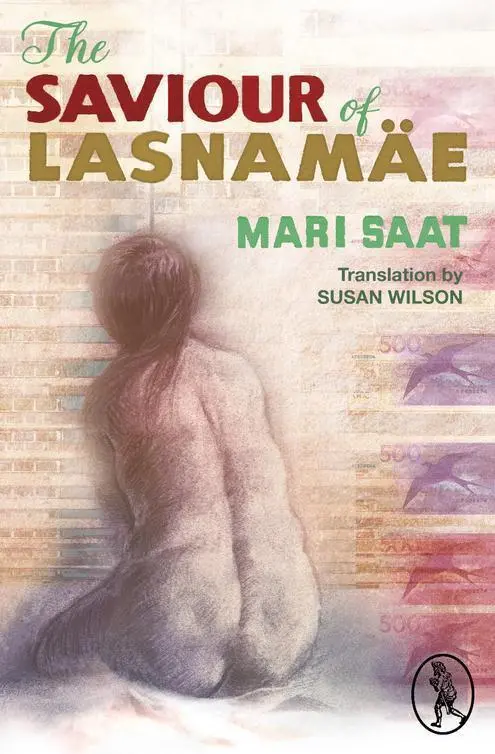
- Название:The Saviour of Lasnamäe
- Автор:
- Издательство:Vagabond Voices
- Жанр:
- Год:2015
- Город:Glasgow
- ISBN:978-1-908251-54-1
- Рейтинг книги:5 / 5. Голосов: 1
-
Избранное:Добавить в избранное
- Отзывы:
-
Ваша оценка:
The Saviour of Lasnamäe: краткое содержание, описание и аннотация
Предлагаем к чтению аннотацию, описание, краткое содержание или предисловие (зависит от того, что написал сам автор книги «The Saviour of Lasnamäe»). Если вы не нашли необходимую информацию о книге — напишите в комментариях, мы постараемся отыскать её.
The Saviour of Lasnamäe — читать онлайн бесплатно полную книгу (весь текст) целиком
Ниже представлен текст книги, разбитый по страницам. Система сохранения места последней прочитанной страницы, позволяет с удобством читать онлайн бесплатно книгу «The Saviour of Lasnamäe», без необходимости каждый раз заново искать на чём Вы остановились. Поставьте закладку, и сможете в любой момент перейти на страницу, на которой закончили чтение.
Интервал:
Закладка:
Rael’s dad was a big help anyhow: it transpired that he had connections at a factory; quite how, Rael was not exactly sure, she wasn’t interested, perhaps he was a shareholder or something… The factory was very small, nothing like the one where Natalya Filippovna had worked before, but they made more or less the same kind of things, although not for mobile phones, more for cars – Rael thought they were for cars, or other bigger machines. These days every moving thing, every actual machine, even washing machines, contained circuit boards for electrons to flow through, as if directed by a person unseen… And now Natalya Filippovna could resume soldering specks for the electrons on to boards…
Notice how the life of Natalya Filippovna, a grown woman on the large side, some might even say portly, had been guided by her young daughter, who was able to earn herself some money honourably and even found a job for her mum, a decent job. Natalya Filippovna hugged her daughter, in tears, because she was so sorry that she had berated her so severely only the previous weekend when she had sailed in after midnight from the she-knew-not-where party (although Sofia had said it was at Zhanna’s), her clothes stinking of smoke and the smell of drink on her still. All right if she was with one of the girls from school, but the thing that capped it all, capped having a drink and a smoke and doing who knows what else – although she’d never have thought Sofia capable of doing that – was getting drunk. Had she understood nothing? If truth be told she had scolded Sofia only out of fear – she’d always had the feeling that Sofia might disappear somewhere, that suddenly she would cease to be and then she would no longer have anything here in the world, nothing, everything would be empty, even Dmitri Dmitrievich would be nothing… That meant that the only thing she had been able to do while waiting for Sofia to come home was to pray soberly, without really realising it, just repeating the familiar words “Lord, have mercy, Lord, have mercy, Lord, have mercy…” without taking in their meaning, in sheer panic and with a heavy painful stone in place of her heart, all the while expecting that when Sofia came through the door she’d feel great happiness and joy and peace, but when Sofia had actually finally arrived, she’d suddenly felt empty inside and then distressed, as if her controlled distress had to find an instant outlet, and as soon as she could breathe between whimperings she began to read Sofia the Riot Act – unable really to measure the words she was saying, both hugging and tearing into her daughter, so that ultimately she too burst into tears, sobbing with her head in her hands…
Quite frankly, she hadn’t wanted to allow Sofia to go anywhere in the evenings, not even to Rael’s grandma’s because she’d be coming home in the dark now that it was winter. Not that it was late – small primary schoolchildren, the ones who did the evening lessons, were making their way home from school by themselves at the same time… Although Sofia still had studying to do for the next day… things were definitely much easier now that her daughter had some money of her own. She was afraid, of course, that Sofia would glimpse the type of life they would never be able to afford themselves. Could that maybe be a good thing? Who could say? Perhaps it was? Who could say what Sofia might one day become or what good it might do her in the future to catch a glimpse of it? Perhaps it was a good thing for her to practise reading Estonian and especially English clearly, after all she apparently had to read to the old lady in all those languages…
The last time they’d sat in the kitchen with Lyuda, Lyuda had explained in aggrieved tones how her language exam had gone. She wanted to pass it so she could apply for citizenship – she didn’t need to do it for work, she just thought that she should have everything straight, and as she had been born here and already had grandchildren who had been born here, and her children had citizenship, why shouldn’t she be a citizen too? The fact that her children were citizens and she wasn’t made it feel as if she didn’t belong with her children. Anyhow, she just about had the exam in the bag, she had everything straight, when at the last minute they asked her what the names of Kalevipoeg’s dogs were – you know, Kalevipoeg, the one who the Estonians’ national epic is about.
“You tell me,” she complained to Natalya. “Am I really supposed to know what his dogs were called? Pet dogs that have been dead for yonks and people are still supposed to know their names.”
Sofia, who was drinking tea with them because she always liked drinking tea with Lyuda, spluttered.
“What are you spluttering for? What is it you’re giggling at, you cheeky little brat?” scolded Lyuda – she always chastised people that way, but no one was actually afraid of her because she never got really angry. “You’re laughing at your elders and betters. You tell me their names.”
“Irmi, Armi and Killer Blackie,” shouted Sofia, laughing.
“Is that so?” drawled Lyuda, sceptically. “And just how do you know that?”
“We did it at school!”
“Is that so… They teach all sorts at school these days. They actually teach something practical. Kisser Blackie.”
Sofia was now roaring with laughter.
“What are you laughing at your elders for?” Lyuda was still trying to tell her off.
“This is a kiss,” laughed Sofia, and kissed Lyuda on her smooth, soft cheek, “but a killer kills. The dog was the Black Killer, Killer Blackie! With a coat that bristled and eyes that glowed – like the hound of the Baskervilles!”
“Who on earth are the Baskervilles?” murmured Lyuda sceptically and sighed, “You see, if I’d have known that, I’d be a citizen now… Killer Blackie! Kids are getting cleverer all the time…”
Natalya thought so too, and the fact that she didn’t say so out loud didn’t stop her thinking to herself, “You never know, Sofia could be a teacher.” Never mind that teachers’ pay was very low, it was a dignified job… It flashed into her head that perhaps she might even become a professor, but the thought seemed indecently arrogant…
Suddenly Sofia burst into tears – so suddenly, that even Lyuda was alarmed.
“What is it, what’s up, I’ve not said the wrong thing, have I?” she asked.
“No, no,” said Sofia almost calmly, only hiccupping, “it’s just the rat… the rat…” and it was as she sobbed the word “rat” that she started to cry again.
It turned out that the rat, the one belonging to her classmate Zhanna, whose birthday she’d gone to celebrate, the one that she’d got into trouble with Mum about, the rat had disappeared. Zhanna had woken in the morning to find the cage door open and the rat nowhere to be found. She was dreadfully cold and the window open, as well as the cage door… Had someone thrown him out of the window? But there was no rat in the street – it was nowhere to be seen. Perhaps the street cleaner had already been and brushed him away. And nobody had thrown him out because Zhanna had interrogated everyone who was still there, and no one knew anything. Perhaps the rat had just hopped it?
“Well you know,” said Lyuda, “rats are devious creatures. They’re intelligent, they don’t get into any trouble.”
But Sofia had the feeling that something had befallen the rat – and it wasn’t just that she felt really sorry for it. No, there was something else – as if there were no longer a something or a someone to rely on… And there was a heaviness in her heart, deep within her breast…
Dmitri Dmitrievich hurried along the long, curved street on the fringes of Lasnamäe. It’s not that he was lost, he’d just got off the bus one stop sooner than he’d needed to. And there was no point now waiting for the next one. Actually, he knew full well where he had to go – he knew Lasnamäe almost like the back of his hand. He didn’t need to follow the curve from here, just go over the wasteland along the path as far as the dark apartment buildings (in daylight they were actually red – the colour of their red bricks). They rose up against the background of the sparkling snow like a dark battlement – which was why the apartment block had been dubbed Dvigatel’s fortress since the Soviet time… After cutting through there he should be on the right street… It was still fairly early, before eight o’clock, but now in midwinter, that meant deep darkness – unless the moon was up. On the city streets you didn’t notice the moon, but here it illuminated the snow-trampled path as efficiently as street lights… In the field the wind swished and whirled in gusts; it bit acerbically into your cheeks and then subsided again, as if mulling something over for a moment.
Читать дальшеИнтервал:
Закладка:
Похожие книги на «The Saviour of Lasnamäe»
Представляем Вашему вниманию похожие книги на «The Saviour of Lasnamäe» списком для выбора. Мы отобрали схожую по названию и смыслу литературу в надежде предоставить читателям больше вариантов отыскать новые, интересные, ещё непрочитанные произведения.






Обсуждение, отзывы о книге «The Saviour of Lasnamäe» и просто собственные мнения читателей. Оставьте ваши комментарии, напишите, что Вы думаете о произведении, его смысле или главных героях. Укажите что конкретно понравилось, а что нет, и почему Вы так считаете.