Yaa Gyasi - Transcendent Kingdom
Здесь есть возможность читать онлайн «Yaa Gyasi - Transcendent Kingdom» весь текст электронной книги совершенно бесплатно (целиком полную версию без сокращений). В некоторых случаях можно слушать аудио, скачать через торрент в формате fb2 и присутствует краткое содержание. Год выпуска: 2020, ISBN: 2020, Издательство: Penguin UK, Жанр: Современная проза, на английском языке. Описание произведения, (предисловие) а так же отзывы посетителей доступны на портале библиотеки ЛибКат.
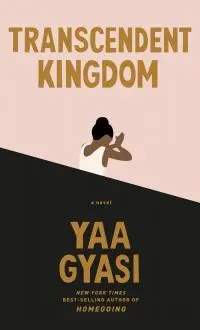
- Название:Transcendent Kingdom
- Автор:
- Издательство:Penguin UK
- Жанр:
- Год:2020
- ISBN:9780241988664
- Рейтинг книги:4 / 5. Голосов: 1
-
Избранное:Добавить в избранное
- Отзывы:
-
Ваша оценка:
Transcendent Kingdom: краткое содержание, описание и аннотация
Предлагаем к чтению аннотацию, описание, краткое содержание или предисловие (зависит от того, что написал сам автор книги «Transcendent Kingdom»). Если вы не нашли необходимую информацию о книге — напишите в комментариях, мы постараемся отыскать её.
As a child Gifty would ask her parents to tell the story of their journey from Ghana to Alabama, seeking escape in myths of heroism and romance. When her father and brother succumb to the hard reality of immigrant life in the American South, their family of four becomes two - and the life Gifty dreamed of slips away.
Years later, desperate to understand the opioid addiction that destroyed her brother's life, she turns to science for answers. But when her mother comes to stay, Gifty soon learns that the roots of their tangled traumas reach farther than she ever thought. Tracing her family's story through continents and generations will take her deep into the dark heart of modern America.
______________________________________________________
**'I would say that** Transcendent Kingdom **is a novel for our time (and it is) but it is so much more than that. It is a novel for all times. The splendor and heart and insight and brilliance contained in the pages holds up a light the rest of us can follow'** Ann Patchett
**'Absolutely transcendent. A gorgeously woven narrative . . . not a word or idea out of place. THE RANGE. I am quite angry this is so good** ' Roxane Gay
**'A stirringly gifted writer'** *New York Times*
Transcendent Kingdom — читать онлайн бесплатно полную книгу (весь текст) целиком
Ниже представлен текст книги, разбитый по страницам. Система сохранения места последней прочитанной страницы, позволяет с удобством читать онлайн бесплатно книгу «Transcendent Kingdom», без необходимости каждый раз заново искать на чём Вы остановились. Поставьте закладку, и сможете в любой момент перейти на страницу, на которой закончили чтение.
Интервал:
Закладка:
“Don’t you think it’s weird how quickly we get used to things?” I said to Han. The patch cord was connected to a blue LED that I would use to deliver light the next time the mouse performed the lever experiment.
Han hardly looked up from his own work. “What do you mean?” he said.
“I mean that if anyone else walked in here and saw this mouse with all of this intense hardware fastened onto its head they’d find it a little strange. They’d think we were creating cyborgs.”
“We are creating cyborgs,” he said. And then he paused, looked at me. “I mean, there’s some debate about whether nonhumans can be considered cyborgs, but given the fact that ‘cyborg’ itself is an abbreviation of ‘cybernetic organism,’ I think it’s safe to say you can extend the definition to any organic matter that’s been biomechanically engineered, right?”
I’d brought this on myself. I spent the next fifteen minutes listening to Han talk about the Future of Science Fiction, which was perhaps the most I’d ever heard him talk about anything. I was bored by the conversation at first, but it was nice to see him so animated by something that I ended up getting caught up in it despite myself.
“My brother always said he wanted bionic legs so that he could be faster on the basketball court,” I said without thinking.
Han pushed up his glasses and leaned in closer to his mouse. “I didn’t know you had a brother,” he said. “Does he still play basketball?”
“He, um. He…” I couldn’t seem to get the words out. I didn’t want to see Han’s ears turn red, that telltale sign of mortification or pity. I wanted to remain who I was to him, without coloring our relationship with stories of my personal life.
Han finally looked up from his work and turned to face me. “Gifty?” he said.
“He died. It was a long time ago.”
“Jesus, I’m so sorry,” Han said. He held my gaze for a long time, longer than either of us was used to, and I was grateful that he didn’t say anything more. That he didn’t ask, as so many people do, how it happened. It embarrassed me to know that I would have been embarrassed to talk about Nana’s addiction with Han.
Instead I said, “He was incredible at basketball. He didn’t need the bionic legs.”
Han nodded and flashed me a sweet, quiet smile. Neither of us really knew what to do or say next, so I asked Han who his favorite science-fiction writers were, hoping that a change of subject might melt away the lump that was forming in my throat. Han took the hint.
—
A year or so after my mother shoved the box of Nana’s cleats and jerseys and soccer balls into the corner of our garage, Nana came home from school with a note from his P.E. teacher. “Basketball tryouts on Wednesday. We’d love to see Nana there,” the note said.
That summer, Nana had hit six feet tall at just thirteen years old. I’d helped my mother measure him on the wall just off the kitchen, climbing up onto her shoulders and placing the faint pencil mark where Nana’s head touched. “Ey, Nana, we’ll have to lift the ceiling soon,” my mother teased once the tape measure snapped back into its case. Nana rolled his eyes, but he was smiling, proud of his genetic luck.
Basketball was, of course, a logical sport for a tall, athletically gifted child, but we were a soccer family in football country. It never really occurred to any of us. And, though we never admitted it to ourselves or to each other, we all felt like a change in sport would be an insult to the Chin Chin Man, who had once said that his time would be better spent watching giraffes in the wild than watching basketball players on television.
But, clearly, Nana missed sports. His body was of a kind that needed to be in motion for him to feel at ease. He was always fidgeting, bouncing his legs, rolling his neck, cracking his knuckles. He wasn’t meant to sit still, and those of us who had loved to watch him play soccer knew that there was something right, true, real about Nana in motion. He was himself, beautiful. My mother signed the consent form.
It was clear right away that this was the sport that he was intended to play. It was like something, in his body, in his mind, clicked into place once he held that basketball in his hands. He was frustrated with himself for being behind the other players, having not started the sport when he was younger, and so my mother bought a hoop she couldn’t really afford and assembled it, with the help of Nana and me. It stood there in our driveway, and the very second it was erected it became like a totem for Nana. He was out there every day for hours, worshipping it. By his third game he was his team’s fifth-highest scorer. By the end of the season he was the best.
My mother and I used to attend his games and sit in the very back. We weren’t versed in the sport and neither of us ever bothered learning the rules. “What’s happening?” one of us would whisper to the other whenever a whistle blew, but it was pointless to ask questions when we didn’t really care what the answers were. It didn’t take long for people to notice Nana, then us. Parents started cozying up to my mother, trying to get her to sit closer to the front, next to them, so that they could say things like “Boy, does he have a future ahead of him.”
“What kind of nonsense is that?” my mother would say in the car on the way back. “Of course he has a future ahead of him. He has always had a future ahead of him.”
“They mean in basketball,” I said.
She glared at me through the rearview. “I know what they mean,” she said.
I didn’t understand why she was upset. She had never been like the stereotypical immigrant parents, the ones who smack their kids around for anything less than an A, who won’t let their children play sports or attend dances, who pride themselves on their oldest, who is a doctor, their middle, who is a lawyer, and are overly worried about their youngest, who wants to study finance. My mother certainly wanted us to be successful, to live in such a way that we wouldn’t end up having to work tiring, demanding jobs like she did. But that same tiring, low-paying work meant that she was often too busy to know if we were making good grades and too broke to get us help if we weren’t. The result of this was that she had taken to simply trusting us to do the right thing, and we had rewarded that trust. It insulted her, I think, that people were so keen to talk about Nana’s basketball prowess as the key to his future, as though he didn’t have anything else to offer. His athleticism was a God-given talent, and my mother knew better than to question what God gives, but she hated the idea that anyone might believe that this was Nana’s only gift.
Sometimes, when Nana was feeling generous, he’d let me play HORSE with him in the driveway. I liked to think that I held my own in those weekend afternoon games, but I’m sure Nana went easy on me.
We lived in a rented house at the end of a cul-de-sac, and the top of our driveway, where the basketball hoop stood, was the peak of a small hill. Whenever one of us missed a shot, if we weren’t fast enough, the ball would bounce off the backboard and launch down that hill, gathering speed as it went. Though I was an energetic child, I was lazy, lousy at sports. I dreaded chasing the ball down the hill and would make little bargains with Nana so that he would do it instead. When I missed my “S” shot, I promised him I would wash all of his dishes for a week. It took Nana five long strides to get down to the bottom, six strides to get back up.
“Do you think the Chin Chin Man would have liked basketball if he’d grown up playing it?” I asked.
I was setting up a shot from inside the frame of the garage. It was physically impossible to get the ball as high as I would need to in order to sink it from there, but I hadn’t yet studied physics, and I had an abundance of misplaced confidence in my skills. I missed the shot by several feet and chased it down before it could start its descent.
Читать дальшеИнтервал:
Закладка:
Похожие книги на «Transcendent Kingdom»
Представляем Вашему вниманию похожие книги на «Transcendent Kingdom» списком для выбора. Мы отобрали схожую по названию и смыслу литературу в надежде предоставить читателям больше вариантов отыскать новые, интересные, ещё непрочитанные произведения.












Обсуждение, отзывы о книге «Transcendent Kingdom» и просто собственные мнения читателей. Оставьте ваши комментарии, напишите, что Вы думаете о произведении, его смысле или главных героях. Укажите что конкретно понравилось, а что нет, и почему Вы так считаете.