Yaa Gyasi - Transcendent Kingdom
Здесь есть возможность читать онлайн «Yaa Gyasi - Transcendent Kingdom» весь текст электронной книги совершенно бесплатно (целиком полную версию без сокращений). В некоторых случаях можно слушать аудио, скачать через торрент в формате fb2 и присутствует краткое содержание. Год выпуска: 2020, ISBN: 2020, Издательство: Penguin UK, Жанр: Современная проза, на английском языке. Описание произведения, (предисловие) а так же отзывы посетителей доступны на портале библиотеки ЛибКат.
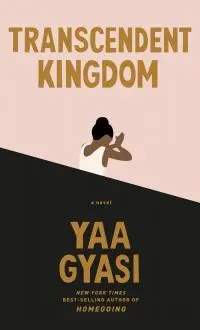
- Название:Transcendent Kingdom
- Автор:
- Издательство:Penguin UK
- Жанр:
- Год:2020
- ISBN:9780241988664
- Рейтинг книги:4 / 5. Голосов: 1
-
Избранное:Добавить в избранное
- Отзывы:
-
Ваша оценка:
Transcendent Kingdom: краткое содержание, описание и аннотация
Предлагаем к чтению аннотацию, описание, краткое содержание или предисловие (зависит от того, что написал сам автор книги «Transcendent Kingdom»). Если вы не нашли необходимую информацию о книге — напишите в комментариях, мы постараемся отыскать её.
As a child Gifty would ask her parents to tell the story of their journey from Ghana to Alabama, seeking escape in myths of heroism and romance. When her father and brother succumb to the hard reality of immigrant life in the American South, their family of four becomes two - and the life Gifty dreamed of slips away.
Years later, desperate to understand the opioid addiction that destroyed her brother's life, she turns to science for answers. But when her mother comes to stay, Gifty soon learns that the roots of their tangled traumas reach farther than she ever thought. Tracing her family's story through continents and generations will take her deep into the dark heart of modern America.
______________________________________________________
**'I would say that** Transcendent Kingdom **is a novel for our time (and it is) but it is so much more than that. It is a novel for all times. The splendor and heart and insight and brilliance contained in the pages holds up a light the rest of us can follow'** Ann Patchett
**'Absolutely transcendent. A gorgeously woven narrative . . . not a word or idea out of place. THE RANGE. I am quite angry this is so good** ' Roxane Gay
**'A stirringly gifted writer'** *New York Times*
Transcendent Kingdom — читать онлайн бесплатно полную книгу (весь текст) целиком
Ниже представлен текст книги, разбитый по страницам. Система сохранения места последней прочитанной страницы, позволяет с удобством читать онлайн бесплатно книгу «Transcendent Kingdom», без необходимости каждый раз заново искать на чём Вы остановились. Поставьте закладку, и сможете в любой момент перейти на страницу, на которой закончили чтение.
Интервал:
Закладка:
She sucked her teeth at me and continued working, slicing the plantains, salting the jollof. I heard the sizzle of the oil, and that smell of hot, wet grease was enough to make my mouth water.
“If you had spent time in the kitchen with me, helping me, you would know how to make all of this. You would know how to feed yourself properly.”
I held my breath and counted to three, waiting for the urge to say something mean to pass. “You’re here now. I can learn now.”
She snorted. So, this was how it would go. I watched her lean over the pot of oil. She grabbed a handful of plantains and dropped them in, her hand so low, so close to the oil. The oil sputtered as it swallowed the plantains, and when my mother lifted her hand from the pot, I could see glistening specks from where the oil had spit at her. She wiped the spots with her index finger, touched her finger to her tongue. How many times had she been burned like this? She must have been immune.
“Do you remember that time you put hot oil on Nana’s foot?” I asked from my spot at the counter. I wanted to get up and help her, but I was nervous that she would make fun of me or, worse, tell me how every move I made was wrong. She was right that I had avoided her kitchen my entire childhood, but even now, even with my small sample size of days spent cooking with her, it’s her voice I hear, saying, “You clean as you go, you clean as you go,” whenever I cook.
“What are you talking about?”
“You don’t remember? We were having a party at the house and you put oil—”
She sharply turned to face me. She was holding a mesh strainer in her hand, high up in the air like a gavel she could bring down at any moment. I saw panic in her face, panic that covered the blankness that had been there since she’d arrived.
“I never did that,” she said. “I never, never did that.”
I was going to press her but then I looked into her eyes and knew immediately that I had made a mistake. Not in the memory, carried back to me through that smell of hot oil, but in the reminder.
“I’m sorry. I must have dreamed it,” I said, and she brought the gavel down.
—
My mother rarely threw parties, and when she did, she spent the entire week leading up to them in enough of a cooking/cleaning frenzy to make you wonder if we were hosting royalty. There were a handful of Ghanaians in Alabama who made up the Ghana Association, and many of them had to drive upward of two hours to come to any of the gatherings. My mother, never the life of the party, only went to a meeting if the drive was under an hour, and she only hosted if she had four days off in a row, a rare enough occurrence to mean that she only hosted twice.
She’d bought me a new dress and Nana new slacks. She pressed them in the morning and then laid them out on our beds, threatening death if we so much as looked at them wrong before it was time to get into them, and then she spent the rest of the day cooking. By the time the first guests arrived, the house was practically sparkling, fragrant with the scents of Ghana.
It was the first time many of the other Ghanaians were seeing us since the Chin Chin Man’s departure, and Nana and I, already outcasts for our taciturn mother, were dreading the party, the stares, the unsolicited advice from the grown-ups, the teasing from the other kids.
“We’ll stay for five minutes and then we can fake sick,” Nana whispered through his smile as we greeted an auntie who smelled like baby powder.
“She’ll know we’re lying,” I whispered back, remembering her CIA-level interrogation into the mystery of who had stolen a Malta from the back of her closet.
It didn’t come to that. By the time the other children showed up, Nana and I had moved from enduring to enjoying the party. My mother had made bofrot, puff-puff, balls of fried dough, and before long all of the children were engaged in an all-out war, the bofrot as our weapon. The rules were ill-defined, but the general idea of the game was that if you were hit with a flying bofrot then you were out.
Nana was, as usual, an expert player. He was fast, he had a good arm, and he was especially adept at escaping detection, for we all knew that if the adults caught us wasting food by throwing it at each other, the game, and our lives, would surely end. I knew I wasn’t fast enough to outrun Nana, and so I hid behind our couch, waiting with my pile of bofrots, listening for the frustrated sighs and giggles of the other children who’d been pelted out. That couch, the only couch I’d ever known, was so old, so ugly, that it was slowly giving up on itself. The seams on one of the cushions had burst, leaving its stuffing, like guts, spilling out from the sides. The left arm of the couch had a decorative wooden piece nailed in, but every so often the piece would fall off, nails out, and Nana, my mother, or I would have to shove it back into the upholstery. I must have knocked the wooden piece off to get behind the couch that day, because it wasn’t long before I heard Nana scream. I slunk out from behind the couch to find him with the wooden piece nailed to the bottom of his foot.
Every uncle and auntie in the room came over to hold court. My mother could hardly shove her way through before everyone had offered up their solutions to the problem. I quickly ate my bofrots, hiding the evidence of my involvement, as the adults in the room got louder and louder. Finally, my mother got to Nana. She sat him down on that treacherous couch and, without a hint of ceremony, pulled the wooden piece, nail and all, from Nana’s foot, leaving behind a perfect, bleeding hole.
“Lockjaw, my sister,” one of the aunties said.
“It’s true, that nail might give him lockjaw. You can’t take any chances.”
The din started up again as the adults discussed tetanus prevention. Nana and I rolled our eyes at each other, waiting for the grown-ups to stop their posturing, slap a Band-Aid on his foot, and call it a day. But there was something about their talk, the way they were working themselves up with memories and ideas of Ghana, their old home. It was like they were turning themselves on with these mentions of folk remedies, turning themselves on and showing each other up, proving that they hadn’t lost it, their Ghanaianness.
My mother scooped Nana up into her arms and carried him into the kitchen, the entire party trailing after her. She put a small pot of oil on the stove and dipped a silver spoon in it and, with Nana screaming, the grown-ups encouraging, and the children looking on in fear, she touched the hot oiled spoon to the hole in Nana’s foot.
Could my mother have forgotten that? The time she had stopped believing in the powers of a tetanus vaccination and had instead left Nana’s health up to folk wisdom. Nana had been so angry at her afterward, so angry and confused. Surely, she remembered.
I set the table while my mother scooped rice and fried plantains onto two plates. She sat down next to me and the two of us ate in silence. That food was better than anything I had eaten in months, years even, better still for having been the one sign of life from a woman who had done nothing but sleep since her arrival. I ate it hungrily. I accepted seconds and did the dishes while my mother looked on. Evening came, and she got back into bed, and by the time I left for the lab the next morning, she still had not gotten up.
22
A mouse with a fiber-optic implant on its head looks like something out of a science-fiction movie, though I suppose any creature with a fiber-optic implant on its head would. I often attached such implants to my mice’s heads so that I could deliver light into their brains during my experiments. Han came into the lab one day to find me attaching a fiber-optic patch cord to one of my mice’s implants. Both Han and the mouse didn’t seem the least bit interested in what I was doing.
Читать дальшеИнтервал:
Закладка:
Похожие книги на «Transcendent Kingdom»
Представляем Вашему вниманию похожие книги на «Transcendent Kingdom» списком для выбора. Мы отобрали схожую по названию и смыслу литературу в надежде предоставить читателям больше вариантов отыскать новые, интересные, ещё непрочитанные произведения.










Обсуждение, отзывы о книге «Transcendent Kingdom» и просто собственные мнения читателей. Оставьте ваши комментарии, напишите, что Вы думаете о произведении, его смысле или главных героях. Укажите что конкретно понравилось, а что нет, и почему Вы так считаете.