Yaa Gyasi - Transcendent Kingdom
Здесь есть возможность читать онлайн «Yaa Gyasi - Transcendent Kingdom» весь текст электронной книги совершенно бесплатно (целиком полную версию без сокращений). В некоторых случаях можно слушать аудио, скачать через торрент в формате fb2 и присутствует краткое содержание. Год выпуска: 2020, ISBN: 2020, Издательство: Penguin UK, Жанр: Современная проза, на английском языке. Описание произведения, (предисловие) а так же отзывы посетителей доступны на портале библиотеки ЛибКат.
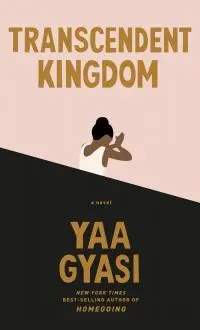
- Название:Transcendent Kingdom
- Автор:
- Издательство:Penguin UK
- Жанр:
- Год:2020
- ISBN:9780241988664
- Рейтинг книги:4 / 5. Голосов: 1
-
Избранное:Добавить в избранное
- Отзывы:
-
Ваша оценка:
Transcendent Kingdom: краткое содержание, описание и аннотация
Предлагаем к чтению аннотацию, описание, краткое содержание или предисловие (зависит от того, что написал сам автор книги «Transcendent Kingdom»). Если вы не нашли необходимую информацию о книге — напишите в комментариях, мы постараемся отыскать её.
As a child Gifty would ask her parents to tell the story of their journey from Ghana to Alabama, seeking escape in myths of heroism and romance. When her father and brother succumb to the hard reality of immigrant life in the American South, their family of four becomes two - and the life Gifty dreamed of slips away.
Years later, desperate to understand the opioid addiction that destroyed her brother's life, she turns to science for answers. But when her mother comes to stay, Gifty soon learns that the roots of their tangled traumas reach farther than she ever thought. Tracing her family's story through continents and generations will take her deep into the dark heart of modern America.
______________________________________________________
**'I would say that** Transcendent Kingdom **is a novel for our time (and it is) but it is so much more than that. It is a novel for all times. The splendor and heart and insight and brilliance contained in the pages holds up a light the rest of us can follow'** Ann Patchett
**'Absolutely transcendent. A gorgeously woven narrative . . . not a word or idea out of place. THE RANGE. I am quite angry this is so good** ' Roxane Gay
**'A stirringly gifted writer'** *New York Times*
Transcendent Kingdom — читать онлайн бесплатно полную книгу (весь текст) целиком
Ниже представлен текст книги, разбитый по страницам. Система сохранения места последней прочитанной страницы, позволяет с удобством читать онлайн бесплатно книгу «Transcendent Kingdom», без необходимости каждый раз заново искать на чём Вы остановились. Поставьте закладку, и сможете в любой момент перейти на страницу, на которой закончили чтение.
Интервал:
Закладка:
“Soon, soon, soon.”
If my mother knew that soon, soon, soon was a lie, she didn’t let on. I suppose if it was a lie, it was one she wanted to believe. She spent most of her mornings on the phone with him, speaking in hushed tones as I prattled on to my favorite doll. I was four, oblivious to the lurch my father had left us in and to the deep pain my mother must have been feeling.
If I’ve thought of my mother as callous, and many times I have, then it is important to remind myself what a callus is: the hardened tissue that forms over a wound. And what a wound my father leaving was. On those phone calls with the Chin Chin Man, my mother was always so tender, drawing from a wellspring of patience that I never would have had if I were in her shoes. To think of the situation now still makes me furious. That this man, my father, went back to Ghana in such a cowardly way, leaving his two children and wife alone to navigate a difficult country, a punishing state. That he let us, let her, believe that he might return.
My mother never spoke an ill word about him. Not once. Even after soon, soon, soon turned into maybe, turned into never.
“I hate him,” Nana said years later, after the Chin Chin Man had canceled yet another visit.
“You don’t,” my mother said. “He hasn’t come back because he is ashamed, but it doesn’t mean he doesn’t care about you. And how could you hate him when he cares so much? He cares about you, he cares about me and Gifty. He cares about Ghana. How could you hate a man like that?”
—
The mice who can’t stop pushing the lever, even after being shocked dozens of times, are, neurologically, the ones who are most interesting to me. By the time my mother came to stay with me in California, my team and I were in the process of identifying which neurons were firing or not firing whenever the mice decided to press the lever despite knowing the risks. We were trying to use blue light to get the mice to stop pressing the lever, to “turn on,” so to speak, the neurons that weren’t functioning properly in warning those mice away from risk.
I talked about the lever experiment at the next dinner party that Raymond threw. He’d made cassoulet, rich with pork and duck and lamb, glistening with oil and so delicious and sinful that everyone in the room let out audible sighs after their first bites.
“So it’s a question of restraint,” one colleague, Tanya, said. “Like how I can’t restrain myself from eating more of this cassoulet, even though I know my waistline isn’t going to be happy about it.”
Everyone laughed as Tanya rubbed her stomach like Winnie-the-Pooh upon finding a pot of honey.
“Well, yes,” I said. “But it’s a bit more complicated than that. Like even the idea of a ‘you’ that can restrain ‘yourself’ doesn’t quite get at it. The brain chemistry of these mice has changed to the point where they aren’t really in control of what they can or can’t control. They aren’t ‘themselves.’ ”
They all nodded vigorously, as though I’d said something extremely profound, and then one of them mentioned King Lear. We are not ourselves when nature, being oppressed, commands the mind to suffer with the body. I hadn’t read Shakespeare since high school, but I nodded along with them, pretending for Raymond’s sake to be interested in the conversation. After they left that night, all those dishes in their wake, I could tell that he was happy to see me finally opening up to his friends. I wanted to be happy too, but I felt like I was lying somehow. Whenever I listened to his friends speak about issues like prison reform, climate change, the opioid epidemic, in the simultaneously intelligent but utterly vacuous way of people who think it’s important simply to weigh in, to have an opinion, I would bristle. I would think, What is the point of all this talk? What problems do we solve by identifying problems, circling them?
I said my goodbyes and then I rushed home and threw up and I never could eat that dish again.
15
When I was still in elementary school, my children’s church pastor told us that sin was defined as anything you think, say, or do that goes against God. She pulled out these two puppets that looked like little monsters and had them demonstrate sin. The purple monster would hit the green monster, and our pastor would say, “Hey, hitting is a sin.” The green monster would wait until the purple monster’s back was turned and then steal a Hershey’s Kiss from the purple monster’s hand. Everyone thought this move was hilarious, so hilarious that our pastor had to remind us that it was sinful to steal.
I was a good, pious child, committed to not sinning, and the definition that our pastor gave confounded me. It was easy enough to not do anything wrong or say anything wrong. But to not think sinfully? To not think about lying or stealing or hitting your brother when he comes into your room intent on torturing you, was that even possible? Do we have control over our thoughts?
When I was a child this was a religious question, a question of whether it was possible to live a sinless life, but it is also, of course, a neuroscientific question. That day, when the children’s church pastor used her puppets to teach us about sin, I realized, with no small amount of embarrassment, that my secret goal of becoming as blameless as Jesus was in fact impossible, and perhaps even blasphemous. My pray-without-ceasing experiment had all but proven the impossibility of controlling my thoughts. I could control one layer, the most readily available layer, but there was always a sublayer lurking. That sublayer was truer, more immediate, more essential, than anything else. It spoke softly but constantly, and the things it said were the very things that allowed me to live and to be. Now I understand that we have a subconscious life, vibrant and vital, that acts in spite of “ourselves,” our conscious selves.
In the book of Matthew, Jesus says, “You shall love the Lord your God with all your heart and with all your soul and with all your mind.” Here is a separation. Your heart, the part of you that feels. Your mind, the part of you that thinks. Your soul, the part of you that is. I almost never hear neuroscientists speak about the soul. Because of our work, we are often given to thinking about the part of humans that is the vital, inexplicable essence of ourselves, as the workings of our brains—mysterious, elegant, essential. Everything we don’t understand about what makes a person a person can be uncovered once we understand this organ. There is no separation. Our brains are our hearts that feel and our minds that think and our souls that are. But when I was a child I called this essence a soul and I believed in its supremacy over the mind and the heart, its immutability and connection to Christ himself.
The week before Buddy the dog died, his golden hair started falling out in tufts. You’d pet him and come away with fistfuls of that luster. It was clear that he was coming to his end, but before he did, I went over to Ashley’s house and prayed for him. “Dear God, bless this dog and let his soul be at rest,” I said, and Ashley and I knelt down next to Buddy and cried into his soft body, and I had a vision of Buddy in the vet’s office, his soul rising out of that golden shell and floating up toward Heaven. It comforted me then to believe in a soul, a separate self, to picture Buddy’s soul alive and well, even if he wasn’t.
At times, my life now feels so at odds with the religious teachings of my childhood that I wonder what the little girl I once was would think of the woman I’ve become—a neuroscientist who has at times given herself over to equating the essence that psychologists call the mind, that Christians call the soul, with the workings of the brain. I have indeed given that organ a kind of supremacy, believing and hoping that all of the answers to all of the questions that I have can and must be contained therein. But the truth is I haven’t much changed. I still have so many of the same questions, like “Do we have control over our thoughts?,” but I am looking for a different way to answer them. I am looking for new names for old feelings. My soul is still my soul, even if I rarely call it that.
Читать дальшеИнтервал:
Закладка:
Похожие книги на «Transcendent Kingdom»
Представляем Вашему вниманию похожие книги на «Transcendent Kingdom» списком для выбора. Мы отобрали схожую по названию и смыслу литературу в надежде предоставить читателям больше вариантов отыскать новые, интересные, ещё непрочитанные произведения.









Обсуждение, отзывы о книге «Transcendent Kingdom» и просто собственные мнения читателей. Оставьте ваши комментарии, напишите, что Вы думаете о произведении, его смысле или главных героях. Укажите что конкретно понравилось, а что нет, и почему Вы так считаете.