Мариам Петросян - The Gray House
Здесь есть возможность читать онлайн «Мариам Петросян - The Gray House» весь текст электронной книги совершенно бесплатно (целиком полную версию без сокращений). В некоторых случаях можно слушать аудио, скачать через торрент в формате fb2 и присутствует краткое содержание. Издательство: Amazon, Жанр: Современная проза, prose_magic, на английском языке. Описание произведения, (предисловие) а так же отзывы посетителей доступны на портале библиотеки ЛибКат.

- Название:The Gray House
- Автор:
- Издательство:Amazon
- Жанр:
- Год:неизвестен
- ISBN:нет данных
- Рейтинг книги:5 / 5. Голосов: 7
-
Избранное:Добавить в избранное
- Отзывы:
-
Ваша оценка:
The Gray House: краткое содержание, описание и аннотация
Предлагаем к чтению аннотацию, описание, краткое содержание или предисловие (зависит от того, что написал сам автор книги «The Gray House»). Если вы не нашли необходимую информацию о книге — напишите в комментариях, мы постараемся отыскать её.
Bound to wheelchairs and dependent on prosthetic limbs, the physically disabled students living in the House are overlooked by the Outsides. Not that it matters to anyone living in the House, a hulking old structure that its residents know is alive. From the corridors and crawl spaces to the classrooms and dorms, the House is full of tribes, tinctures, scared teachers, and laws — all seen and understood through a prismatic array of teenagers' eyes.
But student deaths and mounting pressure from the Outsides put the time-defying order of the House in danger. As the tribe leaders struggle to maintain power, they defer to the awesome power of the House, attempting to make it through days and nights that pass in ways that clocks and watches cannot record.
The Gray House — читать онлайн бесплатно полную книгу (весь текст) целиком
Ниже представлен текст книги, разбитый по страницам. Система сохранения места последней прочитанной страницы, позволяет с удобством читать онлайн бесплатно книгу «The Gray House», без необходимости каждый раз заново искать на чём Вы остановились. Поставьте закладку, и сможете в любой момент перейти на страницу, на которой закончили чтение.
Интервал:
Закладка:
A bunch of kids on the steps of the back porch. Standing, sitting, hanging off the railing. It must have been a hot day. Faces in splotches of sun and shade.
I managed to recognize most of the faces. First of them—Black, of course. The heavy gaze, the blond bangs, the square jaw. All there. He looked a bit less imposing and a bit more round faced, and, if anything, even more morose than now.
Then I found Humpback, Elephant from the Third, and Rabbit from the Sixth. Rabbit hadn't changed at all. Humpback was disguised by motorcycle goggles and was hugging a crossbow. Elephant towered above everyone, a smiling mountain, like a scaled Kewpie doll, with a rubber giraffe peeking out of the pocket of his overalls.
This was turning out to be an exciting activity.
The next one was Blind. He was barefoot, crouching in the corner of the shot so that half of his head was out of the frame. The top button of his shirt came down almost to his navel, and his hair hung lower than the end of his nose. If he were to stand up, the hem of the checkered shirt would have fallen below his knees. I thought it strange that the counselors allowed him to go around the House dressed like that.
I looked for Sphinx but couldn't locate him.
There was Beauty, a tender angel; he was playing dead, draped over the railing. And Solomon, from the Second. Not yet the fat Rat he became, but already quite a plump young of the species.
Then I saw Lary and laughed out loud, choking on smoke. Awkward, big-eared, spindly Lary. He was standing with one leg proudly set apart, displaying the knee scraped myriad times, and no one, not even the sunniest romantic, would dare drone about “happy childhood” looking at this picture, because it was clearly impossible to have both a happy childhood and a nose like his. An owner of a matching nose, and bugged-out eyes to boot, was standing next to Lary. Obviously Horse from the Third. Of all the people in the photograph, Lary's visage took the cake. I even felt something resembling tenderness toward him. Cruel was the life of little Bandar-Logs. And that made them grow up hostile. And suffering from claustrophobia. And stuttering. Because no one loved them. Because they weren't smart, they weren't handsome, they weren't even cute. Lary and Horse were the last ones I could recognize. And Sphinx was still nowhere to be seen.
The two identical fair-haired guys in identical striped vests kept tormenting me. And a boy in front, with a perfectly spherical head, also was somehow familiar. I kept turning the picture this way and that, trying to match the faces to various inhabitants of the House, but wasn't able to place five of them. Finally I grew tired of this and just looked at the picture.
It was a wild, ragtag gang. Dirty, shaggy. They all probably had worms. You couldn't make them behave no matter how you tried, but at least no one was making a face. They wanted to look presentable, even though they could probably guess it wasn't working.
Protective amulets and all that other crap worn around the neck was all the rage, even back then. I counted sixteen pouches, plus talons, teeth, and bones, in bunches and separately; bolts, nuts, nails, rabbit feet, and a wide assortment of tails. Lary and Horse preferred their protection shiny and clanking. Elephant was bedecked in little bells, while the blond twins wore keys. My gaze registered those keys and it finally dawned on me.
I closed my eyes for a second and looked again.
Of course! The cold, round, staring eyes, the hooked noses... Little Vultures! So alike that I wouldn't even venture to guess which of them was the real one.
I wondered where the second one went. Immediately came a thought that even one was plenty, but I chased it away, ashamed, as I remembered the perpetual mourning of the Third.
It could be that Birds were not in mourning for Vulture's lost twin. That they just liked black. Honestly, I didn't really want to know. But in any case, Vulture had no twin brother in the House anymore, and thinking that it was good that he didn't was a foul thing to do.
I put the photograph back and took out the first one again. Looked at it. Then lay back and stared at the ceiling.
The dead inhabited every room in the House. Hidden in every closet was its own decomposing unmentionable skeleton. When the ghosts ran out of space, they moved out into the hallways. Then came the protective sigils on the doors and amulets around the necks, to ward off the uninvited guests, while at the same time the resident spirits were welcomed and flattered, consulted and listened to, serenaded with songs and stories. And they talked back. With scribbles in soap and toothpaste on the bathroom mirrors. With purple-hued drawings on the walls. Also with night whispers, right in the ears of the chosen, while they were taking a shower or bravely catching some sleep on the Crossroads sofa.
The unholy mess of Pheasant stories, superstitions, House proverbs, and silly sayings chased itself around in my head, becoming more and more weird as it went. When I finally tamped it down, I realized with surprise that I seemed to know the House a bit better. A tiny little bit. At least, I understood some things I was never able to before. The passion of the House dwellers for tall tales of all kinds did not spring out of nothing. It was their way of coping, molding their grief into superstitions. Which in turn morphed into traditions, and traditions were really easy to accept. Especially when you're a child. Had I come here seven years ago, I too might have considered talking to ghosts an everyday affair. I'd sit right there on Black's old photos, with a crude bow, or a sling in my pocket, proudly displaying an amulet against poltergeists that I'd fortuitously acquired in exchange for some rare stamps. I'd avoid some specific places at some specific times and still go there on a dare. It might have led to a stutter, who knows, but at least my life never would have been boring, unlike the one I actually had, the one that hadn't been spent here. I was a little bitter that this untamed childhood had passed me by. Yes, it didn't have any open spaces in it, no rivers or forests or abandoned cemeteries, but neither did my real one. I would have learned all of the House's rules and regulations, and how to tell ridiculous stories, to play guitar, to decipher the scribbles on the walls, to read fortunes in chicken bones, to remember all the former nicks of all the old-timers. And maybe, just maybe, to love this crumbling building, which I now would never be able to. The longer I thought about this the sadder I felt. I took out the last sacrificial cigarette, lit it, and sat there tracing the tendrils of smoke floating up toward the lamp and dissolving in its light.
THE HOUSE
INTERLUDE
Sepulcher is a House within the House. It's a place where the world works differently. It's much younger; when it was created the House was already starting to crumble. It is the subject of the scariest stories of all. It is hated and reviled. Sepulcher has its own rules, and it enforces them without mercy. It is dangerous and unpredictable; it sows discord between friends and pacifies enemies. It unrolls a separate path for each visitor: when you travel it to the end, you’ll be either found or lost. For some it's their last journey, for others—only the beginning. Time itself slows down there.
Grasshopper looked out the window at the snowdrifts and the black silhouettes on blue. The morning at the hospital wing began with rounds, before dawn. The cars navigating the icebound roads, honking impatiently, the stomping of feet in the hallway, the lit-up windows of the houses—all pointed toward morning. But if the sky were to be believed, it was still night. Classes had been canceled because of the snowfall, and the inhabitants of the House had been celebrating the unexpected vacation for two days straight. The windows of the hospital wing looked out to the yard. Each morning and each night, Grasshopper climbed up on the windowsill and looked at the boys throwing snowballs and building white forts out of the drifts. He could tell them apart by their hats and parkas. The voices did not penetrate the double-paned glass.
Читать дальшеИнтервал:
Закладка:
Похожие книги на «The Gray House»
Представляем Вашему вниманию похожие книги на «The Gray House» списком для выбора. Мы отобрали схожую по названию и смыслу литературу в надежде предоставить читателям больше вариантов отыскать новые, интересные, ещё непрочитанные произведения.
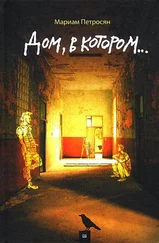
![Мариам Петросян - Дом, в котором… [Издание 2-е, дополненное, иллюстрированное, 2016]](/books/62844/mariam-petrosyan-dom-v-kotorom-izdanie-2-thumb.webp)



Обсуждение, отзывы о книге «The Gray House» и просто собственные мнения читателей. Оставьте ваши комментарии, напишите, что Вы думаете о произведении, его смысле или главных героях. Укажите что конкретно понравилось, а что нет, и почему Вы так считаете.