Amanda Leduc - The Centaur's Wife
Здесь есть возможность читать онлайн «Amanda Leduc - The Centaur's Wife» весь текст электронной книги совершенно бесплатно (целиком полную версию без сокращений). В некоторых случаях можно слушать аудио, скачать через торрент в формате fb2 и присутствует краткое содержание. Город: Toronto, Год выпуска: 2021, ISBN: 2021, Издательство: Random House of Canada, Жанр: Современная проза, prose_magic, на английском языке. Описание произведения, (предисловие) а так же отзывы посетителей доступны на портале библиотеки ЛибКат.
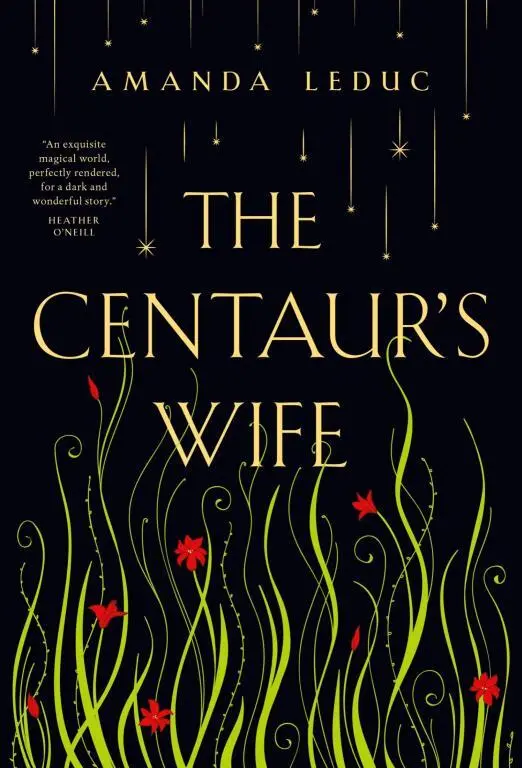
- Название:The Centaur's Wife
- Автор:
- Издательство:Random House of Canada
- Жанр:
- Год:2021
- Город:Toronto
- ISBN:978-0-73527-285-9
- Рейтинг книги:5 / 5. Голосов: 1
-
Избранное:Добавить в избранное
- Отзывы:
-
Ваша оценка:
The Centaur's Wife: краткое содержание, описание и аннотация
Предлагаем к чтению аннотацию, описание, краткое содержание или предисловие (зависит от того, что написал сам автор книги «The Centaur's Wife»). Если вы не нашли необходимую информацию о книге — напишите в комментариях, мы постараемся отыскать её.
Heather is sleeping peacefully after the birth of her twin daughters when the sound of the world ending jolts her awake. Stumbling outside with her babies and her new husband, Brendan, she finds that their city has been destroyed by falling meteors and that her little family are among only a few who survived.
But the mountain that looms over the city is still green—somehow it has been spared the destruction that has brought humanity to the brink of extinction. Heather is one of the few who know the mountain, a place city-dwellers have always been forbidden to go. Her dad took her up the mountain when she was a child on a misguided quest to heal her legs, damaged at birth. The tragedy that resulted has shaped her life, bringing her both great sorrow and an undying connection to the deep magic of the mountain, made real by the beings she and her dad encountered that day: Estajfan, a centaur born of sorrow and of an ancient, impossible love, and his two siblings, marooned between the magical and the human world. Even as those in the city around her—led by Tasha, a charismatic doctor who fled to the city from the coast with her wife and other refugees—struggle to keep everyone alive, Heather constantly looks to the mountain, drawn by love, by fear, by the desire for rescue. She is torn in two by her awareness of what unleashed the meteor shower and what is coming for the few survivors, once the green and living earth makes a final reckoning of the usefulness of human life and finds it wanting.
At times devastating, but ultimately redemptive, Amanda Leduc’s fable for our uncertain times reminds us that the most important things in life aren’t things at all, but rather the people we want by our side at the end of the world.
The Centaur's Wife — читать онлайн бесплатно полную книгу (весь текст) целиком
Ниже представлен текст книги, разбитый по страницам. Система сохранения места последней прочитанной страницы, позволяет с удобством читать онлайн бесплатно книгу «The Centaur's Wife», без необходимости каждый раз заново искать на чём Вы остановились. Поставьте закладку, и сможете в любой момент перейти на страницу, на которой закончили чтение.
Интервал:
Закладка:
“Where did all this come from?” she asks them, in one of her lucid moments.
“Our father was a collector,” Aura says. “And after him—Estajfan.”
Heather looks around the space and tries to focus.
“This was for our mother,” Aura answers the question before Heather can ask. “In case she ever decided to come see us.”
Heather eases herself off the bed and moves slowly to the desk. She flips the laptop open. The battery is long dead, of course. “What use is all of this?”
“It’s of no use.” Estajfan looms dark in the doorway. “I just keep it to… remember.”
“But you’ve never used a computer,” Heather says. She crosses the cave and edges past him. The air outside is cold and starry.
“I haven’t,” he agrees. He comes to stand beside her. “There is no one, Heather. I’m sorry.”
“No one,” she echoes. Last night she dreamt of the girls again, and her father’s face as he fell. She woke up alone in the dark of the cave, a moonlit shadow—Aura? Estajfan? She couldn’t tell—outside the door.
When she fell back to sleep, she dreamed of her mother, who welcomed her into a room that was bare except for a butter churn toppled against the wall in the corner.
“Would you like some tea?” her mother asked. When Heather looked around, confused, her mother opened the window and plucked a mug off a tree branch. When she closed the window, leaves pressed against the glass.
“They want to come in,” her mother said.
“Where’s the baby?” Heather asked. “I left him with you.”
“Oh.” Her mother’s kind face creased with surprise. “He’s sleeping. Out there, like in the song. See?” Out the window, Heather saw him in the tree, embraced by the branches. When she reached for him, the tree would not give him up.
“He’s for the trees,” her mother said.
Heather turned to her mother. “Where are the girls?”
“They were for the trees too.” She stepped forward, tucked a strand of hair behind Heather’s ear. “Like you, Heather. Your life was always going to look a little different too.”
In the dream her stomach dropped in mingled terror and rage. “But they could have done so much,” she whispered. “Didn’t I manage to climb a mountain?”
“Yes. And look what happened when you did.”
Now, waking, she moves to the cave opening and steps out into the light. It’s overcast, but she’s been in the cave so long she needs to shield her eyes.
The mountain centaurs stand in a semicircle in front of the entrance, their faces stern.
“There is no room for humans anymore,” one of them says. A male, tall and dark, his black hair falling down his back in careless waves.
Heather, weary, says, “Do you have anything else to say to me?”
“You are here only because of Estajfan,” he says. “But he cannot protect you forever.”
Estajfan shifts so he’s partly in front of her. “ Nothing will happen to her here,” he says. The other centaur, unimpressed, moves away.
“Take me somewhere else,” Heather says.
And he does. They climb another sloping path that ends in a flat space with three weeping willows. She moves slowly, weak from grief and pregnancy and trauma. She sits down with her back against a tree. Estajfan kneels beside her.
“Tell me a story,” he says.
There are no stories anymore, she wants to tell him. But the stories find her anyway.

Once there were two little girls who were born as the world became new again. Their hair was red like the fire that destroyed the old world. At night, they curled into one another for warmth, their fingers laced together.
They were restless babies. Why sleep when you could keep your eyes open and discover the world? To soothe them, their mother put them in a sling and walked them through the ravaged streets out to the edges of the city, through the fields, close to the mountain in whose shadow they sat every day. They wailed and wailed and wailed.
As their first months passed, the girls cried less and less, and instead began to listen as their mother told them stories—of princesses who beat dragons, of girls whose tears could feed the trees.
“You can do anything,” their mother said to them, over and over. “You can do anything, because you are so loved.”
Greta, a few minutes older, liked to roll balls across the floor with her thumbs. Music made her laugh until she screamed. Jilly, the younger, liked to curl into her father’s neck and whisper nonsense to herself. She loved birds. Greta was louder, but Jilly was the first to find words.
They grew, and were the best of friends. At school they sat together; at home they were never far from one another. Their parents joked that even for them it was impossible to tell the girls apart. They grew taller and slimmer and began to lose their baby faces, growing into their teenage skins. They had their father’s eyes and hair. They had their mother’s hands.
Since they had never known another world, they grew into this one the way tropical flowers grow from decaying trees. When their parents spoke of airplanes and music boxes that ran all the time, of lights that kept the city bright at night, it sounded like a dream. The girls knew only fires in the backyard and laundry done by hand. The water they bathed in was heated over the fire.
But the gardens were bountiful, and they always had enough to eat. They were loved. They were loved.
They remained restless, like their mother. It was not unusual for the girls to find themselves in the shadow of the mountain and not remember how they got there. They would stare at the mountain rising into the clouds and wonder what was up there. Was it magic, this mountain that haunted their days? Did it watch over them in ways they didn’t know? What about the trees, their city, the sky? Did these watch over them too?
Sometimes, when they went out walking, they ran into their mother. She had been up the mountain long ago, the only one who had. When they asked her if she’d ever go up again, she shook her head.
“I like to be by the mountain,” she said. “But my dreams are enough now. I don’t really want to climb it.”
When she was sixteen, Greta heard stories from travellers about a school far away where you could learn to be a doctor. She applied, and was accepted. Her parents packed her bags; her sister wept, but shouldered a pack for her as the family set out for the school together. Jilly, like their mother, was already an artist, her sketchbook filled with flowers and trees.
The world had been reborn a shadow of itself. They had no car, not even bicycles, so they walked to the school. At night, they slept beneath the stars. It took them seven days to reach the school, whose letter of offer had come to Greta by way of a man riding a horse, like all the other letters that passed from place to place. As soon as they got there, Jilly said, “Don’t stay.” She couldn’t see a world without her sister. Would the mountain look the same without Greta there to see it? Would the flowers?
Greta shook her head. “I’m here for a while, and then I’m coming back.”
Jilly opened her mouth to plead, but just then a hummingbird flew by them. She held out her hand. The hummingbird came to sit in her palm. She and her twin bowed over it in silence. They had never seen a hummingbird by the mountain, though they’d read about them in books.
“You see?” Greta said, her voice soft.
The hummingbird started, and flew away.
That night, over dinner, Jilly told her parents that she was also going to stay.
Her mother said, “Greta has a dorm room. You can’t stay by yourself—you’re only sixteen.”
Читать дальшеИнтервал:
Закладка:
Похожие книги на «The Centaur's Wife»
Представляем Вашему вниманию похожие книги на «The Centaur's Wife» списком для выбора. Мы отобрали схожую по названию и смыслу литературу в надежде предоставить читателям больше вариантов отыскать новые, интересные, ещё непрочитанные произведения.










Обсуждение, отзывы о книге «The Centaur's Wife» и просто собственные мнения читателей. Оставьте ваши комментарии, напишите, что Вы думаете о произведении, его смысле или главных героях. Укажите что конкретно понравилось, а что нет, и почему Вы так считаете.