Amanda Leduc - The Centaur's Wife
Здесь есть возможность читать онлайн «Amanda Leduc - The Centaur's Wife» весь текст электронной книги совершенно бесплатно (целиком полную версию без сокращений). В некоторых случаях можно слушать аудио, скачать через торрент в формате fb2 и присутствует краткое содержание. Город: Toronto, Год выпуска: 2021, ISBN: 2021, Издательство: Random House of Canada, Жанр: Современная проза, prose_magic, на английском языке. Описание произведения, (предисловие) а так же отзывы посетителей доступны на портале библиотеки ЛибКат.
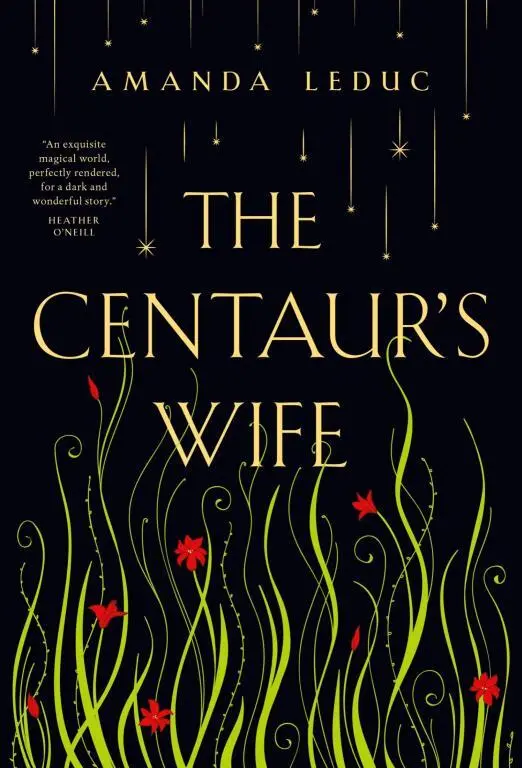
- Название:The Centaur's Wife
- Автор:
- Издательство:Random House of Canada
- Жанр:
- Год:2021
- Город:Toronto
- ISBN:978-0-73527-285-9
- Рейтинг книги:5 / 5. Голосов: 1
-
Избранное:Добавить в избранное
- Отзывы:
-
Ваша оценка:
The Centaur's Wife: краткое содержание, описание и аннотация
Предлагаем к чтению аннотацию, описание, краткое содержание или предисловие (зависит от того, что написал сам автор книги «The Centaur's Wife»). Если вы не нашли необходимую информацию о книге — напишите в комментариях, мы постараемся отыскать её.
Heather is sleeping peacefully after the birth of her twin daughters when the sound of the world ending jolts her awake. Stumbling outside with her babies and her new husband, Brendan, she finds that their city has been destroyed by falling meteors and that her little family are among only a few who survived.
But the mountain that looms over the city is still green—somehow it has been spared the destruction that has brought humanity to the brink of extinction. Heather is one of the few who know the mountain, a place city-dwellers have always been forbidden to go. Her dad took her up the mountain when she was a child on a misguided quest to heal her legs, damaged at birth. The tragedy that resulted has shaped her life, bringing her both great sorrow and an undying connection to the deep magic of the mountain, made real by the beings she and her dad encountered that day: Estajfan, a centaur born of sorrow and of an ancient, impossible love, and his two siblings, marooned between the magical and the human world. Even as those in the city around her—led by Tasha, a charismatic doctor who fled to the city from the coast with her wife and other refugees—struggle to keep everyone alive, Heather constantly looks to the mountain, drawn by love, by fear, by the desire for rescue. She is torn in two by her awareness of what unleashed the meteor shower and what is coming for the few survivors, once the green and living earth makes a final reckoning of the usefulness of human life and finds it wanting.
At times devastating, but ultimately redemptive, Amanda Leduc’s fable for our uncertain times reminds us that the most important things in life aren’t things at all, but rather the people we want by our side at the end of the world.
The Centaur's Wife — читать онлайн бесплатно полную книгу (весь текст) целиком
Ниже представлен текст книги, разбитый по страницам. Система сохранения места последней прочитанной страницы, позволяет с удобством читать онлайн бесплатно книгу «The Centaur's Wife», без необходимости каждый раз заново искать на чём Вы остановились. Поставьте закладку, и сможете в любой момент перейти на страницу, на которой закончили чтение.
Интервал:
Закладка:
In their city. In cities far away.
Then her girls and B, dangling from a beam in the kitchen.
The screaming. The screaming. She’s screaming with it.
The ground surges around her, green things thrumming in triumph. The air smells like the world has a fever.
Estajfan rips the vines away and picks her up. She turns into his shoulder and feels them start to climb.
Mama , says Greta’s little voice inside her ear.
Da , says Jilly.
They are gone—her girls.
There are no stories that will protect her from this.
They are gone from her, forever.
10
Tasha is in the clinic, her stethoscope against a little boy’s chest. She tries to concentrate on the heartbeat in her ears, but all she can see is Annie, pale and withdrawn in the corner of the room. When they woke up this morning, arms and legs tangled around one another, Annie had jumped away from her as though she couldn’t stand her touch. She’s been distant all day—even more distant than she’s been recently.
Tasha tried to distract herself by seeing patients. Those who managed to drag themselves into the clinic today all showed the same signs—they were restless and weary, jumpy and odd, their eyes feverish.
Candice had come, complaining of a fever. Tasha brought her into the examination room and pulled the curtain across.
“Sleep,” she said. “Sleep, and try to drink as much water as you can.”
“There’s no water left,” Candice said, dreamily.
“Annie will give you some.” Tasha glanced at the curtain. “Candice,” she whispered. “What happened to your little boy?”
Candice blinked at her, the words seeming to come from far away. “He died,” she whispered.
Tasha swallowed. “Did you—did you take him to the mountain?”
“I couldn’t,” Candice said. “I couldn’t do it. We got stuck in the snow—I tried to keep him warm, but nothing helped.”
Relief made Tasha dizzy; she reached out and held the other woman’s shoulder. “I’m sorry,” she whispered. “I’m so sorry.”
“I would like to sleep,” Candice continued. “I want to sleep and forget that any of this ever happened. But I just have nightmares. I never get any rest.”
Tasha doled a few precious antibiotics out into Candice’s waiting palm. “These will help,” she said. She felt renewed and also weary beyond belief; when Candice stood up to go, Tasha hugged her, then let her move beyond the curtain.
As she moves through later patients, she notices they all say the same thing. A young boy comes in, trailed by his mother. She listens to his heart while his mother mutters something about strange dreams.
“Dreams?” Tasha says. It’s probably the flu , she tells herself. Delirium brought on by fever.
“I just want food,” the woman whispers. “But those damned flowers keep taking it away.”
“What?”
A rush of wind outside the building brings the mingled scent of sweet flowers and dirty little boy to her nose. The mother only shrugs. “The vines eat everything, and give us only berries.”
Tasha puts a hand on the mother’s arm. “What have you eaten?”
Then, all around them, a scream.
The window shatters. The mother cries out and reaches for the boy, covers his ears. She begins to laugh—softly at first and then loudly—and then she screams, and her hands are around the little boy’s neck and she snaps his head, and now he’s sliding toward the floor, his eyes unseeing.
The mother stops screaming and whispers, “I’m not enough. We’re all going to starve. I can’t stop it.” She lunges past Tasha and throws herself at the shattered window—her fingers scrabbling for broken glass. As Tasha watches, horrified, the mother slashes her own neck.
Tasha can’t move. The screaming hasn’t stopped. Vines snake their way over the glass in the window frame, slither toward her, across the floor.
She backs away and comes up against a cupboard, spreads her hands wide, sidles along the counter until she realizes she’s looking for a phone. Futile.
“ Tasha. ”
She turns at Annie’s call. Her wife’s arms are bare. Something sharp glints in her hand. Glass.
“Annie.” Tasha sidles along the wall. Annie stands between her and the door. Vines slither up her legs.
“I was never enough for you,” Annie says. “I did everything you wanted. It’s never going to be enough, is it? I am never going to be enough.”
“Annie.” Tasha raises a hand “Annie, please.”
Annie lunges. Tasha kicks a chair in her way and scrambles along the wall, her hand reaching for the doorknob of the room that they’ve converted into a supply closet. She swings the door open and jumps inside, heaves it closed, locks the knob. Annie slams into the door and everything shakes.
“ I hate you! ” Annie screams. “ I hate everything you’ve done to me. ”
The darkness in the closet is absolute. On the other side of the door, Annie is cackling, mad. The sound goes on and on.
PART TWO
11
When she sleeps, Aura dreams about her mother—the same dream she’s had since she was young: a house, a long window, a woman with blonde hair staring out. There is a man with her, flat-nosed and gentle, and then children, one by one. The woman dotes on her husband and her children with a love that’s almost desperate. Slowly the woman’s sadness lifts from her shoulders, but settles like cobwebs into the corners of her home.
The woman never leaves the village, although it could just be that Aura doesn’t dream about her anywhere else. The children grow and Aura sees them arrive home from trips, from journeys far away. The mother is always at the door to greet them. When they tell her about their time away, there is a flash of something in the mother’s eyes—longing, hunger, maybe guilt.
Sometimes the woman mentions events in the village. Small things, normal human things. Babies and weddings and death. These are the moments when Aura balls her fists in the dream. Sometimes when she unfurls her hands, she sees red crescent moons across her palms.
No one in her mother’s house ever notices her. No one suspects that she’s there.
But why would they? None of her half-siblings know the story of their mother’s first husband. None of them know she exists.
As the village grows into a town, these children become town children, then town adults. They sail ships to the other side of the world and become teachers and, generations later, lawyers and doctors and accountants. And then they die. They all die. The daughters and granddaughters and great-times-many granddaughters are all, without exception, suffragettes. Maybe this is where the mother’s passion and wanderlust has gone—passed down to the girls, who are strong-willed and difficult, mean and beautiful. They have the woman’s eyes—Aura’s eyes, and her brothers’, too.
She tells her father about the dreams once, when she is small.
“She seems sad,” Aura tells him.
Her father straightens. He is building them a treehouse, like the ones the village children play in, or so he says. The treehouse isn’t really a treehouse—more like a platform that juts out from the tree—but Estajfan and Petrolio already know how to climb higher, to twist their legs and grip their ankles around the trunk. Sometimes they swing from one of the higher branches and do chin-ups.
Aura doesn’t care about the treehouse. She cares about her father, though, so she climbs onto this half-built refuge and waits for him to answer.
“What does she look like?” he says.
She regrets telling him about her dream instantly.
Читать дальшеИнтервал:
Закладка:
Похожие книги на «The Centaur's Wife»
Представляем Вашему вниманию похожие книги на «The Centaur's Wife» списком для выбора. Мы отобрали схожую по названию и смыслу литературу в надежде предоставить читателям больше вариантов отыскать новые, интересные, ещё непрочитанные произведения.











Обсуждение, отзывы о книге «The Centaur's Wife» и просто собственные мнения читателей. Оставьте ваши комментарии, напишите, что Вы думаете о произведении, его смысле или главных героях. Укажите что конкретно понравилось, а что нет, и почему Вы так считаете.