Amanda Leduc - The Centaur's Wife
Здесь есть возможность читать онлайн «Amanda Leduc - The Centaur's Wife» весь текст электронной книги совершенно бесплатно (целиком полную версию без сокращений). В некоторых случаях можно слушать аудио, скачать через торрент в формате fb2 и присутствует краткое содержание. Город: Toronto, Год выпуска: 2021, ISBN: 2021, Издательство: Random House of Canada, Жанр: Современная проза, prose_magic, на английском языке. Описание произведения, (предисловие) а так же отзывы посетителей доступны на портале библиотеки ЛибКат.
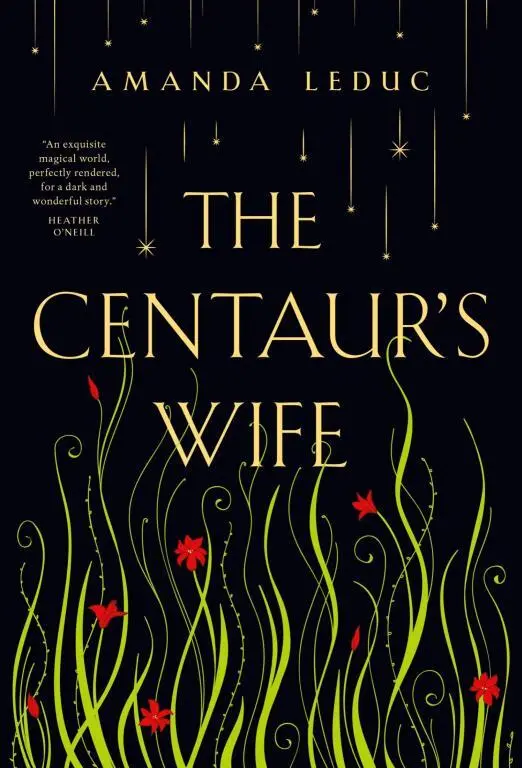
- Название:The Centaur's Wife
- Автор:
- Издательство:Random House of Canada
- Жанр:
- Год:2021
- Город:Toronto
- ISBN:978-0-73527-285-9
- Рейтинг книги:5 / 5. Голосов: 1
-
Избранное:Добавить в избранное
- Отзывы:
-
Ваша оценка:
The Centaur's Wife: краткое содержание, описание и аннотация
Предлагаем к чтению аннотацию, описание, краткое содержание или предисловие (зависит от того, что написал сам автор книги «The Centaur's Wife»). Если вы не нашли необходимую информацию о книге — напишите в комментариях, мы постараемся отыскать её.
Heather is sleeping peacefully after the birth of her twin daughters when the sound of the world ending jolts her awake. Stumbling outside with her babies and her new husband, Brendan, she finds that their city has been destroyed by falling meteors and that her little family are among only a few who survived.
But the mountain that looms over the city is still green—somehow it has been spared the destruction that has brought humanity to the brink of extinction. Heather is one of the few who know the mountain, a place city-dwellers have always been forbidden to go. Her dad took her up the mountain when she was a child on a misguided quest to heal her legs, damaged at birth. The tragedy that resulted has shaped her life, bringing her both great sorrow and an undying connection to the deep magic of the mountain, made real by the beings she and her dad encountered that day: Estajfan, a centaur born of sorrow and of an ancient, impossible love, and his two siblings, marooned between the magical and the human world. Even as those in the city around her—led by Tasha, a charismatic doctor who fled to the city from the coast with her wife and other refugees—struggle to keep everyone alive, Heather constantly looks to the mountain, drawn by love, by fear, by the desire for rescue. She is torn in two by her awareness of what unleashed the meteor shower and what is coming for the few survivors, once the green and living earth makes a final reckoning of the usefulness of human life and finds it wanting.
At times devastating, but ultimately redemptive, Amanda Leduc’s fable for our uncertain times reminds us that the most important things in life aren’t things at all, but rather the people we want by our side at the end of the world.
The Centaur's Wife — читать онлайн бесплатно полную книгу (весь текст) целиком
Ниже представлен текст книги, разбитый по страницам. Система сохранения места последней прочитанной страницы, позволяет с удобством читать онлайн бесплатно книгу «The Centaur's Wife», без необходимости каждый раз заново искать на чём Вы остановились. Поставьте закладку, и сможете в любой момент перейти на страницу, на которой закончили чтение.
Интервал:
Закладка:
“How are you?” Heather asks, surprising herself.
“I’m all right,” Annie says, as though she’s never asked herself the question. “Tired. Hungry. But aren’t we all.”
“And Tasha?”
“Tasha is Tasha.” Annie shrugs. “One day she’ll drop dead from a heart attack and all of this will be over, but until then, who knows.”
After the family leaves, Heather follows Annie to where Tasha sits waiting on her chair. Annie pulls the curtain across and sits down beside her.
“Heather,” she says. “What can we do for you?”
She tells them about the bleeding. Tasha frowns and gets up to check her belly.
“The placenta seems lower than it should be,” she says, “though it’s hard to tell exactly what’s going on without equipment. Did you bleed with the girls?”
“A little,” Heather tells her.
Worry settles into the lines around Tasha’s eyes. “We’ll just have to wait and see. But let me know if the bleeding continues,” she says.
Heather looks at them both, then clears her throat. “What if… what if I don’t want it to stop?”
Tasha blinks. “What?”
“What if I don’t have this baby?” Heather whispers. “What if I can’t have this baby? Can you help me with that?”
The women glance at each other. For a moment Heather sees strong emotion pass between them. Envy flickers in her heart. She’s never looked at B like that. She’s never even wanted to. She’s only ever looked like that at someone else—and that, an impossibility.
“It’s too dangerous,” Tasha says, finally. “Heather—you’re malnourished. I can’t take a chance that something might happen.”
She swallows, closes her eyes. “Isn’t it dangerous to keep going?”
“Your body knows what to do,” Tasha says, softly. “Trust your own body before anything else.”
Her body. Heather lets out a laugh, and wipes a tear from her eye. “My body has always betrayed me,” she says. Not strong enough, not normal enough. And yet still strong enough, somehow, to give her children, again and again.
“I would do it,” Tasha says. “If this was any other time and we were in any other place. I would do it.”
The sharp pull of the curtain. Heather turns.
B stands there, backlit by the light from the windows. She can hear the girls laughing in the waiting room.
“I wanted to make sure you were okay,” he says. Something like terror in his face, something like hatred.
“Brendan—” Tasha begins, but he raises a hand.
“Don’t talk,” he says. “Please.” He looks back at Heather. “Would you have told me? Or would you have just gone and done it?”
She stares at the floor. The criss-cross of cracks over the tile. “I didn’t do it.”
“But you want to.”
“We’re starving,” she says. “You really want another child?”
B comes to her and grips her arm. She feels the other women shift, stand up. “I need you to have faith,” he says. Angry, desperate. “We’ll get through this. We will. The winter will end and we’ll plant the gardens again—”
“And if that doesn’t work? What happens then?”
“You’re always so negative!” he cries, dropping her arm. “I’ve tried so hard and nothing is ever enough for you. Even before all of this.” She looks up at him and then can’t look away.
“No one wanted to touch you,” he whispers. “No one wanted anything to do with you. I used to watch the way that people mimicked you at school. They called you crazy, you know that? No one wanted to be near you. But I did. I do .”
She thinks, hazily, of the smirks his friends had shot his way after B came over to her table at the pub. The whistles that had followed them out onto the street.
“So what?” she hisses. “Am I supposed to be grateful you’re paying attention to me now? Is that it?”
“Heather.” Annie comes to stand between them. “Brendan. Look—this is all terrible— everything is terrible.” She holds her arms out as if to push them away from one another. “But fighting helps nothing. Think about the girls.”
At the thought of them, Heather feels her heart crack open. “I’m sorry,” she says, and covers her face with her hands. “I just—I can’t do this. It’s too hard.”
“You’re not doing it alone,” B says. “That’s what I keep trying to tell you.”
Heather lets her hands fall, then nods. “Yes,” she whispers. “I know.”
They walk back to the house together, each of them carrying a twin, the gulf that yawns between them growing deeper as they go.

As the winter ends, the sky is blue—but never for very long, and not the blue that anyone remembers. The grass and trees are deep green, as though they’ve all kept on growing under the snow. The city is a daylight clock. The city is a shell. The mountains stand over them in shades of grey and green and blue.
There are no eggs from Joseph anymore. Heather no longer speaks to Joseph, apart from saying hello when they pass on the vine-ridden street. She doesn’t really speak to anyone apart from B and the girls, who are babbling now—mostly nonsense, sometimes a few words of something only they can understand. They are tiny but fierce. They pull themselves up by the legs of tables and wobble around the house from one piece of furniture to the next. Greta is always first in line. Jilly, more timid when it comes to new adventures, laughs the loudest. Neither of them goes anywhere without looking to see where the other twin is first. Their eyes follow her everywhere.
Their backyard is soon a lush jungle of green. There is no in-between time, no in-between place. In the morning she cuts the vines back from the stairs and in the evening they have grown to overtake the porch again.
Look at the wildflowers grow, she hears people whisper. Look at the lilies, look at the bushes that have come up almost out of nowhere. Look at all of it, so bright and alive.
A week or so into spring, brightly coloured boxes arrive on their doorstep, holding new clothes for the babies and an invitation. Please join us in the city square for a spring celebration. We would like to come together to celebrate the lives of those we’ve lost, and express gratitude for all that we’ve accomplished together. It’s signed Tasha and the Council.
“I don’t know why it bothers you so much,” B says, as they dress the girls in their new outfits. “The Council is trying to stay positive. Why is that so hard for you to get?”
“This is more complicated than just trying to stay positive. People died during the winter,” she says, the words short and clipped. “Even though the Council did so much. It’s eating away at Tasha, too, even if she’s not talking about it. If it hadn’t been for the Food Angel, we all might have starved.”
“Fuck the Food Angel!” B hisses. “We survived because we prepared. Because we worked together. Because Tasha and Annie didn’t give up. That’s why. Not because some mysterious hoarder decided to be generous.”
“But what do we do now—plant gardens again and wait to see if we’ll have food for next winter? What happens if things don’t grow a second time? Do you think Tasha—”
“What have you got against Tasha?” B yells. The girls watch them, transfixed and terrified. “She gave you vitamins, for God’s sake.” His face darkens. “She would have helped you get rid of the baby if she’d thought it was safe. Don’t think I’ve forgotten.”
How could she think that? The memory is in every shadow on his face, in every strained hello he gives her in the morning. “She’s a doctor,” she says. “That’s her job.”
Читать дальшеИнтервал:
Закладка:
Похожие книги на «The Centaur's Wife»
Представляем Вашему вниманию похожие книги на «The Centaur's Wife» списком для выбора. Мы отобрали схожую по названию и смыслу литературу в надежде предоставить читателям больше вариантов отыскать новые, интересные, ещё непрочитанные произведения.











Обсуждение, отзывы о книге «The Centaur's Wife» и просто собственные мнения читателей. Оставьте ваши комментарии, напишите, что Вы думаете о произведении, его смысле или главных героях. Укажите что конкретно понравилось, а что нет, и почему Вы так считаете.