Amanda Leduc - The Centaur's Wife
Здесь есть возможность читать онлайн «Amanda Leduc - The Centaur's Wife» весь текст электронной книги совершенно бесплатно (целиком полную версию без сокращений). В некоторых случаях можно слушать аудио, скачать через торрент в формате fb2 и присутствует краткое содержание. Город: Toronto, Год выпуска: 2021, ISBN: 2021, Издательство: Random House of Canada, Жанр: Современная проза, prose_magic, на английском языке. Описание произведения, (предисловие) а так же отзывы посетителей доступны на портале библиотеки ЛибКат.
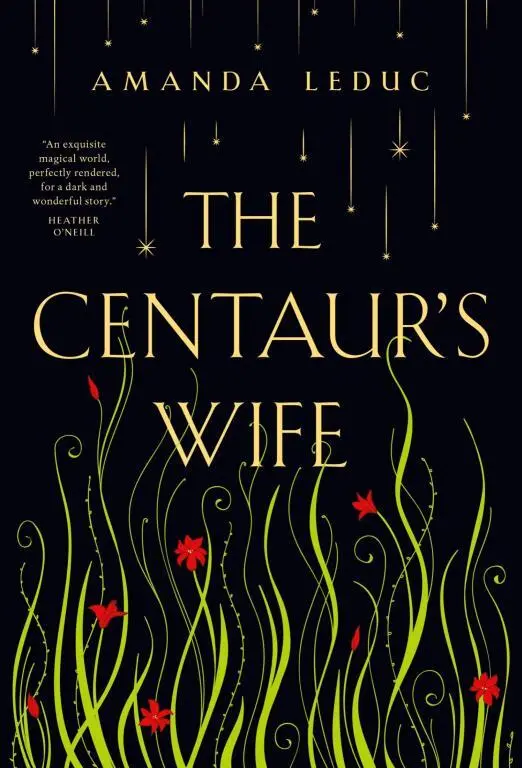
- Название:The Centaur's Wife
- Автор:
- Издательство:Random House of Canada
- Жанр:
- Год:2021
- Город:Toronto
- ISBN:978-0-73527-285-9
- Рейтинг книги:5 / 5. Голосов: 1
-
Избранное:Добавить в избранное
- Отзывы:
-
Ваша оценка:
The Centaur's Wife: краткое содержание, описание и аннотация
Предлагаем к чтению аннотацию, описание, краткое содержание или предисловие (зависит от того, что написал сам автор книги «The Centaur's Wife»). Если вы не нашли необходимую информацию о книге — напишите в комментариях, мы постараемся отыскать её.
Heather is sleeping peacefully after the birth of her twin daughters when the sound of the world ending jolts her awake. Stumbling outside with her babies and her new husband, Brendan, she finds that their city has been destroyed by falling meteors and that her little family are among only a few who survived.
But the mountain that looms over the city is still green—somehow it has been spared the destruction that has brought humanity to the brink of extinction. Heather is one of the few who know the mountain, a place city-dwellers have always been forbidden to go. Her dad took her up the mountain when she was a child on a misguided quest to heal her legs, damaged at birth. The tragedy that resulted has shaped her life, bringing her both great sorrow and an undying connection to the deep magic of the mountain, made real by the beings she and her dad encountered that day: Estajfan, a centaur born of sorrow and of an ancient, impossible love, and his two siblings, marooned between the magical and the human world. Even as those in the city around her—led by Tasha, a charismatic doctor who fled to the city from the coast with her wife and other refugees—struggle to keep everyone alive, Heather constantly looks to the mountain, drawn by love, by fear, by the desire for rescue. She is torn in two by her awareness of what unleashed the meteor shower and what is coming for the few survivors, once the green and living earth makes a final reckoning of the usefulness of human life and finds it wanting.
At times devastating, but ultimately redemptive, Amanda Leduc’s fable for our uncertain times reminds us that the most important things in life aren’t things at all, but rather the people we want by our side at the end of the world.
The Centaur's Wife — читать онлайн бесплатно полную книгу (весь текст) целиком
Ниже представлен текст книги, разбитый по страницам. Система сохранения места последней прочитанной страницы, позволяет с удобством читать онлайн бесплатно книгу «The Centaur's Wife», без необходимости каждый раз заново искать на чём Вы остановились. Поставьте закладку, и сможете в любой момент перейти на страницу, на которой закончили чтение.
Интервал:
Закладка:
He brings her wildflowers from the southern edge of town; tall daisies and tulips, irises and snapdragons. She throws the dried amaryllis into the backyard and this time B does not bring it back; the next day it is covered by Boston ivy.
B says he loves them in the food that he cooks, in the way that he dances with and sings to the girls. His voice soaring high and sweet, sounding so much younger than she feels.
At night he reaches for her again and again and weeps his hot tears into her hair. This, too, is a kind of love.
It’s a miracle that any of them survived. This family they have—a miracle.
The girls shine with a sticky magic that pulls her toward them, a force that feels older than love. Her children. The dark matter of her mind and heart is in constant, uneasy orbit around their flaming heads.
They are three months old, then four, then five.
She grows thinner. Everyone does.

Summer has given way to autumn. Daylight gives way to the dark. Heather and B go to bed earlier and wake up when the light comes, turning themselves toward the remnants of the sun. The sky is grey-tinged, with faint rust at the edges. There is no power in the city save for the generator that keeps Tasha’s clinic refrigerators going.
The girls have finally started to sleep for stretches at a time without wailing. Three hours here, five hours there. Still Heather walks them, and sometimes B comes too. He carries one twin, she carries another. Sometimes they even hold hands—the way they did before the girls came, when she was pregnant and life spooled in front of her, boring but safe. They walk up and down the streets and nod to the people they see. Everyone knows who B is, and they call out to him and smile.
One day, B finds a battery-powered radio in a heap of rubble and brings it back to the house. At night they put the girls down, then turn on the radio and search for news, all of which is ominous. One city has been hit with an unknown sickness—the doctors gone, the food almost nonexistent. Please, somebody help. We can’t do this much longer. A voice-over at another station complains of what they call the greening— the vines that crawl up to choke the buildings and the vegetation strangling the roads.
It’s a fucking referendum OF THE TREES, people! This from a man who identifies himself only as Nate. If you haven’t noticed the way the trees are taking the world back, you haven’t been paying attention! Hoard your matches! Don’t be burned—make sure you DO THE BURNING!
B doesn’t like Nate. B doesn’t really like the radio at all. Inevitably he is the one who goes to bed while Heather sits at the kitchen table with the volume low and searches for other voices.
Every night, B reaches for her when she finally comes to bed. His hand between her thighs and then his cock, his tears against her shoulder, his frustrated grunting in her ear. She looks out the window and up to the mountain. She does not make a sound.
“Where have you gone?” he whispers. “I feel like I’m fucking a ghost.”
Once, when she is feeding the girls dinner from jars of mushy peas and puréed carrots they’ve hoarded down in the basement, B comes across a station that is playing cello music. The notes burst into the kitchen, mournful and dark. The girls stop fussing, instantly. The only music they’ve ever heard is their mother singing to them in the forest. She watches, transfixed, as their eyes register the sound, as they twist their heads around to find where it is. B watches them too. As the music becomes more urgent, they break into open-mouthed smiles, and then they are laughing with joy in a way they’ve never done, and suddenly Heather is laughing too, then crying, and B comes to her, gathering her into his arms as she sobs into his dirt-encrusted shirt.
“It’s okay,” he whispers. “Heather, we’ll be okay.” After the cello trails away, the girls stare at her, and then at B, uncertain.
That night she is the one who reaches for his cock, his face, his lips. She straddles him in the darkness of their bedroom and rocks in utter silence, the only sound the creaking of the mattress, B’s laboured breaths.
He laughs as he comes inside of her, soft and incredulous.
In the days after this she often turns the radio on. She lets the girls roll around on the floor as she looks for the music again. She finds the cello once or twice, here and there a violin or trumpet. She never finds anyone singing.
She burns through one pair of batteries and then another, and then B takes the radio away.
“We have to make our supply of batteries last,” he says. Even B has given up hope of someone coming to the rescue.
The next day, Heather goes to the strip mall, to where Annie is taking inventory in the clinic, which is filled with tired mothers and sniffling children. Tasha is nowhere to be found.
“Batteries,” Heather says by way of hello. “I want more batteries, Annie.”
“Everyone wants batteries,” Annie says, not looking up. She is borderline skeletal now, as they all are.
“I just want a couple,” Heather says. “I won’t tell anyone.”
Annie laughs. “A secret like all the other secrets you’re keeping?”
Heather blinks. “I’m not keeping any secrets.”
Annie snorts. “Sure. Sneaking off to that greenhouse by the mountain is what, exactly?”
Inside of her, a sudden bloom of irrational betrayal. “How do you know about the greenhouse?” She knows the greenhouse does not belong to her. Tasha can talk about it with anyone.
Annie rolls her eyes. “You’re not the only person sneaking away from work, it would seem.”
“I have children to take care of—”
“And I have an entire city to take care of!” Annie slams her palm down on the counter. “Do you care about that? Does Tasha?”
“Annie, I don’t know what you’re talking about.”
“I know you go to the greenhouse,” Annie hisses. “I know that Tasha goes there too.”
“Tasha?” Heather asks, now thoroughly confused. “Alone?”
“Everyone is working so hard,” Annie says. “Tasha most of all. She won’t sleep, I can barely get her to eat—but she disappears into the forest and goes to a fucking greenhouse? For what—so she can pick some fucking flowers that no one can eat?”
“Maybe she just needs some time alone,” Heather says.
“ Well that’s too bad! ”
Heather and all the people in the clinic stiffen in shock.
Annie flushes, shakes her head. “Come with me,” she mutters to Heather. She leads her into the back of the clinic, but then stops and uses the keys at her belt to let them into a small room, a tiny space with a window that faces west. When Heather follows her in, Annie closes the door behind them. The walls are stacked to the ceiling with shelves, which are full of boxes and bundles and who knows what else. Annie turns to face her.
“Why do you go to the greenhouse?” she says. “Why does Tasha?”
“I don’t know why Tasha goes,” Heather says. “But it reminds me of my dad—he’s the one who built it.”
“You know something, ” Annie presses. “I see the way that Tasha looks at you.”
“Look, Annie—why don’t you ask her?”
“I do, but she doesn’t tell me.” Something in her flat tone reminds Heather of B. “She acts like we’re meant to be here when we could just as easily go anywhere else.” She reaches up, yanks a box down from a high shelf. “I was there for her,” she says. “The whole goddamned time after her parents died. She wouldn’t have gotten out of bed if it hadn’t been for me. I didn’t complain. I didn’t say anything. Because I love her.” She stares at the box in her hands. “I thought about leaving her. A hundred times. But that’s not what you do, is it—not when things get bad. And now the world actually falls apart and where is she? Playing the lone saviour and taking off whenever she can to a fucking greenhouse?” She swipes an angry fist across her forehead and fixes her gaze on Heather again. “Why do the people here talk about you?”
Читать дальшеИнтервал:
Закладка:
Похожие книги на «The Centaur's Wife»
Представляем Вашему вниманию похожие книги на «The Centaur's Wife» списком для выбора. Мы отобрали схожую по названию и смыслу литературу в надежде предоставить читателям больше вариантов отыскать новые, интересные, ещё непрочитанные произведения.











Обсуждение, отзывы о книге «The Centaur's Wife» и просто собственные мнения читателей. Оставьте ваши комментарии, напишите, что Вы думаете о произведении, его смысле или главных героях. Укажите что конкретно понравилось, а что нет, и почему Вы так считаете.