Lisa Ko - The Leavers
Здесь есть возможность читать онлайн «Lisa Ko - The Leavers» весь текст электронной книги совершенно бесплатно (целиком полную версию без сокращений). В некоторых случаях можно слушать аудио, скачать через торрент в формате fb2 и присутствует краткое содержание. Город: NYC, Год выпуска: 2017, ISBN: 2017, Издательство: Algonquin Books, Жанр: Современная проза, на английском языке. Описание произведения, (предисловие) а так же отзывы посетителей доступны на портале библиотеки ЛибКат.
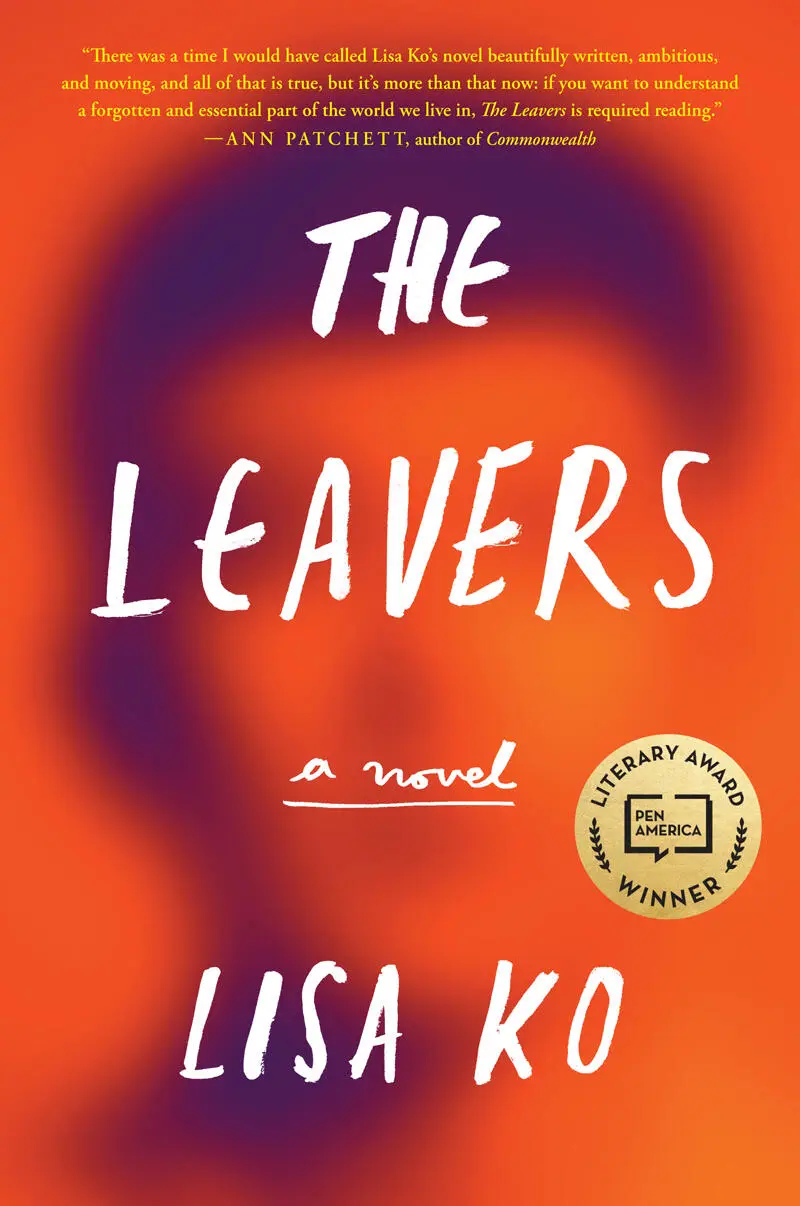
- Название:The Leavers
- Автор:
- Издательство:Algonquin Books
- Жанр:
- Год:2017
- Город:NYC
- ISBN:978-1-61620-713-7
- Рейтинг книги:3 / 5. Голосов: 1
-
Избранное:Добавить в избранное
- Отзывы:
-
Ваша оценка:
The Leavers: краткое содержание, описание и аннотация
Предлагаем к чтению аннотацию, описание, краткое содержание или предисловие (зависит от того, что написал сам автор книги «The Leavers»). Если вы не нашли необходимую информацию о книге — напишите в комментариях, мы постараемся отыскать её.
With his mother gone, eleven-year-old Deming is left mystified and bereft. Eventually adopted by a pair of well-meaning white professors, Deming is moved from the Bronx to a small town upstate and renamed Daniel Wilkinson. But far from all he's ever known, Daniel struggles to reconcile his adoptive parents' desire that he assimilate with his memories of his mother and the community he left behind.
Told from the perspective of both Daniel — as he grows into a directionless young man — and Polly, Ko's novel gives us one of fiction's most singular mothers. Loving and selfish, determined and frightened, Polly is forced to make one heartwrenching choice after another.
Set in New York and China,
is a vivid examination of borders and belonging. It's a moving story of how a boy comes into his own when everything he loves is taken away, and how a mother learns to live with the mistakes of the past.
The Leavers — читать онлайн бесплатно полную книгу (весь текст) целиком
Ниже представлен текст книги, разбитый по страницам. Система сохранения места последней прочитанной страницы, позволяет с удобством читать онлайн бесплатно книгу «The Leavers», без необходимости каждый раз заново искать на чём Вы остановились. Поставьте закладку, и сможете в любой момент перейти на страницу, на которой закончили чтение.
Интервал:
Закладка:
THE APARTMENT WAS QUIET, everyone asleep except Daniel, who was on the living room couch. He looked at a picture of Michael in a cap and gown at his high school graduation, framed and hung on the wall over the television, along with a large department-store studio portrait of Vivian, Michael, and Timothy posing against a blue backdrop. Peter and Kay had one like it in their living room, with Daniel in the middle, taken several Christmases ago at the JCPenney’s at the Littletown Mall. They had a framed picture of him from his high school graduation, too.
On the bottom shelf of a cabinet below the TV, Daniel found a row of photo albums. He removed one and flipped through the pages, saw pictures of Vivian and Timothy’s wedding, faded portraits of people he didn’t know, a younger Timothy with a full head of hair. He knew there wouldn’t be any photos with himself in them but he kept looking, album after album, as if the next page would be the one where he would finally see Deming.
PART THREE. Tilt
If we plot the supply curve and the demand curve on the same graph, we see that, in an efficient market, they intersect at an equilibrium price and quantity.” Professor Nichols pressed a button and the PowerPoint advanced, displaying a black-and-white graph. Fifty students sat at long tables arranged bleacher-style up the back of Peterson Hall, most studying their laptops, multiple chat windows dotting their screens like hungry mosquitoes. One woman in the back had headphones on, not bothering to hide her laughter as she watched a movie on her tablet.
“We call this p and q, respectively,” Professor Nichols said, twisting the end of his gray ponytail. Daniel Wilkinson sat in the next to last row, to the right of Amber Bitburger, watching the guy in front of him play online poker. The guy’s neck was pink, his back set in a hard line. He kept betting too much on terrible hands and losing, and Daniel couldn’t look away. The software that prevented him from playing was still installed on his laptop, and he hadn’t seen a game in months. Unable to stand it a moment longer — the guy’s back was so close he could almost touch it — he leaned until he was halfway over the table. The guy was wearing headphones but Daniel could hear the exact sound the cards made as they shuffled, a decisive, brassy bronze. He leaned closer. “Hey,” he whispered. Amber glanced over. “Don’t do it,” Daniel said, as the guy’s finger hovered over the bet button on an eight of clubs and a three of hearts. “Damn it!” Daniel said out loud, as the guy clicked.
The guy twisted around, his ears reddening. “What the fuck?” he hissed.
Professor Nichols said, “Gentlemen, is there a problem up there?”
Daniel slumped down. Amber looked at him and mouthed, “What was that about?”
After four months in New York City, Ridgeborough seemed smaller, shabbier, and more remote. The teenagers in the Dunkin’ Donuts appeared younger than he’d looked when he was their age, and the Food Lion, with its wide, empty aisles and piped-in Lite Oldies music, evoked gloom. There were so many cereals, so many brands of toothpaste, and yet so few people; you could practically see tumbleweeds rolling down the floor past the sodas and chips.
Summer session was a four-month semester crammed into six weeks; he was in classes weekdays from nine to five. “Good training for the working world,” Kay said. Mornings, Daniel felt like he’d been dug out of the ground and had to relearn how to walk. He would fall asleep in class, jerk awake, obsess about Psychic Hearts and the acclaim Nate was receiving that was supposed to be his.
On May 15, he had left the city at dawn, arriving in Ridgeborough in time to meet with the dean. That night, as Nate and Roland played for Hutch and Daniel’s co-workers, Daniel had apologized to Peter and Kay. “We can’t take you seriously until you take yourself seriously,” Peter said. Kay had been able to get him into two classes, in her and Peter’s departments: Comparative Politics and Microeconomics 101. Eight hours of daily lectures felt isolating, and Daniel felt aggrieved, but also committed, superior; it was good for him, like going to the dentist or holding the door for a slow-walking stranger when you were in a rush.
After Econ, Amber Bitburger, whom he used to sit behind in Mrs. Lumpkin’s sixth-grade class, walked out with him into the full heat of a June afternoon. The onslaught of sunlight made his eyes sting after a long morning inside the windowless lecture hall, where the air conditioning always seemed to be set to fifty-five degrees. He removed his sweatshirt, and, in a green Meloncholia Records T-shirt with a picture of a cantaloupe on a turntable, bared his arms for the walk across the quad.
“What was that about?’ Amber asked.
“That dude was losing hard. I wanted to help.” Daniel had looked for the guy after class, but lost him in the shuffle to leave Peterson Hall.
“A bunch of us are getting drinks on Saturday at the Black Cat,” Amber said, in her shaggy but upbeat voice. She still lived at home, still hung out with the same friends she’d had in high school, and was taking summer classes so she could finish college in three years.
“That sounds fun.” On Saturdays, Daniel would join Amber, Kelsey Ortman, and their other friends for beers at one of the two animal-named bars on Main Street in Littletown, down the hill from the Carlough campus: the Black Cat and the Spotted Cow. One week, there’d been an off-campus party, a near-duplicate of the parties he had gone to at Potsdam, white people dancing badly to corny hip-hop in a ramshackle house, beer bongs and screaming guys in baseball caps, someone barfing on the front lawn.
“They have an Open Mic there on Thursdays. Didn’t you used to be into music in high school, with Roland Fuentes?” Amber pronounced it Fen-Teez . “Wasn’t he, like a little off in high school, with the green hair? He wore eyeliner.”
“I used to play guitar. We had a few bands back then.”
Amber’s white-blonde hair was almost transparent in the sun. “A bunch of us should check out the Open Mic one night.”
“Sure, that sounds good,” Daniel said, though he couldn’t think of anything he wanted to do less.
“HARRY’S CLASS WILL BE a good entrée for you into the world of economics,” Peter said at dinner, “a solid foundation for your future. There are so many ways that knowing economic theory can help enrich your life, from tracking your budget to knowing how to manage your stock portfolio. If only they made it a required class for all undergraduates.”
Kay asked him how Melissa’s class was today. Melissa was Professor Schenkmann, a heavyset woman who wore long dresses in eighties prints, geometric overlapping shapes in hot pinks and lavenders. Daniel remembered going to her house as a kid, summer barbecues with other faculty families.
“Good,” Daniel said. Professor Schenkmann always made it a point to call on him, as if she was doing a favor to Kay, ensuring he got his tuition’s worth.
They were having broccoli and chicken Parmesan. At least Kay had ceased her efforts to cook Chinese food. These efforts flared up periodically, once after they’d visited the Hennings and Elaine had given her a cookbook, and another time after he’d gone to a weeklong camp for Chinese adoptees, where the college-aged counselors, also adoptees, talked with such bare emotion that he felt embarrassed for them. Angel had learned how to make oddly sweet won tons that summer, but he was the only kid there who had been adopted past the age of infancy, who remembered anything about his birth mother.
Kay had become careful around him, overly solicitous. He knew she worried when he went out for drinks, so he made sure to be home by midnight, which wasn’t hard; there was only so much time he could stand being around Amber and her friends. He could see how it reassured her. All it took to make her and Peter happy was to come home and go to Carlough, say he was going to GA meetings.
Читать дальшеИнтервал:
Закладка:
Похожие книги на «The Leavers»
Представляем Вашему вниманию похожие книги на «The Leavers» списком для выбора. Мы отобрали схожую по названию и смыслу литературу в надежде предоставить читателям больше вариантов отыскать новые, интересные, ещё непрочитанные произведения.





Обсуждение, отзывы о книге «The Leavers» и просто собственные мнения читателей. Оставьте ваши комментарии, напишите, что Вы думаете о произведении, его смысле или главных героях. Укажите что конкретно понравилось, а что нет, и почему Вы так считаете.