Lisa Ko - The Leavers
Здесь есть возможность читать онлайн «Lisa Ko - The Leavers» весь текст электронной книги совершенно бесплатно (целиком полную версию без сокращений). В некоторых случаях можно слушать аудио, скачать через торрент в формате fb2 и присутствует краткое содержание. Город: NYC, Год выпуска: 2017, ISBN: 2017, Издательство: Algonquin Books, Жанр: Современная проза, на английском языке. Описание произведения, (предисловие) а так же отзывы посетителей доступны на портале библиотеки ЛибКат.
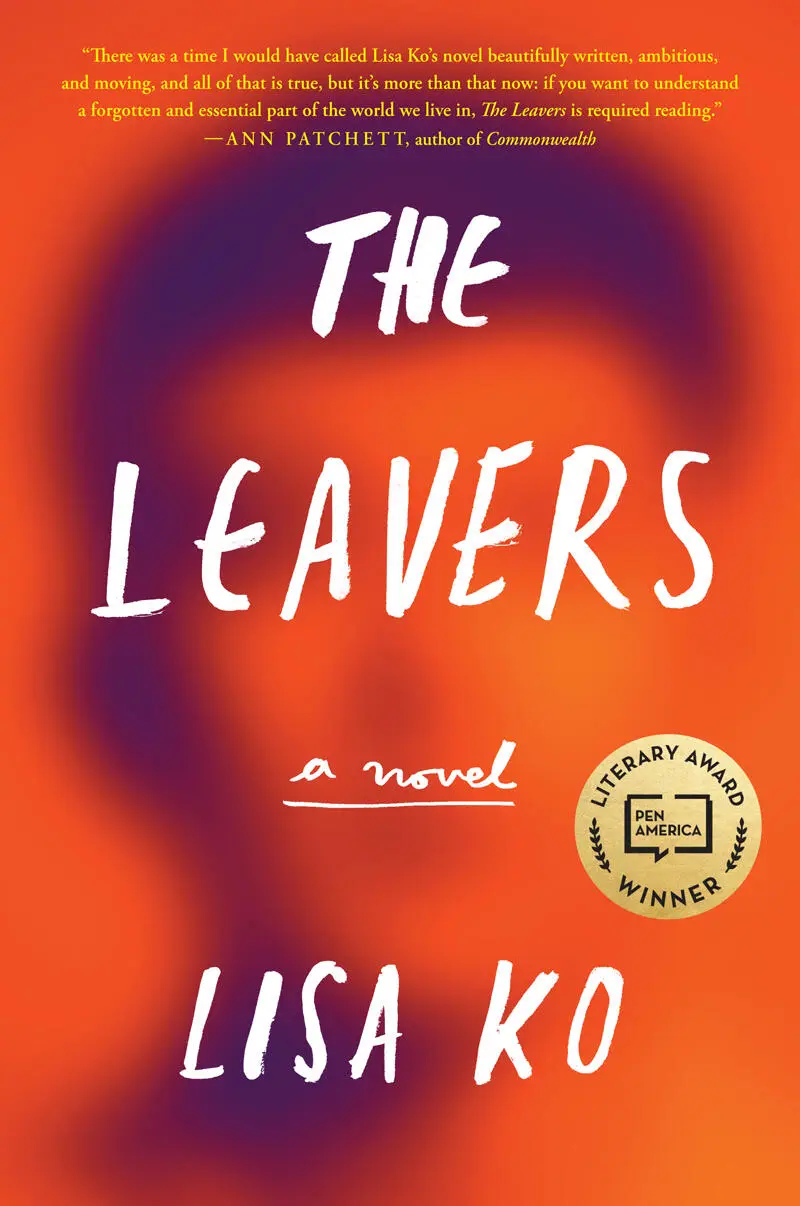
- Название:The Leavers
- Автор:
- Издательство:Algonquin Books
- Жанр:
- Год:2017
- Город:NYC
- ISBN:978-1-61620-713-7
- Рейтинг книги:3 / 5. Голосов: 1
-
Избранное:Добавить в избранное
- Отзывы:
-
Ваша оценка:
The Leavers: краткое содержание, описание и аннотация
Предлагаем к чтению аннотацию, описание, краткое содержание или предисловие (зависит от того, что написал сам автор книги «The Leavers»). Если вы не нашли необходимую информацию о книге — напишите в комментариях, мы постараемся отыскать её.
With his mother gone, eleven-year-old Deming is left mystified and bereft. Eventually adopted by a pair of well-meaning white professors, Deming is moved from the Bronx to a small town upstate and renamed Daniel Wilkinson. But far from all he's ever known, Daniel struggles to reconcile his adoptive parents' desire that he assimilate with his memories of his mother and the community he left behind.
Told from the perspective of both Daniel — as he grows into a directionless young man — and Polly, Ko's novel gives us one of fiction's most singular mothers. Loving and selfish, determined and frightened, Polly is forced to make one heartwrenching choice after another.
Set in New York and China,
is a vivid examination of borders and belonging. It's a moving story of how a boy comes into his own when everything he loves is taken away, and how a mother learns to live with the mistakes of the past.
The Leavers — читать онлайн бесплатно полную книгу (весь текст) целиком
Ниже представлен текст книги, разбитый по страницам. Система сохранения места последней прочитанной страницы, позволяет с удобством читать онлайн бесплатно книгу «The Leavers», без необходимости каждый раз заново искать на чём Вы остановились. Поставьте закладку, и сможете в любой момент перейти на страницу, на которой закончили чтение.
Интервал:
Закладка:
The city was filled with girls like me, girls who swore we’d never go home again. I wanted to work my way up to a better factory, a bigger dormitory, and eventually, my own apartment, like my friend Qing’s cousin.
Fuzhou didn’t look like the pictures of Beijing in Liling’s old book. The alleys split into streets clouded by moped exhaust, the highways were punctured with sinkholes, and the air was all chainsaws and hammering. We slept sixteen to a room, two rows of eight bunks each, decorating the walls with pictures ripped from magazines, actors and singers and landscapes of mountains and lakes. Stuffed animals dangled from the bed poles, teddy bears in shades of greens and pinks. On line for the bathroom at five thirty in the morning, we complained about our thirteen-hour shifts as if we were much older women, discussing aching shoulders and imitating Foreman Tung. I did good imitations. I would lean into the bunks and yell, “Go, slowpokes, go, you turtles!” and emit a low snort my bunkmates agreed was exactly like his. “Not fast enough! You missed a thread!” The other girls would double over with laughter.
I sent home two hundred seventy yuan one month, two hundred forty the next. “You only made this much?” Yi Ba said on the phone. I said I’d try to send more, though the money I wired was twice what Yi Ba made on the boat. When I called to tell him that I’d made two hundred yuan in three weeks, he said, “Guess I taught you well.” Later, the neighbors would tell me he bragged about me, said I was more hard working than any boy. When they found out how much I was earning, they no longer said it was improper for girls to be living alone in the city. They let their own daughters go; they made their daughters go.
Soon Yi Ba had a television, the biggest one on 3 Alley, and when he came home from another crap day at the sea there would be four or five children lying gape-mouthed in front of the screen, drooling at a fuzzy historical drama, and by nightfall this crowd would swell to nine or ten or eleven or fourteen children, splitting peanuts between their teeth and tossing the shells across the room. When Yi Ba walked to the outhouse the shells would crunch and poke at his feet. “Go home,” I pictured him saying, but not really meaning it, and he would be sad when other parents purchased televisions with money their older kids sent from the city and his nights were quiet again.
Two months after I left Minjiang, Haifeng’s parents sent him to the city. As I snipped threads, he fit plastic spools into cassette tapes at an electronics factory on the other side of the highway, and we seldom had the same days off. When he first arrived he called the communal phone in my dormitory every week, though he rarely got through to me. I didn’t think of him often, only missed him during the few times I was by myself, when I’d worry I wasn’t doing enough for Yi Ba.
Mostly, I spent my free time with Xuan and Qing. The three of us had matching jeans, tight blue with a silver star on each butt cheek, and on afternoons off we paraded down the street arm in arm, moving in sync like the world existed only to watch us. We danced to cassette tapes Qing played on her Walkman, pop songs about true love and heartbreak. I memorized the words to the songs; I wrote them down in a hot pink notebook. There was a store that blared music from big speakers, with racks of colorful cassettes. My favorite songs were about girls who’d been treated badly by boys but were now happy on their own.
Xuan, who was the prettiest girl in our dorm room, with thick hair and puffy lips, had a city lover, a man who was nearly thirty. Her boyfriend, who had stayed in their village for high school, didn’t know about the older man. I asked why she didn’t leave her boyfriend, and she said she had to keep her options open because her city lover already had a fiancée who also had urban hukou, and she didn’t want to marry him, anyway. He bought her sweaters and pointy shoes and gave her spending money she sent home to her younger siblings. I was impressed by how matter-of-fact she was.
“My boyfriend’s ba wa is long and skinny,” Xuan announced. We were hanging out in the dormitory bunks before bedtime. “And my city lover’s is shorter, but fatter.” She ran her hands through her hair and pulled it over her shoulder.
“Shorter and fatter is better than long and skinny.” Qing wrinkled her nose and shivered elaborately. Her eyes were set far apart, and she was a little chubby. She had an older cousin who lived with four roommates in an apartment near downtown Fuzhou, and one Sunday the three of us had visited, taking buses across the city. Afterwards, I couldn’t stop thinking about the apartment with its own flush toilet, the closet where the roommates kept their clothes and shoes. I wanted Yi Ba to visit me in my own apartment, remove a pair of guest slippers from my closet.
“My city lover has more experience,” Xuan said. “He likes to do it standing up.”
“Oh,” said Qing, exposing the crooked incisor she usually tried to hide. “That’s nice.”
Xuan turned to me. “What about you, Peilan? Which do you prefer?”
A checkered bedsheet hung over the edge of the top bunk. “Long and skinny, I guess.” I hadn’t had sex with Haifeng, but my friends didn’t know this.
“You need to compare. What if you say you like long and skinny and you’ve never had short and fat? You’ll never know which you’d truly like the best.” Xuan pursed her lips at the tragedy.
“Rural people don’t shop around,” Qing said, though she was from a village so small it didn’t even have a road. “Shop around more, sister.”
“You could get a city man if you had this.” Xuan removed a lace bra from a bag printed with the name of the store: LOVERS. The bra had two heart-shaped cutouts, and the panties had a heart printed on the crotch. “My city lover bought these for me.”
ONE NIGHT, WHEN I was late getting back to the dormitory, Qing and Xuan went to eat without me, and I listened to my other dorm mates talk about getting jobs at newer factories. The room was hot and stuffy. It had been so long since I’d smelled clear air or seen the sea.
I went downstairs and waited for the phone booth. After being passed to three people on the other end of the line, I reached Haifeng.
“Peilan.” It had been months since we had talked. “You called me.”
You called me. “Can you meet me next week?”
We went to a motel Xuan recommended. Lied about our ages and bribed the desk clerk with my money. My initial excitement shriveled when I felt Haifeng’s clammy fingers and saw, when he removed his clothes, that he was scrawnier than before. But I had already resolved to become a grown-up like Xuan.
The first time was over too quickly. We tried again.
“I missed you so much.” Haifeng kissed my cheeks and shoulders. “My sweetheart.” I smoked one of his cigarettes as he slept and looked out the smudgy window at the construction scaffolding of another building in progress. Then I left early and returned to the dorm.
My period didn’t come for two months in a row. How can I tell you how scared I was? My snipping grew sloppier, and Foreman Tung said he would fire me if I didn’t shape up. In the motel room, Haifeng had said things like “when we move back to the village” and “when we’re living together as husband and wife.” I lay awake at night, saw the long march through the village in a rent-by-the-hour wedding gown, seamy with sweat from the armpits of the last bride and the bride before that, the neighbors snickering about the upcoming wedding night. If I told Haifeng I was pregnant, he would act like marriage was inevitable. He would expect me to be happy, or worse, grateful. I saw it written to the end, all the years of my life: village, 3 Alley, babies, me and Haifeng hating each other to death.
Читать дальшеИнтервал:
Закладка:
Похожие книги на «The Leavers»
Представляем Вашему вниманию похожие книги на «The Leavers» списком для выбора. Мы отобрали схожую по названию и смыслу литературу в надежде предоставить читателям больше вариантов отыскать новые, интересные, ещё непрочитанные произведения.



Обсуждение, отзывы о книге «The Leavers» и просто собственные мнения читателей. Оставьте ваши комментарии, напишите, что Вы думаете о произведении, его смысле или главных героях. Укажите что конкретно понравилось, а что нет, и почему Вы так считаете.