Sarah Waters - The Night Watch
Здесь есть возможность читать онлайн «Sarah Waters - The Night Watch» весь текст электронной книги совершенно бесплатно (целиком полную версию без сокращений). В некоторых случаях можно слушать аудио, скачать через торрент в формате fb2 и присутствует краткое содержание. Жанр: Современная проза, на английском языке. Описание произведения, (предисловие) а так же отзывы посетителей доступны на портале библиотеки ЛибКат.
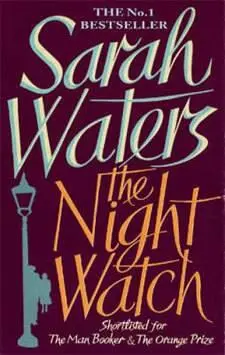
- Название:The Night Watch
- Автор:
- Жанр:
- Год:неизвестен
- ISBN:нет данных
- Рейтинг книги:4 / 5. Голосов: 1
-
Избранное:Добавить в избранное
- Отзывы:
-
Ваша оценка:
The Night Watch: краткое содержание, описание и аннотация
Предлагаем к чтению аннотацию, описание, краткое содержание или предисловие (зависит от того, что написал сам автор книги «The Night Watch»). Если вы не нашли необходимую информацию о книге — напишите в комментариях, мы постараемся отыскать её.
The structure of The Night Watch is worth remarking upon as it begins at the end in 1947. The second section takes us back to 1944, and the third and final section is set in 1941. The decision to use this type of structure is brave, even foolhardy, because of the problems in pulling it off convincingly, but Waters’ subtlety and restraint in pulling back the layers reveals the extent of her authorial control.
This novel is essentially concerned with five main characters (Kay, Viv, Helen, Julia and Viv’s brother, Duncan) and their separate private lives. The connections between these people are also elemental to the narrative. Coincidence plays a significant role in the unfolding of past events as their lives are shown to overlap. This use of coincidence has been a feature of Waters’ previous novels, but this time she uses it casually, and as an extra element, rather than for the purposes of manipulating the plot out of hand as was deemed necessary in a melodrama such as Fingersmith.
The love stories of Kay, Viv and Helen are central and, as the narrative traces back to 1941, we learn how their present views of relationships have been shaped by these past events. As with her previous novels, Waters continues to use lesbian relationships as a main focus of the narrative, but shifts away to examine the affair between Viv and Reggie, and the horrific illegal abortion she undergoes to spare her father from further shame.
Repression becomes a touchstone as many of the characters keep a secret or carry a weight of shame. The converse of this theme of fear of discovery is the examination of bravery. This is most notable in the second and third sections which are, necessarily, concerned with the bombing of London. A re-evaluation of the definition of courage is undertaken and is perhaps most poignant in the prison scene, where Duncan ’s cell mate, conscientious objector Fraser, asks himself if he is ‘simply a – a bloody coward’ when he is overwhelmed by the fear of death. The deconstruction of received morality, of what is to be brave or selfish in this time of heightened emotions, is also examined when Helen considers the effect the war has had on her ethics: ‘In the first blitz, she’d tried to help everyone; she’d given money to people, sometimes, from her own purse. But the war made you careless. You started off, she thought sadly, imagining you’d be a kind of heroine. You end up thinking only of yourself.’
The reason for Duncan ’s imprisonment is one of the well-kept secrets of the novel and is only (partially) explained in the third section. This use of the hidden truth and the hints at the unspoken strengthen the evocation of the period, where loose lips could potentially sink ships, and walls had ears. When revelations are made, they are, more often than not, as subdued as the repressed tone permits and this allows the novel to maintain the same pace throughout.
Despite this steady pace, Waters still enables the readers to see how the war also had a liberating effect on women such as Kay. Her gallantry and masculine demeanour was of use during the bombings whilst she worked as an ambulance driver, but in the beginning of the novel, in 1947, it is clear that with the return to peace time her short hair and male clothing are once more worthy of ridicule.
As with all of Waters’ novels, The Night Watch has been praised by critics for the attention to detail and meticulous research. This work stretches beyond the limits of the previous three, though, and is certainly her most impressive to date. Her control in depicting the central characters gradually is in itself an indicator of skilful writing. As this is also combined with a believable and interested evocation of period and place, this novel must be recommended highly.
The Night Watch — читать онлайн бесплатно полную книгу (весь текст) целиком
Ниже представлен текст книги, разбитый по страницам. Система сохранения места последней прочитанной страницы, позволяет с удобством читать онлайн бесплатно книгу «The Night Watch», без необходимости каждый раз заново искать на чём Вы остановились. Поставьте закладку, и сможете в любой момент перейти на страницу, на которой закончили чтение.
Интервал:
Закладка:
She had been all the way back to John Adam House, in her lunch-hour; she'd gone back there to check the post. For she knew there'd be a card for her, from Reggie: he always sent her a note after one of their Saturdays; it was the only way he had of telling her he was all right. The card, this time, was a picture postcard with a daft illustration on it, a soldier and a pretty girl in the black-out, the soldier winking and the caption underneath saying, Keeping it dark . Next to this Reggie had written, Lucky ****ers!!! And on the back he'd put: G . G .-that meant Glamour Girl. Looked for brunette, but could only find blondes . Wish I was him amp; she was you! xxx . She had the card in her bag now, beside the box of aspirin.
It was quarter past two, and her room was up on the seventh floor. She might have taken the lift-but the lifts were slow, and she'd got stuck waiting about for them before; she kept to the stairs. She went quickly, steadily, like a distance runner: folding her arms beneath her breasts; keeping her heels up, because the stairs were hard, of marble, and heels made a row. When she passed a man, he laughed. 'I say! What's the rush? Do you know something the rest of us don't?' That made her slacken her pace slightly, until he'd moved on; then she speeded up again. Only at the turn of the seventh floor did she slow right down, to catch her breath, to blot her face with her handkerchief and smooth her hair.
A mad sort of noise began to reach her now, a crackety-crack-crack-crack! -it was like the bursting of midget shells. She went quickly down a corridor and opened a door, and the noise grew almost defeaning: the room beyond was crowded with desks, each with a girl at it, furiously typing. Some wore earphones; most were typing from shorthand notes. They were plunging away so vigorously because their machines held not just one sheet of paper, but two or three and sometimes four, with carbons in between. The room was large, but stuffy. The windows had been gas-proofed years before. The panes had strips of brown paper gummed to them in case of blast.
The smell was a rather overpowering one: a mixture of talcum powder, permanent waves, typewriter ink, cigarette smoke, BO. On the walls were posters from various Ministry campaigns: pictures of Potato Pete and other cheery root vegetables, imploring you to boil them up and eat them; slogans, like old religious samplers.
PLANT NOW!
SPRING and SUMMER will come as usual- EVEN in WARTIME .
At the head of the room was a table, separated from the others; its chair was empty. But a minute after Viv had sat down, taken off her typewriter's cover and started work, the door to Mr Archer's office opened and Miss Gibson looked in. She glanced once around the room and, seeing the girls all typing away, disappeared again.
The moment the door was closed, Viv felt something small and light strike her on the shoulder and bounce to the floor. Betty had thrown a paperclip at her from her desk ten feet away.
'You lead a charmed life, Pearce,' she mouthed, when Viv looked over.
Viv stuck out her tongue, and went back to her work.
She was typing up a table, a list of foodstuffs and their calorific values-a fiddly job, since you had to type the vertical columns first, with the right sort of space between them, and then you had to take the papers out and put them back in horizontally and type the lines. And you had to do it all, of course, without letting the papers slide about against each other, otherwise the top sheet would look all right, but the copies underneath would turn out crazy…
What with the effort of getting it right, and the noisiness and stuffiness of the room, you might as well, Viv thought, be working in a factory, making precision parts for planes. You'd probably earn more in a factory. And yet people thought it glamorous, when you told them you were a typist at a Ministry; and lots of the girls were upper-class-they had names like Nancy, Minty, Felicity, Daphne, Faye. Viv had nothing much in common with any of them. Even Betty-who chewed gum, and liked to talk like a wise-cracking New York waitress in a film-even Betty had been to a finishing school, and had money coming out of her ears.
Viv, by contrast, had come to the job after completing a secretarial course at a college in Balham; she'd had a nice instructor there, who'd encouraged her to apply. 'There's really no reason, these days,' the instructor had said, 'why a girl with a background like yours shouldn't do just as well for herself as a girl from a better sort of family.' She'd advised Viv to take elocution lessons, that was all; and so, for half an hour each week for three months, Viv had stood blushing in front of an elderly actress in a basement room in Kennington, reciting poetry. She could still remember whole chunks of Walter de la Mare.
'Is there anybody there?' said the traveller,
Knocking on the moonlit door;
And his horse in the silence champ'd the grasses
Of the forest's ferny floor .
On the day of her interview, the sight and sound of the well-bred young women in the Ministry waiting-room had absolutely appalled her. One had said carelessly, 'Oh, it'll be a cinch, girls! They'll just want to see that our hair's not dyed, and that we don't use words like dad and toilet and horrors like that.'
The interview had passed off all right, as it happened. But Viv could never hear the word 'toilet', even now, after so long, without remembering that moment, and that girl.
When all the trouble with Duncan had started up, she had kept it to herself. No-one, not even Betty, knew she had a brother at all. Early on in the war girls at John Adam House had now and then asked her, in the blunt, casual way that people asked you things like that: 'Don't you have a brother, Viv? Lucky you! Brothers are awful, I can't bear mine.' These days, however, no-one asked after brothers, boyfriends, husbands-just in case.
She finished the table she'd been typing, and started on another. The girl at the desk in front of her-a girl named Millicent-leaned back in her chair and shook her head. A hair came flying on to the paper in Viv's machine: it was long, and brown, quite dry through having been over-waved, but it had a blob of grease on it like a pin-head, where it had been fixed to Millicent's scalp. Viv blew it to the floor. She'd discovered that if you looked closely at the floor at this time of day, you could see that it was full of hairs like that. She thought, sometimes, of the amazing amount of tangled hair that must end up in the char ladies' brooms, when they'd gone through the building and finished sweeping… The thought, just now-on top of the smells and general stuffiness of the room-depressed her rather. For how fed-up she was, she realised, of living with women! How absolutely sick to death she was, of the closeness of so many girls! Of powder! Of scent! Of lipstick marks on the rims of cups and the ends of pencils! Of razored armpits and razored legs! Of bottles of veramon and boxes of aspirin!
That made her think of the aspirin in her bag; and her mind moved from that to Reggie's card. She pictured Reggie writing it, posting it. She saw his face, heard his voice, felt the touch of him-and began to miss him, dreadfully. She started to count up all the different dingy hotel rooms they'd made love in. She thought of all the times he'd had to leave her, to go to his mother-in-law's, to his wife. 'I wish it was you I was going home to,' he always said… She knew he meant it. God knows what his wife thought about it. Viv wouldn't let herself wonder. She'd never been the sort to ask things about his family, to pry and make digs. She'd seen a picture of his wife and little boy, but that was years ago. Since then, she might have passed them on the street! She might meet them in a bus, on a train, get talking. ' What nice, handsome children .'-' Do you think so? They're the image of their dad . Let me show you a snapshot -'
Читать дальшеИнтервал:
Закладка:
Похожие книги на «The Night Watch»
Представляем Вашему вниманию похожие книги на «The Night Watch» списком для выбора. Мы отобрали схожую по названию и смыслу литературу в надежде предоставить читателям больше вариантов отыскать новые, интересные, ещё непрочитанные произведения.








Обсуждение, отзывы о книге «The Night Watch» и просто собственные мнения читателей. Оставьте ваши комментарии, напишите, что Вы думаете о произведении, его смысле или главных героях. Укажите что конкретно понравилось, а что нет, и почему Вы так считаете.