Sarah Waters - The Night Watch
Здесь есть возможность читать онлайн «Sarah Waters - The Night Watch» весь текст электронной книги совершенно бесплатно (целиком полную версию без сокращений). В некоторых случаях можно слушать аудио, скачать через торрент в формате fb2 и присутствует краткое содержание. Жанр: Современная проза, на английском языке. Описание произведения, (предисловие) а так же отзывы посетителей доступны на портале библиотеки ЛибКат.
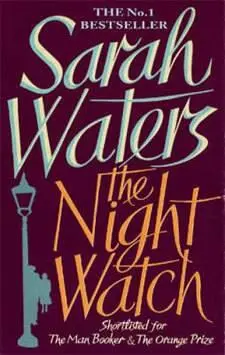
- Название:The Night Watch
- Автор:
- Жанр:
- Год:неизвестен
- ISBN:нет данных
- Рейтинг книги:4 / 5. Голосов: 1
-
Избранное:Добавить в избранное
- Отзывы:
-
Ваша оценка:
The Night Watch: краткое содержание, описание и аннотация
Предлагаем к чтению аннотацию, описание, краткое содержание или предисловие (зависит от того, что написал сам автор книги «The Night Watch»). Если вы не нашли необходимую информацию о книге — напишите в комментариях, мы постараемся отыскать её.
The structure of The Night Watch is worth remarking upon as it begins at the end in 1947. The second section takes us back to 1944, and the third and final section is set in 1941. The decision to use this type of structure is brave, even foolhardy, because of the problems in pulling it off convincingly, but Waters’ subtlety and restraint in pulling back the layers reveals the extent of her authorial control.
This novel is essentially concerned with five main characters (Kay, Viv, Helen, Julia and Viv’s brother, Duncan) and their separate private lives. The connections between these people are also elemental to the narrative. Coincidence plays a significant role in the unfolding of past events as their lives are shown to overlap. This use of coincidence has been a feature of Waters’ previous novels, but this time she uses it casually, and as an extra element, rather than for the purposes of manipulating the plot out of hand as was deemed necessary in a melodrama such as Fingersmith.
The love stories of Kay, Viv and Helen are central and, as the narrative traces back to 1941, we learn how their present views of relationships have been shaped by these past events. As with her previous novels, Waters continues to use lesbian relationships as a main focus of the narrative, but shifts away to examine the affair between Viv and Reggie, and the horrific illegal abortion she undergoes to spare her father from further shame.
Repression becomes a touchstone as many of the characters keep a secret or carry a weight of shame. The converse of this theme of fear of discovery is the examination of bravery. This is most notable in the second and third sections which are, necessarily, concerned with the bombing of London. A re-evaluation of the definition of courage is undertaken and is perhaps most poignant in the prison scene, where Duncan ’s cell mate, conscientious objector Fraser, asks himself if he is ‘simply a – a bloody coward’ when he is overwhelmed by the fear of death. The deconstruction of received morality, of what is to be brave or selfish in this time of heightened emotions, is also examined when Helen considers the effect the war has had on her ethics: ‘In the first blitz, she’d tried to help everyone; she’d given money to people, sometimes, from her own purse. But the war made you careless. You started off, she thought sadly, imagining you’d be a kind of heroine. You end up thinking only of yourself.’
The reason for Duncan ’s imprisonment is one of the well-kept secrets of the novel and is only (partially) explained in the third section. This use of the hidden truth and the hints at the unspoken strengthen the evocation of the period, where loose lips could potentially sink ships, and walls had ears. When revelations are made, they are, more often than not, as subdued as the repressed tone permits and this allows the novel to maintain the same pace throughout.
Despite this steady pace, Waters still enables the readers to see how the war also had a liberating effect on women such as Kay. Her gallantry and masculine demeanour was of use during the bombings whilst she worked as an ambulance driver, but in the beginning of the novel, in 1947, it is clear that with the return to peace time her short hair and male clothing are once more worthy of ridicule.
As with all of Waters’ novels, The Night Watch has been praised by critics for the attention to detail and meticulous research. This work stretches beyond the limits of the previous three, though, and is certainly her most impressive to date. Her control in depicting the central characters gradually is in itself an indicator of skilful writing. As this is also combined with a believable and interested evocation of period and place, this novel must be recommended highly.
The Night Watch — читать онлайн бесплатно полную книгу (весь текст) целиком
Ниже представлен текст книги, разбитый по страницам. Система сохранения места последней прочитанной страницы, позволяет с удобством читать онлайн бесплатно книгу «The Night Watch», без необходимости каждый раз заново искать на чём Вы остановились. Поставьте закладку, и сможете в любой момент перейти на страницу, на которой закончили чтение.
Интервал:
Закладка:
And then he moved back, and put aside the black-out curtain, so that Duncan could climb in.
'Ah, Miss Langrish,' said Mr Leonard, drawing open his door.
Kay gave a jump. She had been going softly up the darkened staircase, but a creaking board must have given her away. Mr Leonard, she guessed, had been sitting up alone in his treatment room-making his night watch, sending out prayers. He was dressed in his shirt-sleeves, the cuffs rolled back. He had put on the indigo-coloured lamp he used when healing at night, and the blue of it lit the landing strangely.
He stood in his doorway, his face in shadow. He said quietly, 'I've been thinking of you tonight, Miss Langrish. How are you?'
She told him she was well. He said, 'You've been out, I imagine, enjoying the evening?' He tilted his head and added, 'You've seen old friends?'
'I've been to a cinema,' she answered quickly.
He nodded, as if sagely. 'A cinema, yes. Such curious places, I always think. Such instructive places… Next time you go to a cinema, Miss Langrish, you ought to just try something. Just turn your head and look over your shoulder. What will you find? So many faces, all lit by the restless, flickering light of impermanent things. Eyes fixed, and wide, with awe, with terror or with lust… Just so, you see, is the unevolved spirit held in thrall by material sense; by fictions and by dreams…'
His voice was low, level, compelling. When she said nothing, he came closer to her and gently caught hold of her hand. He said, 'I think you are one of those spirits, Miss Langrish. I think you are searching, but held in thrall. That is because you are searching with your eyes cast down, seeing nothing but dust. You must lift up your gaze, my dear. You must learn to look away from perishable things.'
His palm and fingertips were soft, and his grip seemed gentle; even so, she had to make a little effort in order to draw her hand away. She said, 'I will. I- Thank you, Mr Leonard'-sounding ridiculous to herself, her voice thick, uncertain, not at all like her own. She moved from him: went gracelessly up the staircase to her room; fumbled with the lock of it before she got the door open and went inside.
She waited for the click of Mr Leonard's door downstairs and then, without putting on the light, crossed to her armchair and sat down. Her foot struck something as she went, and sent it rustling over the rucked-up rug: she'd left a newspaper, open, on the floor. On the arm of her chair was a dirty plate and an old tin pie-dish, overflowing with ash and cigarette stubs. A shirt and some collars that she had recently washed were hanging from a string in the fireplace, pale and flimsy-looking in the gloom.
She kept still for a moment, then put her hand to her pocket and brought out that ring. It felt bulky to her touch, and the finger on which she'd used to wear it was too slim, now, to keep it in place. When she had taken it, in the street, it had still been warm from Viv's hand. She had sat in the cinema, staring unseeingly at the roaring, twitching pantomime being played out on the screen, turning the gold band over and over, running her fingertips across all its little scratches and dents… At last, unable to bear it, she'd clumsily put the ring away and got to her feet; had stumbled along the cinema row, gone quickly through the foyer, and out into the street.
Since then she had been walking. She'd walked to Oxford Street, to Rathbone Place, to Bloomsbury-restless and searching, just as Mr Leonard had guessed. She'd thought of going back to Mickey's boat-had got as far as Paddington, even, before she'd given the idea up. For, what was the point? She'd gone into a pub instead, and had a couple of whiskeys. She'd bought a drink for a blonde-haired girl; that had made her feel better.
After that she'd come wearily home to Lavender Hill. Now she felt exhausted. She turned the ring in her fingers as she'd turned it in the cinema, but even the slight weight of it seemed too heavy for her hand. She gazed about, listlessly, for somewhere to put it-and finally dropped it into the pie-dish, amongst the cigarette stubs.
But it lay there gleaming, undimmed by ash; it kept drawing her eye, and after a minute she fished it out again and rubbed it clean. She put it back on her slender finger; and closed her fist, to keep it from slipping.
The house was still. All London seemed still. Only, presently, did there rise, from the room below, the muffled throb of Mr Leonard's murmur, that told her he was hard at work again; and she pictured him, bathed in indigo electric light: hunched and watchful, sending out his fierce benediction into the fragility of the night.
1944
1
Every time Viv and her father came out of the prison they had to stop for a minute or two so that Mr Pearce could rest, could get out his handkerchief and wipe his face. It was as though the visits knocked the breath from him. He'd gaze back at the quaint, grey, medieval-looking gate like a man who'd just been punched. 'If I'd ever thought,' he'd say, or, 'If someone had told me.'
'Thank God your mother's not here, Vivien, to have to see this,' he said today.
Viv took his arm. 'At least it's not for much longer.' She spoke clearly, so that he would hear. 'Remember what we said, at the start? We said, “It's not for ever.”'
He blew his nose. 'That's right. That's true.'
They started to walk. He insisted on carrying her satchel for her, but she might as well have been holding it herself: he seemed to lean against her with all his weight, and every so often he let out his breath in a little puff. He could have been her grandfather, she thought. All this business with Duncan had made an old man of him.
The February day had been cold, but bright. Now it was quarter to five and the sun was setting: there were a couple of barrage balloons up and they were the only things that still caught the light, drifting pinkly, vividly, in the darkening sky. Viv and her father walked along towards Wood Lane. There was a café, close to the station, where they usually stopped. When they reached it today, however, they found women there, whose faces they recognised: the girlfriends and wives of men in other parts of the prison. They were freshening up their make-up, peering into compacts; laughing their heads off. Viv and her father walked on to another place. They went in, and bought cups of tea.
This café was not so nice as the other. There was one spoon, to be used by all, tied to the counter by a piece of string. The tables were covered with greasy oilcloths, and the steamed-up window had patches and smears where men must have leaned their heads against it as they lolled in their chairs. But her father, Viv thought, saw none of this. He still moved as though winded or bewildered. He sat, and lifted his cup to his mouth, and his hand was shaking: he had to dip his head and quickly sip at the tea before it should spill. And when he rolled himself a cigarette the tobacco fell from the paper. She put down her own cup and helped him pick up the strands from the table-using her long nails, making a joke of it.
He was a little calmer after his smoke. He finished his tea, and they walked together to the Underground-going quickly now, feeling the cold. He had a long journey home to Streatham, but she was going, she said, back to work at Portman Square-working extra hours to make up for the ones she'd taken off in order to visit Duncan. They sat side by side in the train, unable to talk because of the roar and rattle of it. When she got out at Marble Arch he got out with her, to say goodbye on the platform.
The platform was one that was used as a shelter in the night. There were bunks, buckets, a litter of papers, a sour uriney smell. People were already coming in, kids and old ladies, settling down.
Читать дальшеИнтервал:
Закладка:
Похожие книги на «The Night Watch»
Представляем Вашему вниманию похожие книги на «The Night Watch» списком для выбора. Мы отобрали схожую по названию и смыслу литературу в надежде предоставить читателям больше вариантов отыскать новые, интересные, ещё непрочитанные произведения.







Обсуждение, отзывы о книге «The Night Watch» и просто собственные мнения читателей. Оставьте ваши комментарии, напишите, что Вы думаете о произведении, его смысле или главных героях. Укажите что конкретно понравилось, а что нет, и почему Вы так считаете.