Barbara Kingsolver - The Poisonwood Bible
Здесь есть возможность читать онлайн «Barbara Kingsolver - The Poisonwood Bible» весь текст электронной книги совершенно бесплатно (целиком полную версию без сокращений). В некоторых случаях можно слушать аудио, скачать через торрент в формате fb2 и присутствует краткое содержание. Жанр: Современная проза, на английском языке. Описание произведения, (предисловие) а так же отзывы посетителей доступны на портале библиотеки ЛибКат.

- Название:The Poisonwood Bible
- Автор:
- Жанр:
- Год:неизвестен
- ISBN:нет данных
- Рейтинг книги:4 / 5. Голосов: 1
-
Избранное:Добавить в избранное
- Отзывы:
-
Ваша оценка:
The Poisonwood Bible: краткое содержание, описание и аннотация
Предлагаем к чтению аннотацию, описание, краткое содержание или предисловие (зависит от того, что написал сам автор книги «The Poisonwood Bible»). Если вы не нашли необходимую информацию о книге — напишите в комментариях, мы постараемся отыскать её.
Oprah Book Club® Selection, June 2000: As any reader of The Mosquito Coast knows, men who drag their families to far-off climes in pursuit of an Idea seldom come to any good, while those familiar with At Play in the Fields of the Lord or Kalimantaan understand that the minute a missionary sets foot on the fictional stage, all hell is about to break loose. So when Barbara Kingsolver sends missionary Nathan Price along with his wife and four daughters off to Africa in The Poisonwood Bible, you can be sure that salvation is the one thing they're not likely to find. The year is 1959 and the place is the Belgian Congo. Nathan, a Baptist preacher, has come to spread the Word in a remote village reachable only by airplane. To say that he and his family are woefully unprepared would be an understatement: "We came from Bethlehem, Georgia, bearing Betty Crocker cake mixes into the jungle," says Leah, one of Nathan's daughters. But of course it isn't long before they discover that the tremendous humidity has rendered the mixes unusable, their clothes are unsuitable, and they've arrived in the middle of political upheaval as the Congolese seek to wrest independence from Belgium. In addition to poisonous snakes, dangerous animals, and the hostility of the villagers to Nathan's fiery take-no-prisoners brand of Christianity, there are also rebels in the jungle and the threat of war in the air. Could things get any worse?
In fact they can and they do. The first part of The Poisonwood Bible revolves around Nathan's intransigent, bullying personality and his effect on both his family and the village they have come to. As political instability grows in the Congo, so does the local witch doctor's animus toward the Prices, and both seem to converge with tragic consequences about halfway through the novel. From that point on, the family is dispersed and the novel follows each member's fortune across a span of more than 30 years.
The Poisonwood Bible is arguably Barbara Kingsolver's most ambitious work, and it reveals both her great strengths and her weaknesses. As Nathan Price's wife and daughters tell their stories in alternating chapters, Kingsolver does a good job of differentiating the voices. But at times they can grate-teenage Rachel's tendency towards precious malapropisms is particularly annoying (students practice their "French congregations"; Nathan's refusal to take his family home is a "tapestry of justice"). More problematic is Kingsolver's tendency to wear her politics on her sleeve; this is particularly evident in the second half of the novel, in which she uses her characters as mouthpieces to explicate the complicated and tragic history of the Belgian Congo.
Despite these weaknesses, Kingsolver's fully realized, three-dimensional characters make The Poisonwood Bible compelling, especially in the first half, when Nathan Price is still at the center of the action. And in her treatment of Africa and the Africans she is at her best, exhibiting the acute perception, moral engagement, and lyrical prose that have made her previous novels so successful. -Alix Wilber
From Publishers Weekly
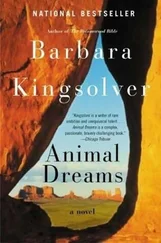
In this risky but resoundingly successful novel, Kingsolver leaves the Southwest, the setting of most of her work (The Bean Trees; Animal Dreams) and follows an evangelical Baptist minister's family to the Congo in the late 1950s, entwining their fate with that of the country during three turbulent decades. Nathan Price's determination to convert the natives of the Congo to Christianity is, we gradually discover, both foolhardy and dangerous, unsanctioned by the church administration and doomed from the start by Nathan's self-righteousness. Fanatic and sanctimonious, Nathan is a domestic monster, too, a physically and emotionally abusive, misogynistic husband and father. He refuses to understand how his obsession with river baptism affronts the traditions of the villagers of Kalinga, and his stubborn concept of religious rectitude brings misery and destruction to all. Cleverly, Kingsolver never brings us inside Nathan's head but instead unfolds the tragic story of the Price family through the alternating points of view of Orleanna Price and her four daughters. Cast with her young children into primitive conditions but trained to be obedient to her husband, Orleanna is powerless to mitigate their situation. Meanwhile, each of the four Price daughters reveals herself through first-person narration, and their rich and clearly differentiated self-portraits are small triumphs. Rachel, the eldest, is a self-absorbed teenager who will never outgrow her selfish view of the world or her tendency to commit hilarious malapropisms. Twins Leah and Adah are gifted intellectually but are physically and emotionally separated by Adah's birth injury, which has rendered her hemiplagic. Leah adores her father; Adah, who does not speak, is a shrewd observer of his monumental ego. The musings of five- year-old Ruth May reflect a child's humorous misunderstanding of the exotic world to which she has been transported. By revealing the story through the female victims of Reverend Price's hubris, Kingsolver also charts their maturation as they confront or evade moral and existential issues and, at great cost, accrue wisdom in the crucible of an alien land. It is through their eyes that we come to experience the life of the villagers in an isolated community and the particular ways in which American and African cultures collide. As the girls become acquainted with the villagers, especially the young teacher Anatole, they begin to understand the political situation in the Congo: the brutality of Belgian rule, the nascent nationalism briefly fulfilled in the election of the short-lived Patrice Lumumba government, and the secret involvement of the Eisenhower administration in Lumumba's assassination and the installation of the villainous dictator Mobutu. In the end, Kingsolver delivers a compelling family saga, a sobering picture of the horrors of fanatic fundamentalism and an insightful view of an exploited country crushed by the heel of colonialism and then ruthlessly manipulated by a bastion of democracy. The book is also a marvelous mix of trenchant character portrayal, unflagging narrative thrust and authoritative background detail. The disastrous outcome of the forceful imposition of Christian theology on indigenous natural faith gives the novel its pervasive irony; but humor is pervasive, too, artfully integrated into the children's misapprehensions of their world; and suspense rises inexorably as the Price family's peril and that of the newly independent country of Zaire intersect. Kingsolver moves into new moral terrain in this powerful, convincing and emotionally resonant novel.
The Poisonwood Bible — читать онлайн бесплатно полную книгу (весь текст) целиком
Ниже представлен текст книги, разбитый по страницам. Система сохранения места последней прочитанной страницы, позволяет с удобством читать онлайн бесплатно книгу «The Poisonwood Bible», без необходимости каждый раз заново искать на чём Вы остановились. Поставьте закладку, и сможете в любой момент перейти на страницу, на которой закончили чтение.
Интервал:
Закладка:
Home, home, home, home, I prayed. If the problem was big enough, we’d just have to go home. We could get on that plane tomorrow and fly right straight out of here, if only he would say so.
Father got up and came to stand in the doorway, facing out toward the porch. I shuddered, both hoping and dreading that he’d read my mind. But he wasn’t looking at us girls. He just stared right past us, to make a point of turning his back on the present company of Underdowns and Mother. I slouched back into my hammock and attended to my cuticles while Father spoke to the great outdoors.
“Not a television set in this whole blessed country,” he announced to the palm trees. “Radios, maybe one per hundred thousand residents. No telephones. Newspapers as scarce as hen’s teeth, and a literacy rate made to match. They get their evening news by listening to their neighbors’ drums.”
That was all true. Almost every single night we could hear those drums from the next village over, which Nelson said was talking drums. But what in tarnation could you tell somebody with just a drum? It would have to be worse than that dip-dip-dop More Scold thing they use in the army.
Father said, “An election. Frank, I’m embarrassed for you. You’re quaking in your boots over a fairy tale. Why, open your eyes, man. These people can’t even read a simple slogan: Vote for Me! Down with Shapoopie! An election! Who out here would even know it happened?”
Nobody answered him. We girls never said a peep, of course, any more than the palm trees did, for we knew he was talking to Mother and the Underdowns. I knew just how they felt, getting one of Father’s pop quizzes.
“Two hundred different languages,” he said, “spoken inside the borders of a so-called country invented by Belgians in a parlor. You might as well put a fence around sheep, wolves, and chickens, and tell them to behave like brethren.” He turned around, looking suddenly just like a preacher. “Frank, this is not a nation, it is the Tower of Babel and it cannot hold an election. If these people are to be united at all, they will come together as God’s lambs in their simple love for Christ. Nothing else will move them forward. Not politics, not a desire for freedom-they don’t have the temperament or the intellect for such things. I know you’re trying to tell us what you’ve heard, but believe me, Frank, I know what I see.”
Mrs. Potato Head spoke up for the first time since they’d drifted from the subject of malaria pills. “Orleanna, all we really came here for is to tell you to make your plans to leave. I know you were going to stay on till the fifteenth of June, but we have to send you home.”
Boy, my heart did the cha-cha, hearing that. Home! Well. If there’s one solitary thing Father does not like it’s being told what to do. “My contract expires in June,” he announced to all concerned. “We will stay through July to help welcome the Reverend and Mrs. Minor when they come. I’m sure Christian charity will be forthcoming from America, regardless of any problems Belgium may have with its fatherly hand”
“Nathan, the Minors…” Frank started to say, but Father ran him right over and kept going.
“I’ve worked some miracles here, I don’t mind telling you, and I’ve done it single-handedly. Outside help is of no concern to me. I can’t risk losing precious ground by running away like a coward before we have made a proper transition!”
Transition when, is what I wanted to know. Another week? A month? July was practically half a year away!
“Frank, Janna,” my mother said, in a voice that sounded scared. “For my own part,” she said, and faltered. “For the girls, I’d like to…”
“You’d like to what, Orleanna.” Father was still right out there in the doorway, so we could see his face. He looked like a mean boy fixing to smash puppies with a brick. “What is it you’d like to say, for your own part?” he asked.
Mrs. Underdown was shooting worried looks over at her husband like, “Oh, Lordy, what next?”
“Nathan, there may not be a transition,” Mr. Underdown said nervously, saying Father’s name the way you’d say a growling dog’s name to calm it down. “The Minors have declined their contract, on our advice. It may be years before this mission resumes.”
Father stared at the trees, giving no indication he’d heard his poor frightened wife, or any of this news. Father would sooner watch us all perish one by one than listen to anybody but himself. Years before they send someone else to this mission, I thought. Years! Oh, please God make a tree fall on him and smash his skull! Let us leave right now!
Mrs. Underdown pitched in helpfully, “We are making preparations to leave, ourselves.”
“Oh, yes,” her husband said. “Absolutely. We are packing to leave. We have called the Congo our home for many years, as you know, but the situation is very extreme. Nathan, perhaps you don’t understand how serious this is. In all likelihood the embassy will evacuate from Leopoldville.”
“I believe I understand perfectly well,” Father said, turning around suddenly to face them. In his khakis and rolled-up white shirt sleeves he looked like a working man, but he raised up one hand above his head the way he does in church to pronounce the benediction.
“Only God knows when our relief may arrive. But God does know. And in His benevolent service we will stay.”
Adah
SO MUCH DEPENDS on a red wheelbarrow glazed with rain water standing beside the white chickens. That is one whole poem written by a doctor named William C. Williams. Chickens white beside standing water rain, with glazed wheelbarrow. Red on! Depends much. So?
I particularly like the name Williams C. William. He wrote the poem while he was waiting for a child to die. I should like to be a doctor poet, I think, if I happen to survive to adulthood. I never much imagined myself as a woman grown, anyway, and nowadays especially it seems a waste of imagination. But if I were a doctor poet, I would spend all day with people who could not run past me, and then I would go home and write whatever I liked about their insides.
We are all waiting now to see what will happen next.Waiting for a child to die is not an occasion for writing a poem here in Kilanga: it isn’t a long enough wait. Every day, nearly, one more funeral. Pascal doesn’t come anymore to play because his older brother died and Pascal is needed at home. Mama Mwanza without a leg to stand on lost her two smallest ones. It used to astonish us that everyone here has so many children: six or eight or nine. But now, suddenly, it seems no one has enough. They wrap up the little bodies in layers of cloth like a large goat cheese, and set it out in front of the house under a funeral arch woven from palm fronds and the howling sweet scent of frangipani flowers. All the mothers come walking on their knees. They shriek and wail a long, high song with quivering soft palates, like babies dying of hunger. Their tears run down and they stretch their hands out toward the dead child but never do they reach it. When they have finished trying, the men carry the body in a hammock slung between sticks. The women follow, still wailing and reaching out. Down the road past our house they go, into the forest. Our Father forbids us to watch. He doesn’t seem to mind the corpses so much as the souls unsaved. In the grand tally Up Yonder, each one counts as a point against him.
According to my Baptist Sunday-school teachers, a child is denied entrance to heaven merely for being born in the Congo rather than, say, north Georgia, where she could attend church regularly. This was the sticking point in my own little lame march to salvation: admission to heaven is gained by the luck of the draw. At age five I raised my good left hand in Sunday school and used a month’s ration of words to point out this problem to Miss Betty Nagy. Getting born within earshot of a preacher, I reasoned, is entirely up to chance. Would Our Lord be such a hit-or-miss kind of Saviour as that? Would he really condemn some children to eternal suffering just for the accident of a heathen birth, and reward others for a privilege they did nothing to earn? I waited for Leah and the other pupils to seize on this very obvious point of argument and jump in with their overflowing brace of words. To my dismay, they did not. Not even my own twin, who ought to know about unearned privilege. This was before Leah and I were gifted; I was still Dumb Adah. Slowpoke poison-oak running-joke Adah, subject to frequent thimble whacks on the head. Miss Betty sent me to the corner for the rest of the hour to pray for my own soul while kneeling on grains of uncooked rice. When I finally got up with sharp grains imbedded in my knees I found, to my surprise, that I no longer believed in God. The other children still did, apparently. As I limped back to my place, they turned their eyes away from my stippled sinner’s knees. How could they not even question their state of grace? I lacked their confidence, alas. I had spent more time than the average child pondering unfortunate accidents of birth.
Читать дальшеИнтервал:
Закладка:
Похожие книги на «The Poisonwood Bible»
Представляем Вашему вниманию похожие книги на «The Poisonwood Bible» списком для выбора. Мы отобрали схожую по названию и смыслу литературу в надежде предоставить читателям больше вариантов отыскать новые, интересные, ещё непрочитанные произведения.








Обсуждение, отзывы о книге «The Poisonwood Bible» и просто собственные мнения читателей. Оставьте ваши комментарии, напишите, что Вы думаете о произведении, его смысле или главных героях. Укажите что конкретно понравилось, а что нет, и почему Вы так считаете.