Ha Jin - A Free Life
Здесь есть возможность читать онлайн «Ha Jin - A Free Life» весь текст электронной книги совершенно бесплатно (целиком полную версию без сокращений). В некоторых случаях можно слушать аудио, скачать через торрент в формате fb2 и присутствует краткое содержание. Жанр: Современная проза, на английском языке. Описание произведения, (предисловие) а так же отзывы посетителей доступны на портале библиотеки ЛибКат.
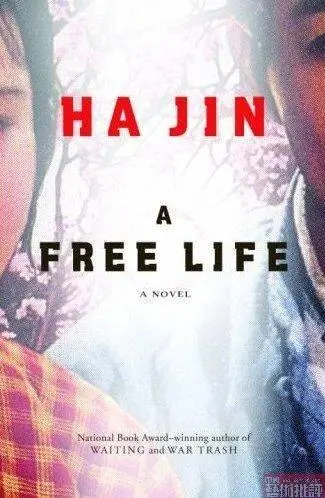
- Название:A Free Life
- Автор:
- Жанр:
- Год:неизвестен
- ISBN:нет данных
- Рейтинг книги:3 / 5. Голосов: 1
-
Избранное:Добавить в избранное
- Отзывы:
-
Ваша оценка:
A Free Life: краткое содержание, описание и аннотация
Предлагаем к чтению аннотацию, описание, краткое содержание или предисловие (зависит от того, что написал сам автор книги «A Free Life»). Если вы не нашли необходимую информацию о книге — напишите в комментариях, мы постараемся отыскать её.
Ha Jin, who emigrated from China in the aftermath of Tiananmen Square, had only been writing in English for 12 years when he won the National Book Award for Waiting in 1999. His latest novel sheds light on an émigré writer's woodshedding period. It follows the fortunes of Nan Wu, who drops out of a U.S. grad school after the repression of the democracy movement in China, hoping to find his voice as a poet while supporting his wife, Pingping, and son, Taotao. After several years of spartan living, Nan and Pingping save enough to buy a Chinese restaurant in suburban Atlanta, setting up double tensions: between Nan's literary hopes and his career, and between Nan and Pingping, who, at the novel's opening, are staying together for the sake of their young boy. While Pingping grows more independent, Nan -amid the dulling minutiae of running a restaurant and worries about mortgage payments, insurance and schooling-slowly snuffs the torch he carries for his first love. That Nan at one point reads Dr. Zhivago isn't coincidental: while Ha Jin's novel lacks Zhivago's epic grandeur, his biggest feat may be making the reader wonder whether the trivialities of American life are not, in some ways, as strange and barbaric as the upheavals of revolution.
***
From the award-winning author of Waiting, a new novel about a family's struggle for the American Dream.
Meet the Wu family-father Nan, mother Pingping, and son Taotao. They are arranging to fully sever ties with China in the aftermath of the 1989 massacre at Tiananmen Square, and to begin a new, free life in the United States. At first, their future seems well-assured. But after the fallout from Tiananmen, Nan 's disillusionment turns him toward his first love, poetry. Leaving his studies, he takes on a variety of menial jobs as Pingping works for a wealthy widow as a cook and housekeeper. As Pingping and Taotao slowly adjust to American life, Nan still feels a strange attachment to his homeland, though he violently disagrees with Communist policy. But severing all ties-including his love for a woman who rejected him in his youth-proves to be more difficult than he could have ever imagined.
A Free Life — читать онлайн бесплатно полную книгу (весь текст) целиком
Ниже представлен текст книги, разбитый по страницам. Система сохранения места последней прочитанной страницы, позволяет с удобством читать онлайн бесплатно книгу «A Free Life», без необходимости каждый раз заново искать на чём Вы остановились. Поставьте закладку, и сможете в любой момент перейти на страницу, на которой закончили чтение.
Интервал:
Закладка:
Luckily the Gold Wok continued thriving. To increase its food variety, Nan added steamed dumplings and several kinds of noodles, such as noodles sauteed with beef and snow peas, or with shiitake mushrooms, or with dried shrimp and scallops. The new offerings helped fetch more customers. Their Yangzhou Rice had become a favorite choice for lunch, loved by the Mexican workers at the construction site of an apartment complex off Lawrenceville Highway. Nan had been wondering how to make the restaurant more profitable, but it was too small to expand further. Yet there was an obvious way, namely to install a bar. Alcoholic beverages were lucrative, but neither Nan nor Pingping knew how to mix drinks. The Gold Wok did have a license for alcohol, yet to date it had offered only a few bottled beers and wines. For weeks the Wus had been wondering whether they should set up a bar, which meant they'd have to hire a barkeep. That would cost a lot.
When working in New York, Nan had heard a good deal about bars in Chinese restaurants. Many of them were tended by Caucasians, because most Asians couldn't communicate with customers well enough in English. ABCs, American-born Chinese, didn't take bartending as a real profession, so they wouldn't man bars. In a Chinese restaurant, all too often there was unspoken contention between the barman and the waitstaff. At some places the bars even offered appetizers, directly taking business away from the dining tables. It was commonplace that a barman often acted like a lord in a Chinese restaurant and was feared by waiters and waitresses, because he could create trouble for them by slightly altering the drinks ordered by their customers. If a complaint came up and their boss intervened, the barman could simply say he couldn't understand the English used by the waiter or waitress who had placed the order. Worse yet, it was almost impossible for the boss to follow the sales at the bar, so the barkeep could give favors freely to barflies, especially to young women, and some barmen even pocketed the money that was supposed to go to the cash registers. In short, a bar could be a bonanza but also a major bugbear.
Pingping didn't know what a bar would entail, so Nan explained everything to her. He even thought of finding a Chinese fellow, sending him to a bartending school in Atlanta and then hiring him afterward. But Pingping was adamantly against setting up a bar, which she said would throw their business out of kilter. Since physically the restaurant couldn't be expanded any more, there shouldn't be a bar that might destroy their peace of mind. What they needed most was a stable clientele, which didn't even have to be large. Nan agreed.
For months Nan had been working at least fourteen hours a day, sometimes without seeing the sun for a whole week, as he had to go to the Gold Wok early in the morning to get things ready. He'd slice beef, cut chickens, boil the bones to make stock, heat up a samovar for tea, chop broccoli and scallions, steam rice, deep-fry pork and chicken cubes. In the afternoons his legs often felt heavy and bloated; he'd sit down whenever he could, even when working at the wok, so as to avoid developing varicose veins. The restaurant had fully occupied his body and mind. Even at night he often dreamed of greeting customers and cooking their orders, his head full of the din of the kitchen while his limbs remained hot and sore as a result of the long working hours. His hands, always marked by nicks or burns or blisters, would throb a little whenever he woke up in the morning. Despite the hard work, despite his fatigue, he felt content and was determined to succeed. At long last life had become simple and clear to him, as if all the confusion and uncertainties had never befogged his mind.
One afternoon Pingping handed Nan a letter. "It's for you." "For me? From whom?"
"How can I know? Must be from a secret lover of yours." She tittered, seeing his eyes flash with annoyance.
He hadn't expected that Sam Fisher would write back. A month earlier Nan had sent the poet a letter to inform him of his move to Georgia. He told Sam about the Gold Wok and his intention to continue to write poetry, which he had almost stopped doing, actually. He just meant to keep in touch with Sam in case he might consult him on the craft of poetry writing. Besides telling Sam that he loved his book Fire Sutra, he also took the occasion to send his greetings to Dick Harrison, the tall young poet, who had been friendly to him when Nan was in New York. In his reply Sam Fisher encouraged Nan to write more poetry, saying that he had talent and should persevere to develop it, and that what was fundamental was "to sustain a great sentiment" in his heart. Sam also mentioned that he had lately fallen in love with some of Tu Fu's poems, which he hoped he could translate someday.
The letter touched and upset Nan at the same time. He had been so devoted to making money lately that his desire to be a poet was almost gone, though he still read poetry before going to sleep at night. He was very fond of a thick anthology called Great Poems, especially the short explanatory essays before each poem, and he pored over the book whenever he had time. He knew some of the poems, but some he had never read before. He wrote back to Sam Fisher and offered to help if Sam did embark on translating Tu Fu.
20
THE WUS knew very few Chinese living in this area. Neither had they gone to any Chinese church or visited the community center in Chinatown. They just wanted to lead an undisturbed life and didn't mind their isolation.
However, one afternoon in mid-March, two Chinese, a young man and a woman in her mid-thirties, came to the Gold Wok. They ignored Tammie's greetings and went straight to Pingping and Nan at the counter. The woman, who had a bony face, glossy skin, fierce eyes, and permed hair, introduced herself as the wife of a graduate student at Georgia Tech, whereas the man said he was a leader of the Chinese student association of that same school. They had come here to solicit a donation for the flood victims in mainland China. Nan wasn't interested and said he had no money.
The woman, named Mei Hong, persisted, "Look, Mr. Wu, you're from China, aren't you? Even if you're a rich American businessman now, you shouldn't forget your ancestors and homeland. Think about what you can do for your country."
"China is not my country anymore, and I'm not a rich man," Nan said. "I've been working my ass off day in and day out to keep this place alive. Besides, you shouldn't parrot that JFK crap here. Every citizen has the right to ask what my country can do for me."
Stumped, she stared at him for a moment, then kept on, "Do you know how much damage the Yangtze flood did last autumn?"
"I know, but it's over. It's spring now."
"No. Seventy million victims are still suffering from the aftermath of the calamity. Tens of thousands of them are homeless and waiting for your help. Eighteen provinces are still struggling to recover from the losses-"
"Give me a break! How can I be a savior of so many people? We've separated ourselves from China long ago, and for good. We don't owe it anything."
The young man tugged at Mei Hong's elbow, saying, "Let's go. It's no use arguing with such a miser who has forgotten his roots." His eyebrows were tilting as he kept pushing his flat nose with his knuckle.
Pingping said to Nan, " Why not give them a few dollars and send them away?"
"No, this is a matter of principle. I won't spend money this way." Mei Hong went on, "You act like the U.S. government. Don't you feel ashamed?"
"I'm not as rich as Uncle Sam." Nan raised his voice. "I don't collect taxes from others."
"All right, do you know China appealed to the United States for help last autumn? Guess how much the U.S. government offered our country."
Читать дальшеИнтервал:
Закладка:
Похожие книги на «A Free Life»
Представляем Вашему вниманию похожие книги на «A Free Life» списком для выбора. Мы отобрали схожую по названию и смыслу литературу в надежде предоставить читателям больше вариантов отыскать новые, интересные, ещё непрочитанные произведения.











Обсуждение, отзывы о книге «A Free Life» и просто собственные мнения читателей. Оставьте ваши комментарии, напишите, что Вы думаете о произведении, его смысле или главных героях. Укажите что конкретно понравилось, а что нет, и почему Вы так считаете.