Ha Jin - A Free Life
Здесь есть возможность читать онлайн «Ha Jin - A Free Life» весь текст электронной книги совершенно бесплатно (целиком полную версию без сокращений). В некоторых случаях можно слушать аудио, скачать через торрент в формате fb2 и присутствует краткое содержание. Жанр: Современная проза, на английском языке. Описание произведения, (предисловие) а так же отзывы посетителей доступны на портале библиотеки ЛибКат.
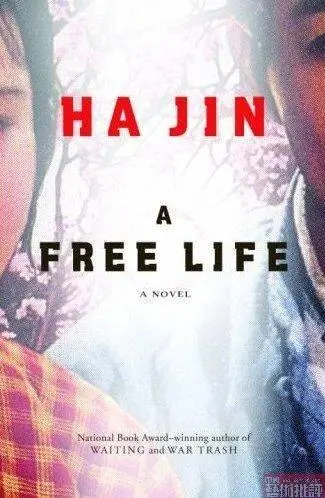
- Название:A Free Life
- Автор:
- Жанр:
- Год:неизвестен
- ISBN:нет данных
- Рейтинг книги:3 / 5. Голосов: 1
-
Избранное:Добавить в избранное
- Отзывы:
-
Ваша оценка:
A Free Life: краткое содержание, описание и аннотация
Предлагаем к чтению аннотацию, описание, краткое содержание или предисловие (зависит от того, что написал сам автор книги «A Free Life»). Если вы не нашли необходимую информацию о книге — напишите в комментариях, мы постараемся отыскать её.
Ha Jin, who emigrated from China in the aftermath of Tiananmen Square, had only been writing in English for 12 years when he won the National Book Award for Waiting in 1999. His latest novel sheds light on an émigré writer's woodshedding period. It follows the fortunes of Nan Wu, who drops out of a U.S. grad school after the repression of the democracy movement in China, hoping to find his voice as a poet while supporting his wife, Pingping, and son, Taotao. After several years of spartan living, Nan and Pingping save enough to buy a Chinese restaurant in suburban Atlanta, setting up double tensions: between Nan's literary hopes and his career, and between Nan and Pingping, who, at the novel's opening, are staying together for the sake of their young boy. While Pingping grows more independent, Nan -amid the dulling minutiae of running a restaurant and worries about mortgage payments, insurance and schooling-slowly snuffs the torch he carries for his first love. That Nan at one point reads Dr. Zhivago isn't coincidental: while Ha Jin's novel lacks Zhivago's epic grandeur, his biggest feat may be making the reader wonder whether the trivialities of American life are not, in some ways, as strange and barbaric as the upheavals of revolution.
***
From the award-winning author of Waiting, a new novel about a family's struggle for the American Dream.
Meet the Wu family-father Nan, mother Pingping, and son Taotao. They are arranging to fully sever ties with China in the aftermath of the 1989 massacre at Tiananmen Square, and to begin a new, free life in the United States. At first, their future seems well-assured. But after the fallout from Tiananmen, Nan 's disillusionment turns him toward his first love, poetry. Leaving his studies, he takes on a variety of menial jobs as Pingping works for a wealthy widow as a cook and housekeeper. As Pingping and Taotao slowly adjust to American life, Nan still feels a strange attachment to his homeland, though he violently disagrees with Communist policy. But severing all ties-including his love for a woman who rejected him in his youth-proves to be more difficult than he could have ever imagined.
A Free Life — читать онлайн бесплатно полную книгу (весь текст) целиком
Ниже представлен текст книги, разбитый по страницам. Система сохранения места последней прочитанной страницы, позволяет с удобством читать онлайн бесплатно книгу «A Free Life», без необходимости каждый раз заново искать на чём Вы остановились. Поставьте закладку, и сможете в любой момент перейти на страницу, на которой закончили чтение.
Интервал:
Закладка:
August 26, 1986
Dear Nan,
I hope this will reach you and find you well. I don't have your address, so I'm sending this letter to your department. Thank you so much for accommodating me when I was in Boston. Without your help, I couldn't have survived the crisis. I'm sorry to have dragged you into my personal trouble when I was there. You are a sweet man. That night you made me feel great, as if I became a woman again. But to tell the truth, afterward I felt guilty, so I left in the morning without saying good-bye.
Don't be angry with me, Nan. We both sinned, though I am the one who made you commit fornication. Last weekend I confessed everything at the church, and it lightened my mind considerably. God is large-hearted and has forgiven me. Perhaps you need to go to confession too. Try it. It really helps.
Please don't think ill of me. I know you're a kind, generous man. I will remember you fondly.
Yours,
Heather
Her letter bewildered him. Nobody had ever called him "a sweet man." Neither did he know what "a sweet man" was like. Weren't men supposed to be strong and fierce, full of spunk? How could he be sweet? He was baffled.
He had never considered that, similar to himself, eager to prove the adequacy of his manhood with the one-night stand, Heather had been desperate to restore her womanhood. How could a woman have the kind of crippled feeling like a man's fear of having lost his potency? Perhaps for Heather this was more psychological than physical, since she didn't have to depend on an erection to perform in bed. She must have wanted to convince herself of being desired by a man or of her ability to make love to a man.
Rather than feeling guilty, Nan was fearful and somewhat upset.
He had promised his wife that he wouldn't have another woman in America. But Heather was a different case. He wasn't really fond of her. The yearlong celibacy had tormented him and made him feel he might not be adequate between the sheets anymore. The idea of sin hadn't entered his mind until he read Heather's letter. He couldn't imagine kneeling in a box and exposing himself to a priest, though he had gone to a church in Waltham on two Sundays. He consulted his Webster's Collegiate Dictionary to see the difference between "fornication" and "copulation." Being a one-night fornicator didn't bother him that much. What worried him most was whether Heather had carried any disease. Her letter sounded calm, with no trace of anxiety. Did this mean she was a clean and healthy woman?
For the whole fall he was troubled by that question. He examined his genitals carefully whenever he took a shower, but noticed nothing abnormal. His body was still fine and vigorous; his vision and hearing were as clear as before. Everything was normal. Not until it snowed did he manage to put the worry out of his mind.
20
AT HAMPDEN PARK, Ivan often talked to Nan about women, complaining that it was too expensive to have a date here. In Russia, he said, women would take care of the expenses when they went out with him. Nan doubted whether that was true. Ivan claimed that he had been a junior officer in the Red Army in the late 1970s and that Russian women were always enamored of uniforms and epaulets. Nan wondered why the cost of dating a woman would nettle Ivan so much if he was a successful businessman. Didn't he own real estate on Lake Geneva? He must already be a millionaire. One night, when Ivan talked about American women again, Nan asked him, "Are you not afraid of catching AIDS?"
Ivan let out a bray of laughter. "I've known lots of girls and can take care of diseases."
"So you like American women?"
"Not particularly. I need female company sometimes."
"How about your wife?"
"She lives in Paris. I don't need to pay attention to her." "You mean you two are separated?"
"No. She's bossing a business there. She's Frenchwoman by birth, you know."
"So she let you have anozzer woman when she is away?"
Ivan smiled without answering. The expression on his face seemed to indicate that he was good at handling women. It reminded Nan of the saying "A brazen face is a man's great leverage with ladies." He then noticed that Ivan's laptop wasn't there. "Where's your computer?" he asked.
"Its hard disk busted dead. I left it home."
"You do oil exports still?" "Well, I changed my profession." "Doing what now?"
"That's top secret." Ivan laughed again. "By the way, don't you like Maria? She talked very much about you."
"Maria is all right, but I'm too tired to sink about women."
"You're smart. Maria goes nutty sometimes. What an appetite she possesses. She ate two rib-eye steaks when we dined together last time."
"And she drinks a lawt too." "Like a cow whale." "So you're dating her?"
"Not really. We visited a restaurant last weekend. God, I won't do that again. It's just too much."
By now Nan saw that Ivan wasn't very different from himself, a mere nighttime drudge, though this man from Vladivostok appeared to be confident and thriving here. Unlike him, Ivan must still believe in the dream of becoming a man of means.
A few days later Sandy called Nan into his office and told him not to carry his dictionary to work again. He insisted that personally he wouldn't have minded as long as Nan did his job well. But someone at the recent residents' meeting voiced the complaint in front of others, so he had no choice but to stop Nan from reading anything at work. "No hard feelings, Nan," said Sandy. "As the manager here, I have to let you know."
"I understand." Nan promised he wouldn't bring any book with him again. He knew it must be Maria who had bitched about him. But why? Only because he wouldn't flirt with her, or take her out, or bed her? Or simply because she could hurt him? He felt outraged and disgusted. From now on, he'd turn his back on that woman whenever she came to the parking lot.
21
THE FIRST ANNIVERSARY of the Tiananmen massacre was approaching, and the Yenching Institute at Harvard University was holding a memorial meeting in its auditorium. Several Chinese dignitaries, ranging from celebrated historians to the student movement leaders who had recently fled China, were to speak at the conference, so on Saturday morning Nan and Danning went there to hear those famous people talk. Among them, Nan was particularly interested in a poet, Yong Chu, who had lived in the United States for more than two decades, teaching at a private college in Rhode Island. What was amazing about this man was that he had made his name in Taiwan, in mainland China, and in the Chinese diaspora as well, although he had lived in North America. Nan remembered being very touched by some of his poems, which were written in a slightly archaic style that reflected the influence of the lyrics of the Song dynasty. The poet was especially known for the famous lines: "The jenny donkey under me is unaware / She's trotting into a mistaken serenade."
The conference wasn't as interesting as Nan had expected. Two student leaders talked about their experiences in fleeing China through an underground channel. Because some of the audience couldn't understand Chinese, a young woman, a graduate student, sat on the stage interpreting. Her voice, however, was too soft, aggravated by her shyness, which kept her eyes downcast when she spoke. After the student leaders' speeches, a Yale professor, an expert in Chinese intellectual thought, began expounding on the necessity of the Confucian values for contemporary China, a country that, chaotic and ruined, was on the brink of a moral meltdown because there was no religion to guide its populace. Nan was bored and said to Danning, "I shouldn't be here. What a drag!" He definitely would skip the panel discussion in the afternoon.
After the professor's speech, a noted dissident named Manping Liu went up and began to speak. This man in his mid-fifties had once headed China 's Central Institute of Social Reforms, but owing to his involvement with the student movement the previous spring, he had fled the country and was now living in New York City. He had a strong but lean face, and his voice sounded metallic and resonant. He talked about the necessity of developing democracy within the Communist Party, because there wasn't yet another political force in China that could rival the ruling party, and because the country couldn't afford to have a hiatus in governing power if the Communist rule was abolished. His argument and analyses were cogent and at moments subtle, able to hold the audience. He emphasized that China 's hope lay in reforming the Communist Party. Nan had read some of Mr. Liu's articles and was familiar with his thoughts, but today he felt there was something unsavory in his speech that Nan couldn't put his finger on, though he hadn't lost his reverence for the scholar's sincerity. Everyone could tell that Mr. Liu was speaking from his heart. Somehow Nan kept observing the old man's hand, which was small and delicate like a young woman's and which was gesturing as he spoke. That hand, a true scholar's, was born to wield a pen.
Читать дальшеИнтервал:
Закладка:
Похожие книги на «A Free Life»
Представляем Вашему вниманию похожие книги на «A Free Life» списком для выбора. Мы отобрали схожую по названию и смыслу литературу в надежде предоставить читателям больше вариантов отыскать новые, интересные, ещё непрочитанные произведения.











Обсуждение, отзывы о книге «A Free Life» и просто собственные мнения читателей. Оставьте ваши комментарии, напишите, что Вы думаете о произведении, его смысле или главных героях. Укажите что конкретно понравилось, а что нет, и почему Вы так считаете.