Michelle Kretser - The Lost Dog
Здесь есть возможность читать онлайн «Michelle Kretser - The Lost Dog» весь текст электронной книги совершенно бесплатно (целиком полную версию без сокращений). В некоторых случаях можно слушать аудио, скачать через торрент в формате fb2 и присутствует краткое содержание. Жанр: Современная проза, на английском языке. Описание произведения, (предисловие) а так же отзывы посетителей доступны на портале библиотеки ЛибКат.
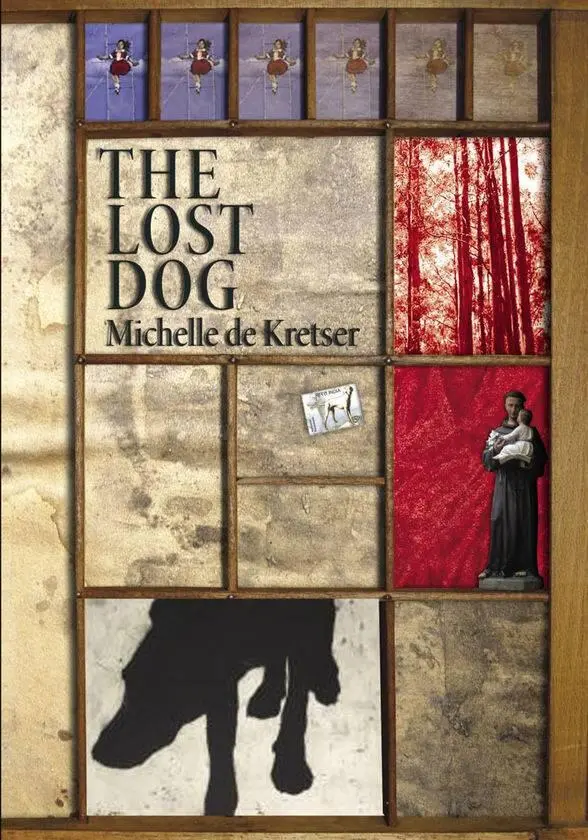
- Название:The Lost Dog
- Автор:
- Жанр:
- Год:неизвестен
- ISBN:нет данных
- Рейтинг книги:5 / 5. Голосов: 1
-
Избранное:Добавить в избранное
- Отзывы:
-
Ваша оценка:
The Lost Dog: краткое содержание, описание и аннотация
Предлагаем к чтению аннотацию, описание, краткое содержание или предисловие (зависит от того, что написал сам автор книги «The Lost Dog»). Если вы не нашли необходимую информацию о книге — напишите в комментариях, мы постараемся отыскать её.
***
‘A captivating read… I could read this book 10 times and get a phew perspective each time. It’s simply riveting.’ Caroline Davison, Glasgow Evening Times
‘… remarkably rich and complex… De Kretser has a wicked, exacting, mocking eye…While very funny in places, The Lost Dog is also a subtle and understated work, gently eloquent and thought-provoking… a tender and thoughtful book, a meditation on loss and fi nding, on words and wordlessness, and on memory, identity, history and modernity.’ The Dominion Post
‘Michelle de Kretser is the fastest rising star in Australia ’s literary firmament… stunningly beautiful.’ Metro
‘… a wonderful tale of obsession, art, death, loss, human failure and past and present loves. One of Australia ’s best contemporary writers.’
Harper’s Bazaar
‘In many ways this book is wonderfully mysterious. The whole concept of modernity juxtaposed with animality is a puzzle that kept this reader on edge for the entire reading. The Lost Dog is an intelligent and insightful book that will guarantee de Kretser a loyal following.’ Mary Philip, Courier-Mail
‘Engrossing… De Kretser confidently marshals her reader back and forth through the book’s complex flashback structure, keeping us in suspense even as we read simply for the pleasure of her prose… De Kretser knows when to explain and when to leave us deliciously wondering.’ Seattle Times
‘De Kretser continues to build a reputation as a stellar storyteller whose prose is inventive, assured, gloriously colourful and deeply thoughtful. The Lost Dog is a love story and a mystery and, at its best, possesses an accessible and seemingly effortless sophistication… a compelling book, simultaneously playful and utterly serious.’ Patrick Allington, Adelaide Advertiser ‘A nuanced portrait of a man in his time. The novel, like Tom, is multicultural, intelligent, challenging and, ultimately, rewarding.’
Library Journal
‘This book is so engaging and thought-provoking and its subject matter so substantial that the reader notices only in passing how funny it is.’ Kerryn Goldsworthy, Sydney Morning Herald
‘… rich, beautiful, shocking, affecting’ Clare Press, Vogue
‘… a cerebral, enigmatic reflection on cultures and identity… Ruminative and roving in form… intense, immaculate.’ Kirkus Reviews
‘De Kretser is as piercing in her observations of a city as Don DeLillo is at his best… this novel is a love song to a city… a delight to read, revealing itself in small, gem-like scenes.’ NZ Listener
‘… de Kretser’s trademark densely textured language, rich visual imagery and depth of description make The Lost Dog a delight to savour as well as a tale to ponder.’ Australian Bookseller and Publisher
‘A remarkably good novel, a story about human lives and the infi nite mystery of them.’ Next
‘Confident, meticulous plotting, her strong imagination and her precise, evocative prose. Like The Hamilton Case, The Lost Dog opens up rich vistas with its central idea and introduces the reader to a world beyond its fictional frontiers.’ Lindsay Duguid, Sunday Times
“[a] clever, engrossing novel… De Kretser’s beautifully shaded book moves between modern day Australia and post-colonial India. Mysteries and love affairs are unfolded but never fully resolved, and as Tom searches for his dog, it becomes apparent that its whereabouts is only one of the puzzles in his life.” Tina Jackson, Metro
‘A richly layered literary text.’ Emmanuelle Smith, Big Issue
The Lost Dog — читать онлайн бесплатно полную книгу (весь текст) целиком
Ниже представлен текст книги, разбитый по страницам. Система сохранения места последней прочитанной страницы, позволяет с удобством читать онлайн бесплатно книгу «The Lost Dog», без необходимости каждый раз заново искать на чём Вы остановились. Поставьте закладку, и сможете в любой момент перейти на страницу, на которой закончили чтение.
Интервал:
Закладка:
There were rustlings and tickings, the inhuman sounds of the bush. The great blue forests of Australia were walked by strangers and ghosts. People like the Feeneys did not much go in for entering them on foot. It was an unvoiced taboo: the ancient human respect for wooded places, strengthened by memories of a time when the only people who trod these paths were blacks or fugitive convicts.
Flies settled on Tom’s lids. The bush was full of light. In a north ern forest, vegetable density would have brought gloom. Here light dropped straight down past vertical leaves. There was the discon certing impression of being both trapped and exposed.
Mountain ash, clear-felled and rejected, rotted in the hollows where they had been herded by machines. Five or six years earlier the hill had been replanted with blue gums, chosen for the rapidity of their growth. Their puny forms were still struggling for supremacy over the undergrowth; an outbreak of mean skirmishes arising from a great defeat.
Felix Atwood had bought the house on the hill from Jack three years before he disappeared. It stood on land that had been selected late, the topography and weather deterring all but dirt-poor optimists; which is to say the Irish. Built in 1920 by a man called McDermot, the old farmhouse was testimony to the hardscrabble of his life.
Half a century later, his grandson gave up. Machinery and stock were sold; the house and its vertical acres to Jack Feeney. The McDermots moved to a town where a power station was hiring.
Framed photographs in Nelly’s kitchen taken at the time her husband bought the house showed rotting boards, a sagging chimney. Even in a picture from the 1950s, when the McDermots were still living there, the house had a desolate look. A flat garment pegged to a rope in the background was suggestive of fl aying.
Looking at these images, Tom understood the attraction of a brown suburban box with its own generator.
Jack agisted beef cattle in Nelly’s paddock, clearing it of blackberries and ragwort in return, and keeping an eye on the property. Nelly would go up to the house for a week or so at a stretch; and in the milder seasons, friends were persuaded to rent it for brief periods. But in that comfortless place, the hard winters were harder. And bad summers threatened fire: a red beast rampaging over the forested hills.
The Feeneys had stored sheepskins in the house. When the rooms were first repainted, the sharp animal smell disappeared, said Nelly. Then it returned to stay.
On his third or fourth visit to the library’s archives, Tom learned that the police had re-interviewed Mrs Atwood in the light of Jimmy Morgan’s evidence. The photograph that showed her shouting at the camera coincided with this development. It was at this stage of the story, too, that conscientious citizens began writing to the papers urging Nelly’s arrest: You’ve only got to look at her to know it was all her idea. Nelly Atwood failed the first universal test of womanliness, which is to appear meek. She failed the fi rst Australian test of virtue, which is to appear ordinary. Intangibles such as these, operating with a subterranean force unavailable to mere evidence, bound her to the figure Morgan had seen among the ti-tree.
Sources inevitably described as close to the couple claimed that the Atwoods’ marriage had been unhappy. There had been arguments about money. She was always on at him, wanting more. Tom read reports of extravagance on a Roman scale. Mrs Atwood was a brand junkie. She wore tights woven in Lille from cashmere and silk. A weekly florist’s bill ran to hundreds of dollars. Confirmation came in the form of a photograph: the florist himself, righteous above an armful of triangular blooms.
And so, with the practised ease of a sleight-of-hand, disapproval passed from the man to his wife. Atwood photographed well. He went surfing. His victims were bankers. He was halfway to being a hero in Australian eyes.
Nelly Atwood was also Nelly Zhang. She was A and Z, twin poles, the extremities of a line that might loop into a snare. She was double: a rich man’s wife and an artist; native yet foreign. Duplicity was inscribed in her face.
But Morgan insisted he had seen a tall woman. ‘Same as me, about’; and he was five foot nine. Nelly Atwood came in at barely five one. High heels might account for missing inches but seemed unlikely on a sandy track; in any case, the story kept running into Morgan. He was shown TV footage of Atwood’s wife. The woman on the path had been, ‘Different,’ he insisted.
His objections were easily disregarded, of course. Morgan reeked of imbalance. One chop short of the barbecue. And then-distance, darkness, the passage of time: these might deceive a far steadier witness.
But-and this was crucial-if Morgan was to be discredited over small things, he could scarcely be relied on for large ones. The woman on the dunes might have been elfi n. Equally, she might never have existed. Elusive female forms were known to appear to men who lived alone in the bush. Folk tales were told about them. The woman on the beach might have been nothing more than a splutter of memory, the brightest element in a story related by lamplight in the unimaginable kingdom where Jimmy Morgan had been young.
The police commissioner himself appealed to her to come forward. But the woman from the sand dunes never materialised. She had appeared in flashes among the scrub, then vanished. Like the hitch-hikers who were her kin, she remained legendary; the latest variant of an old tradition.
There was a limit to what journalism could concoct from repetition and guesswork. There was a limit to what could be done with Morgan. The bush lent him a tattered heroism. Shabbiness, alcoholism, eccentricity: these might pass as the decadent residues of a mythic past. But there was a fatal laxity to the man. He should have been shrewd and sparing of words. In fact he ran on endlessly, a garrulous drunk.
There was a hunger to equate the woman he had seen with Nelly. All those years later, Tom felt it quiver under the surface of tabloid prose. It would have been so neat. Perfect solutions make perfect stories. This one foundered on a paradox: the solution required Morgan, but Morgan undid the solution.
An interview with Carson Posner appeared in a Saturday supplement. The photographer had posed him against an early Howard Arkley abstract, and there was much obsequious fi ller about the dealer’s reputation as a talent-spotter, his unwavering, unfashionable devotion to painting, and so on. But the real subject of the feature was never in doubt.
Posner said he had been devastated to learn what Felix Atwood had done. The evidence against the broker was overwhelming. Nevertheless, Posner felt sure his friend was not devoid of conscience. Atwood would not have required the certainty of punishment to suffer for what he had done. When they were both boys, he had spoken of drowning; that it was the way he would like to go. And so he, Posner, believed that his old friend had chosen to end his days in the southern waters he loved.
His interviewer raised the subject of a note. Wasn’t the absence of one a serious flaw in the suicide theory? Posner’s disdain was superb. ‘Art exists because there are realities that exceed words.’
If it was plain that Posner’s portrait of Atwood had been airbrushed into smoothness, there was admiration, in the days that followed, for the loyalty that had produced it. Mateship: the Australian male’s birthright. Even stockbrokers were worthy of it.
Above all, Posner’s opining added weight to the idea that Atwood had taken his own life. Perhaps not having really made a decision, merely going on swimming; the continent receding, and with it, the braided pull of life itself.
Читать дальшеИнтервал:
Закладка:
Похожие книги на «The Lost Dog»
Представляем Вашему вниманию похожие книги на «The Lost Dog» списком для выбора. Мы отобрали схожую по названию и смыслу литературу в надежде предоставить читателям больше вариантов отыскать новые, интересные, ещё непрочитанные произведения.





Обсуждение, отзывы о книге «The Lost Dog» и просто собственные мнения читателей. Оставьте ваши комментарии, напишите, что Вы думаете о произведении, его смысле или главных героях. Укажите что конкретно понравилось, а что нет, и почему Вы так считаете.