Tracy Chevalier - Remarkable Creatures
Здесь есть возможность читать онлайн «Tracy Chevalier - Remarkable Creatures» — ознакомительный отрывок электронной книги совершенно бесплатно, а после прочтения отрывка купить полную версию. В некоторых случаях можно слушать аудио, скачать через торрент в формате fb2 и присутствует краткое содержание. Жанр: Современная проза, на английском языке. Описание произведения, (предисловие) а так же отзывы посетителей доступны на портале библиотеки ЛибКат.
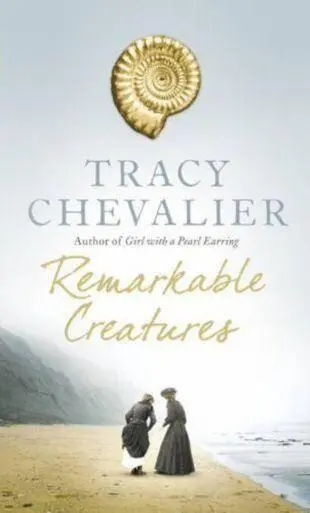
- Название:Remarkable Creatures
- Автор:
- Жанр:
- Год:неизвестен
- ISBN:нет данных
- Рейтинг книги:4 / 5. Голосов: 1
-
Избранное:Добавить в избранное
- Отзывы:
-
Ваша оценка:
Remarkable Creatures: краткое содержание, описание и аннотация
Предлагаем к чтению аннотацию, описание, краткое содержание или предисловие (зависит от того, что написал сам автор книги «Remarkable Creatures»). Если вы не нашли необходимую информацию о книге — напишите в комментариях, мы постараемся отыскать её.
Remarkable Creatures — читать онлайн ознакомительный отрывок
Ниже представлен текст книги, разбитый по страницам. Система сохранения места последней прочитанной страницы, позволяет с удобством читать онлайн бесплатно книгу «Remarkable Creatures», без необходимости каждый раз заново искать на чём Вы остановились. Поставьте закладку, и сможете в любой момент перейти на страницу, на которой закончили чтение.
Интервал:
Закладка:
“And so no one else knows of this response?”
“Only Joe, but he won’t say anything.”
“Well, that is something.”
“But people will find out. Eventually Mr Buckland and Reverend Conybeare and Mr Konig and all those men we sell to will know that the Frenchman thinks the Annings are frauds. The Duke of Buckingham might hear and not pay us!” Molly Anning’s mouth started to tremble, and I feared she might actually cry-a sight I didn’t think I could bear.
To stop her I said, “Molly, I am going to help you. Don’t cry, now. We will manage.”
I had no idea what I would do. But I was thinking of the crate full of fossil fish in Mary’s workshop, waiting for me to thaw, and knew I had to do something. I thought for a moment. “Where is the plesiosaurus now?”
“On board the Dispatch, heading for London, if it ain’t already arrived. Mr Buckland saw her off. And Reverend Conybeare is meeting it at the other end. He’s addressing the Geological Society later this month at their annual dinner.”
“Ah.” So it was gone already. The men had charge of it now. I would have to go to them.
Margaret and Louise thought I was mad. It was bad enough that I wanted to travel to London rather than simply write a forceful letter. But to go in winter, and by ship, was folly. However, the weather was so foul, the roads so muddy, that only mail coaches were getting through to London, and even they were being delayed, and were full besides. A ship might be quicker, and the weekly one was leaving when I needed it.
I knew too that the men I wanted to see would be blinded by their interest in the plesiosaurus and would not attend to my letter, no matter how eloquent or urgent. I must see them in person to convince them to help Mary immediately.
What I did not tell my sisters was that I was excited to go. Yes, I was fearful of the ship and of what the sea might do. It would be cold and rough, and I might feel sick much of the time, despite a tonic for seasickness that Margaret had concocted for me. As the only lady on board, I could not be sure of sympathy or comfort from the crew or other passengers.
I also had no idea if I could make any difference to Mary’s predicament. I only knew that when I read Joseph Pentland’s letter, I was consumed with anger. Mary had been so generous for so long, to so little gain-apart from Colonel Birch’s sudden, madcap auction-while others took what she found and made their names from it as natural philosophers. William Buckland lectured on the creatures at Oxford, Charles Konig brought them into the British Museum to acclaim, Reverend Conybeare and even our dear Henry De La Beche addressed the Geological Society and published papers about them. Konig had had the privilege of naming the ichthyosaurus, and Conybeare the plesiosaurus. Neither would have had anything to name without Mary. I could not stand by and watch suspicions grow about her skills when the men knew she outstripped them all in her abilities.
I was also making amends to Mary. I was at last asking her to forgive me my jealousy and disdain.
There was something else, though. This was also my chance for an adventure in an unadventurous life. I had never travelled alone, but was always with my sisters or brother or other relatives, or with friends. As secure as that had felt, it was a bind as well that sometimes threatened to smother me. I was rather proud now as I stood on the deck of the Unity-the same ship that had taken Colonel Birch’s ichthyosaurus to London -and watched Lyme and my sisters grow smaller until they disappeared and I was alone.
We sailed straight out to sea rather than hug the coast, for we had to clear the tricky isle of Portland. So I did not get to see up close the places I knew well-Golden Cap, Bridport, Chesil Beach, Weymouth. Once past Portland we remained out at sea until we had gone around the Isle of Wight, before finally coming closer to shore.
A sea voyage is very different from a coach trip to London, where Margaret, Louise and I were packed with several strangers into a stuffy, rattling, jolting box that stopped constantly to change horses. That was a communal event, uncomfortable in ways that as I grew older took days to recover from.
Being on board the Unity was much more solitary. I would sit on deck, tucked out of the way on a small keg, and watch the crew at work with their ropes and sails. I had no idea what they were doing, but their shouts to one another and their confident routines soothed my fears of being at sea. Moreover, the cares of daily life were taken out of my hands, and nothing was expected of me but to stay out of the men’s way. Not only did I not feel ill on board, even when it was rough; I was actually enjoying myself.
I had been anxious about being the only lady on the ship-the three other passengers were all men with business in London -but I was mostly ignored, though the Captain was kind enough, if taciturn, when I joined him to dine each night. No one seemed at all curious about me, though one of the passengers-a man from Honiton-was happy to talk about fossils when he heard of my interest. I did not tell him about the plesiosaurus, however, or of my intended visit to the Geological Society. He knew only about the obvious-ammonites, belemnites, crinoids, gryphaea-and had little of use to say, though he made sure to say every word of it. Luckily he could not bear the cold, and most often stayed belowdecks.
Until I boarded the Unity, I had always thought of the sea as a boundary keeping me in my place on land. Now, though, it became an opening. As I sat I occasionally saw another vessel, but most of the time there was nothing but sky and moving water. I often looked to the horizon, lulled into a wordless calm by the rhythm of the sea and by ship life. It was oddly satisfying to study that far-off line, reminding me that I spent much of my life in Lyme with my eyes fixed to the ground in search of fossils. Such hunting can limit a person’s perspective. On board the Unity I had no choice but to see the greater world, and my place in it. Sometimes I imagined being on shore and looking out at the ship, and seeing on deck a small, mauve figure caught between the light grey sky and dark grey sea, watching the world pass before her, alone and sturdy. I did not expect it, but I had never been so happy.
The winds were light, but we made steady if slow progress. The first I saw of land was on the second day when the chalk cliffs to the east of Brighton came blinking into view. When we made a brief stop there to unload cloth from Lyme’s factory, I considered asking Captain Pearce if I might go ashore to see my sister Frances. However, rather to my surprise, I felt no real urge to do so, or to send her a note saying I was there, but was content to remain on board and watch the residents of Brighton on land walking back and forth along the promenade. Even if Frances herself had appeared, I am not sure I would have called out to her. I preferred not to disturb the delicious anonymity of standing on deck with no one looking for me.
On the third day we had passed Dover with its stark white cliffs, and were coming around the headland by Ramsgate when we saw a ship off our port side run aground on a sandbar. As we drew nearer I heard one of the crew name it as the Dispatch, the ship carrying Mary’s plesiosaurus.
I sought out the Captain. “Oh yes, that be the Dispatch,” he confirmed, “run aground on Goodwin Sands. They’ll have tried to turn too sharp.” He sounded disgusted and entirely without sympathy, even as he called for the men to cast anchor. Soon two sailors set out in a boat to cross over to the listing vessel, where they met with a few men who had by now appeared on deck. The sailors talked to them for just a few minutes before rowing back. I leaned forward and strained to hear what they shouted to the Captain. “Cargo was taken to shore yesterday!” one called. “They’re taking it overland to London.”
Читать дальшеИнтервал:
Закладка:
Похожие книги на «Remarkable Creatures»
Представляем Вашему вниманию похожие книги на «Remarkable Creatures» списком для выбора. Мы отобрали схожую по названию и смыслу литературу в надежде предоставить читателям больше вариантов отыскать новые, интересные, ещё непрочитанные произведения.









Обсуждение, отзывы о книге «Remarkable Creatures» и просто собственные мнения читателей. Оставьте ваши комментарии, напишите, что Вы думаете о произведении, его смысле или главных героях. Укажите что конкретно понравилось, а что нет, и почему Вы так считаете.