Kamran Pasha - Mother Of the Believers
Здесь есть возможность читать онлайн «Kamran Pasha - Mother Of the Believers» весь текст электронной книги совершенно бесплатно (целиком полную версию без сокращений). В некоторых случаях можно слушать аудио, скачать через торрент в формате fb2 и присутствует краткое содержание. Жанр: Современная проза, на английском языке. Описание произведения, (предисловие) а так же отзывы посетителей доступны на портале библиотеки ЛибКат.
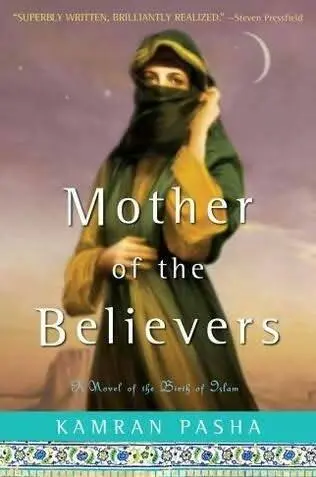
- Название:Mother Of the Believers
- Автор:
- Жанр:
- Год:неизвестен
- ISBN:нет данных
- Рейтинг книги:4.5 / 5. Голосов: 2
-
Избранное:Добавить в избранное
- Отзывы:
-
Ваша оценка:
Mother Of the Believers: краткое содержание, описание и аннотация
Предлагаем к чтению аннотацию, описание, краткое содержание или предисловие (зависит от того, что написал сам автор книги «Mother Of the Believers»). Если вы не нашли необходимую информацию о книге — напишите в комментариях, мы постараемся отыскать её.
Written in beautiful prose and meticulously researched, Mother of the Believer is the story of an extraordinary woman who was destined to help usher Islam into the world.
Mother Of the Believers — читать онлайн бесплатно полную книгу (весь текст) целиком
Ниже представлен текст книги, разбитый по страницам. Система сохранения места последней прочитанной страницы, позволяет с удобством читать онлайн бесплатно книгу «Mother Of the Believers», без необходимости каждый раз заново искать на чём Вы остановились. Поставьте закладку, и сможете в любой момент перейти на страницу, на которой закончили чтение.
Интервал:
Закладка:
“It dies,” he said simply.
Hind smiled, and her hand touched his excited flesh.
“Exactly.”
He ran a finger across her neck, long and elegant like a gazelle’s.
“We will use trade as a weapon.”
Hind smiled, delighted as always that the pupil had finally caught up to the teacher. She reached over to a basket of red grapes and took one in her lips. And then she kissed Abu Sufyan and let the grape fall into his mouth. He sucked on it and her tongue at the same time.
She finally broke off the kiss and looked him deep in the eyes.
“You do not need to kill them. If you starve them, they will kill themselves.”
The full plan was now coming into view, with all its cold brilliance. Abu Sufyan gazed at Hind with admiration.
“If the Quraysh would accept a woman as their leader, they would have chosen you,” he said.
Hind did not deny this. She ran her nails across his chest, feeling the harsh beating of his heart.
“But since they would not, I chose you.”
Abu Sufyan smiled.
“I thought you married me because you loved me.”
She kissed him again, letting her soft pink tongue play across his lips.
“I do.”
And then Abu Sufyan leaned back and looked at her as if appraising the true value of a rare gem.
“Is it me, or is it my power that you love?”
Hind smiled mischievously.
“Defeat Muhammad, and you will never need to know the answer to that question.”
She leaned forward and kissed him for a long moment. When she broke free, he saw that they were not alone. The dancer with the lustful eyes had returned to the hall unbidden, perhaps summoned by the magnetic heat that Hind’s body exuded.
His wife smiled and pulled Abu Sufyan up with her right hand. She held out her left and grasped the dancer’s small fingers, and then she quietly led the two back to her bedchamber.
14
I stood holding my father’s hand as Abu Sufyan, dressed in the formal black robes of judgment, led a group of similarly clad chieftains before the golden door of the Kaaba. I saw that he held a heavy lambskin parchment in his hand and that Abu Jahl stood to his right, a triumphant smile playing across his face.
When they were all gathered in the courtyard of the Sanctuary, I counted over forty of the most powerful men, not only of Mecca but of the Bedouin tribes who grazed their flocks just beyond the black hills that served as the borders of the city.
My eye caught movement to my left, and I saw Abu Talib, the Prophet’s uncle and the head of the clan of Bani Hashim, standing with his brothers, Hamza and Abbas. He looked even more aged and tired than when I had last seen him, and Hamza held his shoulder firmly to help Abu Talib maintain his balance. I saw the three brothers looking at the gathering of the chieftains, from which they had been pointedly excluded, with evident concern.
And then Hamza scowled and I followed his eyes across the courtyard to see his half brother and spiritual enemy, Abu Lahab, standing by his wife, Umm Jamil. She had become one of the most vocal female voices against the Prophet and his Message. Umm Jamil’s petty vindictiveness was legendary, and I remembered how the Messenger had limped to my father’s house after she had carefully strewn thorns behind him while he prayed at the Sanctuary so that he when finished and turned to leave, his feet had been torn and bloodied.
The persecution by his own uncle and aunt had so upset the Messenger that God had come to his defense, sending a Revelation that condemned both of them to hell for eternity. This had only enraged Umm Jamil even more, and the next time she had seen the Messenger, she had thrown a pot full of steaming goat feces and entrails over his head.
Now she and her slug of a husband stood gloating as the lords of Mecca moved to destroy our faith once and for all.
Abu Sufyan looked sternly at our small crowd of believers, who had been summoned to hear the proclamation that had been decided in secret council that morning. And then he read from the document, his voice firm with authority.
“In your name, O Allah, we the leaders of Quraysh proclaim this solemn oath. The Children of Hashim have harbored a dangerous sorcerer named Muhammad, a madman whose lies defile the sanctity of Your House and Your children, the gods of the Arabs. His sedition has driven men away from the sacred Pilgrimage and has covered Your holy city with the shadow of poverty and fear. As custodians of Your Sanctuary, we can no longer stand by and watch corruption spread through the earth. We therefore proclaim this day that the clan of Hashim is outlawed. No man of Quraysh may marry a woman of Hashim or give his daughter in marriage to a man of Hashim. And no one of Quraysh may sell anything to anyone of Hashim, nor purchase anything from them. And this proclamation shall stay in force until the Bani Hashim lifts its protection of the heretic Muhammad or the sorcerer renounces his false claim of prophecy.”
He finished reading and raised his head to face us again.
“So say we all.”
The other tribal chiefs loudly declared their support of the proclamation, raising their right hands in affirmation.
I saw my father’s face fall as he watched the chiefs move forward one by one to place their individual wax seals on the document. A crowd of hooligans and rabble-rousers had been strategically gathered by the chieftains, and they now played their designated role by shouting practiced curses and slurs at the Muslims, inviting the gods to rain punishment on us from the heavens.
Abu Sufyan bowed to the angry mob with a deep flourish, as if accepting the will of the people. He took the proclamation and climbed the stone steps leading up to the gold-embossed door of the Temple. I gasped, as I had never seen anyone go inside the Kaaba. It was said that the lords of Mecca would enter the Holy of Holies only on extremely rare occasions when the future of the city was at stake, such as when a Yemeni army had besieged Mecca fifty years ago, shortly before the birth of the Messenger.
Clearly, this proclamation of exclusion was seen by the chieftains as requiring the highest divine endorsement. Never before had the lords gathered together to denounce and expel one of their own, not just one man but an entire clan, and deny by common agreement a whole caste of people any source of food or income to survive.
Abu Sufyan entered the Kaaba, his head bowed in humility and recognition of the fact that he was stepping on sacred ground that was normally forbidden. When the doors swung inward and sunlight flooded the normally dark interior, I saw a flash of crimson inside and caught sight of a towering cornelian quartz idol that I had heard about but never seen before.
Hubal, the god of Mecca, an ancient idol that had been brought all the way from Syria hundreds of years before. Its carved right hand had broken off during the long caravan ride from the north, and the ancestors of the Quraysh had fashioned for the idol a new hand of solid gold. The Messenger had said that of all the pagan abominations that corrupted the sacred ground of the Sanctuary, none was more hateful to Allah than this monstrosity that sat inside the House of God, its jagged face smiling obscenely at its usurpation of the authority of the One.
As Abu Sufyan stepped inside and nailed the proclamation to the dark stone wall behind Hubal, I saw his ally Abu Lahab look across the courtyard to Abu Talib, a victorious gleam in his beady eyes. The ban had cut Abu Talib’s leadership of the Bani Hashim at the knees, leaving Abu Lahab rich ground to agitate for new leadership. And then Abu Jahl approached Abu Lahab, shaking his black-turbaned head and placing his jeweled fingers on his friend’s meaty shoulder. Abu Jahl sighed in exaggerated sympathy, speaking loud enough so that we could all hear him.
Читать дальшеИнтервал:
Закладка:
Похожие книги на «Mother Of the Believers»
Представляем Вашему вниманию похожие книги на «Mother Of the Believers» списком для выбора. Мы отобрали схожую по названию и смыслу литературу в надежде предоставить читателям больше вариантов отыскать новые, интересные, ещё непрочитанные произведения.









Обсуждение, отзывы о книге «Mother Of the Believers» и просто собственные мнения читателей. Оставьте ваши комментарии, напишите, что Вы думаете о произведении, его смысле или главных героях. Укажите что конкретно понравилось, а что нет, и почему Вы так считаете.