Kamran Pasha - Mother Of the Believers
Здесь есть возможность читать онлайн «Kamran Pasha - Mother Of the Believers» весь текст электронной книги совершенно бесплатно (целиком полную версию без сокращений). В некоторых случаях можно слушать аудио, скачать через торрент в формате fb2 и присутствует краткое содержание. Жанр: Современная проза, на английском языке. Описание произведения, (предисловие) а так же отзывы посетителей доступны на портале библиотеки ЛибКат.
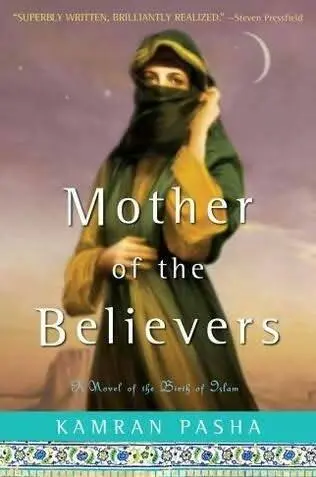
- Название:Mother Of the Believers
- Автор:
- Жанр:
- Год:неизвестен
- ISBN:нет данных
- Рейтинг книги:4.5 / 5. Голосов: 2
-
Избранное:Добавить в избранное
- Отзывы:
-
Ваша оценка:
Mother Of the Believers: краткое содержание, описание и аннотация
Предлагаем к чтению аннотацию, описание, краткое содержание или предисловие (зависит от того, что написал сам автор книги «Mother Of the Believers»). Если вы не нашли необходимую информацию о книге — напишите в комментариях, мы постараемся отыскать её.
Written in beautiful prose and meticulously researched, Mother of the Believer is the story of an extraordinary woman who was destined to help usher Islam into the world.
Mother Of the Believers — читать онлайн бесплатно полную книгу (весь текст) целиком
Ниже представлен текст книги, разбитый по страницам. Система сохранения места последней прочитанной страницы, позволяет с удобством читать онлайн бесплатно книгу «Mother Of the Believers», без необходимости каждый раз заново искать на чём Вы остановились. Поставьте закладку, и сможете в любой момент перейти на страницу, на которой закончили чтение.
Интервал:
Закладка:
The Prophet stopped a few feet away from the door. He was now positioned so that his followers were grouped behind him, as if he would single-handedly shield us from Umar’s vengeance. Hamza stood behind his right shoulder and Ali was to his left. The Messenger nodded to his young cousin, who threw open the door.
We all stopped breathing. I thought I could hear the steady thrum of our hearts, as if they were pounding in unison.
And then Umar stepped inside, his sword unsheathed and glistening in his hand. I looked with morbid curiosity to see if there was any blood drying on the blade. But if he had killed his sister, as we all expected, Umar had wiped the sword clean before returning to fulfill his vow.
I watched his face with fascination. He appeared different from the man I had seen only a few hours before. There was no more rage on his face, and he appeared uncertain, almost afraid, as he stood before the Messenger.
For a moment, no one moved. It was as if the slightest tremor would set into motion events that would change everything.
And indeed it did.
The Prophet stepped forward and grabbed Umar by his studded belt, suddenly pulling the giant who towered a full head over the tallest men in the room as if he were an unruly child. He dragged Umar unceremoniously to the center of the hall, where the assassin was forced to stand among a crowd of two dozen believers staring at him with fear.
“What has brought you here, O son of al-Khattab?” the Messenger said, his eyes never leaving his adversary’s bushy bearded face. “I cannot see you desisting until God sends down some calamity on you.”
Umar hesitated. I saw him move his sword arm and Hamza instantly had his bow in his hand, an arrow nocked and pointed right at Umar’s chest.
And then I saw something that made my heart leap into my throat.
Tears welled into the giant’s eyes and poured down his weathered cheeks like the well of Ishmael suddenly erupting from the bowels of the desert and bringing hope of life where there had been only death.
Umar dropped the sword at the Messenger’s feet and knelt in humility until his head was positioned beneath the Prophet’s chest. And then he said words that no one in all of Mecca would have ever expected.
“O Messenger of God, I have come to you that I may declare my faith in God and in His Messenger and in what he has brought from God.”
There was moment of stunned silence. This had to be a trick, some ruse Umar had devised to startle us and lower our guard so that he could strike unexpectedly.
But then the Prophet smiled warmly, his face glowing like the sun breaking through dark clouds.
“Allahu akbar!” the Messenger cried in a voice that thundered throughout the hall and poured out into the dusty streets of the holy city. “God is great!”
And then Muhammad, may God’s blessings and peace be upon him, embraced Umar like a brother whom he had not seen in many years.
We looked at one another in wonder. And then I started clapping, a flurry of giggles erupting from my lips. The sound of my laugh was throaty and contagious, and soon others joined in. We raised our voices in joy, marveling at the power of faith and the inexplicable depths of the human heart.
12
A few hours later, Umar strode through the streets of Mecca, walking as if in a dream. Everything had changed the moment he had read the Words of God. It was as if someone had reached inside his breast and torn out a deadly snake that had been wrapped around his heart, squeezing out any love for life or his fellow man. And then he had understood. The Spirit that he sensed around the Kaaba, the Being that he had vowed to serve at the cost of his own life, had a voice, and it had spoken to him through a book revealed to an illiterate man. All this time, he had been fighting the very force to which he had dedicated his soul.
Umar had read the words that were painted on the leather strip and had fallen back as if struck by an invisible hand. He had started shaking with violent tremors and his head had felt warm and dizzy. But he knew that he was not suffering from fever or plague. It was the same dizzying sensation that had torn through him the day he had sought solace for murdering his daughter by kneeling at the Sanctuary. But this time, instead of cruel laughter mocking him, he heard a gentle voice in his heart, filled with compassion, saying: “Go to him.”
And like a child who does not dare question his elders, Umar had gotten up without a word to his sister and walked straight to the Messenger’s house. When he had declared his newfound faith, he felt as if a stone had lifted from his shoulders and that someone who had been imprisoned inside of him had suddenly been set free. The man Umar had once been was gone, like a shadow that vanishes when light is shone upon it.
He had not cried since he was a child. His father, al-Khattab, would beat him ferociously each time he sniffled, calling him weak and threatening to cut off his male organ if he kept weeping like a girl. But today he had wept for hours, as if a dam had burst and all the pain he had bottled inside himself for years had come out. He could not control it if he wanted to. And, in truth, he did not want to.
The Messenger had accepted him and forgiven him his treachery, but Umar found he still could not stop crying. He kept seeing the image of his precious baby daughter looking up at him with a smile even as he covered her tiny body with stones. She had kept squeezing his finger until the breath had finally left her and her little hand had dropped.
He had looked at the Messenger and asked that God punish him for his sin. He had handed his sword to Muhammad and begged him to avenge the girl and cut off his head. But the Prophet had put a gentle hand on his arm, his own black eyes welling with tears of empathy.
“You have already punished yourself enough, son of al-Khattab,” he had said softly. “Islam is like a river. It cleans those who immerse themselves of their past sins.”
Umar had bowed his head, still not willing to accept the forgiveness he was offered.
“You say that all men will be resurrected one day and the girls who were slain by their fathers will confront them on the Day of Judgment,” he said, repeating the teachings that he had reviled and mocked only a few hours before. “What will I say to my little girl when I face her?”
The Prophet looked past Umar’s shoulder, as if staring at some grand vision on the horizon of his mind’s eye.
“I see her holding you by the hand, squeezing your finger, as she leads you to Paradise.”
At that moment, Umar ibn al-Khattab was freed. The man he had been, the murderer, the drunk, the adulterer, died. And the man who now walked purposefully through the cobbled alleys of Mecca had been born.
He noticed that people in the streets were staring at him, looking confused as he passed them. And then he realized it was because he was smiling. Not the smile of a man with a deadly scheme in his heart, but one of pure and unconditional joy. As he passed by a street merchant selling coral combs, agate rings, and vials of rosewater perfume to a group of black-veiled Bedouin women, he caught a reflection of his face in the polished silver mirror the merchant had erected to promote his wares to the vanity of his customers.
He did not recognize himself. The cruel scowl that he had once believed to be a sign of power and masculinity was gone, replaced by a look of childlike wonder. Umar grinned and found that he liked the way the lines around his lips and cheeks crinkled when he did so.
And then he forced himself to adopt a serious, stoic face. For now he was on a new mission and he could not allow himself to be distracted by the unfamiliar face that stared back at him from the mirror.
Читать дальшеИнтервал:
Закладка:
Похожие книги на «Mother Of the Believers»
Представляем Вашему вниманию похожие книги на «Mother Of the Believers» списком для выбора. Мы отобрали схожую по названию и смыслу литературу в надежде предоставить читателям больше вариантов отыскать новые, интересные, ещё непрочитанные произведения.









Обсуждение, отзывы о книге «Mother Of the Believers» и просто собственные мнения читателей. Оставьте ваши комментарии, напишите, что Вы думаете о произведении, его смысле или главных героях. Укажите что конкретно понравилось, а что нет, и почему Вы так считаете.