Nikos Kazantzakis - Zorba The Greek
Здесь есть возможность читать онлайн «Nikos Kazantzakis - Zorba The Greek» весь текст электронной книги совершенно бесплатно (целиком полную версию без сокращений). В некоторых случаях можно слушать аудио, скачать через торрент в формате fb2 и присутствует краткое содержание. Жанр: Современная проза, на английском языке. Описание произведения, (предисловие) а так же отзывы посетителей доступны на портале библиотеки ЛибКат.
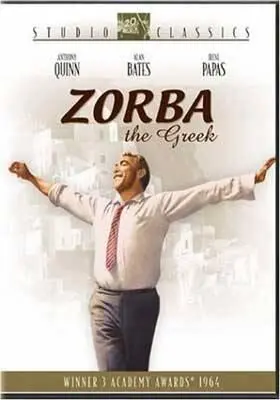
- Название:Zorba The Greek
- Автор:
- Жанр:
- Год:неизвестен
- ISBN:нет данных
- Рейтинг книги:3 / 5. Голосов: 1
-
Избранное:Добавить в избранное
- Отзывы:
-
Ваша оценка:
Zorba The Greek: краткое содержание, описание и аннотация
Предлагаем к чтению аннотацию, описание, краткое содержание или предисловие (зависит от того, что написал сам автор книги «Zorba The Greek»). Если вы не нашли необходимую информацию о книге — напишите в комментариях, мы постараемся отыскать её.
Zorba The Greek — читать онлайн бесплатно полную книгу (весь текст) целиком
Ниже представлен текст книги, разбитый по страницам. Система сохранения места последней прочитанной страницы, позволяет с удобством читать онлайн бесплатно книгу «Zorba The Greek», без необходимости каждый раз заново искать на чём Вы остановились. Поставьте закладку, и сможете в любой момент перейти на страницу, на которой закончили чтение.
Интервал:
Закладка:
"Play!" he cried again. "Play, Fanurio, or I shall burst!"
The lyre player shook his hand, the lyre responded, the bells began to tinkle in rhythm and the young man took one leap, striking his feet together three times on the air, as high as a man stands, and with his boots caught the white kerchief from round the head of his neighbor, Manolakas, the constable.
"Bravo, Sifakas!" they cried, and the young girls trembled and lowered their eyes.
But the young man was silent and not looking at anyone at all. Wild and yet self-disciplined, he rested his left hand, palm outwards on his slim and powerful thighs, as he danced with his eyes fixed timidly on the ground. The dance ceased abruptly as the old verger, Androulio, came rushing into the square, his arms raised to heaven.
"The widow! The widow!" he shouted breathlessly.
Manolakas, the constable, was the first to run to him, breaking off the dance. From the square you could see the church, which was still adorned with myrtle and laurel branches. The dancers stopped, the blood coursing through their heads, and the old men rose from their seats. Fanurio put the lyre down on his lap, took the April rose from behind his ear and smelled it.
"Where, Androulio?" they cried, boiling with rage. "Where is she?"
"In the church; the wretch has just gone in; she was carrying an armful of lemon blossom!"
"Come on! At her!" cried the constable, rushing ahead.
At that moment the widow appeared on the doorstep of the church, a black kerchief over her head. She crossed herself.
"Wretch! Slut! Murderess!" the voices cried. "And she's got the cheek to show herself here! After her! She's disgraced the village!"
Some followed the constable who was running towards the church, others, from above, threw stones at her. One stone hit her on the shoulder; she screamed, covered her face with her hands, and rushed forward. But the young men had already reached the church door and Manolakas had pulled out his knife.
The widow drew back uttering little cries of terror, bent herself double to protect her face and ran back stumbling to shelter in the church. But on the threshold was planted old Mavrandoni. With a hand on each side of the door he blocked the way.
The widow jumped to the left and clung to the big cypress tree in the courtyard. A stone whistled through the air, hit her head and tore off her kerchief. Her hair came undone and tumbled down over her shoulders.
"In Christ's name! In Christ's name!" the widow screamed, clinging tightly to the cypress tree.
Standing in a row on the squàre the young girls of the village were biting their white kerchiefs, eagerly watching the scene. The old women, leaning on the walls, were yelping: "Kill her! Kill her!"
Two young men threw themselves at her, caught her. Her black blouse was torn open and her breasts gleamed, white as marble. The blood was running from the top of her head down her forehead, cheeks and neck.
"In Christ's name! In Christ's name!" she panted.
The flowing blood and the gleaming breasts had excited the young men. Knives appeared from their belts.
"Stop!" shouted Mavrandoni. "She's mine!"
Mavrandoni, still standing on the threshold of the church, raised his hand. They all stopped.
"Manolakas," he said in a deep voice, "your cousin's blood is crying out to you. Give him peace."
I leaped from the wall on which I had climbed and ran towards the church; my foot hit a stone and I fell to the ground.
Just at that moment Sifakas was passing. He bent down, picked me up by the scruff of the neck like a cat and put me on my feet.
"This is no place for the likes of you!" he saíd. "Clear off!"
"Have you no feeling for her, Sifakas?" I asked. "Have pity on her!"
The savage mountaineer laughed in my face.
"D'you take me for a woman? Asking me to have pity! I'm a man!"
And in a second he was in the churchyard.
I followed him closely but was out of breath. They were all round the widow now. There was a heavy silence. You could hear only the victim's strangled breathing.
Manolakas crossed himself, stepped forward, raised the knife; the old women, up on the walls, yelped with joy. The young girls pulled down their kerchiefs and hid their faces.
The widow raised her eyes, saw the knife above her, and bellowed like a heifer. She collapsed at the foot of the cypress and her head sank between her shoulders. Her hair covered the ground, her throbbing neck glistened in the half-light.
"I call on God's justice!" cried old Mavrandoni, and he also crossed himself.
But just at that second a loud voice was heard behind us:
"Lower your knife, you murderer!"
Everyone turned round in stupefaction. Manolakas raised his head: Zorba was standing before him, swinging his arms with rage. He shouted:
"Aren't you ashamed? Fine lot of men you are! A whole village to kill a single woman! Take care or you'll disgrace the whole of Crete!"
"Mind your own business, Zorba! And keep your nose out of ours!" roared Mavrandoni.
Then he turned to his nephew.
"Manolakas," he said, "in the name of Christ and the Holy Virgin, strike!"
Manolakas leaped up. He seized the widow, threw her to the ground, placed his knee on her stomach and raised his knife. But in a flash Zorba had seized his arm and, with his big handkerchief wrapped round his hand, strained to pull the knife from the constable's hand.
The widow got onto her knees and looked about her for a way of escape, but the villagers had barred the way. They were in a circle round the churchyard and standing on the benches; when they saw her looking for an opening they stepped forward and closed the circle.
Meanwhile Zorba, agile, resolute and calm, was struggling silently. From my place near the church door, I watched anxiously. Manolakas's face had gone purple with fury. Sifakas and another giant of a man came up to help him. But Manolakas indignantly rolled his eyes:
"Keep away! Keep away! Nobody's to come near!" he shouted. He attacked Zorba again fiercely. He charged him with his head like a bull.
Zorba bit his lips without saying a word. He got a hold like a vise on the constable's right arm, and dodged to right and left to avoid the blows from the constable's head. Mad with rage, Manolakas lunged forward and seized Zorba's ear between his teeth, and tore at it with all his might. The blood spurted. "Zorba!" I cried, terrified, rushing forward to save him.
"Get away, boss!" he cried. "Keep out of it!"
He clenched his fist and hit Manolakas a terrible blow in the lower part of the abdomen. The wild beast let go immediately. His teeth parted and set free the half-torn ear. His purple face turned ghastly white. Zorba thrust him to the ground, snatched away his knife and threw it over the church wall.
He stemmed the flow of blood from his ear with his handkerchief. He then wiped his face, which was streaming with sweat and his face became all smeared with blood. He straightened up, glanced around him. His eyes were swollen and red. He shouted to the widow:
"Get up! Come with me!"
And he walked towards the churchyard door.
The widow stood up; she gathered all her strength together in order to rush forward. But she did not have the time. Like a falcon, old Mavrandoni threw himself on her, knocked her over, wound her long black hair three times round his arm and with a single blow of his knife cut off her head.
"I take the responsibility for this sin!" he cried, and threw the victim's head on the doorstep of the church. Then he crossed himself.
Zorba looked round and saw the terrible sight. He gripped his moustache and pulled out a number of hairs in horror. I went up to him and took his arm. He leaned forward and looked at me. Two big tears were hanging on his lashes.
Читать дальшеИнтервал:
Закладка:
Похожие книги на «Zorba The Greek»
Представляем Вашему вниманию похожие книги на «Zorba The Greek» списком для выбора. Мы отобрали схожую по названию и смыслу литературу в надежде предоставить читателям больше вариантов отыскать новые, интересные, ещё непрочитанные произведения.










Обсуждение, отзывы о книге «Zorba The Greek» и просто собственные мнения читателей. Оставьте ваши комментарии, напишите, что Вы думаете о произведении, его смысле или главных героях. Укажите что конкретно понравилось, а что нет, и почему Вы так считаете.