Nikos Kazantzakis - Zorba The Greek
Здесь есть возможность читать онлайн «Nikos Kazantzakis - Zorba The Greek» весь текст электронной книги совершенно бесплатно (целиком полную версию без сокращений). В некоторых случаях можно слушать аудио, скачать через торрент в формате fb2 и присутствует краткое содержание. Жанр: Современная проза, на английском языке. Описание произведения, (предисловие) а так же отзывы посетителей доступны на портале библиотеки ЛибКат.
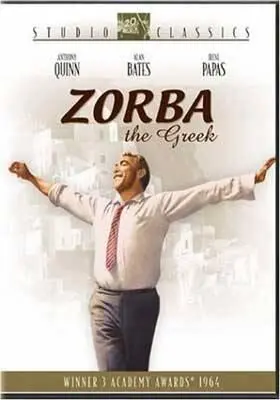
- Название:Zorba The Greek
- Автор:
- Жанр:
- Год:неизвестен
- ISBN:нет данных
- Рейтинг книги:3 / 5. Голосов: 1
-
Избранное:Добавить в избранное
- Отзывы:
-
Ваша оценка:
Zorba The Greek: краткое содержание, описание и аннотация
Предлагаем к чтению аннотацию, описание, краткое содержание или предисловие (зависит от того, что написал сам автор книги «Zorba The Greek»). Если вы не нашли необходимую информацию о книге — напишите в комментариях, мы постараемся отыскать её.
Zorba The Greek — читать онлайн бесплатно полную книгу (весь текст) целиком
Ниже представлен текст книги, разбитый по страницам. Система сохранения места последней прочитанной страницы, позволяет с удобством читать онлайн бесплатно книгу «Zorba The Greek», без необходимости каждый раз заново искать на чём Вы остановились. Поставьте закладку, и сможете в любой момент перейти на страницу, на которой закончили чтение.
Интервал:
Закладка:
"I'm going to put a few pylons in," he said.
I calmly chewed my food in the sun and felt a deep physical happiness as if I was floating on the cool, green waters of the sea. I did not allow my mind to take possession of this carnal joy, to press it into its own moulds, and make thoughts of it. I let my whole body rejoice from head to foot, like an animal. Now and then, nevertheless, in ecstasy, I gazed about me and within me, at the miracle of this life: What is happening? I said to myself. How did it come about that the world is so perfectly adapted to our feet and hands and bellies? And once again I closed my eyes and was silent.
Suddenly I stood up and went into the hut; there I picked up the Buddha manuscript and opened it. I had finished it. At the end, Buddha was lying beneath the flowering tree. He had raised his hand and ordered the five elements he was made of-earth, water, fire, air, spirit-to dissolve.
I had no more need of this image of my torment; I had gone beyond it, I had completed my service with Buddha-I, too, raised my hand, and ordered the Buddha within me to dissolve.
In great haste, with the help of words and their great exorcising power, I devastated his body, mind and spirit. Pitilessly I scratched the final words onto the paper, uttered the ultimate cry and wrote my name with a big red pencil. It was finished.
I took a thick piece of string and tied up the manuscript. I felt a strange sort of pleasure, as though I were tying up the hands and feet of a redoubtable enemy, or as savages must feel as they bind the bodies of their loved ones when they die, so that they shall not climb out of their graves and turn into ghosts.
A little girl suddenly ran up to me, barefoot. She was wearing a yellow dress and clasping a red egg tightly in her hand. She stopped and looked at me, terror-stricken.
"Well," I asked her, smíling to encourage her, "díd you want something?"
She sniffed and answered in a small, breathless voice.
"The lady has sent me to ask you to come. She is in bed. Are you the one they call Zorba?"
"All right. I'll come."
I slipped another red egg ínto her other tiny hand and she ran off.
I rose and started along the road. The village noises grew louder: the sweet sounds of the lyre, shouts, gunshots, joyous songs. When I came to the square, youths and girls had gathered beneath the fresh foliage of the poplars and were about to begin dancing. Sitting on the benches round the trees, the old men were watching, with their chins resting on their sticks. The old women were standing. behind. The brilliant lyre player, Fanurio, an April rose stuck behind his ear, was lording it amidst the dancers. With his left hand he held the lyre upright on his knee and with the right he was trying his bow with its noisy bells.
"Christ is reborn!" I shouted as I passed.
"He is, indeed!" came the answer in a joyful murmur from them all.
I looked round quickly. Well-built youths, with slim waists, wearing puffed-out breeches and, on their heads, kerchiefs with fringes which fell over their foreheads and temples like curly locks. And young girls, with sequins round their necks, embroidered white fichus, and lowered eyes, were trembling with expectation.
"Wouldn't you care to stay with us, sir?" asked a few voices.
But I had already passed.
Madame Hortense was lying in her big bed, the only piece of furniture she had always managed to hold on to. Her cheeks were burning with fever, and she was coughing.
As soon as she saw me she sighed complainingly.
"And Zorba? Where is Zorba?"
"He's not very well. Since the day you fell ill, he's been sick, too. He keeps holding your photograph in his hand and sighing as he gazes at it."
"Tell me more, tell me more…" murmured the poor old siren, closing her eyes in happiness.
"He's sent me to ask you if you want anything. He'll come himself this evening, he said, although he can't get about very well himself. He can't bear being away from you any longer…"
"Go on, please, go on…"
"He's had a telegram from Athens. The wedding clothes are ready, and the wreaths. They are on the boat and should be here soon… with the white candles and their pink ribbons…"
"Go on, go on…"
Sleep had won, her breathing changed; she began to talk deliriously. The room smelled of eau-de-Cologne, ammonia and sweat. Through the open window came the pungent odor of the excrement from the hens and rabbits in the yard.
I rose and slipped out of the room. At the door I ran across Mimiko. He was wearing new breeches and boots, and he had pushed a sprig of sweet basil behind his ear.
"Mimiko," I said to him, "run to Kalo village, will you, and bring the doctor!"
Mimiko had his boots off before I had finished speaking-he did not mean to spoil them on the way. He tucked them under his arm.
"Find the doctor, give him my respects and tell him to mount his old mare and come over here without fail. Tell him the lady's dangerously ill. She's caught cold, poor thing, she's feverish and she's dying, say. Don't forget to tell him that. Now be off!"
"Right away!"
He spat into his hands, clapped them joyously against one another, but didn't move. He looked at me with a gay twinkle in his eye.
"Get going! Didn't I say?"
He still did not budge. He winked at me and smiled satanically.
"Sir," he said, "I've taken a bottle of orange water up to your place as a present."
He stopped for a second. He was waiting for me to ask him who had sent it, but I did not do so.
"Don't you want to know who sent it, sir?" he chuckled. "It's for you to put in your hair, she said, to make you smell good."
"Get along! Quick! And keep your mouth shut!"
He laughed, spitting on his hands once more.
"Right away!" he cried again. "Christ is reborn!"
And he dísappeared.
22
BENEATH THE POPLAR TREES the paschal dance was at its height. It was led by a tall, handsome, dark youth of about twenty, whose cheeks were covered with a thick down which had never known a razor. In the opening of his shirt his chest made a splash of dark color-it was covered with curly hair. His head was thrown back, his feet beating against the earth like wings; from time to time he cast a glance at some 'girl, and the whites of his eyes gleamed steadily, disturbingly from a visage blackened by the sun.
I was enchanted and at the same time frightened. I was returning from Dame Hortense's house; I had called a woman in to look after her. This relieved me, and I had come to watch the Cretans dance. So I went up to uncle Anagnosti and sat down on a bench next to him.
"Who is that young man leading the dance?" I asked.
Uncle Anagnosti laughed:
"He's like the archangel who bears your soul away, the rascal," he said with admiration. "It's Sifakas, the shepherd. All the year round he keeps his flock on the mountains, then comes down at Easter to see people and to dance."
He sighed.
"Ah, if only I had his youth!" he muttered. "If I had his youth, by God! I'd take Constantinople by storm!"
The young man shook his head and gave a cry, bleating inhumanly, like a rutting ram.
"Play, play, Fanurio!" he shouted. "Play until Charon himself is dead."
Every minute death was dying and being reborn, just like life. For thousands of years young girls and boys have danced beneath the tender foliage of the trees in spring-beneath the poplars, firs, oaks, planes and slender palms-and they will go on dancing for thousands more years, their faces consumed with desire. Faces change, crumble, return to earth; but others rise to take their place. There is only one dancer, but he has a thousand masks. He is always twenty. He is immortal.
The young man raised his hand to stroke his moustache, but he had none.
Читать дальшеИнтервал:
Закладка:
Похожие книги на «Zorba The Greek»
Представляем Вашему вниманию похожие книги на «Zorba The Greek» списком для выбора. Мы отобрали схожую по названию и смыслу литературу в надежде предоставить читателям больше вариантов отыскать новые, интересные, ещё непрочитанные произведения.









Обсуждение, отзывы о книге «Zorba The Greek» и просто собственные мнения читателей. Оставьте ваши комментарии, напишите, что Вы думаете о произведении, его смысле или главных героях. Укажите что конкретно понравилось, а что нет, и почему Вы так считаете.