Margaret Atwood - The Robber Bride
Здесь есть возможность читать онлайн «Margaret Atwood - The Robber Bride» весь текст электронной книги совершенно бесплатно (целиком полную версию без сокращений). В некоторых случаях можно слушать аудио, скачать через торрент в формате fb2 и присутствует краткое содержание. Год выпуска: 1993, Жанр: Современная проза, на английском языке. Описание произведения, (предисловие) а так же отзывы посетителей доступны на портале библиотеки ЛибКат.
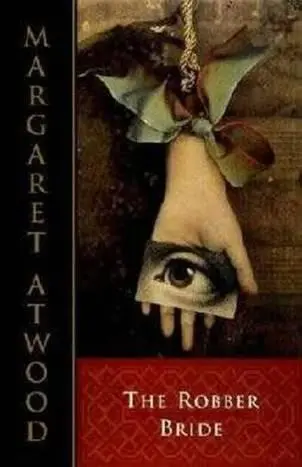
- Название:The Robber Bride
- Автор:
- Жанр:
- Год:1993
- ISBN:нет данных
- Рейтинг книги:5 / 5. Голосов: 1
-
Избранное:Добавить в избранное
- Отзывы:
-
Ваша оценка:
The Robber Bride: краткое содержание, описание и аннотация
Предлагаем к чтению аннотацию, описание, краткое содержание или предисловие (зависит от того, что написал сам автор книги «The Robber Bride»). Если вы не нашли необходимую информацию о книге — напишите в комментариях, мы постараемся отыскать её.
Even Zenia’s name is enough to provoke the old sense of outrage, of humiliation and confused pain. The truth is that at certain times—early mornings, the middle of the night—she finds it hard to believe that Zenia is really dead.’ Zenia is beautiful, smart and greedy; by turns manipulative and vulnerable, needy and ruthless; a man’s dream and a woman’s nightmare. She is also dead. Just to make absolutely sure Tony, Roz and Charis are there for the funeral. But five years on, as the three women share a sisterly lunch, the impossible happens: ‘with waves of ill will flowing out of her like cosmic radiation’, Zenia is back ...
This is the wise, unsettling, drastic story of three women whose lives share a common wound: Zenia, a woman they first met as university students in the sixties. Zenia is smart and beautiful, by turns manipulative, vulnerable—and irresistible. She has entered into their separate lives to ensnare their sympathy, betray their trust, and exploit their weaknesses. Now Zenia, thought dead, has suddenly reappeared. In this richly layered narrative, Atwood skilfully evokes the decades of the past as she retraces three women’s lives, until we are back in the present—where it’s yet to be discovered whether Zenia’s ‘pure, free-wheeling malevolence’ can still wreak havoc.
reports from the farthest reaches of the sex wars and is one of Margaret Atwood’s most intricate and subversive novels yet.
Exploring the paradox of female villainy, this tale of three fascinating women is another peerless display of literary virtuosity by the supremely gifted author of
and
. Roz, Charis and Tony all share a wound, and her name is Zenia. Beautiful, smart and hungry, by turns manipulative and vulnerable, needy and ruthless, Zenia is the turbulent center of her own neverending saga. She entered their lives in the sixties, when they were in college. Over the three decades since, she has damaged each of them badly, ensnaring their sympathy, betraying their trust, and treating their men as loot. Then Zenia dies, or at any rate the three women—with much relief -- attend her funeral. But as
begins, Roz, Charis and Tony have come together at a trendy restaraunt for their monthly lunch when in walks the seemingly resurrected Zenia...
In this consistently entertaining and profound new novel, Margaret Atwood reports from the farthest reaches of the war between the sexes with her characteristic well-crafted prose, rich and devious humor, and compassion.
The Robber Bride — читать онлайн бесплатно полную книгу (весь текст) целиком
Ниже представлен текст книги, разбитый по страницам. Система сохранения места последней прочитанной страницы, позволяет с удобством читать онлайн бесплатно книгу «The Robber Bride», без необходимости каждый раз заново искать на чём Вы остановились. Поставьте закладку, и сможете в любой момент перейти на страницу, на которой закончили чтение.
Интервал:
Закладка:
Mitch is already in here, taking a shower. His pink silhouette looms dimly through the steam and the pebble glass. Years ago—how many?—Roz would have scampered playfully into the shower, too; she would have soaped him all over, rubbed herself against his slippery body, pulled him down onto the tiled bathroom floor; back in the days when his skin fit him exactly, no sags, no bulges, and hers did too, and when he tasted like hazelnuts, a delicious roasted smell; but she doesn’t do such things now, now that she has become more reluctant to be viewed by daylight.
Anyway, if what she suspects is true, this is the wrong time to be putting herself on display. In Mitch’s cosmology Roz’s body represents possessions, solidity, the domestic virtues, hearth and home, long usage. Mother-of-his-children. The den. Whereas whatever other body may currently be occupying his field of vision will have other nouns attached to it: adventure, youth, freedom, the unknown, sex without strings. When the pendulum swings back—when that other body starts representing complications, decisions, demands, sulkiness, and weepy scenes—then it will be Roz’s turn again. This has been the pattern.
Intuition is not one of Roz’s strong suits, but she has intuitions about the onset of Mitch’s attacks. She thinks of them as attacks, as in attacks of malaria; or else as attacks of a different nature, for isn’t Mitch a predator, doesn’t he take advantage of these poor women, who are surely becoming younger and younger as Mitch gets older and older, isn’t it really more like a bear attack, a shark attack, aren’t these women savaged by him? Judging from some of the tearful phone calls Roz has fielded, some of the shoulders she’s patted in her hypocritical, maternal, there-there-ing way, they are.
It’s amazing the way Mitch can just write these women off. Sink his teeth into them, spit them out, and Roz is expected to clean up the mess. Fire off his loins and then wipe, like a blackboard, and after that he can barely remember their names.
Roz is the one who remembers. Their names, and everything else about them.
The beginnings of Mitch’s flings are never obvious. He never says blatant things such as “I’m working late at the office”; when he says that, he really is working late at the office. Instead, his habits undergo a subtle change. The numbers of conferences he goes to, the numbers of showers he takes, the amount he whistles in them, the quantity and kind of aftershave he uses and the places where he splashes it—the groin is a sure giveaway—such things are minutely observed by Roz, looking pleasantly out of her indulgent eyes, bristling like a bottlebrush within. He stands up straighter, pulls in his stomach more; she catches him glaring at himself, at his profile, in hall mirrors, in store windows, his eyes narrowing as if for a leonine pounce.
He’s more considerate of her, more attentive; he’s alert to her, watching her to see if she’s watching. He gives her little kisses on the back of her neck, on her fingertips—little homage kisses, little forgive-me kisses, but nothing that might be construed as foreplay, because in bed he becomes inert, he turns his back, he pleads minor illnesses, he takes up the jackknife position, oystering himself against her stroking fingers. His prick is a serial monogamist; a sure sign of a dyed-in-the-wool romantic, in Roz’s books. No cynical polygamy for it! One more, it wants, just one more woman, because a man’s reach should exceed his grasp, and Mitch is afraid of dying, and if he were ever to pause, to see himself as a man married to Roz, married only to Roz, married to Roz forever, in that instant his hair would fall out, his face would wrinkle up like a thousandyear-old mummy’s, his heart would stop. Or that is how Roz explains him, to herself.
She asks him if he’s seeing someone.
He says no. He says he’s just tired. He’s under a lot of pressure; he says, a lot of stress, and to prove it he gets up in the middle of the night and goes into his study, where he shuts the door and works until dawn. Sometimes there is the murmur of his voice: dictating letters, or so he claims, offering unasked-for explanations at breakfast.
And thus it goes, until Mitch gets tired of whoever it is he really has been seeing. Then he becomes deliberately careless, then he starts to leave clues. The match folder from the restaurant where he and Roz have never been, the unknown-number long-distance phone-call entries on their home phone bill. Roz knows that at this point she is supposed to call him on it. She’s supposed to confront him, to rave and scream, to cry and accuse and grovel, to ask him if he still loves her and whether the children mean anything to him at all. She’s supposed to behave the way she did the first time (the second time, the fifth time), so he will be able to wriggle off the hook, so he can tell the other woman, the one with the haggard lines appearing around her eyes, the one with the pieces of love bitten out of her, that he will always adore her but he can’t bear to leave the kids; and so he will be able to tell Roz—magnanimously, and with a heroic air of self-sacrifice—that she is the most important woman in his life, no matter how badly and foolishly he may behave from time to time, and he’s given the other woman up for her, so how can she refuse to forgive him? The other women are just trivial adventures, he will imply: she’s the one he comes home to. Then he will throw himself into her as into a warm bath, as into a deep feather bed, and exhaust himself, and sink again into connubial torpor. Until the next time.
Lately, however, Roz has been refusing her move. She’s learned to keep her big fat mouth shut. She ignores the phone bills and the match covers, and after the midnight conversations she tells him sweetly that she hopes he’s not overdoing it with too much work. During his conference absences she finds other things to do. She has meetings to go to, she has plays to attend, she has detective novels to read, tucked up in bed with her night cream; she has friends, she has her business to keep up; her time is fully occupied with items other than him. She adopts absentmindedness: she forgets to send his shirts to the cleaners, and when he speaks to her she says, “What did you just say, sweetie?” She buys new dresses and new perfumes, and smiles at herself in mirrors when he can be supposed not to be looking, but is, and Mitch begins to sweat.
Roz knows why: his little piece of cotton candy is growing claws, she’s saying she doesn’t understand what’s going on with him, she’s whining, she’s babbling about coiiiinitment and divorce, both of them things he is now supposed to be doing, after all he’s promised. The net is closing around him and he’s not being rescued. He’s being thrown from the troika, thrown to the wolves, to the hordes of ravening bimbos snapping at his heels.
In desperation he resorts to more and more open ploys. He leaves private letters lying around—the women’s letters to him, and, worse, his letters to the women—he actually makes copies!—and Roz reads them and fumes, and goes to the gym to work out, and eats chocolate mud cake afterwards, and puts the letters back where she found them and does not mention them at all. He announces a separate vacation—maybe he will take the boat on a short trip around Georgian Bay, by himself, he needs some time to unwind—and Roz pictures some loosemouthed slut spread out on the deck of the Rosalind 77, and mentally rips up the snapshot, and tells him she thinks that’s a wonderful idea because each of them could use a little space.
God only knows how much she bites her tongue. She waits until the last minute, just before he really has to elope, or else get caught screwing his latest thing in Roz’s raspberry-coloured bed in order to get Roz’s attention. Only then will she reach out a helping hand, only then will she haul him back from the brink, only then will she throw the expected tantrum. The tears Mitch sheds then are not tears of repentance. They are tears of relief.
Читать дальшеИнтервал:
Закладка:
Похожие книги на «The Robber Bride»
Представляем Вашему вниманию похожие книги на «The Robber Bride» списком для выбора. Мы отобрали схожую по названию и смыслу литературу в надежде предоставить читателям больше вариантов отыскать новые, интересные, ещё непрочитанные произведения.




Обсуждение, отзывы о книге «The Robber Bride» и просто собственные мнения читателей. Оставьте ваши комментарии, напишите, что Вы думаете о произведении, его смысле или главных героях. Укажите что конкретно понравилось, а что нет, и почему Вы так считаете.