Margaret Atwood - The Robber Bride
Здесь есть возможность читать онлайн «Margaret Atwood - The Robber Bride» весь текст электронной книги совершенно бесплатно (целиком полную версию без сокращений). В некоторых случаях можно слушать аудио, скачать через торрент в формате fb2 и присутствует краткое содержание. Год выпуска: 1993, Жанр: Современная проза, на английском языке. Описание произведения, (предисловие) а так же отзывы посетителей доступны на портале библиотеки ЛибКат.
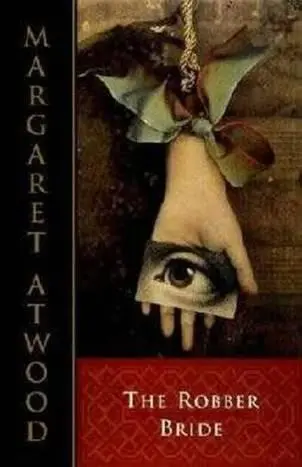
- Название:The Robber Bride
- Автор:
- Жанр:
- Год:1993
- ISBN:нет данных
- Рейтинг книги:5 / 5. Голосов: 1
-
Избранное:Добавить в избранное
- Отзывы:
-
Ваша оценка:
The Robber Bride: краткое содержание, описание и аннотация
Предлагаем к чтению аннотацию, описание, краткое содержание или предисловие (зависит от того, что написал сам автор книги «The Robber Bride»). Если вы не нашли необходимую информацию о книге — напишите в комментариях, мы постараемся отыскать её.
Even Zenia’s name is enough to provoke the old sense of outrage, of humiliation and confused pain. The truth is that at certain times—early mornings, the middle of the night—she finds it hard to believe that Zenia is really dead.’ Zenia is beautiful, smart and greedy; by turns manipulative and vulnerable, needy and ruthless; a man’s dream and a woman’s nightmare. She is also dead. Just to make absolutely sure Tony, Roz and Charis are there for the funeral. But five years on, as the three women share a sisterly lunch, the impossible happens: ‘with waves of ill will flowing out of her like cosmic radiation’, Zenia is back ...
This is the wise, unsettling, drastic story of three women whose lives share a common wound: Zenia, a woman they first met as university students in the sixties. Zenia is smart and beautiful, by turns manipulative, vulnerable—and irresistible. She has entered into their separate lives to ensnare their sympathy, betray their trust, and exploit their weaknesses. Now Zenia, thought dead, has suddenly reappeared. In this richly layered narrative, Atwood skilfully evokes the decades of the past as she retraces three women’s lives, until we are back in the present—where it’s yet to be discovered whether Zenia’s ‘pure, free-wheeling malevolence’ can still wreak havoc.
reports from the farthest reaches of the sex wars and is one of Margaret Atwood’s most intricate and subversive novels yet.
Exploring the paradox of female villainy, this tale of three fascinating women is another peerless display of literary virtuosity by the supremely gifted author of
and
. Roz, Charis and Tony all share a wound, and her name is Zenia. Beautiful, smart and hungry, by turns manipulative and vulnerable, needy and ruthless, Zenia is the turbulent center of her own neverending saga. She entered their lives in the sixties, when they were in college. Over the three decades since, she has damaged each of them badly, ensnaring their sympathy, betraying their trust, and treating their men as loot. Then Zenia dies, or at any rate the three women—with much relief -- attend her funeral. But as
begins, Roz, Charis and Tony have come together at a trendy restaraunt for their monthly lunch when in walks the seemingly resurrected Zenia...
In this consistently entertaining and profound new novel, Margaret Atwood reports from the farthest reaches of the war between the sexes with her characteristic well-crafted prose, rich and devious humor, and compassion.
The Robber Bride — читать онлайн бесплатно полную книгу (весь текст) целиком
Ниже представлен текст книги, разбитый по страницам. Система сохранения места последней прочитанной страницы, позволяет с удобством читать онлайн бесплатно книгу «The Robber Bride», без необходимости каждый раз заново искать на чём Вы остановились. Поставьте закладку, и сможете в любой момент перейти на страницу, на которой закончили чтение.
Интервал:
Закладка:
“Let’s put her on a stool,” they say. They carry her over and deposit her, and climb back onto their own stools, like circus animals who have done their trick.
“Mom, you look like a pumpkin in that,” says one. It’s Erin. Roz has always been able to tell them apart, or so she claims. Two guesses and she’s right every time. Mitch used to have trouble. But then, he only ever saw them for about fifteen minutes a day.
“Pumpkin, that’s me,” says Roz, with heavy jocularity. ‘Fat, orange, big friendly grin, hollow in the centre and glows in the dark:’ She needs her coffee, right now! She pulls open the freezer door, sticks the frozen blueberry package back in there, finds the bag of magic beans, and fumbles around in one of the roll-out drawers for the electric grinder. Having everything stowed away in drawers wasn’t such a hot idea, she can never find anything any more. Especially not the pot lids. The uncluttered look, said that fool of a designer. They always intimidate her.
“Aww,” says the other one. Paula. Errie and Pollie, they call each other, or Er and La, or, when they’re speaking collectively, Erla. It’s creepy when they do that. Erla’s going out tonight. That means both of them. “Aww. You rotten twin! You hurt the Mommy’s feelings! You are just rotten, rotten to the core!” This last is an imitation of Roz imitating her own mother, who used to say that. Roz feels a sudden need for her, for her harsh, embattled, once-scorned, long-dead mother. She’s tired of being a mother, she wants to be a child for a change. She missed out on that. It looks like way more fun.
The twins laugh delightedly. “Selfish rotten cesspool,” one says to the other.
“Unshaved armpit!”
“Festering tampon!”
“Used panty liner!” They can go on this way for hours, thinking up worse and worse insults for each other, laughing so hard they roll on the floor and kick their feet in the air with delight at their own outrageous humour. What puzzles her is how so many of their insults can be so—well, so sexist. Bitch and slut are among their mildest; she wonders if they’d let boys call them that. When they think she’s not listening, they can get much more obscene, or what she thinks of as obscene. Cunt gum. Such a thing could never even have been thought of, when she was growing up. And they’re only fifteen!
But people carry their vocabularies with them through their lives, like turtle shells, thinks Roz. She has a sudden flash of the twins at eighry, their beautiful faces raddled, their by-then-withered legs still encased in coloured tights, gym socks on their bunioned feet, still saying cunt gum. She shudders.
Touch wood, she corrects herself. They should live so long.
The coffee grinder isn’t there; not where she put it yesterday. “Darn it, kids,” she says. “Did you move my grinder?” Maybe it was Maria. Yesterday was one of Maria’s days to clean.
“Darn it!” says Paula. “Oh, my darned grinder. Oh gosh darn to heck!”
“Oh golly jeez, oh Holy Moly,” says Erin. They think it’s hilarious, the way Roz can’t bring herself to really swear. But she can’t. The words are in her head, all right, but they don’t come out. You want people to think you’re trash?
She must seem so archaic to them. So obsolete, so foreign. She spent the first half of her life feeling less and less like an immigrant, and now she’s spending the second half feeling more and more like one. A refugee from the land of middle age, stranded in the country of the young.
“Where’s your big brother?” she says. This sobers them up. “Where he usually is at this time of day,” says Erin with a hint of scorn. “Stoking up on his energy.”
“Zizzing;” says Paula, as if she wants them to get back to joking. “Dreamland,” says Erin pensively.
“Larryland,” says Paula. “Greetings, Earthling, I come from a distant planet:”
Roz wonders whether she should wake Larry up, decides not to. She feels safer about him when he’s asleep. He is the firstborn, the firstborn son. Not a lucky thing to be. Fingered for sacrifice, he would have been, once. It’s very bad news that he was named after Mitch. Laurence Charles Mitchell, such a weighty and pompous combination for such a vulnerable little boy. Even though he’s twenty-two and has a moustache, she can’t help thinking of him as that.
Roz finds the coffee grinder, in the pull-out drawer under the convection oven, among the roasting pans. She should speak to Maria. She grinds her beans, measures the coffee, turns on her cute Italian espresso maker. While waiting she peels herself an orange.
“I think he’s got something going,” says Erin. “Some romance or other.”
Paula has made herself some false teeth out of Roz’s orange peel. “Pouf, qui sait, c’est con fa, je m’en fiche,” she says, with elaborate shrugs, lisping and spitting. That’s about all the two of them have picked up from French immersion: loose talk. Roz doesn’t know most of the words and she’s just as glad.
“I think I spoiled you,” Roz says to them. “Spoiled, moi?” says Erin.
“Erla’s not spoiled,” says Paula with fake pouty innocence, taking out the orange-peel teeth. “Is she, Erla?”
“Holy Moly, gee whizzikers, Mommy, no!” says Erin. The two of them peer out at her through the underbrush of their hair, their bright eyes assessing her. Their kibitzing, their mimicry, their vulgar idiocies, their laughter, all of it is a distraction they put on, for her benefit. They tease her, but not too much: they know she has a breaking point. They never mentiori Mitch, for instance. They carry on as if he’s never existed. Do they miss him, did they love him, do they resent him, did they hate him? Roz doesn’t know. They don’t let her know. Somehow that’s harder.
They are so wonderful! She gazes at them with ferocious love. Zenia, she thinks, you bitch! Maybe you had everything else, but you never had such a blessing. You never had daughters. She starts to cry, resting her head in her hands, her elbows on the cold white tiles of the kitchen counter, the tears rolling hopelessly down.
The twins come round her, smaller than they were, anxious, more timid, patting her, stroking her orange back. “It’s okay, Mom, it’s okay,” they say.
“Look,” she tells them, “I put my elbow in your darned blue milk!”
“Oh heck!” they say. “Oh double darn!” They smile at her with relief.
XIII
The twins place their tall smoothie glasses ostentatiously in the dishwasher, head for the back stairs, forget the blender, remember it and come back, put it in too, forget the puddle of blue milk. Roz wipes it up as they take the stairs, two at a time, and barge along the hall to their rooms to get ready for school. They’re more subdued than usual, though; normally it’s an elephant stampede. Upstairs, two stereos go on at once, two competing drumbeats.
A couple more years and they’ll be away at university, in some other city. The house will be quiet. Roz doesn’t want to think about it. Maybe she’ll sell this barn. Get a Grade A condo, overlooking the lake.-Flirt with the doorman: w
She sits at the white counter, drinking her coffee at last, and eating her breakfast. Two rusks. Just an orange and two rusks, because she’s on a diet. Sort of a diet. A mini-diet.
She used to do all kinds of diets. Grapefruit ones, bran added to everything, all-protein. She used to wax and wane like the moon, trying to shake the twenty pounds that came on when the twins were born. But she’s not so drastic any more. She knows by now that weird diets are bad for you, the magazines have been full of it. The body is like a besieged fortress, they say; it stores up food supplies in its fat cells, it stockpiles in case of emergency, and if you diet then it thinks it’s being starved to death and stores up even more, and you turn into a blimp. Still, a little deprivation here and there can’t hurt. Eating a little less, that’s not a real diet.
Читать дальшеИнтервал:
Закладка:
Похожие книги на «The Robber Bride»
Представляем Вашему вниманию похожие книги на «The Robber Bride» списком для выбора. Мы отобрали схожую по названию и смыслу литературу в надежде предоставить читателям больше вариантов отыскать новые, интересные, ещё непрочитанные произведения.






Обсуждение, отзывы о книге «The Robber Bride» и просто собственные мнения читателей. Оставьте ваши комментарии, напишите, что Вы думаете о произведении, его смысле или главных героях. Укажите что конкретно понравилось, а что нет, и почему Вы так считаете.