Margaret Atwood - The Robber Bride
Здесь есть возможность читать онлайн «Margaret Atwood - The Robber Bride» весь текст электронной книги совершенно бесплатно (целиком полную версию без сокращений). В некоторых случаях можно слушать аудио, скачать через торрент в формате fb2 и присутствует краткое содержание. Год выпуска: 1993, Жанр: Современная проза, на английском языке. Описание произведения, (предисловие) а так же отзывы посетителей доступны на портале библиотеки ЛибКат.
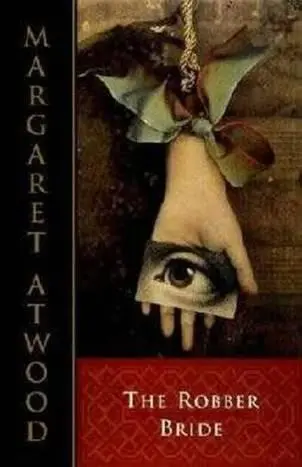
- Название:The Robber Bride
- Автор:
- Жанр:
- Год:1993
- ISBN:нет данных
- Рейтинг книги:5 / 5. Голосов: 1
-
Избранное:Добавить в избранное
- Отзывы:
-
Ваша оценка:
The Robber Bride: краткое содержание, описание и аннотация
Предлагаем к чтению аннотацию, описание, краткое содержание или предисловие (зависит от того, что написал сам автор книги «The Robber Bride»). Если вы не нашли необходимую информацию о книге — напишите в комментариях, мы постараемся отыскать её.
Even Zenia’s name is enough to provoke the old sense of outrage, of humiliation and confused pain. The truth is that at certain times—early mornings, the middle of the night—she finds it hard to believe that Zenia is really dead.’ Zenia is beautiful, smart and greedy; by turns manipulative and vulnerable, needy and ruthless; a man’s dream and a woman’s nightmare. She is also dead. Just to make absolutely sure Tony, Roz and Charis are there for the funeral. But five years on, as the three women share a sisterly lunch, the impossible happens: ‘with waves of ill will flowing out of her like cosmic radiation’, Zenia is back ...
This is the wise, unsettling, drastic story of three women whose lives share a common wound: Zenia, a woman they first met as university students in the sixties. Zenia is smart and beautiful, by turns manipulative, vulnerable—and irresistible. She has entered into their separate lives to ensnare their sympathy, betray their trust, and exploit their weaknesses. Now Zenia, thought dead, has suddenly reappeared. In this richly layered narrative, Atwood skilfully evokes the decades of the past as she retraces three women’s lives, until we are back in the present—where it’s yet to be discovered whether Zenia’s ‘pure, free-wheeling malevolence’ can still wreak havoc.
reports from the farthest reaches of the sex wars and is one of Margaret Atwood’s most intricate and subversive novels yet.
Exploring the paradox of female villainy, this tale of three fascinating women is another peerless display of literary virtuosity by the supremely gifted author of
and
. Roz, Charis and Tony all share a wound, and her name is Zenia. Beautiful, smart and hungry, by turns manipulative and vulnerable, needy and ruthless, Zenia is the turbulent center of her own neverending saga. She entered their lives in the sixties, when they were in college. Over the three decades since, she has damaged each of them badly, ensnaring their sympathy, betraying their trust, and treating their men as loot. Then Zenia dies, or at any rate the three women—with much relief -- attend her funeral. But as
begins, Roz, Charis and Tony have come together at a trendy restaraunt for their monthly lunch when in walks the seemingly resurrected Zenia...
In this consistently entertaining and profound new novel, Margaret Atwood reports from the farthest reaches of the war between the sexes with her characteristic well-crafted prose, rich and devious humor, and compassion.
The Robber Bride — читать онлайн бесплатно полную книгу (весь текст) целиком
Ниже представлен текст книги, разбитый по страницам. Система сохранения места последней прочитанной страницы, позволяет с удобством читать онлайн бесплатно книгу «The Robber Bride», без необходимости каждый раз заново искать на чём Вы остановились. Поставьте закладку, и сможете в любой момент перейти на страницу, на которой закончили чтение.
Интервал:
Закладка:
It is jealousy. Roz is so jealous she can’t think straight. Some nights she cries with rage, others with sorrow. She walks around in a red fog of anger, in a grey mist of self-pity, and she hates herself for both. She calls on her stubbornness, her will to fight, but who exactly is her enemy? She can’t fight Mitch, because she wants him back. Maybe if she holds her fire long enough, this will all blow over. Mitch will fizzle out like a barbecue in the rain, he’ll come back home as he has before, wanting her to disentangle him from Zenia, wanting to be saved. And Roz will do it, though this time it won’t be so easy. He’s violated something, some unwritten contract, some form of trust. He’s never moved out before. The other women were a game to him but Zenia is serious business.
There’s another way it could play: Zenia would divest herself of Mitch. She would throw him out the window, as he has thrown many. Mitch would get his comeuppance. Roz would get revenge.
In public Roz maintains her grin, her tooth-filled grin. The muscles of her jaws ache with it. She wishes to preserve her dignity, put up a bold front. But that’s not so easy, with her chest ripped open like this and her heart exposed for all to surely see; her heart, which is on fire and dripping blood.
She can’t expect much pity from her friends, the ones who used to tell her to dump Mitch. She sees now what they’d meant: Dump him before he dumps you!
But she didn’t listen. Instead she’d kept on playing the knifethrower’s assistant, in her sparkly costume, with her arms and legs splayed out, standing still and smiling while the knives thudded into the wall, tracing the outline of her body. Flinch and you’re dead. It was inevitable that one day, by accident or on purpose, she’d get hit.
Tony phones her. So does Charis. She hears the concern in their voices: they know something, they’ve heard. But she puts them off; she holds them at arm’s length. One touch of their compassion now would do her in.
Three months go by. Roz straightens her back and tightens her lips and clenches her jaws so hard she’s sure her teeth are being ground to stumps, and tints her hair maroon, and buys a new outfit, an Italian leather suit in an opulent shade of vermilion. She has several unsatisfactory flings with men. She rolls about with them, fitfully, self-consciously, as if her bedroom’s wired for sound: she knows she’s acting. She hopes the news of her reckless unfaithfulness will get back to Mitch and make him writhe, but any writhing he does is in the privacy of his own home, if the viper’s nest he’s living in can be called that. Worst case: maybe he’s not writhing. Maybe he’s delighted at the possibility that some hapless fall guy might take her off his hands.
Harriet phones: she thinks Roz might like to know that Zenia is seeing another man, in the afternoons, while Mitch is out. “What sort of other man?” says Roz. Adrenalin rushes through her brain. ‘
“Let’s just say he wears a black leather jacket and drives a Harley, and has two arrests but no convictions. Lack of witnesses willing to come forward:”
“—Arrests for what?” says Roz.
“Dealing coke,” says Harriet. ,
Roz asks for a written report, and pops it into an envelope, and addresses it anonymously to Mitch, and waits for the other shoe to drop; and it does drop, because one Monday just before lunchtime Harriet calls her at the office.
“She’s taken a plane,” says Harriet. “Three big suitcases.”
“Where to?” says Roz. Her whole body is tingling. “Was Mitch with her?”
“No,” says Harriet. “To London.”
“Maybe he’ll join her there later,” says Roz. Well, well, she thinks. Bye bye black sheep. Three bags full.
“I don’t think so,” says Harriet. “She didn’t have that look.”
“What look did she have?” says Roz.
“The dark glasses look,” says Harriet. “The scarf-aroundthe-neck look. I’d lay money on a black eye, and two to one he tried to throttle her. Or somebody did. I’d say from all appearances she’s on the run:”
“He’ll go after her,” says Roz, who doesn’t want to get her hopes up. “He’s obsessed.”
But that evening, when she walks into her house, into her living room with its deep pink-and-mauve carpets and its subtle off-green accents, neo-forties revival with postmod undertones, there is Mitch, sitting in his favoured armchair as if he’s never been away.
Sitting in his favoured armchair, at least. But as for away, yes, that’s where he’s been. Far away. Some cinder of a planet in a distant galaxy. He looks as if he’s been drifting around in deep space, where it’s cold and empty and there are things with tentacles, and has just barely made it back to Earth. A stunned look, a conked-on-the-head look. Mugged, pushed face first against a brick wall, crammed into a trunk, tossed half-naked onto the stony roadside, and he didn’t even see who did it.
Glee leaps up in Roz, but she stifles it. “Mitch,” she says, in her best hen voice. “Honey, what’s wrong?”
“She’s gone,” says Mitch.
“Who is?” says Roz, because although she won’t demand a pound of flesh, not at this juncture, she does want a little blood, just a drop or two, because she’s thirsty.
“You know who,” says Mitch in a choking voice. Is this sorrow or fury? Roz can’t tell.
“I’ll get you a drink,” she says. She pours one for each of them, then sits down opposite Mitch in the matching armchair, their usual position for conversations like this. Have-it-out conversations. He will explain, she will be hurt; he will pretend to repent, she will pretend to believe him. They face each other, two card sharps, two poker players.
Roz opens. “Where did she go?” she says, although she knows the answer; but she wants to know if he knows. If he doesn’t know it won’t be her that tells him. He can hire his own detective.
“She took her clothes,” says Mitch, in a sort of groan. He puts one hand to his head, as if he has a headache. So, he doesn’t know.
What is Roz expected to do? Sympathize with her husband because the woman he loves, loves instead of her, has flown the coop? Console him? Kiss him better? Yes, that’s what, all right. She hovers on the edge of doing it—Mitch looks so battered—but she hangs back. Let him wait.
Mitch looks across at her. She bites her tongue. Finally he says, “There’s something else.”
Zenia, it appears, has forged some cheques, on the Woman operating account. She’s made off with the entire allowable overdraft. How much? Fifty thousand dollars, give or take; but in cheques under a thousand dollars each. She cashed them through different banks. She knows the system.
Roz calculates: she can afford it, and the disappearance of Zenia is cheap at the price. “Whose name did she use?” she asks. She knows who the signing officers are. For small cheques like that, it’s Zenia herself and any one of three board members.
“Mine,” says Mitch.
What could be crystal clearer? Zenia is a cold and treacherous bitch. She never loved Mitch. All she wanted was the pleasure of winning, of taking him away, from Roz. Also the money. This is obvious to Roz, but not, apparently, to Mitch. “She’s in some kind of trouble:” he says. “I ought to find her.” He must be thinking about the coke dealer.
Roz loses it. “Oh, spare me,” she says.
“I’m not asking you to do anything,” Mitch says, as if Roz would be too mean-spirited to lend a helping hand. “I know where that envelope came from:”
“You’re not actually going after her,” says Roz. “I mean, haven’t you got the message? She’s wiped her spikes on you. She’s made a fool of you. She’s lied and cheated and stolen, and she’s written you off. Believe me, there’s no place in her life for a used dupe.”
Читать дальшеИнтервал:
Закладка:
Похожие книги на «The Robber Bride»
Представляем Вашему вниманию похожие книги на «The Robber Bride» списком для выбора. Мы отобрали схожую по названию и смыслу литературу в надежде предоставить читателям больше вариантов отыскать новые, интересные, ещё непрочитанные произведения.


Обсуждение, отзывы о книге «The Robber Bride» и просто собственные мнения читателей. Оставьте ваши комментарии, напишите, что Вы думаете о произведении, его смысле или главных героях. Укажите что конкретно понравилось, а что нет, и почему Вы так считаете.