Anthony Powell - Casanova’s Chinese Restaurant
Здесь есть возможность читать онлайн «Anthony Powell - Casanova’s Chinese Restaurant» весь текст электронной книги совершенно бесплатно (целиком полную версию без сокращений). В некоторых случаях можно слушать аудио, скачать через торрент в формате fb2 и присутствует краткое содержание. Жанр: Современная проза, на английском языке. Описание произведения, (предисловие) а так же отзывы посетителей доступны на портале библиотеки ЛибКат.
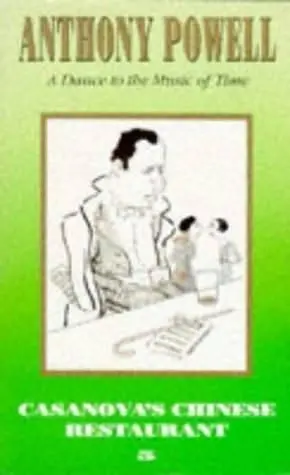
- Название:Casanova’s Chinese Restaurant
- Автор:
- Жанр:
- Год:неизвестен
- ISBN:нет данных
- Рейтинг книги:5 / 5. Голосов: 1
-
Избранное:Добавить в избранное
- Отзывы:
-
Ваша оценка:
Casanova’s Chinese Restaurant: краткое содержание, описание и аннотация
Предлагаем к чтению аннотацию, описание, краткое содержание или предисловие (зависит от того, что написал сам автор книги «Casanova’s Chinese Restaurant»). Если вы не нашли необходимую информацию о книге — напишите в комментариях, мы постараемся отыскать её.
The novels follow Nicholas Jenkins, Kenneth Widmerpool and others, as they negotiate the intellectual, cultural and social hurdles that stand between them and the “Acceptance World.”
Casanova’s Chinese Restaurant — читать онлайн бесплатно полную книгу (весь текст) целиком
Ниже представлен текст книги, разбитый по страницам. Система сохранения места последней прочитанной страницы, позволяет с удобством читать онлайн бесплатно книгу «Casanova’s Chinese Restaurant», без необходимости каждый раз заново искать на чём Вы остановились. Поставьте закладку, и сможете в любой момент перейти на страницу, на которой закончили чтение.
Интервал:
Закладка:
‘How is Isobel, Nick?’ Veronica asked. ‘I went to see her last week. She was looking a bit washed out. I’d have gone again, but one of the kids was running a temperature and I got stuck in the house for a day or two. I hear St John Clarke is coming to lunch. Isn’t that exciting? I used to love Fields of Amaranth when I was a girl. I never seem to get any time for reading now.’
George and Veronica were almost immediately followed into the room by Susan and her husband, Roddy Cutts, also in the City, now an M.P. Tall, sandy-haired, bland, Roddy smiled ceaselessly. The House of Commons had, if anything, increased a tendency, probably congenital, to behave with a shade more assiduity than ordinary politeness required; a trait that gave Roddy some of the bearing of a clergyman at a school-treat. Always smiling, his eyes roved for ever round the room, while he offered his hosts their own food, and made a point of talking chiefly to people he did not know, as if he felt these could not be altogether comfortable if still unacquainted with himself. In spite of accepting, indeed courting, this duty of putting young and old at their ease, he lacked the powerful memory – perhaps also the interest in individual differences of character – required to retain in the mind names and personal attributes; a weakness that sometimes impaired this eternal campaign of universal good-will. All the same, Roddy was able, ambitious, quite a formidable figure.
George and Roddy did not exactly dislike one another, but a certain faint sense of tension existed between them. Roddy, who came of a long line of bankers on his father’s side, while his mother, Lady Augusta’s, family could claim an almost equal tradition of shrewd business grasp, undoubtedly regarded George as an amateur where money matters were concerned. George, on the other hand, was clearly made impatient when Roddy, speaking as a professional politician, explained in simple language the trend of public affairs, particularly the military implications of world strategy in relation to the growing strength of Germany. Besides, Susan was George’s favourite sister, so there may have been a touch of jealousy about her too. Susan was a pretty girl, not a beauty, but lively and, like her husband, ambitious; possessing plenty of that taste for ‘occasion’ so necessary to the wife of a man committed to public life.
Lady Warminster now appeared in the room. She had probably mastered her habitual unpunctuality at meals in honour of St John Clarke. Slighter in build than her sister, Molly Jeavons, she looked as usual like a very patrician sibyl about to announce a calamitous disaster of which she had personally given due and disregarded warning. This Cassandra-like air of being closely in touch with sacred mysteries, even with the Black Arts themselves, was not entirely misleading. Lady Warminster was prone to fortune-tellers and those connected with divination. She was fond of retailing their startling predictions. I found that, in her day, she had even consulted Uncle Giles’s fortune-telling friend, Mrs Erdleigh, whom she rated high as an oracle, although the two of them had long been out of touch, and had not ‘put the cards out’ together for years.
‘I asked Mr Clarke for half-past one,’ said Lady Warminster. ‘You know I had not seen him since one of those rum parties Aunt Molly used to give, when I noticed him at Bumpus’s last week, browsing about among the books. I think he only goes there to read the new ones, because he showed no sign of wanting to buy anything. When he caught sight of me, he immediately followed me out into Oxford Street and began to talk about Shelley. He told me a long story of how he wanted to see me again, how people no longer liked him on account of his political opinions. He is rather an old humbug, but I remember enjoying the first part of Fields of Amaranth when it came out. I always think one ought to be grateful to an author if one has liked even a small bit of a book.’
I had heard little of St John Clarke since the days when Mark Members and J. G. Quiggin had been, one after another in quick succession, his secretary; to be followed by the ‘Trotskyist’ German boy, Werner Guggenbühl; Guggenbühl, so Quiggin hinted, had been sacked as a result of political pressure, but did not mind leaving as he had found a better job. By this time, so many people of relative eminence were writing, speaking, or marching in one or another form of militant political expression that St John Clarke’s adhesion to the Left was a matter of little general interest. He was said to have become at times resentful of a brand of politics he felt to lay a burden on his social life.
‘The man has got it in him to be a traitor to any cause,’ Quiggin said, when he reported this. ‘We shall never see Clarke manning a machine-gun.’
This supposed backsliding on the part of St John Clarke was certainly not because any potential hostess objected to his being a ‘Communist’. On the contrary, as an elderly, no longer very highly esteemed writer, such views may even have done something to re-establish his name. The younger people approved, while in rich, stuffy houses, where he was still sometimes to be seen on the strength of earlier reputation as a novelist, a left-wing standpoint was regarded as suitable to a man of letters, even creditable in a widely known, well-to-do author, who might at his age perfectly well have avoided the controversies of politics. However, St John Clarke himself apparently felt less and less capable, in practice, of taking part in the discussion of Marxist dialectic, with its ever-changing bearings. As a consequence of this laxity in ‘keeping up’, he had lost ground in the more exacting circles of the intellectual Left. His name was rarely seen except in alphabetical order among a score of nonentities signing at the foot of some letter to the press. St John Clarke, according to Members (himself suspected by Quiggin of ‘political cynicism’) yearned for his former unregenerate life. If so, he must have felt himself too deeply committed, perhaps too old, to make a reversal of programme – which, at that period, would in any case have entailed swimming against a stream that brought to a writer certain advantages. Lady Warminster was probably better informed about St John Clarke than he supposed. Her phrase ‘rather an old humbug’ established within the family her own, as it were, official attitude. She now made some enquiry about the colds from which Veronica’s two children, Angus and Iris, had been suffering.
‘Oh, Angus is all right at last,’ said George, speaking before his wife could reply. ‘We have been looking about for a school for him. I am going down to see another next week.’
‘They are both off to their Granny’s on Friday,’ said Veronica, ‘where they will get fussed over a lot and probably catch colds all over again. But there it is. They have to go. The rest of the year will be spent getting them out of bad habits.’
‘Talking of grandparents,’ said George, who, although reputed to be very ‘good’ about Veronica’s children, probably preferred relations on their father’s side to be kept, in so far as possible, out of sight and out of mind, ‘I was wondering whether I ought to try and reopen with Erry the question of getting the stained glass window put up to our own grandfather. I saw Uncle Alfred the other day-he has not been at all well, he tells me – who complained the matter had been allowed to drift for a number of years. I thought I would leave it for a time until Erry had settled down after his Chinese trip, then tackle him about it. There are always a mass of things to do after one has come home from abroad, especially after a long tour like that. I don’t know what state of mind he is in at the moment. Do you happen to have seen anything of him lately?’
Читать дальшеИнтервал:
Закладка:
Похожие книги на «Casanova’s Chinese Restaurant»
Представляем Вашему вниманию похожие книги на «Casanova’s Chinese Restaurant» списком для выбора. Мы отобрали схожую по названию и смыслу литературу в надежде предоставить читателям больше вариантов отыскать новые, интересные, ещё непрочитанные произведения.


Обсуждение, отзывы о книге «Casanova’s Chinese Restaurant» и просто собственные мнения читателей. Оставьте ваши комментарии, напишите, что Вы думаете о произведении, его смысле или главных героях. Укажите что конкретно понравилось, а что нет, и почему Вы так считаете.