Marina Lewycka - Two Caravans
Здесь есть возможность читать онлайн «Marina Lewycka - Two Caravans» весь текст электронной книги совершенно бесплатно (целиком полную версию без сокращений). В некоторых случаях можно слушать аудио, скачать через торрент в формате fb2 и присутствует краткое содержание. Жанр: Современная проза, на английском языке. Описание произведения, (предисловие) а так же отзывы посетителей доступны на портале библиотеки ЛибКат.
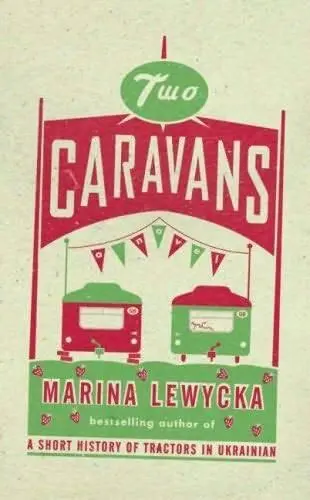
- Название:Two Caravans
- Автор:
- Жанр:
- Год:неизвестен
- ISBN:нет данных
- Рейтинг книги:3 / 5. Голосов: 1
-
Избранное:Добавить в избранное
- Отзывы:
-
Ваша оценка:
Two Caravans: краткое содержание, описание и аннотация
Предлагаем к чтению аннотацию, описание, краткое содержание или предисловие (зависит от того, что написал сам автор книги «Two Caravans»). Если вы не нашли необходимую информацию о книге — напишите в комментариях, мы постараемся отыскать её.
Somewhere in the heart of the green and pleasant land called England is a valley filled with strawberries. A group of migrant workers, who hail from Eastern Europe, China, and Africa have come here to harvest them for delivery to British supermarkets, and end up living in two small trailer homes, a men’s trailer and a woman’s trailer. They are all seeking a better life (and in their different ways they are also, of course, looking for love) and they’ve come to England, some legally, some illegally, to find it. They are supervised-some would say exploited-by Farmer Leaping, a red-faced Englishman who treats everyone equally except for the Polish woman named Yola, the boss of the crew, who favors him with her charms in exchange for something a little extra on the side. But the two are discreet, and all is harmonious in this cozy vale-until the evening when Farmer Leaping’s wife comes upon him and Yola and does what any woman would do in this situation: She runs him down in her red sports car. By the time the police arrive the migrant workers have piled into one of the trailer homes and hightailed it out of their little arcadia, thus setting off one of the most enchanting, merry, and moving picaresque journeys across the length and breadth of England since Chaucer’s pilgrims set off to Canterbury.
Along the way, the workers’ fantasies about England keep rudely bumping into the ignominious, brutal, and sometimes dangerous realities of life on the margins for Ĺ˝migrĹ˝s in the new globalized labor market. Some of them meet terrible ends, some give up and go back home, but for those who manage to hang in for the full course of this madcap ride, the rewards-like the strawberries-prove awfully sweet-especially for the young Ukrainians from opposite sides of the tracks, Andriy and Irina, whose initial mutual irritation blossoms into love.
Two Caravans — читать онлайн бесплатно полную книгу (весь текст) целиком
Ниже представлен текст книги, разбитый по страницам. Система сохранения места последней прочитанной страницы, позволяет с удобством читать онлайн бесплатно книгу «Two Caravans», без необходимости каждый раз заново искать на чём Вы остановились. Поставьте закладку, и сможете в любой момент перейти на страницу, на которой закончили чтение.
Интервал:
Закладка:
“Uh-oh.” Neil looks over towards the Portuguese-Brazilians, who are becoming increasingly raucous. “Bagpipes. Yer’d better not look at this, Mick.”
But Tomasz is transfixed.
One of them, the one with the manic eyes, has seized a bedraggled broken-legged chicken, and tucking it under his arm, its head poking out backwards behind his elbow, he is sneaking up on his friend, who is bending down to close a cage. As he straightens up, the other man squeezes the chicken hard with his elbow, like a bagpipe, and a torrent of excrement flies out of the chicken’s tail end and hits the man in the face. The chicken squawks and struggles to free itself, excrement still dribbling from its behind. The victim bellows in fury, wiping his face with his hands, which just spreads it around even more. Then he grabs another chicken, sticks it backwards under his arm, and squeezes it hard at his friend with a rough pumping action. The chicken lets out a long screech of pain. Excrement flies. The older man comes rushing across, shouting at the other two to stop, skids in the slime and ends up wallowing on the ground in all the muck. The fourth man just stands and watches, clutching his sides and weeping with laughter. Neil also stands and laughs, whooping hysterically, tears pouring down his face. To his horror, Tomasz finds that he is laughing too.
The foreman pulls himself up and fires off a stream of abuse in Portuguese. Sulkily, they resume their work. There is an edge of barely suppressed excitement as the number of birds diminishes, and catching the remaining ones becomes more challenging. It is incredibly hot, the shit on the floor steaming like a manure heap, but they still can’t leave the doors of the barn open. These last few chickens are the survivors, the tough ones. They are all having to run around more, shouting and swearing, as they skid in the muck trying to corner and grab the birds.
In the end, there is just one chicken left, a large canny bird that dodges and sidesteps with amazing skill as they try to close in on it. Then one of the Portuguese-Brazilians-the football enthusiast with the beautiful teeth-catches the fleeing chicken with the tip of his boot, sending it up into the air. Its wings are too weak to carry its weight, and as it flops down the second Portuguese-Brazilian runs up and gives it a mighty kick, sending it up into the air again. It is spinning and screeching. Feathers are flying everywhere. The older man is shouting to them to stop, but the game is too exciting. The first one boots it right across the feeding trough and raises his arms in the air shouting, “Goal! Goal!” The bird, dazed and dishevelled, picks itself up and starts to run again, limping. It is running towards Tomasz. Suddenly it stops and looks at him, its strange round eyes blinking. He looks back. They stand and face each other, man and bird. Then with a quick swoop, he bends down, grabs the bird, and holding it in both hands, dashes across the barn, opens the door and runs outside. Still holding the chicken against his chest, he sprints through the yard to a low wire fence beyond which is a dip with a hedge at the bottom. He leans and puts the chicken down on the other side of the fence. It stands there, bewildered, blinking in the bright light. He leans over, gives it a shove and whispers in Polish, “Run, chicken, run!” The bird hesitates for a moment, then suddenly it dashes towards the hedge as fast as its stunted little legs will carry it, and disappears into the undergrowth.
The others have followed him outside, with puzzled looks on their faces.
“What yer doing, Mick?” asks Neil.
Tomasz turns to face them with a mad grin.
“Rugby. I score.”
By the time they have finished, he is so burnt out with exhaustion that he longs for that filthy mattress with five other sweaty exhausted bodies stretched out alongside. The four Portuguese-Brazilians have gone off somewhere with the lorry driver. Tomasz is too tired to go with them, and decides instead to stretch his legs and walk down to the village to see whether he can buy something to eat. Their pair of houses is on the outskirts of Titchington, which turns out to be no more than a cluster of quaint steep-gabled cottages with gardens full of roses, clustered around a pretty medieval church. He wonders whether the villagers know the horror that is happening on their doorstep. It was said that the villagers who lived near Treblinka had only a hazy idea of what was happening behind the barbed wire fence a few kilometres away. They, like the villagers of Titchington, must have been bothered by the smell when the wind blew in a certain direction.
There is no shop or pub. He realises with dismay that he has nothing to eat, and there is nowhere to buy anything. When he gets back to the house, it is empty. The sleepers have all disappeared-there is nothing but their lingering smells and their shabby holdalls and overflowing carrier bags lined up against the walls to remind him they were there. He hunts around in the cupboards and finds some slices of stale bread and a tin of tomatoes. In a drawer in the kitchen there is a tin opener. He eats the tomatoes just like that, out of the tin, mopping out the juice with stale bread. At the end, he still feels hungry. If only there were some pilchards. Or some chocolate biscuits. And a nice glass of wine. Chianti. Rioja. He wonders where Yola and Marta are, and what they are eating. Rabbit maybe. Or fish. He imagines he can smell the dish, fragrant with herbs, and Yola, smelling of soap, passing a plate to him and smiling. Come, eat, Tomek .
Then there is a knock on the door and, without waiting for him to open it, Neil walks in. He has changed out of his overalls into jeans and a black leather jacket, and he has a motorcycle helmet under his arm. In his other hand, he is holding something in a paper bag.
“Here, Mick. I got this for you. Solid-er nosh.”
The bag is warm. Tomasz opens it. Inside, in a foil container, is a small chicken-and-mushroom pie.
“Thank you.” He starts to unwrap it. The smell is penetrating and delicious. It must be the tiredness, or all the pent-up horror of the chicken barn, or maybe just loneliness that makes the tears spring into his eyes. “Thankyou. You have saved me from desolation row.”
“Desolation row.” Neil nods. “That’s good. Is it a film?”
“It is song.”
“I like that.”
“And good luck with your voyage.”
“Yeah.” The lad shuffles his feet backwards towards the door. “Yeah. I’m getting there.”
There is a full moon that night, which shines in through the open curtains of the upstairs bedroom, lighting up the five sleeping figures curled on their mattresses on the floor-five strangers, who arrived at half past midnight and made such a noise when they came in that they woke Tomasz, who had gone to bed three hours earlier. Now, despite his weariness, he can’t get back to sleep. He listens to their deep, rhythmic breathing, and stares at the moon. He is thinking about the chicken-the one that ran away. Is it sleeping in the hedge tonight, under the moonlight? Is it enjoying its freedom? What is freedom?
“Yerll be on chicken-shit clear-up for a few days. Then they’re sending yer to the slaughterhouse,” Darren had said, and Tomasz had shuddered.
“Is there not another job I could do?”
“Nah, pal. Yer’ve got to go where they send yer.”
“Where black is the colour and none is the number.” Darren gave him a funny look.
Is he freer here in the West today than he was in Poland in the years of communism, when all he dreamt of was freedom, without even knowing what it was? Is he really any freer than those chickens in the barn, packed here in this small stinking room with five strangers, submitting meekly to a daily horror that has already become routine? Tormentor and tormented, they are all just damned creatures in hell. There must be a song in this.
Читать дальшеИнтервал:
Закладка:
Похожие книги на «Two Caravans»
Представляем Вашему вниманию похожие книги на «Two Caravans» списком для выбора. Мы отобрали схожую по названию и смыслу литературу в надежде предоставить читателям больше вариантов отыскать новые, интересные, ещё непрочитанные произведения.






Обсуждение, отзывы о книге «Two Caravans» и просто собственные мнения читателей. Оставьте ваши комментарии, напишите, что Вы думаете о произведении, его смысле или главных героях. Укажите что конкретно понравилось, а что нет, и почему Вы так считаете.