Xhenet Aliu - Brass
Здесь есть возможность читать онлайн «Xhenet Aliu - Brass» весь текст электронной книги совершенно бесплатно (целиком полную версию без сокращений). В некоторых случаях можно слушать аудио, скачать через торрент в формате fb2 и присутствует краткое содержание. Город: NYC, Год выпуска: 2018, ISBN: 2018, Издательство: Random House Publishing Group, Жанр: Современная проза, на английском языке. Описание произведения, (предисловие) а так же отзывы посетителей доступны на портале библиотеки ЛибКат.
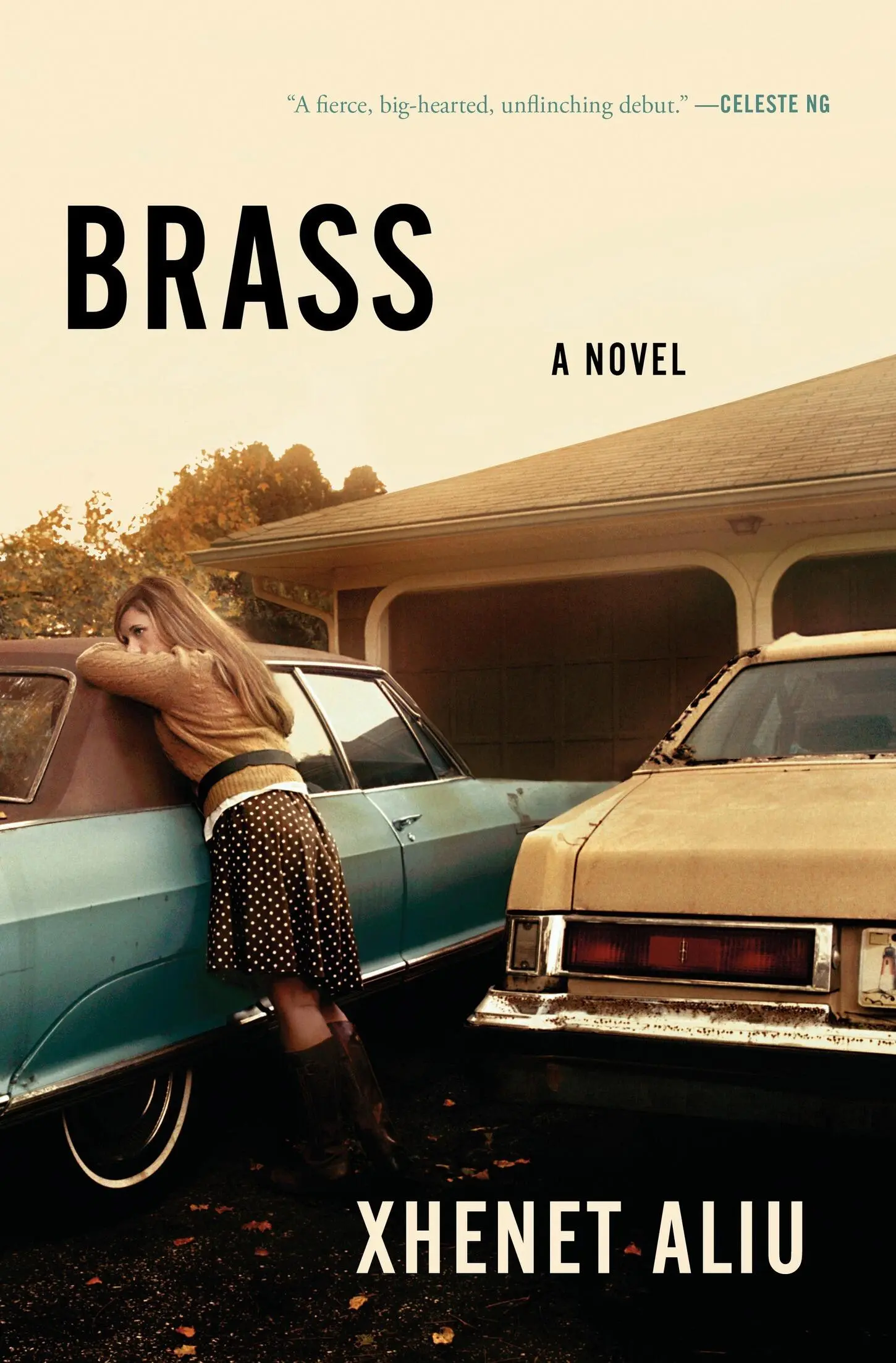
- Название:Brass
- Автор:
- Издательство:Random House Publishing Group
- Жанр:
- Год:2018
- Город:NYC
- ISBN:9780399590252
- Рейтинг книги:3 / 5. Голосов: 1
-
Избранное:Добавить в избранное
- Отзывы:
-
Ваша оценка:
Brass: краткое содержание, описание и аннотация
Предлагаем к чтению аннотацию, описание, краткое содержание или предисловие (зависит от того, что написал сам автор книги «Brass»). Если вы не нашли необходимую информацию о книге — напишите в комментариях, мы постараемся отыскать её.
A waitress at the Betsy Ross Diner, Elsie hopes her nickel-and-dime tips will add up to a new life. Then she meets Bashkim, who is at once both worldly and naïve, a married man who left Albania to chase his dreams—and wound up working as a line cook in Waterbury, Connecticut. Back when the brass mills were still open, this bustling factory town drew one wave of immigrants after another. Now it’s the place they can’t seem to leave. Elsie, herself the granddaughter of Lithuanian immigrants, falls in love quickly, but when she learns that she’s pregnant, Elsie can’t help wondering where Bashkim’s heart really lies, and what he’ll do about the wife he left behind.
Seventeen years later, headstrong and independent Luljeta receives a rejection letter from NYU and her first-ever suspension from school on the same day. Instead of striking out on her own in Manhattan, she’s stuck in Connecticut with her mother, Elsie—a fate she refuses to accept. Wondering if the key to her future is unlocking the secrets of the past, Lulu decides to find out what exactly her mother has been hiding about the father she never knew. As she soon discovers, the truth is closer than she ever imagined.
Told in equally gripping parallel narratives with biting wit and grace, Brass announces a fearless new voice with a timely, tender, and quintessentially American story.
Brass — читать онлайн бесплатно полную книгу (весь текст) целиком
Ниже представлен текст книги, разбитый по страницам. Система сохранения места последней прочитанной страницы, позволяет с удобством читать онлайн бесплатно книгу «Brass», без необходимости каждый раз заново искать на чём Вы остановились. Поставьте закладку, и сможете в любой момент перейти на страницу, на которой закончили чтение.
Интервал:
Закладка:
I walked into the bathroom to wash up. The sun was just beginning to break outside, but there was enough light that I could make something out in the other bedroom, a little rectangle that we kept meaning to set up for the baby but that until that point had been just a storage unit for dust bunnies. I turned on the light and when my eyes adjusted to it, I saw a white crib, hollow aluminum soldered at the joints to just support the weight of an infant. A few plush animals already peeked through the bars, a miniature irradiated zoo: lime-green orangutan, purple elephant, jaundice-yellow sea turtle. There was a changing table, too, the vinyl coating on the foam mat printed with wagon wheels and daisies. The colors weren’t soothing baby colors, they were ferocious, oranges and yellows and greens and whites, but I felt the mattress and the blanket and they were soft, and I thought, Well, this is home, and it will have to do.
There were a few less things to buy with Greta’s money, so I stashed the rest in the rainy day tin in the kitchen. It was possible I wouldn’t need it at all, I thought. With my new job and Bashkim finally keeping some of his money at home, it was possible we might actually pull through.
Before I left for work I tiptoed back into our bedroom. I knew he wasn’t asleep, and I whispered to him, “I’m going to work,” because I didn’t want him to think that I was leaving again just to spite him, or that I’d come back in the first place for the same reason.
It took a few seconds for him to answer, as if he was trying to figure out whether he should still be pretending to be asleep. “I’m glad you’re back,” he eventually whispered back.
“Yeah,” I answered.
“The baby, it’s okay?”
“Yeah.”
“This is good.”
“Yeah,” I said, one last time.
All the whispering didn’t make sense, because there was no one else in there to be quiet for, but it seemed it was all we could muster at the moment. I’d blame it on the ungodly hour, when humans aren’t meant to be awake, but I knew there wasn’t going to be any more explanation coming from either one of us later, either. There was just me closing the bedroom door behind me and the reset button of a new day.
CHAPTER TWELVE: Luljeta
After two hours on the road, the exhilaration of having gotten more than a hundred miles from Waterbury begins to wear off. In its place, you’re left with a muted panic that manifests as arrhythmia and diarrhea and that you cannot trace back to one specific root fear. At each of your frequent bathroom breaks, you think you pinpoint its origin: at the Woodrow Wilson rest area outside of Trenton, NJ, you’re sure that it stems from your anxiety that you’ll soon be sharing sleeping quarters with Ahmet, a guy whose Spotify stations consist exclusively of rap from the nineties, contemporary R & B favorites, and some electronic stuff that sounds like it comes from a windswept, apocalyptic future.
During hour three in Allentown, PA, you’re certain that some particularly strong indoor draft has swept away the letter you’d written to your mother explaining that you’d left of your own volition, that you are safe, and that you are appalled at her lifelong deceptions, lack of ambition and imagination, and (though it didn’t actually make it into the letter) her culinary reliance on aluminum flavor pouches. If she doesn’t find and thus can’t read what you’d written, you will feel compelled to answer at least one of the nine thousand calls or texts she’ll soon be making to you, and the police to whom she will also make nine thousand phone calls will ping the cell towers along your route, and a fleet of barrel-chested highway patrolmen will be waiting for you at the next rest stop to deliver you back home.
By hour nine, in Roanoke, VA, you are so sure that your reception in Texas will be one of outrage to the point of violence that you nearly ask Ahmet to turn around. You see so clearly now that you’ll be received like a poltergeist haunting your father in revenge for past transgressions. You’ll be the creepy rag doll in horror movies who won’t let that innocent family rest.
By hour thirteen, during some stretch of Tennessee that you can’t be bothered to identify, you’ve grown as bored with panic as with Ahmet’s chatter about UConn’s chances for an NCAA title this season, and you find yourself disappointed at how much everything outside the window, even hundreds of miles from Waterbury, looks mostly like the place you just left. The exits grow farther and farther apart the farther you get from the Northeast Corridor, but the trees are the same trees, the cars are the same cars, the Exxons are still Exxons, and the McDonald’s are still hawking the same meat-like patties to the same overweight, overworked moms and their overweight, hyperactive kids. At first you’d felt briefly excited upon entering the limits of minor cities you’d vaguely heard of, as if they were celebrities of which you were hoping to catch a glimpse, but if they were celebrities they were the depressing reality-show kind, with boring jobs and bad bleached hair and family members they were embarrassed by but not better than. Now, even Ahmet seems to be out of topics to try to talk to you about, and his chivalry is tested by your body’s seeming inability to hold any food or beverage internally for more than twenty minutes.
“Maybe you shouldn’t drink that Diet Coke right now,” he suggests as he pulls away from a gas station where you’d flushed the last beverage and purchased a shiny new one.
“I need it to stay awake,” you tell him.
“You don’t need to stay awake. I’m the one driving,” he says.
“But I want to stay awake. I just want to, like, see.”
“It’s too dark to see anything.”
“Not that kind of seeing,” you say.
“What kind of seeing?”
“I don’t know,” you say, in a tone meant to convey that if you have to explain it, he’ll never understand, when the truth is you have no idea what you mean yourself.
Ahmet sighs. “You’re a strange girl,” he says quietly, only this time, he sounds slightly annoyed instead of charmed, as he had when he’d said the same statement during earlier phases of a courtship he hadn’t known yet was doomed.
You’re a strange girl. You’re a strange girl, he’d said, several times over. But are you really a strange girl? The description doesn’t seem quite right, the way that so-called synonyms never seem precise enough when you look up words in the thesaurus. You recognize, objectively, that your behavior over the past several weeks has been atypical, not just of you but of generally above-average-yet-unexceptional high-school-age girls from depressed-yet-still-first-world New England cities. It is, perhaps, not what you’d call normal to manipulate a very nice, very wrong-for-you guy with a very innocent yet almost pathological crush to drive you across a large swath of the United States on short notice, only to—to what? What exactly do you plan to do with him once you get to Houston, hire him as your interpreter? Get back in his car and head right back to where you came from? You aren’t even sure you are going back. You aren’t even sure you could go back, or that there’s any point. What would the point be, an early childhood degree from Western Connecticut State University? Sharing an apartment and cannolis with your mother for the rest of your life? At this point, you’re not any more sure that your mother could forgive you than you are that you could forgive her. The kind of bitterness you’d share at your kitchen table would ruin every cannoli forevermore.
In any case, you don’t feel strange. You feel like a run-of-the-mill shithead. By the time you check into whatever Bates Motel you manage to find when both you and Ahmet are too tired to go on, you’ve almost convinced yourself to accept this new role, and to adapt to this new transient world where you’re attached to nothing and no one. Not long ago, you used to stare at the homeless people in your neighborhood park and try to imagine them as children, when they probably shared with their fellow second graders the same dreams of becoming astronauts or presidents or veterinarians. Could the homeless people even trace what kinds of decisions had led their second-grade peers to grow up to live regular lives of pump truck operators or daycare center workers or department managers at Target, while they themselves had gone on to sip from paper sacks filled with bottles of their own doom? Probably not. They adapted. They lived on, raged on, drank on, and in short order it all became normal.
Читать дальшеИнтервал:
Закладка:
Похожие книги на «Brass»
Представляем Вашему вниманию похожие книги на «Brass» списком для выбора. Мы отобрали схожую по названию и смыслу литературу в надежде предоставить читателям больше вариантов отыскать новые, интересные, ещё непрочитанные произведения.





Обсуждение, отзывы о книге «Brass» и просто собственные мнения читателей. Оставьте ваши комментарии, напишите, что Вы думаете о произведении, его смысле или главных героях. Укажите что конкретно понравилось, а что нет, и почему Вы так считаете.