Anna Quinn - The Night Child
Здесь есть возможность читать онлайн «Anna Quinn - The Night Child» весь текст электронной книги совершенно бесплатно (целиком полную версию без сокращений). В некоторых случаях можно слушать аудио, скачать через торрент в формате fb2 и присутствует краткое содержание. Город: Ashland, OR, Год выпуска: 2017, ISBN: 2017, Издательство: Blackstone Publishing, Жанр: Современная проза, на английском языке. Описание произведения, (предисловие) а так же отзывы посетителей доступны на портале библиотеки ЛибКат.
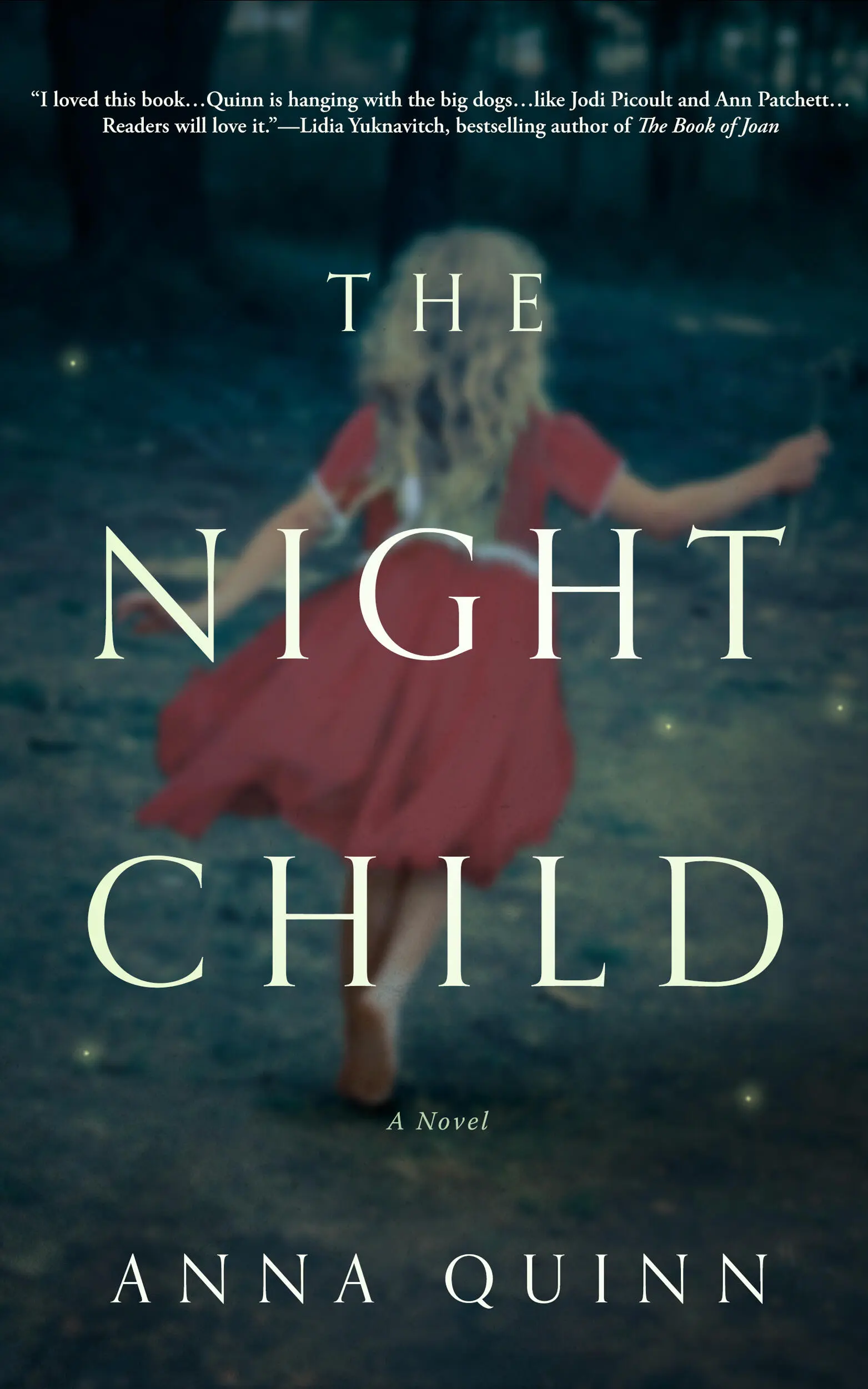
- Название:The Night Child
- Автор:
- Издательство:Blackstone Publishing
- Жанр:
- Год:2017
- Город:Ashland, OR
- ISBN:978-1-5384-3433-8
- Рейтинг книги:4 / 5. Голосов: 1
-
Избранное:Добавить в избранное
- Отзывы:
-
Ваша оценка:
The Night Child: краткое содержание, описание и аннотация
Предлагаем к чтению аннотацию, описание, краткое содержание или предисловие (зависит от того, что написал сам автор книги «The Night Child»). Если вы не нашли необходимую информацию о книге — напишите в комментариях, мы постараемся отыскать её.
Twenty-four hours later, while on Thanksgiving vacation, the face appears again. Shaken and unsteady, Nora meets with neurologists and eventually, a psychiatrist. As the story progresses, a terrible secret is discovered—a secret that pushes Nora toward an even deeper psychological breakdown.
This breathtaking debut novel examines the impact of traumatic childhood experiences and the fragile line between past and present. Exquisitely nuanced and profoundly intimate, The Night Child is a story of resilience, hope, and the capacity of the mind, body, and spirit to save itself despite all odds.
The Night Child — читать онлайн бесплатно полную книгу (весь текст) целиком
Ниже представлен текст книги, разбитый по страницам. Система сохранения места последней прочитанной страницы, позволяет с удобством читать онлайн бесплатно книгу «The Night Child», без необходимости каждый раз заново искать на чём Вы остановились. Поставьте закладку, и сможете в любой момент перейти на страницу, на которой закончили чтение.
Интервал:
Закладка:
CHAPTER SEVENTEEN: January 31, 1997
The next morning, Nora sits at her desk sipping coffee and writing comments on essays. It is necessary she keep her head in the game and not dwell on confessionals, shoe boxes, and saints. Outside the door, students slam lockers, establishing their positions by calling each other names: Gay. Loser. Shithead. The word “fuck” replacing most of their verbs, some of their nouns, and all of their adjectives. She takes a deep breath and opens the door. “Good morning,” she says, pretending cheerfulness to each one as they drift in, morose and heavy-lidded.
Once they are seated and she’s taken attendance, she stands in front of her desk, leans on it, smiling and fighting an urge to run from the room.
“Okay,” she says, “today we’ll begin with a freewrite.”
There are a few groans from the audience but mostly grins. Freewrites are easy for most of them—they like that there’s no right or wrong. “Remember,” she says, “this isn’t about sounding smart or clever. It’s about listening to your thoughts and recording them in whatever way they come out.” She feels then, suddenly, that someone is behind her, though she knows there isn’t, how could there be? No one has left their seat or come in the door. She resists the urge to look over her shoulder, but still, the pervasive sensation unnerves her.
“I hate freewrites,” Jessica mutters, slumping back in her seat and sucking on a strand of her hair.
Good, Nora thinks. Good. Focus your attention on her. The girl who likes math because there are answers. Look at her. You are the teacher. Nora moves to the whiteboard and picks up an orange Magic Marker. Orange. The orange box. Shit. Don’t go there. You are the teacher. Teach. Nora plucks the cap off the marker and draws the outline of a brain with a wiggly line splitting it in two. It looks like a cracked lima bean. She does this sometimes, teaches them how the brain works. She points to the drawing and says with a forced steadiness, “Jessica, here’s the thing. When you freewrite, you know, just free associate and write as if no one will read it, you’re tapping into the right side of the brain.” Nora taps the right side of her drawing with the Magic Marker, surprised she can act as if she’s fine. “The right side can offer us discoveries,” she continues, “aha moments, ideas no one ever thought of before. I mean, don’t get me wrong, important things happen over here, too”—she taps the left side of her drawing—“but”—now she points to the right side, draws a light bulb with an exclamation point inside it—“here in the right hemisphere—well, this is where the new stuff happens. And honestly, Jessica, if you want to come up with some new mathematical equations someday, you might want to spend some time over here.”
Jessica considers Nora for a moment, smirks, and says, “Whatever,” but picks up her mechanical pencil as if she may indeed write.
“Okay, everyone, go ahead and begin,” Nora says and begins to walk up and down the aisles, watching pencils slide over paper, thoughts like freed prisoners finally breathing fresh air.
Except for Elizabeth, who sits there with her notebook closed.
“Elizabeth?”
“I have nothing to write about,” Elizabeth says, not looking up, tapping on her notebook with the eraser-end of her pencil.
Nora bends down and rests her elbows on Elizabeth’s desk. She’d tried to talk to her after the Bluest Eye conversation, but Elizabeth had only looked at her shoes and mumbled, “I’m fine.” And when Nora had pressed her, said, “Are you sure?” Elizabeth had looked at her for a moment, eyes full of tears, but then turned away and walked down the hall.
“Elizabeth, what’s going on?”
“I don’t know what to write.”
“Well, maybe start with ‘I don’t remember’? That prompt gets me started sometimes when I’m stuck.”
“What’s the meeting after school about?” Elizabeth whispers.
Nora has a meeting at 3:00 with Elizabeth and her parents, some of her teachers, and the school counselor to discuss Elizabeth’s lack of progress in her classes.
“Is it about The Bluest Eye ?”
“No, that meeting is in a few weeks. Today is—well, your parents are concerned about you,” Nora says. Elizabeth’s eyes are so tired, so glazed with sleeplessness. “It’ll be okay. Really.”
“Fuck my parents.”
“Elizabeth, listen. We can’t talk about this right now. Okay? We’ll talk after school.”
Elizabeth jerks her notebook open and begins to write, pressing hard into her paper.
Nora stands up and leaves her. She feels guilty. Twice in the last month, Nora watched Elizabeth rip her freewrites from her notebook, ball them up, and throw them in the wastebasket. And both times, after class, Nora unfolded them and read them. She’d read the pages of ugliness, horrible sentences of self-loathing, lines and loops plunging deep into bottomless holes, and when she’d tried to talk with Elizabeth (not confessing she’d read the notes, how could she?), said, “If you ever need anything, please ask,” but of course Elizabeth didn’t ask, so Nora had felt obligated to show the notes to Joyce Robertson, the school counselor, and now there’s a meeting.
Nora walks by Joe. He’s wearing headphones and a stained T-shirt that says excuse me for staring. He is drawing some sort of multiheaded creature on a tree with dead branches. He glances up at Nora with a smirk that is slightly defiant.
“Cool,” Nora says, admiring his drawing. And she means it. He is a talented artist, his attention to detail, exquisite. “I sure wouldn’t mind being able to see from every direction,” she says.
His smirk morphs into a smile, and he keeps drawing. She’s not going to require more of him in this moment. She knows what he’s up against, living alone with his older brother who’s the night manager at 7-11. Once, after Joe had yelled at his math teacher, “I don’t have time for fucking homework, you fucking moron,” the school counselor told the faculty that Joe did all the cooking and cleaning at his house and to please try and cut him some slack.
Nora walks to her desk and sits down—her head beginning to throb. She allows the students to write until the end of the period. She pretends to grade essays. Neurons firing glass shards into the vessels of her brain.
On her way to the meeting, things are magnified. Students just released from classrooms pour into the hallway, sweaty, in various moods and behaving with conspicuous nuances. Mouths open and close, and sounds come at her in scratching flats and sharps. Arms wave loosely. Lockers slam. Slam over and over again, the deafening slam slam slam and she wants to clap her hands to her ears, but of course she doesn’t. She rushes in and out through bodies, arms, and huge faces breathing close from all angles and she moves in and out, and shit, this must be how a bad acid trip feels, and she rushes into the faculty bathroom, into a stall, locks the door, mind raw, eyes blinking fast.
She is safe.
She sits on the toilet. Listens. A toilet flushes. A door opens. Clicking of heels. A faucet shoots water. Paper towel ripped, crumpled. Clicking of heels. A door opens and shuts with a thud. The clicking heels echo down the hall. Silence.
She shudders. Then, thoughts of Elizabeth. “Damn it,” she says half aloud. “Damn it,” she says again to something she has no name for. “You will not win.” She stands and opens the door.
She is only five minutes late. The counselor, the math teacher, the science teacher, Elizabeth’s parents, Elizabeth, and John sit around the large table. Only John and Elizabeth’s mother look at her. John smiles at her, and she relaxes a bit.
Читать дальшеИнтервал:
Закладка:
Похожие книги на «The Night Child»
Представляем Вашему вниманию похожие книги на «The Night Child» списком для выбора. Мы отобрали схожую по названию и смыслу литературу в надежде предоставить читателям больше вариантов отыскать новые, интересные, ещё непрочитанные произведения.







Обсуждение, отзывы о книге «The Night Child» и просто собственные мнения читателей. Оставьте ваши комментарии, напишите, что Вы думаете о произведении, его смысле или главных героях. Укажите что конкретно понравилось, а что нет, и почему Вы так считаете.