Tim Gautreaux - The Missing
Здесь есть возможность читать онлайн «Tim Gautreaux - The Missing» весь текст электронной книги совершенно бесплатно (целиком полную версию без сокращений). В некоторых случаях можно слушать аудио, скачать через торрент в формате fb2 и присутствует краткое содержание. Жанр: Современная проза, на английском языке. Описание произведения, (предисловие) а так же отзывы посетителей доступны на портале библиотеки ЛибКат.
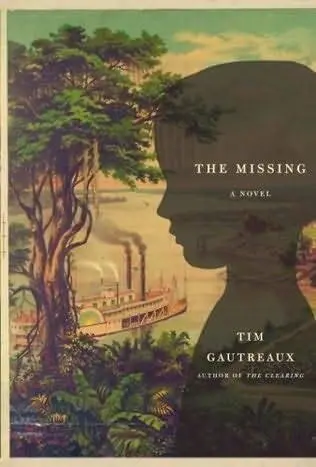
- Название:The Missing
- Автор:
- Жанр:
- Год:неизвестен
- ISBN:нет данных
- Рейтинг книги:4 / 5. Голосов: 1
-
Избранное:Добавить в избранное
- Отзывы:
-
Ваша оценка:
The Missing: краткое содержание, описание и аннотация
Предлагаем к чтению аннотацию, описание, краткое содержание или предисловие (зависит от того, что написал сам автор книги «The Missing»). Если вы не нашли необходимую информацию о книге — напишите в комментариях, мы постараемся отыскать её.
After World War I, Sam Simoneaux returns to New Orleans determined to leave mayhem and destruction behind, and to start anew with his wife years after losing a son to illness. But when a little girl disappears from the department store where he works, he has no recourse but to join her musician parents on a Mississippi excursion steamboat, hoping to unearth clues somewhere along the river. Though ill-prepared for this rough trade in hamlets where neither civilization nor law is familiar, he enforces tolerable behavior on board and ventures ashore to piece together what happened to the girl – making a discovery that not only endangers everyone involved but also sheds new light on the murder of his own family decades before.
Against this vivid evocation of a ragged frontier nation, a man fights to redeem himself, parents contend with horrific loss, and others consider kidnapping either another job or a dream come true. The suspense – and the web of violence linking Sam to complete strangers – is relentless, compelling, and moving, the finest demonstration yet of Gautreaux's understanding of landscape, history, and human travail and hope.
The Missing — читать онлайн бесплатно полную книгу (весь текст) целиком
Ниже представлен текст книги, разбитый по страницам. Система сохранения места последней прочитанной страницы, позволяет с удобством читать онлайн бесплатно книгу «The Missing», без необходимости каждый раз заново искать на чём Вы остановились. Поставьте закладку, и сможете в любой момент перейти на страницу, на которой закончили чтение.
Интервал:
Закладка:
He walked forward, but the captain was nowhere to be seen, so he took the stairs up to the Texas deck and found the first mate in his cabin. Swaneli was propped in his bunk reading a week-old newspaper from Chicago. “Lucky, what’s up?”
“I need to know where Graysoner, Kentucky, is.”
“It’s up ahead somewheres.”
“On the river?”
“Or close to it. Ask someone in the pilothouse, if anybody’s up there.”
He ducked into the companionway and went up the steps to the Texas roof and saw Mr. Brandywine’s cap moving about. He tapped on the narrow door and the old man waved him in with one crooked finger. He was leaning down over a river chart.
“Mr. Brandywine, can you tell me where Graysoner, Kentucky, is?”
“We’ll play there in a few days if I can get this boat in among the rocks.”
Sam leaned back against the door and caught his breath. “Is it another pigpen?”
“Well, it’s not a big town, but there’s five little burgs right around it, and all in all it’s a decent place to play. The people there know how to behave themselves.”
“Nice place to live?”
Brandywine leaned down over his channel map and pursed his lips, slowly placing a finger on a blue line passing between islands. “Paved streets. Electric lights. Good stores. Right now you can go down and get me a mug of hot coffee.”
“You heard about Ted Weller.”
“Of course. The captain gave his wife an extra fifty dollars when he paid her off. Told her she could come back and work the end of the season if she wanted. But you know she can’t.”
Sam reached over and gathered up two empty mugs. “Her life’s pretty much wrecked.”
“That’s a good way to put it, all right. She’ll be starting from scratch, I imagine.” Mr. Brandywine looked at him sharply. “Were you sweet on her?”
“I’m a married man.”
“I hope you plan to stay that way.”
He motioned at him with the mugs. “I’m very happy with my wife.”
“Don’t take offense. I’ve seen you sitting with Mrs. Weller at table with her son.”
“And?”
Mr. Brandywine’s eyes narrowed at some problem on the map. “And would you please get me my coffee?”
Chapter Twenty-one
THE EVANSVILLE WHARF boat had an excellent telephone connection in a little private room used by freight brokers. Here Sam sat in a chair and called his wife, collect, and after three operators made the links, she picked up the receiver on their candlestick phone in New Orleans.
“Hello?”
“Hey, it’s me.”
“Oh, Sam, I’m glad to hear from you. How are you?”
“I’m fine. I’m in Evansville.”
“Where is that?”
“Illinois, right above Kentucky. How are you? Your last letter said you were kind of sick.”
“I’ve been feeling so bad I had to go to the doctor. It got so I couldn’t work for a week.”
He moved closer to the phone and felt a rill of fear run up his arms and across his chest. “The doctor? Is something wrong? What kind of doctor?”
“Dr. Duplessis, the one you go to.”
He felt a pain rise in the pit of his stomach. There was so much bad luck going around, he wondered if he was in for his share. “Did he give you some medicine? What did he say?”
Her voice was thin but musical, even over the wire. “He said we’re going to have a baby. I feel so stupid because here I thought I was sick all summer and it turns out I’m over three months along. Are you happy?”
“Yes!” He made a punching swing with his left hand. “I’m more than happy! Do you need me home?”
There was static on the line, and then her voice came back. “I know you want to look for that little girl and I want you to keep on. I don’t want to make you mad, but I’ve got to tell you that the money you’ve been sending home isn’t quite enough, honey.”
“It isn’t?”
“We’ll have to get set up here and pay the doctor, you know. The furniture people haven’t ordered much of my needlepoint this month.”
“Maybe I can figure something on this end to make a few extra bucks.”
“Sergeant Muscarella called and said the bank on Baronne needs a superintendent of its bank guards there. I think it pays what you’re making now, but with no expenses.” There was a brief pause in her voice. “And you’d be home.”
He told her they could discuss that soon. He wanted to talk for a long time, just to hear her voice, but she reminded him the call was expensive. When he came out of the room he realized he hadn’t even told her about the Wellers. He saw Charlie Duggs, and they climbed the hill into town to celebrate with a beer. In the back room of a speakeasy they got into a poker game and Sam lost over three dollars, and later, walking back down into the coal smoke of the dock area, he cursed the jack of hearts that did him in. “I can’t figure what I did wrong,” he complained.
Charlie spat next to the Ambassador ’s stage as they went up. “I think it’s called playin’ poker. Lucky in cards you ain’t.”
“Three dollars. Linda could’ve paid the light bill with that.”
Charlie stopped to set his watch under a deck light. “Or you could’ve bought a little Cloat-killing pistol with it.”
IN LATE SUMMER the Ohio River is a hazy green, and Sam watched it slide under the bow of the steamer like an endless watery lawn. After six hard days of day trips for veterans’ conventions, Elks lodges, and high schools, night trips for mostly easy crowds intent on practicing their new steps or proposing romance on the dark upper deck, the boat pulled in one morning to the landing at Graysoner. Sam leaned on the Texas deck railing, his bruises driven inside where they banded together and roamed his burning shoulders and lower back. He stared hard at the town, watching it develop out of a fog as Nellie Benton drifted the boat in, and after the docking he hiked up to the main business section, several blocks of well-maintained and amply stocked brick stores fronted by paved streets with curbs and electric streetlights. Water oaks had been planted twenty years before, and the lanes above the business district were shady and lush. Upriver he saw the masonry smokestack bearing the name of a furniture factory, and judging from even the modest houses, everyone here made more money than he did. He was out of the Deep South and could smell the money and comfort.
He left his uniform behind in his cabin and wore his best shirt, which needed ironing and mending at the cuffs. Going into a drugstore, a place with marble counters and waxed-oak display cases, he asked to see a phone book. Sure enough, he found an Acy White at 653 Lilac Street. He grinned in spite of himself.
The woman behind the counter took the book back, and he asked where Lilac Street was.
“Why, it’s up the hill three blocks and to the right.” She smiled at him and became a template for the rest of the population, people with something to smile about.
He left the store and began walking through a neighborhood of big, well-kept houses, some of them made of stone inset with transoms of stained glass. It occurred to him that he’d never imagined who had the girl-that is, what kind of people. If he’d had to guess he would’ve said outlaws, or sick-minded people who wanted a lightning rod for their electrical meanness, or just someone who wanted a kid to train up as a serving girl. As he walked deeper into the fine neighborhood, he realized that Morris Hightower’s lead was another fool’s errand, that there were no child thieves living in houses like these. People who hired thugs to steal little girls didn’t live in fine mansions with copper trim and beveled-glass entries, with sunrooms and carriageways, wrought-iron fences and belvederes.
Читать дальшеИнтервал:
Закладка:
Похожие книги на «The Missing»
Представляем Вашему вниманию похожие книги на «The Missing» списком для выбора. Мы отобрали схожую по названию и смыслу литературу в надежде предоставить читателям больше вариантов отыскать новые, интересные, ещё непрочитанные произведения.






Обсуждение, отзывы о книге «The Missing» и просто собственные мнения читателей. Оставьте ваши комментарии, напишите, что Вы думаете о произведении, его смысле или главных героях. Укажите что конкретно понравилось, а что нет, и почему Вы так считаете.