Tim Gautreaux - The Missing
Здесь есть возможность читать онлайн «Tim Gautreaux - The Missing» весь текст электронной книги совершенно бесплатно (целиком полную версию без сокращений). В некоторых случаях можно слушать аудио, скачать через торрент в формате fb2 и присутствует краткое содержание. Жанр: Современная проза, на английском языке. Описание произведения, (предисловие) а так же отзывы посетителей доступны на портале библиотеки ЛибКат.
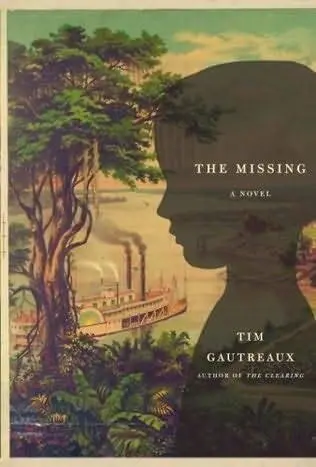
- Название:The Missing
- Автор:
- Жанр:
- Год:неизвестен
- ISBN:нет данных
- Рейтинг книги:4 / 5. Голосов: 1
-
Избранное:Добавить в избранное
- Отзывы:
-
Ваша оценка:
The Missing: краткое содержание, описание и аннотация
Предлагаем к чтению аннотацию, описание, краткое содержание или предисловие (зависит от того, что написал сам автор книги «The Missing»). Если вы не нашли необходимую информацию о книге — напишите в комментариях, мы постараемся отыскать её.
After World War I, Sam Simoneaux returns to New Orleans determined to leave mayhem and destruction behind, and to start anew with his wife years after losing a son to illness. But when a little girl disappears from the department store where he works, he has no recourse but to join her musician parents on a Mississippi excursion steamboat, hoping to unearth clues somewhere along the river. Though ill-prepared for this rough trade in hamlets where neither civilization nor law is familiar, he enforces tolerable behavior on board and ventures ashore to piece together what happened to the girl – making a discovery that not only endangers everyone involved but also sheds new light on the murder of his own family decades before.
Against this vivid evocation of a ragged frontier nation, a man fights to redeem himself, parents contend with horrific loss, and others consider kidnapping either another job or a dream come true. The suspense – and the web of violence linking Sam to complete strangers – is relentless, compelling, and moving, the finest demonstration yet of Gautreaux's understanding of landscape, history, and human travail and hope.
The Missing — читать онлайн бесплатно полную книгу (весь текст) целиком
Ниже представлен текст книги, разбитый по страницам. Система сохранения места последней прочитанной страницы, позволяет с удобством читать онлайн бесплатно книгу «The Missing», без необходимости каждый раз заново искать на чём Вы остановились. Поставьте закладку, и сможете в любой момент перейти на страницу, на которой закончили чтение.
Интервал:
Закладка:
Some time later, two cotton buyers barged into the waiting room complaining to each other about the market, and the bigger one bellied up to the counter. “Wake up there ’fore you catch a fly.”
Morris lifted one eyelid. “Do for you?”
“We need tickets to Graysoner, Kentucky.”
“What class?”
“We can stand day coach if there’s a parlor car for a good poker game.”
“There is.” He pulled out his guide to see what the connections were past Memphis and told them it would take a while to set up the tickets as they involved three different railroads. While he worked, the men chattered around their cigars about cotton prices and the damned bankers not wanting to loan money on signature anymore. The voices were just noise; some of it went in his ear, some of it didn’t. Then one of them mentioned a banker in Graysoner who’d demanded a whole cotton shipment for collateral on a small loan.
“I went to grammar school with Acy. He knew me when I still peed my pants, and when I asked for enough to ship eight thousand bales, just the shipping, mind you, he wanted to put the whole crop subject to duress in a contract.”
“You don’t say.”
“Sure enough. And I’ve been a guest in his house, made small talk with that odd wife of his.”
“I know her. She ever do anything other than walk around and shop?”
“When I was in his office she came in there with a sweet, crop-haired little girl, so I guess he finally put a bun in the oven.”
The other buyer pulled his cigar and looked at the soggy end. “Well, maybe that’ll sweeten his disposition.”
The men stepped out into the sun to look down the line and tell a joke. When they came back into the waiting room, a heat-drunk Morris Hightower was at the window with their tickets, his red face against the bars. “So Acy has a little girl?”
One of the cotton buyers looked at him and made a face. “You from Kentucky?”
“Agents know everybody up and down the line. She’s not a baby, is she?”
“She’s about three years old.”
“Cropped hair, you say?”
“Yes.” The buyer looked at him hard.
“Did they tell you how good she could sing? About all those songs?”
At this, the cotton buyer smiled. “Why, you do know the Whites!”
Morris Hightower laughed for the first time in a long while. “It’s a small world.”
THE CROWDS AT CAIRO were moderate in size and well behaved, so the order was not given to check for weapons. After an easy night trip, Sam was washing up at the little lavatory and inspecting his two uniforms, which were not holding up well.
“I told the captain I needed another jacket,” he said over his shoulder to Charlie, who was in his bunk holding an unlit cigarette under his nose.
“What’d he tell you?”
“Said I’d have to buy it out of my salary.”
“What you think about that?”
“I don’t know. It’d take two or three days’ wages to get one that’d last through the fights.”
“It’d be nine dollars or better, anyway. The boat raked in a fortune at Stovepipe Bend. The purser like to got a hernia haulin’ the change bags up the hill this morning.”
“Sometimes I think I’d be making more as a waiter, with the tips and all.”
“You could get into that late-night game down in the galley.”
“I gave that stuff up.”
“Then hold on to your pennies.” The cigarette traveled slowly under his nose. They were not allowed to smoke in the cabins. “You still thinking about that young’un?”
“I walked into town and spoke with the police captain. Went by the station and talked to the agent. He was full of information but mostly wanted to sell me some raffle tickets.”
“What’d he tell you?”
“About another boy they gave off the orphan train. I called this farmer up on the phone and sure enough it was a boy.”
The cabin door was open, and Charlie hopped down and walked right out to the rail to light up and watch the stars. “You give any more thought to the Cloats?”
“Not enough to ruin my day.”
“Damn, you’re worthless.”
“I’m thinking about it. You got to give me that.”
The Alice Brown passed downbound pushing a big raft of coal barges, the glow from her furnace doors sparking up the water. Her carbon-arc light raked the Ambassador and moved over the channel like a wand of ice.
“What’d Elsie say when you walked her to the streetcar?”
“Not much. Said she couldn’t even imagine he was dead. That she had to hold off thinking until she got up there.”
“I can’t believe old Ted’s gone myself. It’ll be a tough row to hoe for the both of them. The kid’s too young to play in the union bands. You say she’ll be living with her sick mother?”
“Starving is more like it. Her father’s too old to work anymore.”
Charlie drew in a lungful of smoke and let it out slow. “At least she’s got that boy with her. It could be worse.”
“Don’t say that. For God’s sake, don’t even think it.”
ABOVE CAIRO the Ambassador steamed into more populated regions where people in the civilized river towns looked forward to the new dance music promised by the flyers posted on every cottonwood by the advance man. Radios, the few there were in these rural areas, didn’t play New Orleans jazz, and record companies weren’t promoting it either. But the Ambassador had the real, rare commodity, and over the next week the boat did good business at Mound City, Metropolis, and Paducah, though at a mining town called Potato Landing, all three mates and six waiters were injured in a huge café brawl between baseball teams from opposite sides of the river. The boat was left in such a sorry condition that Sunday’s afternoon run at Evansville was canceled, and Captain Stewart gave the crew as much time off as possible. Sam went up to town to attend Mass and then find the railroad station. The agent looked at his bruised face and wouldn’t answer any questions, so he walked back to the river, stopping several times to let a leg cramp die down. He’d been kicked by a drunk woman after he’d pulled her away from a slot machine she was hammering with a high heel. Hobbling up to a corner bench, he sat and rubbed his calf, feeling silly and useless, a fool matched with a fool’s errand. He thought again longingly of his wife and his lost kingdom at Krine’s. A long vista of cottonwoods rising up from the Kentucky side made him feel solitary, small, and a long way from the house.
But when he returned to the boat, the advance man, a vest-wearing glad-hander named Jules, buttonholed him on the stage and handed him a telegram. “Here you go, bud.”
“Where’s it from?”
“Can’t you read?” The advance man jumped off the stage to the mud and headed for his idling Model T.
It was from Greenville, Mississippi, and the very paper felt crisp with possibility. He tore it open. THIS A GOOD LEAD. ACY WHITE AND WIFE. GRAYSONER KENTUCKY. LET ME KNOW. MORRIS.
He ran across the forecastle and asked a deckhand if he knew where Graysoner was.
“Don’t know, Cap. The chief steward upstairs, maybe he knows.”
He raced up the big staircase and walked back to the restrooms, where he saw the man talking to a janitor. “Can you tell me where Graysoner is?”
The chief steward looked at his face and winced. “Rough time last night. Graysoner the new man what replaced that old Jenkins boy with the broke leg?”
“No, it’s a town in Kentucky.”
“It’s a town.”
“That’s right.”
“Go see Mr. Check in the kitchen. He’s from Kentucky.”
Mr. Check, the head cook, was scraping down a stove top with a firebrick. “Naw, I ain’t from Kentucky. I was raised in St. Marys, West Virginia. The steward’s thinking of that Meldon feller who cooked for us two years gone. Go ask the captain. Maybe ten minutes ago I saw him kicking cinders off the skylight roof.”
Читать дальшеИнтервал:
Закладка:
Похожие книги на «The Missing»
Представляем Вашему вниманию похожие книги на «The Missing» списком для выбора. Мы отобрали схожую по названию и смыслу литературу в надежде предоставить читателям больше вариантов отыскать новые, интересные, ещё непрочитанные произведения.





Обсуждение, отзывы о книге «The Missing» и просто собственные мнения читателей. Оставьте ваши комментарии, напишите, что Вы думаете о произведении, его смысле или главных героях. Укажите что конкретно понравилось, а что нет, и почему Вы так считаете.