Adriana Trigiani - Very Valentine
Здесь есть возможность читать онлайн «Adriana Trigiani - Very Valentine» весь текст электронной книги совершенно бесплатно (целиком полную версию без сокращений). В некоторых случаях можно слушать аудио, скачать через торрент в формате fb2 и присутствует краткое содержание. Жанр: Современная проза, на английском языке. Описание произведения, (предисловие) а так же отзывы посетителей доступны на портале библиотеки ЛибКат.
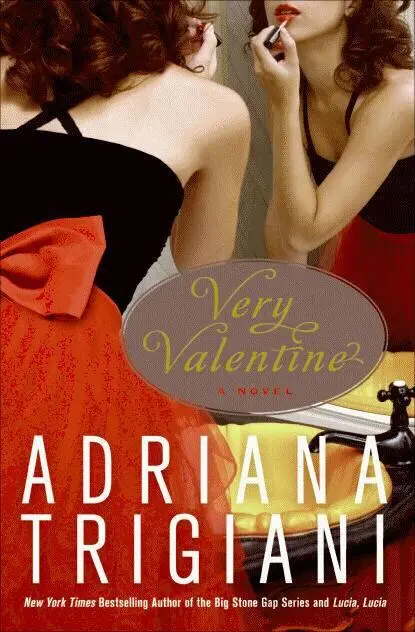
- Название:Very Valentine
- Автор:
- Жанр:
- Год:неизвестен
- ISBN:нет данных
- Рейтинг книги:3 / 5. Голосов: 1
-
Избранное:Добавить в избранное
- Отзывы:
-
Ваша оценка:
Very Valentine: краткое содержание, описание и аннотация
Предлагаем к чтению аннотацию, описание, краткое содержание или предисловие (зависит от того, что написал сам автор книги «Very Valentine»). Если вы не нашли необходимую информацию о книге — напишите в комментариях, мы постараемся отыскать её.
In this luscious, contemporary family saga, the Angelini Shoe Company, makers of exquisite wedding shoes since 1903, is one of the last family-owned businesses in Greenwich Village. The company is on the verge of financial collapse. It falls to thirty-three-year-old Valentine Roncalli, the talented and determined apprentice to her grandmother, the master artisan Teodora Angelini, to bring the family's old-world craftsmanship into the twenty-first century and save the company from ruin.
While juggling a budding romance with dashing chef Roman Falconi, her duty to her family, and a design challenge presented by a prestigious department store, Valentine returns to Italy with her grandmother to learn new techniques and seek one-of-a-kind materials for building a pair of glorious shoes to beat their rivals. There, in Tuscany, Naples, and on the Isle of Capri, a family secret is revealed as Valentine discovers her artistic voice and much more, turning her life and the family business upside down in ways she never expected. Very Valentine is a sumptuous treat, a journey of dreams fulfilled, a celebration of love and loss filled with Trigiani's trademark heart and humor.
Very Valentine — читать онлайн бесплатно полную книгу (весь текст) целиком
Ниже представлен текст книги, разбитый по страницам. Система сохранения места последней прочитанной страницы, позволяет с удобством читать онлайн бесплатно книгу «Very Valentine», без необходимости каждый раз заново искать на чём Вы остановились. Поставьте закладку, и сможете в любой момент перейти на страницу, на которой закончили чтение.
Интервал:
Закладка:
We pass through a small, open breezeway lined with an eclectic mix of marble planters spilling over with edelweiss, daisies, and bluebells.
“Signora Angelini!” the woman behind the desk cries.
“Signora Guarasci!”
The old friends greet each other with a warm embrace. I take in the lobby. The front desk is a long mahogany counter. There’s a slotted wooden box holding the room keys on the wall behind it. It could be 1900 except for the computer next to the sign-in book.
A deep sofa, covered in gold-and-white damask, is anchored by two ornate floor lamps and an overstuffed gold chenille ottoman that serves as a coffee table. The overhead chandelier is white wrought iron with cream-colored linen shades over the bulbs.
Signora Guarasci is a petite woman with small hands and thick white hair. She wears a blue cotton skirt with a pressed white smock over it, gray tights, and open black leather clogs, a more stylish version of the plastic ones that Roman wears in the kitchen of Ca’ d’Oro. The signora embraces me as Gram makes my introduction.
While Gram catches up with her old friend, I take our bags, climb the stairs, and find our rooms. I unlock the door to number 3, place my suitcase by the door, and look over my new surroundings. The spacious corner room is painted sunflower yellow with off-white trim. There’s a high, soft double bed with six fat feather pillows and a pressed black-and-white-checked coverlet. There’s an antique oak library table under the windows. An old gray rocking chair is positioned near a white marble fireplace, both looking like they have been here for a hundred years. I open the windows and a cool breeze blows through, turning the long white muslin draperies into billowing ball gowns. The walls of the open closet are lined in cedar, which gives the room a green, woodsy scent.
The bathroom that connects my room to Gram’s is simple, with black-and-white-checked tile, a deep ceramic tub with a shiny silver handheld nozzle, and a marble sink with an antique mirror over it. A large bay window on the far wall looks out over a garden. Privacy shades are pulled to the top. The signora has left the window open, letting in more of those fresh spring breezes.
I go back out into the hallway, pick up Gram’s luggage, and unlock the door to room number 2. Gram’s room is twice the size of mine, done in china blue and white, with windows the length of the room, and a full seating area with two low chairs and a sofa covered in white duck fabric.
“How are the rooms?” Gram asks as I skip back downstairs.
“Gorgeous. Now I see why you stay here.”
“Wait until you taste the signora’s cooking,” Gram says.
Signora Guarasci enters the lobby and claps her hands together. “Now, you eat.”
I help Gram up off the very soft sofa. She takes my arm as we go into the dining room.
“When we go home, I’m making an appointment with Dr. Sculco at the Hospital for Special Surgery. You’re getting your knees replaced.”
“I am not.”
“You are, too. Look at you. You’ve got mod hair, good skin, and a great figure. Why should you suffer with bad knees? They’re the only thing about you that’s eighty years old.”
“My brain is eighty.”
“But nobody can see that in a pencil skirt.”
“Good point.”
We take our seats at a table by the windows that overlook a small pond at the back of the house. Every table is set with cutlery, pressed napkins, and small vases of violets even though we are the only patrons in the dining room.
Signora Guarasci pushes through the kitchen door carrying a tray with two ceramic crocks of soup and a basket of crusty bread with a tin of butter. The signora pours us each a glass of homemade red wine from a decanter, then goes back into the kitchen.
“Perfetto! Grazie.” Gram raises her glass.
“I like having you with me, Val,” Gram says. “I think this is going to be a great trip for both of us.”
I taste the minestrone made of pork, root vegetables, and beans in a thick tomato broth. “This is de-lish.” I put the spoon down and break off a piece of the warm crusty bread. “I could stay here forever. Why would anyone ever leave?”
“Well, your grandfather had to. He was six years old when his mother died. Her name was Giuseppina Cavalline. Your great-grandfather called her Jojo.”
“What was she like?”
“She was the most beautiful girl in Arezzo. She was about nineteen when she walked into the Angelini Shoe Shop and asked to speak with the owner. Your great-grandfather, who was around twenty-two at the time, fell in love at first sight.”
“And what about Jojo? Was it mutual?”
“Eventually. See, she had come by to order custom shoes. My father-in-law, so eager to impress her, trotted out samples of the finest leather and showed her the best designs. But Jojo said that she didn’t care if the shoes were fashionable. Your great-grandfather thought this was very odd. What young woman doesn’t love the latest styles? Then she turned and walked across the room and your great-grandfather saw that she had a very pronounced limp. And she said, ‘Can you help me?’”
Gram looks out the window, as if to better remember this story that happened just a few streets away. She continues, “He worked six days and six nights without stopping, and created a beautiful pair of black leather ankle boots with a stacked heel. He created a hidden platform on the interior of the shoe that evened out her stride without being visible to anyone else.”
“Brilliant.” I wonder if I could ever build such an ingenious shoe.
“When Jojo came back to the shop and tried on the shoes, she stood up and skimmed across the room. For the first time in her life, her steps were uniform and her posture straight and tall. Jojo was so grateful, she threw her arms around your great-grandfather and thanked him.
“Then he said, ‘Someday, I’m going to marry you.’ And he did, a year later. And a few years after that, my husband, your grandfather, was born in the house I showed you.”
“What a romantic story.”
“They were happy for a long time. But when she died of pleurisy ten years later, my father-in-law was so grief-stricken, he took your grandfather and went to America. He couldn’t bear to be in Arezzo any longer, to walk in the streets where they lived, or stay in the bed where they slept, or pass the church where they married. That’s how deep his grief was.”
“Did he ever find love again?”
“No. And you know, a cobbler can be very appealing to women.”
“Give a woman a new pair of shoes and her life changes.”
“That’s right. Well, he was a wonderful man, very funny and bright. You remind me of him in many ways. Michel Angelini was a great designer, in my opinion, ahead of his time. He’d love that shoe you designed, believe me.”
“He would?” This compliment means the world to me. After all, my great-grandfather designed every shoe our company makes. A hundred years later, his work is still relevant.
“He would be happy to know that Angelini Shoes is still in operation. He’d also be thrilled that you are carrying on his legacy. He sacrificed so much for his work. Well, at least his personal life.”
The meaning of his sacrifice is not lost on me. I get it: a creative life is an all-consuming one. If we aren’t in the shop building shoes, we are sending them; and if we’re not shipping them, we’re creating new ones. It’s a cycle that never ends, especially when we do our jobs well. “It’s sad he never found another woman to share his life with.”
“My father-in-law was crazy about her. The truth is, no one could ever compare to her. He told me that many times. He missed her right up until the moment he died. And I know that for sure because I was with him.”
Читать дальшеИнтервал:
Закладка:
Похожие книги на «Very Valentine»
Представляем Вашему вниманию похожие книги на «Very Valentine» списком для выбора. Мы отобрали схожую по названию и смыслу литературу в надежде предоставить читателям больше вариантов отыскать новые, интересные, ещё непрочитанные произведения.










Обсуждение, отзывы о книге «Very Valentine» и просто собственные мнения читателей. Оставьте ваши комментарии, напишите, что Вы думаете о произведении, его смысле или главных героях. Укажите что конкретно понравилось, а что нет, и почему Вы так считаете.