Adriana Trigiani - Very Valentine
Здесь есть возможность читать онлайн «Adriana Trigiani - Very Valentine» весь текст электронной книги совершенно бесплатно (целиком полную версию без сокращений). В некоторых случаях можно слушать аудио, скачать через торрент в формате fb2 и присутствует краткое содержание. Жанр: Современная проза, на английском языке. Описание произведения, (предисловие) а так же отзывы посетителей доступны на портале библиотеки ЛибКат.
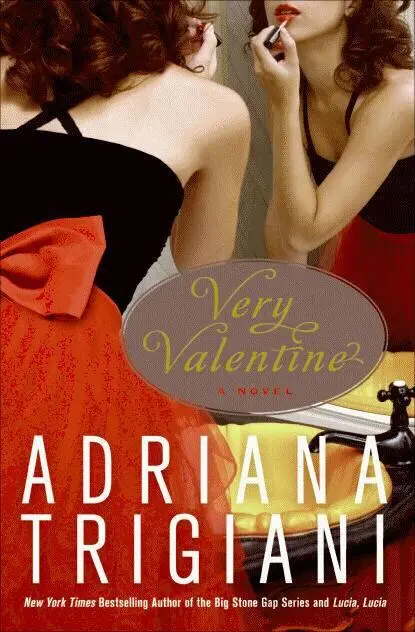
- Название:Very Valentine
- Автор:
- Жанр:
- Год:неизвестен
- ISBN:нет данных
- Рейтинг книги:3 / 5. Голосов: 1
-
Избранное:Добавить в избранное
- Отзывы:
-
Ваша оценка:
Very Valentine: краткое содержание, описание и аннотация
Предлагаем к чтению аннотацию, описание, краткое содержание или предисловие (зависит от того, что написал сам автор книги «Very Valentine»). Если вы не нашли необходимую информацию о книге — напишите в комментариях, мы постараемся отыскать её.
In this luscious, contemporary family saga, the Angelini Shoe Company, makers of exquisite wedding shoes since 1903, is one of the last family-owned businesses in Greenwich Village. The company is on the verge of financial collapse. It falls to thirty-three-year-old Valentine Roncalli, the talented and determined apprentice to her grandmother, the master artisan Teodora Angelini, to bring the family's old-world craftsmanship into the twenty-first century and save the company from ruin.
While juggling a budding romance with dashing chef Roman Falconi, her duty to her family, and a design challenge presented by a prestigious department store, Valentine returns to Italy with her grandmother to learn new techniques and seek one-of-a-kind materials for building a pair of glorious shoes to beat their rivals. There, in Tuscany, Naples, and on the Isle of Capri, a family secret is revealed as Valentine discovers her artistic voice and much more, turning her life and the family business upside down in ways she never expected. Very Valentine is a sumptuous treat, a journey of dreams fulfilled, a celebration of love and loss filled with Trigiani's trademark heart and humor.
Very Valentine — читать онлайн бесплатно полную книгу (весь текст) целиком
Ниже представлен текст книги, разбитый по страницам. Система сохранения места последней прочитанной страницы, позволяет с удобством читать онлайн бесплатно книгу «Very Valentine», без необходимости каждый раз заново искать на чём Вы остановились. Поставьте закладку, и сможете в любой момент перейти на страницу, на которой закончили чтение.
Интервал:
Закладка:
When I was a nineteen-year-old sophomore in college, I went to check my grade at two o’clock in the morning outside Sister Jean Klene’s advanced class, Shakespeare: The Comedies. And I got an A. I stood and stared at that letter A until the reality of it set in: I had achieved the impossible. The solid B student had broken the barrier and earned a perfect grade.
And I’ll never forget the night Bret dropped me off at my apartment in Queens, before leaving on his first business trip to some outpost like Dallas, Texas. I was twenty-seven years old and he had asked me to marry him. Sensing my uncertainty, he said, “Don’t answer now.” After he left to go to the airport to catch his flight, I felt the great relief that comes with being alone. I needed to seek my own counsel, to think things through. So I made a dish of spaghetti with fresh tomatoes from this garden, olive oil from Arezzo, and sweet white garlic. I made a salad of artichokes and black olives. I opened a bottle of wine. I set my own little table and lit candles. Then I sat down to eat a glorious meal, slowly savoring every bite and sip.
I realized that my answer to his proposal, upon his return, would not be the great moment; the great moment had already happened. He had asked. This was the first time in my life I recognized that I delight in the process and not necessarily the result. I was a good girlfriend, but wife? I couldn’t see it. But Bret could. And now, he has it, the life he dreamed of even then. The only difference? He’s with Mackenzie, not me.
I don’t crave a traditional life. If I did, I assume I’d have one. My own sister thinks I want a life like she has, with a husband and children. How can I explain that my thirties may not be about reaching some finish line everyone seems to be rushing toward? Maybe my thirties are about the precious time I have left with Gram and deciding which path to take in my life. Stability or the lark? Very different things.
When I observe Gram, I see how fragile the notion of tradition can be. If I take my eyes off the way she kneads her Easter bread, or if I fail to study the way she sews a seam in suede, or if I lose the mental image I have of her when she negotiates a better deal with a button salesman, somehow, the very essence of her will be lost. When she goes, the responsibility for carrying on will fall to me. My mother says I’m the keeper of the flame, because I work here, and because I choose to live here. A flame is a very fragile thing, too, and there are times when I wonder if I’m the one who can keep it going.
A wind kicks up. I hear the snap of the old screen door. I turn around, my heart pounding a little faster, hoping for a second that Roman made it over after all. But it’s just the wind.
That evening, I’m debating as I pace behind the kitchen counter. Do I heat up the lasagna now or wait until Gram gets home tomorrow night? One of the rules of etiquette my mother insisted upon on is that you never cut a cake before the company comes. You present it properly and whole to the guests, like a gift. The lasagna will become a leftover instead of a welcome-home gesture if I eat a square tonight. So I put it back in the refrigerator.
The buzzer sounds. I press the intercom. “Delivery,” Roman says. I buzz him in. Then I go to the top of the stairs and turn on the track lights.
“Hi, Valentine.” Roman smiles up at me from the bottom of the stairs.
His face is about the best thing I’ve ever seen. “I thought you were working tonight.”
“I’m playing hooky so I can be with my girl.” He climbs the stairs two at a time, wielding an enormous tote bag. He drops the bag when he reaches me, scoops me up in his arms, and kisses me. “You’re surprised?”
I kiss him tenderly on his cheek, his nose, and then his neck, hoping each kiss will make up for the doomed thoughts I had about us on the roof this morning. I’m not a good liar, so I fess up, “I’m surprised. I totally gave up.”
Roman looks at me, concerned. “Gave up what?”
“That I’d see you before Gram came home.”
“Ah.” He looks relieved. “Well, I’m here. And I’m not going anywhere.” He kisses me again. I let the words I’m not going anywhere play in my head like a simple tune. Roman picks up the bag and follows me into the living room. “I’m going to make you dinner.”
“You don’t have to. I made a lasagna.”
“I don’t think so.” He pulls a bottle of wine out of the bag. “We’re starting with a Brunello, vintage 1994.”
“I wasn’t even legal drinking age then.”
“You were plenty old enough.”
Roman laughs as he pulls the cork out of the wine and places it on the counter. He takes two wineglasses from the shelf and fills them. He brings me a glass. He toasts and we sip. Then he kisses me, the lush wine on his lips making mine tingle. “Like it?”
I nod.
“Get ready. I have a wine for each course.”
“Each course?”
“Uh-huh,” he laughs. “We’re having two.”
I pull out the stool under the counter and climb onto it. I watch him as he unpacks the tote, which is like one of those boxes in the circus where you think the last pup in a skirt has danced out, but another jumps out of the box and gets in line. There is box after box, tray after tray, container after container, until most of the counter is filled with unmarked delicacies.
Roman opens the cabinets, pulling out a large skillet, and a smaller one. He puts the flames on low underneath the empty pans. Quickly, he throws butter in one and drizzles olive oil in the other.
He reaches into the tote and hands me a small white box. “This is for you.”
I shake it. “Let me guess, a truffle?”
“I’m boring you with my truffle dishes. No, it’s not fungi.”
“Okay.” I open it. A branch of coral the color of a blood orange lies on a pad of white cotton. I pull it out of the box and place it in my hand. The solid fingers of the waxy jewel make a lovely shape that curls as it rests in my hand. “Coral.”
“From Capri.”
“Have you been there?”
“Many times,” he says. “Have you?”
“Never.”
“Well, I’m taking you for your birthday. I worked it out with Gram. When you fly to Italy next month, you’ll get your work done, and then we’re going to Capri for a week at the end of your stay. We’re going to stay at the Quisisana. An old friend is the chef of the restaurant there. We’ll eat and swim and relax. How about it?”
“You’re serious?”
“Very.” Roman leans across the counter and kisses me.
“I’d love to go to Capri with you.”
“I’m taking care of everything. Just the two of us, and that ocean and that sky and that place. This will be the first time I’m in love when I’ve gone there.”
“Are you in love?”
“Didn’t you know?”
“I was hoping.”
“I am.” Roman puts his arms around me. “Are you?”
“Definitely.”
“There’s an old trick that I learned from the locals on Capri when I was there. Everybody wants to go into the Blue Grotto, and it gets overrun with tourists. So they came up with a sign that says Non Entrata La Grotto. When the sign is out, the tour guide tells the people on the boat that the surf is too rough to enter, but in fact, the locals put the sign there to keep the tourists out while they’re inside swimming.”
“That’s a cheat. What if it’s the only time the poor tourists can visit Capri and they miss out on the Blue Grotto?”
“The tour guides circle past the grotto and return later, when the sign is gone, and they row inside.”
“What’s the grotto like?”
“I’ve tried in every place I’ve ever lived to paint a room that color blue. And I’ve never found it. And the water is warm. Some old king used it as a secret passageway through the island to the other side. A lot of decadent stuff went on in there.” Roman pulls me close. “And there will be more of that this spring.”
Читать дальшеИнтервал:
Закладка:
Похожие книги на «Very Valentine»
Представляем Вашему вниманию похожие книги на «Very Valentine» списком для выбора. Мы отобрали схожую по названию и смыслу литературу в надежде предоставить читателям больше вариантов отыскать новые, интересные, ещё непрочитанные произведения.








Обсуждение, отзывы о книге «Very Valentine» и просто собственные мнения читателей. Оставьте ваши комментарии, напишите, что Вы думаете о произведении, его смысле или главных героях. Укажите что конкретно понравилось, а что нет, и почему Вы так считаете.