Adriana Trigiani - Very Valentine
Здесь есть возможность читать онлайн «Adriana Trigiani - Very Valentine» весь текст электронной книги совершенно бесплатно (целиком полную версию без сокращений). В некоторых случаях можно слушать аудио, скачать через торрент в формате fb2 и присутствует краткое содержание. Жанр: Современная проза, на английском языке. Описание произведения, (предисловие) а так же отзывы посетителей доступны на портале библиотеки ЛибКат.
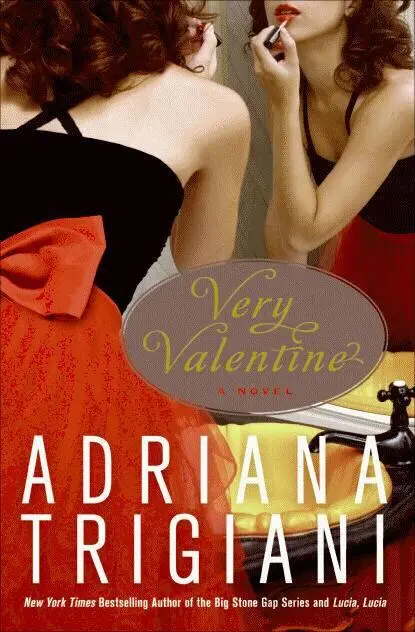
- Название:Very Valentine
- Автор:
- Жанр:
- Год:неизвестен
- ISBN:нет данных
- Рейтинг книги:3 / 5. Голосов: 1
-
Избранное:Добавить в избранное
- Отзывы:
-
Ваша оценка:
Very Valentine: краткое содержание, описание и аннотация
Предлагаем к чтению аннотацию, описание, краткое содержание или предисловие (зависит от того, что написал сам автор книги «Very Valentine»). Если вы не нашли необходимую информацию о книге — напишите в комментариях, мы постараемся отыскать её.
In this luscious, contemporary family saga, the Angelini Shoe Company, makers of exquisite wedding shoes since 1903, is one of the last family-owned businesses in Greenwich Village. The company is on the verge of financial collapse. It falls to thirty-three-year-old Valentine Roncalli, the talented and determined apprentice to her grandmother, the master artisan Teodora Angelini, to bring the family's old-world craftsmanship into the twenty-first century and save the company from ruin.
While juggling a budding romance with dashing chef Roman Falconi, her duty to her family, and a design challenge presented by a prestigious department store, Valentine returns to Italy with her grandmother to learn new techniques and seek one-of-a-kind materials for building a pair of glorious shoes to beat their rivals. There, in Tuscany, Naples, and on the Isle of Capri, a family secret is revealed as Valentine discovers her artistic voice and much more, turning her life and the family business upside down in ways she never expected. Very Valentine is a sumptuous treat, a journey of dreams fulfilled, a celebration of love and loss filled with Trigiani's trademark heart and humor.
Very Valentine — читать онлайн бесплатно полную книгу (весь текст) целиком
Ниже представлен текст книги, разбитый по страницам. Система сохранения места последней прочитанной страницы, позволяет с удобством читать онлайн бесплатно книгу «Very Valentine», без необходимости каждый раз заново искать на чём Вы остановились. Поставьте закладку, и сможете в любой момент перейти на страницу, на которой закончили чтение.
Интервал:
Закладка:
It’s helpful to have the house to myself. I’m one of those people who actually savors being alone. I like to get up in the middle of the night, turn on the lights, put on a pot of coffee, and get to work without fear of waking Gram. There is nothing more peaceful than New York City at three A.M. It’s the rest period before the madness begins at dawn.
I relish a big space with nobody in it but me. Virginia Woolf celebrated a room of one’s own, but I’ve learned that I require a house of my own. When I’m designing, I fill all available surfaces with offbeat objects that inspire me: a marble bocce ball that’s the exact shade of vanilla ice cream, a small watercolor of a cloud that has hues of lavender on a field of white, wheels of paint chips, boards of fabric swatches and skeins of silk trim. I like to create a circus of ideas, which I can walk through and live with, until something speaks to me. Slowly, I winnow out the claptrap until I’m left with just a few things that move me the most. This is how my mind works, several concepts at play at once, all advancing toward an unknown conclusion; disparate pieces becoming a new whole, in this case, a pair of shoes for a wedding gown that may, on the surface, appear to be in tatters, but is actually, after hours of study, a dress design that is forward thinking and new. My laptop is propped open, ready to record any ideas I have, and to provide available research when I need a goose in a particular direction.
The dining table is covered in fabric folded neatly in rectangles, a few old shoes I’ve saved from yard sales, a crocheted bride doll that belonged to my mother in the 1950s and a large collage that I’ve been making since we first met with Rhedd Lewis. I started the collage on an enormous sheet of butcher paper. I pasted images, photographs, scenes, and words from old magazines, then textured the whole by gluing on artful bits of lace, buttons, and loose crystals. Somewhere in this wild stew, which my subconscious directed, lies my design, or at least, the impulse that will guide me through the process of designing our shoe.
Using Rhedd’s sketch as a jumping-off point, my collage is a landscape of women, collected from couture photo shoots, advertisements, and newspaper stories, most of whom are in repose or turned away from the camera’s lens. I imagine the woman in the Rag & Bone sketch, who she might be and why she chose this particular design above all others to wear on her wedding day. My instincts say this dress isn’t for a first-time bride. It’s for a woman who has been down the road of true love more than once; she’s jaded and even a little ambivalent, hence the unfinished details and frayed chiffon. If the bride is not committed, her gown isn’t either.
Gram has taught me that, as custom cobblers, we have succeeded only when we have taken something a client needs and turned it into something she desires . I have to think like the bride who chooses to wear this gown and design shoes to complement her style.
We use line to accent and play up the individual customer’s physical attributes, we use balance to make the shoe comfortable and provide a seamless fit, form is mandated by personal taste and silhouette, shape is about taking current trends and making the shoe contemporary, color is about working with the dress design so both elements flow as one, pattern is used to accent the fabric of the gown, while texture is about the overall statement of the shoe. Is the leather or fabric appropriate for the time of year the bride is married, and do all the elements feed seamlessly into the overall presentation?
Gram says to keep it simple but not to be afraid of dramatic elements. These are the arenas an apprentice must master. All these notes must dance in the head of the artist as she creates; one element cannot take precedence over another, rather, the goal is a harmonious confluence of all of them. This harmony creates beauty.
I look at the shards of chiffon on the sketch. I prop it up against the candlesticks on the dining room table and walk to the kitchen and look at it from across the room. It reminds me of something. Something specific. And then I remember. I climb the stairs to Gram’s room.
Gram was married in 1948 in an eggshell silk-georgette gown with a scoop neck and sheer, short, puffed sleeves of organza with a wide band of fabric around the upper arm. The natural, fitted waist flowed out to a full circle skirt. There were accents aplenty: ornate handmade Italian cutwork lace was sewn on every seam. There was spider lace on the bodice, facing, and tips of the voluminous ruffles on the hem of the skirt. A photograph of Gram tossing the bouquet shows the gown from the back, where there are wings of tulle fashioned like a capelet, which must have trailed behind Gram like a mist when she walked. It was a typical postwar, pre-New Look ensemble, overtly feminine and deliberately overdone. The war was over and, evidently, one of the great prizes was the sea of femininity that awaited the soldiers as they returned home.
Today the design looks cluttered and homemade, like the crocheted bride doll my mother loved as a girl. Gram’s gown has small seed pearls on the bodice, whereas the doll has pearls on the clunky layers of yarn skirt. Gram wears the bright red lipstick and pencil-thin eyebrows of the postwar era, whereas the doll’s face is piquant, with red Cupid’s bow lips and no eyebrows at all. The look on both faces is pure domestic contentment. I can even picture Gram the following morning, lipstick matte, eyes sparkling, flipping pancakes, wearing a starched sheer organza apron with a frilly pocket shaped like a heart. A joyful wife the morning after her blissful wedding night begins a new life.
As I flip through the black-and-white photographs of my grandparents’ wedding, I look for clues. There’s something I remember about these photographs that will help me with the design. I’m just not sure what.
Finally, I find a photograph of Gram’s wedding shoes as she lifts the hem of her gown slightly to expose the garter. Gram wears a pair of cream-colored, leather platform sandals. The folds of the leather on the vamp are tufted into diamond shapes accented with small leather buttons.
How interesting: boot buttons on an open sandal.
The gown in the sketch, with its seemingly haphazard layers of ripped material, needs a substantial shoe, but not a boot, to stabilize it. Platforms are out, but hefty straps, large buckles, and bows are in. Somehow, I have to make the eye go to the feet and not to the dress. I’m beginning to understand the point of the Rhedd Lewis challenge. This dress is all about not looking at it, but directing the eye to the shoe. And here it is, the epiphany, the beam of clarity, the moment of truth I have been waiting for: make the shoe drive the dress.
I get out my sketchbook and begin to draw my grandmother. I copy the expression on her face in the photo album, her wide eyes, her hair in sausage-roll curls.
Then I take the dress in the sketch and draw it anew, on Gram’s body. I create a new silhouette, feminine but strong. Gone is the fussiness, replaced with modern restraint. The wide streamers of ripped chiffon now seem fresh, not haphazard.
I flip the page in my sketchbook. I draw the shape of the foot, then fill it, with wide straps and a tongue of soft leather anchoring the straps. Then I add texture on the straps, some of smooth leather, others with the striae of silk, a combination of materials that gives it a new-century feeling. I’ll worry about how to execute this later. Right now, it’s about the freedom of letting the idea loose on the page. The gown exposes leg, so I follow that line down to the ankle of the shoe, creating an oversize bow around the ankle, a touch of femininity that looks powerful, like the boot laces on the Mighty Isis in the comic books I loved as a girl. The condition of the fabric gives me license to create a shoe that uses scraps, pieces of luxe materials, soft leathers, offbeat embossing on the leather, whimsical braiding, bold embellishments, and oversize pearls on the strap anchors.
Читать дальшеИнтервал:
Закладка:
Похожие книги на «Very Valentine»
Представляем Вашему вниманию похожие книги на «Very Valentine» списком для выбора. Мы отобрали схожую по названию и смыслу литературу в надежде предоставить читателям больше вариантов отыскать новые, интересные, ещё непрочитанные произведения.


Обсуждение, отзывы о книге «Very Valentine» и просто собственные мнения читателей. Оставьте ваши комментарии, напишите, что Вы думаете о произведении, его смысле или главных героях. Укажите что конкретно понравилось, а что нет, и почему Вы так считаете.