Adriana Trigiani - Very Valentine
Здесь есть возможность читать онлайн «Adriana Trigiani - Very Valentine» весь текст электронной книги совершенно бесплатно (целиком полную версию без сокращений). В некоторых случаях можно слушать аудио, скачать через торрент в формате fb2 и присутствует краткое содержание. Жанр: Современная проза, на английском языке. Описание произведения, (предисловие) а так же отзывы посетителей доступны на портале библиотеки ЛибКат.
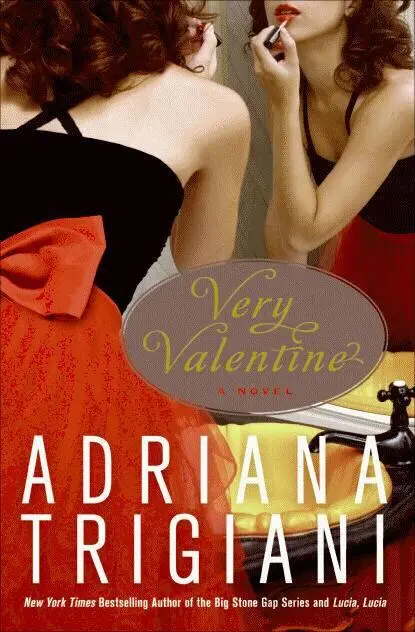
- Название:Very Valentine
- Автор:
- Жанр:
- Год:неизвестен
- ISBN:нет данных
- Рейтинг книги:3 / 5. Голосов: 1
-
Избранное:Добавить в избранное
- Отзывы:
-
Ваша оценка:
Very Valentine: краткое содержание, описание и аннотация
Предлагаем к чтению аннотацию, описание, краткое содержание или предисловие (зависит от того, что написал сам автор книги «Very Valentine»). Если вы не нашли необходимую информацию о книге — напишите в комментариях, мы постараемся отыскать её.
In this luscious, contemporary family saga, the Angelini Shoe Company, makers of exquisite wedding shoes since 1903, is one of the last family-owned businesses in Greenwich Village. The company is on the verge of financial collapse. It falls to thirty-three-year-old Valentine Roncalli, the talented and determined apprentice to her grandmother, the master artisan Teodora Angelini, to bring the family's old-world craftsmanship into the twenty-first century and save the company from ruin.
While juggling a budding romance with dashing chef Roman Falconi, her duty to her family, and a design challenge presented by a prestigious department store, Valentine returns to Italy with her grandmother to learn new techniques and seek one-of-a-kind materials for building a pair of glorious shoes to beat their rivals. There, in Tuscany, Naples, and on the Isle of Capri, a family secret is revealed as Valentine discovers her artistic voice and much more, turning her life and the family business upside down in ways she never expected. Very Valentine is a sumptuous treat, a journey of dreams fulfilled, a celebration of love and loss filled with Trigiani's trademark heart and humor.
Very Valentine — читать онлайн бесплатно полную книгу (весь текст) целиком
Ниже представлен текст книги, разбитый по страницам. Система сохранения места последней прочитанной страницы, позволяет с удобством читать онлайн бесплатно книгу «Very Valentine», без необходимости каждый раз заново искать на чём Вы остановились. Поставьте закладку, и сможете в любой момент перейти на страницу, на которой закончили чтение.
Интервал:
Закладка:
I try and make up for my family. “Roman, the ravioli is scrumptious.”
“Thank you.” Roman sits down.
Why aren’t they complimenting his cooking? I kick Tess under the table.
“Ow,” she says.
“Sorry.” I look at her but she doesn’t catch my cue.
When Tess was dating Charlie, I knocked myself out to make him feel welcome. I listened to Charlie drone on about installing home-security systems until my eyes rolled back in my head like martini olives. When Jaclyn got serious with Tom, she warned us that he was “shy,” so we made sure to bring him in on every conversation, to try and include him. He finally told Tess and me to back off, that it wasn’t necessary to include him in our dull conversations, he gets enough of that at work. We’ve failed with Pamela, but it wasn’t from lack of trying; she’s just not into the stuff we enjoy, like eating, so it’s always been a struggle to find common ground. When Alfred was dating her, we were on our best behavior, but once they married, it was too much work.
Now, as I look around the table, reciprocation of my kind gestures toward my sisters and brother when they were bringing someone new into the family has gone out the window. It seems they are just too jaded, disinterested, and old to put on a good face for Roman. He’s getting the rent-a-wreck version of my family when the rest of the in-laws got the Cadillac treatment. It’s almost assumed that Funnyone isn’t a serious player in romance, so why bother? Why use the good china on Roman, he won’t be around anyway. But they’re wrong. They are my family, and they should be on my side and, God forbid, root for my happiness. Tonight, it’s clear they couldn’t care less. Here they are at a restaurant short-listed in New York magazine for Best Italian Eatery and they act like they’re grabbing a sweaty hot dog in wax paper out of a bin at Yankee Stadium. Don’t they see that this is special? That he is special?
“Are you going to tell the chef what you think?” I say so loudly that even Roman is startled. The family does an en masse hmm, good, great garble that seems insincere.
And then Alfred says, “Who’s paying for the trip to Italy?”
“We are,” I tell him.
“More debt.” He shrugs.
“We need leather to make shoes,” I snap at him.
“You need to modify your operation and sell the building,” he says. “Gram, I agreed to come tonight hoping that I might be able to tell Scott what your plans are.”
Now I’m really angry. This dinner was supposed to be a lovely evening about getting to know my new boyfriend, and now it’s turned into agenda night for the Angelini Shoe Company. “Could we talk about this another time?”
“I have an answer for Alfred,” Gram says quietly.
Alfred smiles for the first time this evening.
“I’ve been doing a little research on my own,” Gram begins. “I had a long talk with Richard Kirshenbaum. Remember him?” She turns to Mom. “He used to run the printing factory on the West Side Highway? He and his wife owned it.”
“I remember her well. Dana. Stunning brunette. Amazing fashion sense. How is she?” Mom asks.
“Retired,” Gram deadpans. “Anyhow, I told him about the offer and he advised me to wait. He said that Scott Hatcher’s offer wasn’t nearly enough.”
“Not enough?” Alfred puts his hands on the table.
“That’s what he said.” Gram picks up her fork. “But we can talk about the details another time.”
“You know what, Gram? We don’t have to. I can see Valentine and her crazy ideas have gotten to you and you’re not thinking clearly.”
“I’m clear,” Gram assures him.
“No, you’re just buying time.”
“First of all, Alfred, if I could buy time, I would have done it already. It’s the only thing I don’t have enough of. Though none of you would understand that, not having reached your eightieth birthdays.”
“Except for me.” Dad waves his white napkin in surrender and continues. “Time? It’s like a freakin’ gong in my head in the middle of the night. And then I get the cold sweats of death. I’m hearing the call to arms, believe me.”
“Okay, Dutch, you’re right. You’re exempt. You would understand this because you have a health situation-”
“Damn right.”
“-that would make you empathetic to old age. But the rest of you are too young to understand.”
“What does this have to do with your building?” my brother asks impatiently.
“I am not going to be pushed into anything. And I feel you’re pushing me, Alfred.”
“I want what’s best for you.”
“You’re rushing me. And as far as Mr. Hatcher is concerned, he is looking out for his best interests, not mine.”
“It’s a cash offer, Gram. As is. He’d buy the building as is.”
“And as it is, today, I’m not selling.”
“Okay. Fine.” Alfred places his napkin next to his plate. He stands and moves to the door. Roman shakes his head in disbelief at my brother’s lack of manners.
“Honey!” Mom calls after him. He goes through the door. Mom goes after him.
Dad looks at me. “See what you started?”
“Me?”
I look to Roman, but he is gone. “Great. Now dinner is ruined. I hope you’re all happy.” I throw down my napkin. “Now that’s something to cry about.” I look to Jaclyn, who suddenly can’t muster a tear.
I go into the kitchen. Roman is carefully slicing the pork loin and placing it on a platter. “I’m sorry.”
“It’s okay. It’s actually worse in my family. When they’re not complaining, they’re plotting.” Roman puts down his carving knife, wipes his hands on a moppeen, and comes around the butcher-block table and puts his arms around me. “Let it go,” he says.
I pretend, for his sake, that I can. But I know, having seen the expression on his face and his abrupt exit to the kitchen, that my family just became a potential deal breaker in our relationship. Roman left Chicago because of this kind of infighting and competition in his own family, why should he put up with it from mine? Why would any man sign on for this kind of nonsense, even when it’s achingly familiar?
As complex as Roman is in the kitchen, when it comes to his private life, he is a minimalist. He doesn’t clutter his loft with unnecessary furniture, his kitchen with dust-collecting gadgets, or his heart with emotional fracases. He makes quick decisions and clean breaks. I’ve seen him do it. He is not a fan of drama for the sake of it, and the last thing he wants to do is argue. He wants his life outside work, which is competitive and volatile, to be the opposite: calm and peaceful. My family, even when I beg them, cannot deliver that. Sensing my feelings, he says, “Don’t worry.”
“Too late,” I tell him.
9. The Hudson River
LAST WEEK, GRAM LEFT for her annual two-week Lenten retreat with the women’s sodality of Our Lady of Pompeii. The ladies stay at a convent in the Berkshires during the ides of March, and find inner peace through participation in daily masses, group rosaries, hikes in the woods, and meals so loaded with starch that when Gram returns home she has to juice for a week to clear out the gluten. However, she considers the sacrifice well worth it because, while her body may take a health hit, her soul is cleansed. Mezzo. Mezzo.
I’m aiming to have my sketch of the shoe design for the competition at Bergdorf’s finished by the time Gram returns. I want to have a clear notion of what we’ll need to build the shoes before we go to Italy. While Gram has left the design of the shoe up to me, she promised to weigh in with any refinements or corrections before we turn it into a pair of real shoes and deliver them to Rhedd Lewis. I have become obsessed with the sketch of the dress, studying it so often, I see it when I sleep. I’ve come to appreciate the design, and the strange charm of it. The Rag & Bone gown has grown on me.
Читать дальшеИнтервал:
Закладка:
Похожие книги на «Very Valentine»
Представляем Вашему вниманию похожие книги на «Very Valentine» списком для выбора. Мы отобрали схожую по названию и смыслу литературу в надежде предоставить читателям больше вариантов отыскать новые, интересные, ещё непрочитанные произведения.









Обсуждение, отзывы о книге «Very Valentine» и просто собственные мнения читателей. Оставьте ваши комментарии, напишите, что Вы думаете о произведении, его смысле или главных героях. Укажите что конкретно понравилось, а что нет, и почему Вы так считаете.