Doris Lessing - Doris Lessing
Здесь есть возможность читать онлайн «Doris Lessing - Doris Lessing» весь текст электронной книги совершенно бесплатно (целиком полную версию без сокращений). В некоторых случаях можно слушать аудио, скачать через торрент в формате fb2 и присутствует краткое содержание. Город: London, New York, Toronto and Sydney, Год выпуска: 2007, ISBN: 2007, Издательство: Harper Perennial, Жанр: Современная проза, на английском языке. Описание произведения, (предисловие) а так же отзывы посетителей доступны на портале библиотеки ЛибКат.
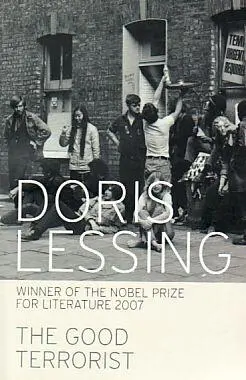
- Название:Doris Lessing
- Автор:
- Издательство:Harper Perennial
- Жанр:
- Год:2007
- Город:London, New York, Toronto and Sydney
- ISBN:978-0-00-724721-9
- Рейтинг книги:5 / 5. Голосов: 1
-
Избранное:Добавить в избранное
- Отзывы:
-
Ваша оценка:
Doris Lessing: краткое содержание, описание и аннотация
Предлагаем к чтению аннотацию, описание, краткое содержание или предисловие (зависит от того, что написал сам автор книги «Doris Lessing»). Если вы не нашли необходимую информацию о книге — напишите в комментариях, мы постараемся отыскать её.
Only Alice, motherly, practical and determined, seems capable of organising anything. She likes to be on the battlefront: picketing, being bound over and spray-painting slogans. But her enthusiasm is also easy to exploit and she soon becomes ideal fodder for the group's more dangerous and potent cause. When their naive radical. fantasies turn into a chaos of real destruction, they realise that their lives will never be the same again.
Doris Lessing — читать онлайн бесплатно полную книгу (весь текст) целиком
Ниже представлен текст книги, разбитый по страницам. Система сохранения места последней прочитанной страницы, позволяет с удобством читать онлайн бесплатно книгу «Doris Lessing», без необходимости каждый раз заново искать на чём Вы остановились. Поставьте закладку, и сможете в любой момент перейти на страницу, на которой закончили чтение.
Интервал:
Закладка:
In the familiar, heady, but comforting atmosphere that attends the opening of such events, forty-odd people crowded into the sitting room, seating themselves as they found places, on the floor, or on the window sills. Outside was a fitfully sunny day. Inside, the new heating was too much for some, and windows had to be opened.
Nearly all were under thirty. Alice, she believed, was by far the oldest. Except, that is, for Roberta, who only laughed when asked her age.
It was to Bert and Jasper that everyone looked, though it had been agreed that if Pat did in fact come, she would give the opening address.
Bert had been listening and watching for her for days, as all the residents in number 43 knew.
Now Bert stood at ease by the fireplace, in which was a great jar of daffodils and narcissus, leaning his elbow on the mantelpiece to show informality, and said, "This is the first National Congress of the Communist Centre Union. From small seeds grow great trees." Energetic applause. Smiles, pleased laughter. Mary Williams and Reggie were clapping, sober but emphatic. Muriel was in a corner, on the floor. She was here as a spy, Alice reminded herself.
Bert did not laugh. Or smile. His problem with Pat had fined him down, giving him a look of suffering restrained by thought. His easy affability had gone. He nodded briefly at the applause, and went on to say that the CCU proposed to be a nonsectarian party, taking the best from the existing socialist parties, learning from their mistakes and failures. It was determined to base itself on the great traditions of the British working class, working for radical social change towards a revolution "if needs be - and every day teaches us that the class that controls this country of ours is not going to let itself be dislodged without force...." Applause and laughter and jeers. A revolution that would learn from the experience of the Russian Revolution, the Chinese Revolution, and, if necessary, the French Revolution, for it was not too much to say that the lessons of the French Revolution had by no means been exhausted. The Congress this weekend had not been called with the aim of formulating a detailed policy, for much more work would have to be done; but to lay down broad principles. And now he, Bert Barnes, would stand down and let a much more accomplished and developed revolutionary, Comrade Willis, take the floor.
Jasper took Bert's place. He did not lean on the mantelpiece, but stood like an arrow, arms down by his sides, his reddish-gold crest of hair glistening, and his eyes fixed on the portrait of Lenin. He began his speech in a voice higher than his usual one, which made it sound to Alice rather strained. But, then, she was used to his platform style, and judged him by other criteria: for instance, she knew he had hardly slept last night, for he had been engaged in passionate and voluble discussion, and going without sleep did not suit him.
His style was to use the familiar phrases of the socialist lexicon, but as though he had only just that moment discovered them, so that when he began, there was often a moment when people showed a tendency to laugh. This stopped at once, because of his desperate, even ecstatic seriousness.
"Comrades! Welcome to you all, comrades. This is for all of us a historic moment. There are very few of us in this room today, but we are a chosen few - chosen by the time we live in, chosen by history itself! - and there is nothing we cannot achieve if we set ourselves to do it." Here, if Bert or anyone else had been speaking, there would have been applause. There was a tense silence. The truth was, the comrades had not expected this note of high seriousness; or, at least, not so early in the proceedings.
"We all know the criminal, the terrible condition of Britain. We all know the fascist-imperialistic government must be forcibly overthrown! There is no other way forward! The forces that will liberate us all are already being forged. We are in the vanguard of these forces, and the responsibility for a glorious future is with us, in our hands."
He went on like this for about twenty minutes. Alice listened to every word, with a sweet, trustful, even beautiful smile; this was the Jasper she loved best, and it was wonderful for her to see how other people responded to him. Even people whom she knew to be critical of him, at such moments admired him. Or, at any rate, recognised that here was something extraordinary and much more than that after all not exactly rare phenomenon, the natural speaker, the orator. No, here was a leader. The real thing.
Alice stood by the door, ready to nip out quickly when it was time to get the tea making started. She was listening, and she was watching the faces: how they responded, how the levels of their attention were being raised by him, by Jasper. This thing that often happened when Jasper began to speak - a nervousness, even a tendency to titter, or perhaps to interject the odd deflating sardonic remark - was because his style was not the common-or-garden British style, a bit homespun, humorous by preference, down to earth. And, of course, Alice in the usual way would be the first to admire this Britishness. It was ours! National characteristics were precious. But Jasper was a special case. He had to impose his own exaltation on them from the start; and today there were no titterers instantly suppressed by others who were on a worthier, higher level. The strained expressions she saw were not because of criticism, far from it; rather, they did not trust themselves to believe some beautiful message or gift that was being offered to them by Jasper, did not feel themselves to be worthy. She had learned long ago that when Jasper spoke people did not clap or shout approval. They remained absolutely silent - after the tricky first few moments, that is; and when he had finished speaking, there would be a silence lasting perhaps as long as fifteen seconds, more. Then there would be applause, sudden, fervent, even violent; people would stand up and shout and cheer. The applause would go on like this, and then suddenly stop.
And this is what happened today. The final applause was as though something had been liberated in them. Some of the women were in tears. Everyone seemed deeply moved. (Not everyone; Alice noted that the goose-girl sat as if part of another audience, not this one, and she didn't applaud at all. Her eyes encountered Alice's but moved on, as if she had not seen Alice, did not want to be called to account for this lapse in real feeling, let alone ordinary good manners.) Then everyone stood up, those not already on their feet, in the need to applaud more passionately, so inspired and fired by Jasper had they been, this emissary from what he had been apostrophising as "the future, our glorious future." They could not, in fact, bear to sit down again, and although the tea break had not been envisaged for another hour, tea was set in motion then and there.
The tea break took a long time, because so many people were busy with conversations. These were not, in fact, about the CCU, or, indeed, about anything Jasper had said; his opening speech was hardly mentioned. When the tea break was ending - Comrades Alice, Roberta, and Bert having to shout above the din with all kinds of dire threats and warnings, all humorous, of course, to get people back to the sitting room - Pat appeared. Quite frankly, she looked terrible. Just like Bert, in fact. She was pale and thin and had lost her glossy-cherry look. Bert and she embraced quickly, in a convulsive and even guilty way; but she would not look at him, and from this Alice saw that Pat would not stay long.
Scheduling Pat, not Jasper, to make the opening speech had been a sensible decision. Her style was very different from Jasper's, being low-key, humorous, informative. She did not know about Jasper's inspirational speech, of course. She told how the CCU had come into being - not in a way that appealed to emotion, but saying it was because of dissatisfactions with the existing socialist parties, which she then analysed. In fact, she was giving a short but rather competent analysis of the existing economic situation in Britain. People were listening attentively, though not at all as they had to Jasper. They were chipping in with facts and figures, they laughed sarcastically at particularly telling points, and there were little ripples of applause. It was a tragedy, Alice knew, that Pat had not arrived in time to make the opening speech, so that Jasper could have made his, as had been planned, at the end of the day. As things were, it was almost as though Jasper's speech had not been made at all; it was all wasted; nothing seemed to have flowed from it.
Читать дальшеИнтервал:
Закладка:
Похожие книги на «Doris Lessing»
Представляем Вашему вниманию похожие книги на «Doris Lessing» списком для выбора. Мы отобрали схожую по названию и смыслу литературу в надежде предоставить читателям больше вариантов отыскать новые, интересные, ещё непрочитанные произведения.





Обсуждение, отзывы о книге «Doris Lessing» и просто собственные мнения читателей. Оставьте ваши комментарии, напишите, что Вы думаете о произведении, его смысле или главных героях. Укажите что конкретно понравилось, а что нет, и почему Вы так считаете.