Doris Lessing - Doris Lessing
Здесь есть возможность читать онлайн «Doris Lessing - Doris Lessing» весь текст электронной книги совершенно бесплатно (целиком полную версию без сокращений). В некоторых случаях можно слушать аудио, скачать через торрент в формате fb2 и присутствует краткое содержание. Город: London, New York, Toronto and Sydney, Год выпуска: 2007, ISBN: 2007, Издательство: Harper Perennial, Жанр: Современная проза, на английском языке. Описание произведения, (предисловие) а так же отзывы посетителей доступны на портале библиотеки ЛибКат.
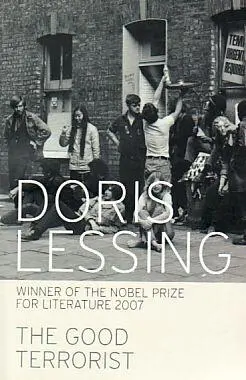
- Название:Doris Lessing
- Автор:
- Издательство:Harper Perennial
- Жанр:
- Год:2007
- Город:London, New York, Toronto and Sydney
- ISBN:978-0-00-724721-9
- Рейтинг книги:5 / 5. Голосов: 1
-
Избранное:Добавить в избранное
- Отзывы:
-
Ваша оценка:
Doris Lessing: краткое содержание, описание и аннотация
Предлагаем к чтению аннотацию, описание, краткое содержание или предисловие (зависит от того, что написал сам автор книги «Doris Lessing»). Если вы не нашли необходимую информацию о книге — напишите в комментариях, мы постараемся отыскать её.
Only Alice, motherly, practical and determined, seems capable of organising anything. She likes to be on the battlefront: picketing, being bound over and spray-painting slogans. But her enthusiasm is also easy to exploit and she soon becomes ideal fodder for the group's more dangerous and potent cause. When their naive radical. fantasies turn into a chaos of real destruction, they realise that their lives will never be the same again.
Doris Lessing — читать онлайн бесплатно полную книгу (весь текст) целиком
Ниже представлен текст книги, разбитый по страницам. Система сохранения места последней прочитанной страницы, позволяет с удобством читать онлайн бесплатно книгу «Doris Lessing», без необходимости каждый раз заново искать на чём Вы остановились. Поставьте закладку, и сможете в любой момент перейти на страницу, на которой закончили чтение.
Интервал:
Закладка:
Down they went into the Underground. They had not looked to see whether the police had come into the main road in time to see. Again, Jasper's eyes demanded they chance it; they walked smartly up out of the Underground on the other side, and saw two policemen - different ones - coming towards them. Cool and indifferent, Alice and Jasper walked past. Then down again into the Underground. They went two stops, to where Alice had seen a long low bridge along a main road over railway lines. By then it was ten, and raining a little. Here the police station was a good way off. On the other hand, cars were passing regularly. On the bridge was already written, in white letters that had run and streaked, "Women Are Angry."
They stood arm in arm, backs to the traffic, as though looking over the railway lines, and Alice, holding the spray low down, wrote, "We Are All...," which is as far as she could go without having to move. They moved on a few steps, again stood together, and wrote, "Angry. Angry About..." Another move. "Ireland. About Sexism. About..." They moved. Then they heard - their ears alert for the slightest changes in the grind of the traffic - a car slowing down just behind them. They both shot looks over their shoulders: not a police car. But two men sat side by side in the front seat, staring.
"... Trident" - Alice finished. And they walked on, slowly, very close, knowing the car crawled behind. The intoxication of it, the elation: pleasure. There was nothing like it!
Now, remembering, Alice craved and longed. Oh, she did so hope that Jasper would not be late, would not be tired, would want to go out. He had promised....
... They had walked, perhaps 150 yards. Luck! A one-way street! The car, of course, did not follow. At the end of that street, they went back to the bus stop and to Kilburn, where they had worked before.
"No to Cruise! No to Trident!"
No one had so much as noticed them there.
Let down, their elation leaking away, they had decided to give up, and taken a taxi back to Alice's mother's house, where Alice made them both coffee and scrambled eggs.
Now it was six-thirty.
Mary came in, sat briefly with Alice, said she and Reggie were going to the pictures. She had had a word about this girl, Monica; there was really nothing, nothing at all. She had done her best, Alice must understand.
"Never mind," said Alice, "I've thought of something."
Mary saw the scribbled-over envelope, smiled, and said, "Reggie and I are going to the Greenpeace demo tomorrow."
"Good for you," said Alice.
"But it's shocking, it's terrible, the despoliation of our countryside...."
"I know," said Alice. "I've been on some of their demos."
"You have!" Mary was relieved, Alice could see, that they shared this; but Reggie "hahV'ed from the hall, and, with a smile, Mary went.
Where were Roberta and Faye? Probably at their women's-commune place. Where Philip? He might have been thrown out by his girlfriend, but he was going round there still for meals and baths, so Bert had said. Jim? Now, that was a serious question, where was he? The smiling face, the jokey mellow voice - but what was going on, really?
Apart from having his home, his place taken over like this.
Worry, worry, Alice sat worrying.
In came Jasper, smiling, jaunty, stepping like a dancer, and at once he said, "Oh, lovely," at the forsythia. There: people said this and that about him, but no one knew how sensitive he was, how kind. Now he bent and kissed her cheek; it was a thin papery kiss, but she understood that; understood when - rarely - she simply had to put her arms around him out of an exuberance of love, the instinctive shrinking, as though she held a wraith, something cold and wailing, a lost child. And he would try to stand up to it, the sudden blast of her love; she could feel a brave little determination to withstand it, and even an intention to return it. Which, of course, he could not - not the physical thing; she knew that what she felt as a warmth of affection was experienced by him as a demand for that.
He stood near her, beaming, positively dancing, with the excess of his pride and pleasure.
"So it was all right."
"Thirty pounds."
"A lot, surely?"
"They knew me," he said with pride.
"How was the cell?"
"Oh, not bad. They fed us - not bad. But I was with Jack-though it's an alias, you understand!"
"Yes, of course," she beamed back. "What I don't know..."
"... won't hurt you." He rubbed his hands, and began a light, smart quick-stepping about the kitchen: to the forsythia, which he touched delicately; to the window; and back to her. She put on the kettle, put coffee into a mug, and stood by the stove, so as to be standing, not sitting, while he moved so electrically and finely about.
"Bert doesn't know, either. Where is he? Bert?"
"But he told you, he's gone for the weekend with Pat."
"Oh yes... for the weekend - how long?" He was now standing still, threatened, frowning.
"Sunday night."
"Because we're going for a trip," he said. "He knew we were going, but not so soon. Jack says..."
"A fine Irish name," said Alice.
He chuckled, enjoying her teasing him. "Well, there are Jacks in Ireland." He went on, "And how did you know... But you always do, don't you," he said, with a flash of acid.
"But where else?" she wailed, humorously, as she always did when he was surprised by what to her was obvious. "You and Bert and Jack are going to Ireland, because Jack is IRA?"
"In touch. In contact. He can arrange a meeting."
"Well, then!" said Alice, handing him a mug of black coffee, and sat down again.
He stood silent, stilled a moment. Then he said, "Alice, I've got to have some money."
Alice thought: "Well, that's that" - meaning, the end of this delightful friendliness. She strengthened herself for a fight.
She said, "I gave Bert the money he gave you for your fine."
"I've got to have my fare to Dublin."
"But you can't have spent your dole money!"
He hesitated. He had? How? She could never understand what he did with it, where it went - he had not had time for... that other life of his, he had been with Bert, with Jack!
"I said I'd pay Jack's fare - the fine cleaned him out."
"Was he fined thirty pounds, too?"
"No, fifteen."
"I have been spending and spending," said Alice. "No one chips in - only a bit here and there." She thought: At least Mary and Reggie will pull their weight, at least one can say that of their kind.... To the exact amount, no more, no less.
"You can't have spent all that," said Jasper. He looked as though she were deliberately punishing him. "I saw it. Hundreds."
"What do you suppose all this is costing."
Now - as she had expected - his hand closed around her wrist, tight and hurtful. He said, "While you play house and gardens, pouring money away on rubbish, the Cause has to suffer, do without."
His little blue eyes in the shallow depressions of very white, glistening flesh stared into hers, unblinking, as his grasp tightened. But long ago she had gained immunity from this particular accusation. Without resisting, leaving her wrist limp in his circle of bone, she looked hard back at him and said, "I see no reason why you should pay Comrade Jack's fare. Or expenses. If he hadn't met you, what would he have done for the fare?"
"But he's only going over for our sakes - so we can make contact."
She forced herself to fight him: "You picked up three weeks' money this week. You had a hundred and twenty pounds plus. And I paid your fine. You can't have spent more than at the most twenty pounds on train fares and snacks."
When she did this, let him know that she made this silent, skilled reckoning of what he spent, what he must be doing, he hated her totally, and showed it. He was white with his hatred. His thin pink lips, which normally she loved for their delicacy and sensitivity, were stretched in a colourless line, and between them showed sharp discoloured teeth. He looked like a rat, she thought steadily, knowing that her love for him was not by an atom diminished.
Читать дальшеИнтервал:
Закладка:
Похожие книги на «Doris Lessing»
Представляем Вашему вниманию похожие книги на «Doris Lessing» списком для выбора. Мы отобрали схожую по названию и смыслу литературу в надежде предоставить читателям больше вариантов отыскать новые, интересные, ещё непрочитанные произведения.





Обсуждение, отзывы о книге «Doris Lessing» и просто собственные мнения читателей. Оставьте ваши комментарии, напишите, что Вы думаете о произведении, его смысле или главных героях. Укажите что конкретно понравилось, а что нет, и почему Вы так считаете.