Julian Fellowes - Past Imperfect
Здесь есть возможность читать онлайн «Julian Fellowes - Past Imperfect» весь текст электронной книги совершенно бесплатно (целиком полную версию без сокращений). В некоторых случаях можно слушать аудио, скачать через торрент в формате fb2 и присутствует краткое содержание. Жанр: Современная проза, на английском языке. Описание произведения, (предисловие) а так же отзывы посетителей доступны на портале библиотеки ЛибКат.
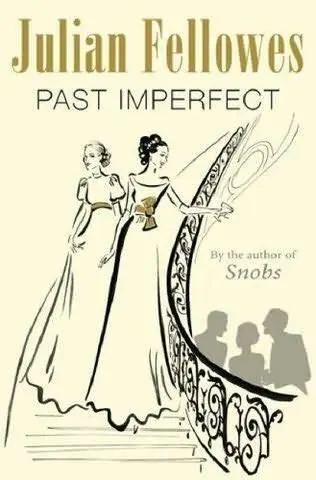
- Название:Past Imperfect
- Автор:
- Жанр:
- Год:неизвестен
- ISBN:нет данных
- Рейтинг книги:3 / 5. Голосов: 1
-
Избранное:Добавить в избранное
- Отзывы:
-
Ваша оценка:
Past Imperfect: краткое содержание, описание и аннотация
Предлагаем к чтению аннотацию, описание, краткое содержание или предисловие (зависит от того, что написал сам автор книги «Past Imperfect»). Если вы не нашли необходимую информацию о книге — напишите в комментариях, мы постараемся отыскать её.
Past Imperfect — читать онлайн бесплатно полную книгу (весь текст) целиком
Ниже представлен текст книги, разбитый по страницам. Система сохранения места последней прочитанной страницы, позволяет с удобством читать онлайн бесплатно книгу «Past Imperfect», без необходимости каждый раз заново искать на чём Вы остановились. Поставьте закладку, и сможете в любой момент перейти на страницу, на которой закончили чтение.
Интервал:
Закладка:
It did seem very hard to have lost both parents by the time she was eighteen, even if Oscar Wilde would have thought it careless. ‘Where were you at school?’
‘Cullingford Grange.’
I had vaguely heard of it. ‘Isn’t that in Hertfordshire?’
Candida nodded. ‘It’s the kind of place where they worry if you’re reading too much, instead of being out in the nice fresh air.’ She rolled her eyes at the strangeness of her stepmother’s choices. ‘I could recite the rules of hockey in my sleep, but unfortunately nothing was taught about literature, mathematics, history, art, politics or life.’ I believed her because her account was only too familiar.
I think, I pray, I come from the last generation of the privileged to pay no attention to the education of their daughters. Even in 1968 there were women’s colleges at Cambridge and Oxford, but they were, as a rule, filled with the daughters of the bourgeois intelligentsia. Posh girls were an oddity and indeed almost the only one I can remember from my own year left after one term to marry a man with a castle in Kent. There were exceptions, but these generally came from families who were known to cherish an eccentric tradition of educating their women, rather than from the run-of-the-mill squireachy. For the rest, parents would scrimp and save to send the boys to Eton or Winchester or Harrow, while their sisters were put into the charge of some alcoholic, Belgian countess, whose main instruction was not to bother the parents.
After leaving, a girl might spend a year at a finishing school where she could polish her languages and her skiing, then another year would pass in coming out, after which she would get a job arranging flowers in the boardroom or cooking lunches for directors or working for her father, until she had discovered Mr Right who, with any luck, would be the heir to Lord Right. And that would be that. Hopefully, the Hon. John Right would be right for Mummy and Daddy, too, since they, like their own parents, would expect to approve the choice. Our mothers may not have been pushed into their marriages in the Thirties and Forties, but they had certainly been kept out of any marriages their parents disapproved of. We all had stories of aunts and great-aunts who had been sent to study painting in Florence, or to live with a grandmother in Scotland, or to improve their French at some mountainous chateau in the Swiss Alps, to break them of a bad love habit and, lest those Barbara Cartland addicts think differently, usually it worked.
I do not mean to imply that all who followed this path were wretched. Lots of them were as happy as clams. They spent the early years of marriage in some part of London their mothers found unlikely, then, if they’d chosen well, they might move into the big house on their father-in-law’s estate (‘Fizzy and I were just rattling around and we thought it was time to let the kids have a go’). For some the father proved stubborn and wouldn’t move out, and for most there wasn’t a house to inherit, so the young couple would generally buy a cottage or a farmhouse or, if things were going really well in the City, a Queen Anne manor house in Gloucestershire or Oxfordshire or Suffolk. After that, he would shoot and complain about politics, they’d both ski and worry about the children, and she would work for charity, entertain and, if things were going less well in the City, sell artificial jewellery to her captive friends. Until the children grew up and it was time first to downsize and then to die. All of which, lest we forget and before we feel too sorry for them, was a lot better than scratching for a living in the dirt of the plains of Uzbekistan.
But where did it leave someone like Candida Finch? She was obviously clever but her appearance and her manner would not help to offset her lack of qualifications to say the least. Nor would I have thought there was any certainty of a husband coming up on the next lift. And there wouldn’t be much money. What were her options? ‘Do you know what you’d like to do?’ I asked.
Again, she rolled her eyes in exasperation. ‘What can I do?’
‘I asked what would you like to do.’
This was enough to soften her a little. It was, after all, a genuine enquiry. ‘I think I might have liked to work in publishing, but I have no degree. And before you suggest I take one now, we both know that won’t happen. It’s too late and I’ve missed it. I thought I might squeeze a few quid out of a godparent and push into a vanity publishing firm, but they’d have to accept they’d lose every penny, and all to buy me the right to talk about publishing at dinner parties. Which is the most I’d achieve.’
‘Be careful you’re not determined to fail in order to annoy your stepmother. It doesn’t sound to me as if she’ll care much either way.’ I nearly didn’t say this, since our very brief acquaintance did not at all justify it, but she laughed.
‘Well, that’s true anyway.’ Her voice was warmer than it had been. ‘You know, you really are quite good at this.’
When dinner was over, by some pre-arranged signal the white-clad debutantes slipped away, leaving the tables occupied only by the parents, the young men and the odd non-deb girl, glum and in colour. It was time for the ceremony that we had come for and while I would not pretend to the ecstasy of anticipation that gripped the mothers throughout the room, the rest of us were quite curious. First, an enormous cake, literally six or seven feet high, was wheeled out on to the centre of the dance floor. Next the Patroness of the Ball arose from her chair with sober grandeur and walked across to stand next to it. I seem to remember that this was always Lady Howard de Walden, but maybe I’m wrong, maybe it alternated with the Duchess of Somewhere. Either way, she was a heavyweight in the scales by which these things are weighed. I don’t actually think the whole thing would have worked if she were not. As it was, her rigid upright posture and the confident dignity of a crowned monarch, which a lot of those women seemed to possess quite naturally then in contrast to so many of their daughters, gave the exercise a certain credibility even before it had begun. The band struck up and we looked towards the head of the staircase, where the Girls of the Year stood lined up in couples, side by side, poised, waiting. Then, slowly, they began to descend at a measured pace, as solemnly as if they were serving at a Pope’s funeral.
Down they came, the lights playing on the white flowers among their gleaming curls, on their long white gloves, on the white lace and silk of their dresses, on their shining, haughty, hopeful faces. Once they had reached the bottom, each pair advanced to where the Patroness stood, dropped into a deep Court curtsey, and moved on. They were not all presented to absolute advantage. Georgina looked like Godzilla in a shroud as she lumbered down towards terra firma. But for most of them there was something almost ethereal in their uniformity. Sixty versions of the Angel of Mons coming down to ease the pain of those beneath.
It may, of course, be with the wisdom of hindsight, but I am fairly sure it was at that precise moment that I first became aware that what we were witnessing did not have long to live. That there would not be many more generations taking part in this performance or, indeed, anything like it. That our parents’ dream of somehow rescuing enough of the old, pre-war world for their children to live in, was a chimera, that I was, in short, witnessing the start of the finish. Funnily enough, and you probably will not believe me, it was an impressive sight. Like all disciplined, synchronised movement, the procession was commanding in its execution, as on and on they came, pair after matched pair, gliding down, curtseying low, moving on. All before a giant cake. Yet it was not ridiculous. It probably sounds ridiculous in the telling. Absurd. Even laughable. I can only say that I was there and it was not.
Читать дальшеИнтервал:
Закладка:
Похожие книги на «Past Imperfect»
Представляем Вашему вниманию похожие книги на «Past Imperfect» списком для выбора. Мы отобрали схожую по названию и смыслу литературу в надежде предоставить читателям больше вариантов отыскать новые, интересные, ещё непрочитанные произведения.










Обсуждение, отзывы о книге «Past Imperfect» и просто собственные мнения читателей. Оставьте ваши комментарии, напишите, что Вы думаете о произведении, его смысле или главных героях. Укажите что конкретно понравилось, а что нет, и почему Вы так считаете.