J. Margos - Shattered Image
Здесь есть возможность читать онлайн «J. Margos - Shattered Image» — ознакомительный отрывок электронной книги совершенно бесплатно, а после прочтения отрывка купить полную версию. В некоторых случаях можно слушать аудио, скачать через торрент в формате fb2 и присутствует краткое содержание. Жанр: Современная проза, на английском языке. Описание произведения, (предисловие) а так же отзывы посетителей доступны на портале библиотеки ЛибКат.
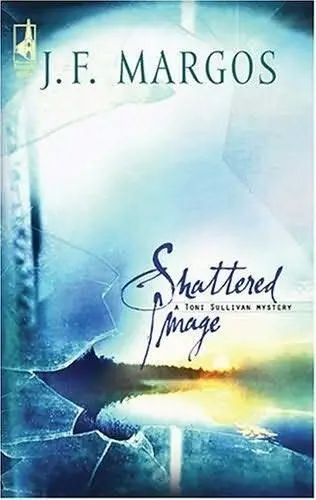
- Название:Shattered Image
- Автор:
- Жанр:
- Год:неизвестен
- ISBN:нет данных
- Рейтинг книги:3 / 5. Голосов: 1
-
Избранное:Добавить в избранное
- Отзывы:
-
Ваша оценка:
Shattered Image: краткое содержание, описание и аннотация
Предлагаем к чтению аннотацию, описание, краткое содержание или предисловие (зависит от того, что написал сам автор книги «Shattered Image»). Если вы не нашли необходимую информацию о книге — напишите в комментариях, мы постараемся отыскать её.
When Toni accepts another assignment that may officially prove an old friend is dead, memories of her nursing days in Vietnam begin to haunt her.
Suddenly, her calm professionalism is gone. To find peace, she'll do whatever it takes to unmask a murderer. But where will she find the strength to handle the traumatic legacy of the past?
Shattered Image — читать онлайн ознакомительный отрывок
Ниже представлен текст книги, разбитый по страницам. Система сохранения места последней прочитанной страницы, позволяет с удобством читать онлайн бесплатно книгу «Shattered Image», без необходимости каждый раз заново искать на чём Вы остановились. Поставьте закладку, и сможете в любой момент перейти на страницу, на которой закончили чтение.
Интервал:
Закладка:
“Good question. What I saw in ’Nam was a lot of horror, but it was bloody horror, and it was human suffering. Forensic art and sculpture isn’t bloody and the suffering is already past, at least for the departed. I don’t take care of the families or friends of the victims, so it’s totally different to me.”
Suddenly, I could hear Reverend Iordani’s words to me replaying in my head, and it hit me hard. I must have looked as if I was drifting off, because Dr. Carroway interrupted my thoughts again.
“So, you said your husband was a police officer. I’m assuming that’s what led you into this.”
“Yes, it is. Jack used to discuss his tough cases with me, and I had a knack for helping him solve them-an artist’s eye for details, I guess. Anyway, we were exposed to this new science of forensic reconstructive art, and I decided I wanted to learn it. I spent some time with two really terrific forensic reconstructive artists, and then began to do some work on my own. My artistic credentials and my husband’s connections allowed me access to the right people to teach me the skills.”
“Now you’re one of the best in the country.”
“Well, I don’t know about that…”
“No, Dr. Sullivan, you are regarded as one of the very best in the country. I checked.”
I felt myself blushing. I looked down at my feet, cleared my throat and said, “Well, I work hard and enjoy what I do.”
The material in the form was firmed up, so I cut the form open and gently lifted the skull out of the impression. It was a good impression. It would now harden fully and I could transport it back to Austin where the remainder of the work could take place.
“Wow, that’s really interesting,” Dr. Carroway remarked, looking at the fresh mold.
“Yes, the mold looks good.”
“Have you ever had one turn out bad?”
I laughed. “Oh yeah. That’s when you ditch it and start all over.”
We both smiled.
I packed up all my supplies, and Dr. Carroway called the sergeant major, who escorted me out of the building to my waiting cab. On my way back to the hotel, the memories of ’Nam began to flood in.
The first horror that revisited my mind was the smell. You never forget the smell and it’s something you really can’t describe. It’s sour and stale-a decayed smell. It was the smell that came with blood, burn wounds, infections and death. It’ll wrench your gut up into your throat. As if the smell wasn’t bad enough, the images that come along with it finish you off and you’re retching and in the dry heaves in no time flat. I already felt sick after my morning at the CILHI labs. The remembrance of that smell was compounding my queasiness. The remembrance of it was so real, it was as if it was there in the cab with me.
The dentists had the worst duty. The mortuary was nearby and a lot of the dead were burn victims-napalm and air crashes on the landing strip. They had to be identified by dental records. Those poor dentists would throw up three or four times just doing the ID on one body. I don’t know how any of them ever ate anything while they were in ’Nam.
None of that was even the worst part of the war. I was a nurse in the air force. The army nurses in the MASH units and evac hospitals-those women must have lost their minds or nearly so. They saw everything that came off the battlefield. The worst wounded usually never made it my way because they were never in good enough shape for plane flight. In fact, they usually died before they made it to our hospital.
I was in charge of triaging the injured for plane transport to another hospital, Hawaii or maybe even back home. The ones who were really bad couldn’t go on a plane, although that didn’t keep some doctors from trying to get them on one. There was no way to pressurize a plane for ground-level pressure. The best that could be achieved was pressure equal to three thousand or four thousand feet. You need more oxygen than that for certain wounds, especially burns and eye wounds. Oxygen tanks were not something we had in abundance, so there was triage. I would do an evaluation of their condition for plane flight. The ones who didn’t qualify had to go back to a hospital nearby to improve their condition, or just to die and return home in a box.
The bad news is that I saw a lot of horrible stuff. The good news is that I never had a patient more than twenty-four hours. It was an assessment assembly line and I was charged with making some difficult decisions in short order.
I met Jack there in Vietnam. He was an MP who did duty on the perimeter at the base where I was stationed in Da Nang. He used to play cards and hang out with that flyboy named Teddy Nikolaides. Teddy, Jack and I became a tight trio. We’d sit around and talk about home and dreams-and Teddy’s wife and kids.
Jack and I saw a lot of our buddies go into battle or fly off the airstrip and never return, but no loss hit us as hard as the loss of Ted Nikolaides. I don’t think either one of us ever really got our head around that one.
Ted had almost made it out of that horrible place-almost. I wondered now if he had finally made it out. Were the fragments I had seen and the skull I had touched really all that was left of Ted? Had he finally made it home to American soil?
Back at the hotel I secured the case with the skull mold in it and took a long hot shower. I put on fresh clothes-blue-jean shorts, a white cotton tank top and sandals. I was going to do what I had done each of the two previous times I had been to Hawaii since the Vietnam War. I was taking a trip to the Hawaii National Cemetery of the Pacific-to the Punchbowl.
The Punchbowl is the bowl-shaped remains of a volcanic crater just north of downtown Honolulu. In Hawaiian, the name for this place means “Hill of Sacrifice.” There are over thirty-three-thousand veterans buried in the floor of the crater. A memorial at the head of the cemetery consists of ten Courts of the Missing-marble courts containing the names of the MIAs from World War II, the Korean War and Vietnam-more than twenty-eight-thousand of them in all. In one of those Courts of the Missing, engraved on a marble wall, was the name of Theodore P. Nikolaides.
I would leave Hawaii for Austin the next morning, but first I would make my traditional trip to the Punchbowl, the Hill of Sacrifice, to find my friend’s name in the Courts of the Missing, and I would pay my respects.
Chapter Ten
Heavily jet-lagged and back in my house less than two hours, I received a call from Chris. There were more bones. This time not far from the edge of the running trail and the bridge that crosses Waller Creek. I taped my eyelids open, put on some jeans and boots and threw on an old, khaki-colored Keep Austin Weird T-shirt and bolted out the door.
It hadn’t been started in four days, but the ’Stang fired up like the little land rocket it was. As I roared down the road, I wondered what in blazes was going on. Could this victim be Doug Hughes?
I called my son on the cell phone. He was at the scene and he and Tommy were working this case as if it was related to the Red Bud case, until they could prove otherwise. He said the bones were in a jumble as with the Red Bud case, and it looked like a fresh grave.
It was 7:00 a.m. and traffic was already getting heavy, but I put the pedal down as I pulled up onto IH-35. As I wove in and out of traffic, speeding up, gearing down and shifting lanes, a motorcycle cop pulled alongside me. I just knew he was going to pull me over, but he motioned for me to follow him. That son of mine, always thinking. I smiled to myself as the officer turned on his lights and sirens and the traffic parted before us like the Red Sea before Moses.
We flew down the highway to the Cesar Chavez off-ramp. The officer’s Harley maneuvered easily through traffic as we continued our wild ride across downtown Austin, finally turning in at the parking area next to the old power plant on the riverbank. I thanked the officer for his escort and he smiled and waved as he pulled away.
Читать дальшеИнтервал:
Закладка:
Похожие книги на «Shattered Image»
Представляем Вашему вниманию похожие книги на «Shattered Image» списком для выбора. Мы отобрали схожую по названию и смыслу литературу в надежде предоставить читателям больше вариантов отыскать новые, интересные, ещё непрочитанные произведения.
![Никки Сикс - Героиновые дневники. Год из жизни павшей рок-звезды[The Heroin Diaries - A Year in the Life of a Shattered Rock Star]](/books/78612/nikki-siks-geroinovye-dnevniki-god-iz-zhizni-pavshej-rok-zvezdy-the-heroin-diaries-a-yea-thumb.webp)




![Ширли Мерфи - The Shattered Stone [calibre]](/books/436059/shirli-merfi-the-shattered-stone-calibre-thumb.webp)


Обсуждение, отзывы о книге «Shattered Image» и просто собственные мнения читателей. Оставьте ваши комментарии, напишите, что Вы думаете о произведении, его смысле или главных героях. Укажите что конкретно понравилось, а что нет, и почему Вы так считаете.