Colleen McCullough - 4. Caesar's Women
Здесь есть возможность читать онлайн «Colleen McCullough - 4. Caesar's Women» весь текст электронной книги совершенно бесплатно (целиком полную версию без сокращений). В некоторых случаях можно слушать аудио, скачать через торрент в формате fb2 и присутствует краткое содержание. Жанр: Современная проза. Описание произведения, (предисловие) а так же отзывы посетителей доступны на портале библиотеки ЛибКат.
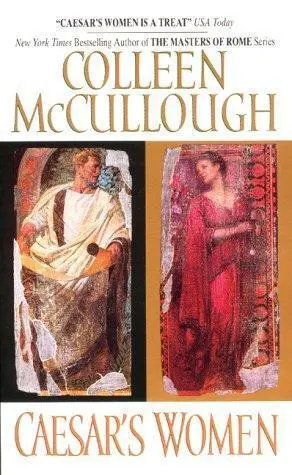
- Название:4. Caesar's Women
- Автор:
- Жанр:
- Год:неизвестен
- ISBN:нет данных
- Рейтинг книги:3 / 5. Голосов: 1
-
Избранное:Добавить в избранное
- Отзывы:
-
Ваша оценка:
4. Caesar's Women: краткое содержание, описание и аннотация
Предлагаем к чтению аннотацию, описание, краткое содержание или предисловие (зависит от того, что написал сам автор книги «4. Caesar's Women»). Если вы не нашли необходимую информацию о книге — напишите в комментариях, мы постараемся отыскать её.
4. Caesar's Women — читать онлайн бесплатно полную книгу (весь текст) целиком
Ниже представлен текст книги, разбитый по страницам. Система сохранения места последней прочитанной страницы, позволяет с удобством читать онлайн бесплатно книгу «4. Caesar's Women», без необходимости каждый раз заново искать на чём Вы остановились. Поставьте закладку, и сможете в любой момент перейти на страницу, на которой закончили чтение.
Интервал:
Закладка:
Night was just beginning to yield to day when Titus Labienus, Quintus Caecilius Metellus Celer and Lucius Julius Caesar arrived at the Domus Publica to find Caesar wide awake and apparently none the worse for lack of sleep. Water, mild sweet wine, new baked bread, virgin oil and an excellent honey from Hymettos had been placed on a console table at the back of the room, and Caesar waited patiently until his guests had helped themselves. He himself sipped something steaming from a carved stone cup, though he ate nothing. "What's that you're drinking?" asked Metellus Celer, curious. "Very hot water with a little vinegar." "Ye gods, how vile!" "One gets used to it," said Caesar tranquilly. "Why would one want to?" Two reasons. The first, that I believe it is good for my health, which I intend to keep in rude excellence until I am an old man, and the second, that it inures my palate to all manner of insults from rancid oil to sour bread." "I'll grant you the first reason, but what's the virtue in the second unless you've espoused Stoicism? Why should you ever have to put up with poor food?" "On campaign one often has to at least, the way I campaign. Does Pompeius Magnus do you prouder, does he, Celer?" "I should hope so! And every other general I've served under! Remind me not to campaign with you!" "Well, in winter and spring the drink isn't quite so vile. I replace the vinegar with lemon juice." Celer rolled his eyes; Labienus and Lucius Caesar laughed. "All right, time to get down to business," said Caesar as he seated himself behind his desk. Please forgive my patron's pose, but it seems more logical for me to sit where I can see all of you, and all of you can see me." "You are forgiven," said Lucius Caesar gravely. "Titus Labienus was here last night, so I have his reasons for voting with me yesterday," Caesar said, "and I understand completely why you voted with me, Lucius. However, I am not entirely privy to your motives, Celer. Tell me now." The long suffering husband of his own first cousin, Clodia, Metellus Celer was also the brother in law of Pompey the Great, as the mother of Celer and his younger brother, Metellus Nepos, was also Mucia Tertia's mother. Devoted to each other, Celer and Nepos were liked and esteemed, for they were charming and convivial men. To Caesar, Celer had never seemed particularly radical in his political leanings, until now respectably conservative. How he answered was critical to success; Caesar could not hope to carry out what he planned unless Celer was prepared to back him to the hilt. Handsome face grim, Celer leaned forward, hands clenched into fists. "To begin with, Caesar, I disapprove of mushrooms like Cicero dictating policy to genuine Romans. Nor for one single moment will I condone the execution of Roman citizens without a trial! It does not escape me that Cicero's ally turned out to be another quasi Roman, Cato of the Saloniani. What are we coming to when those who presume to interpret our laws are descended from slaves or ancestorless bumpkins?" An answer which did Celer realize it? also dismissed his relative by marriage Pompey the Great. However, provided no one was crass enough to mention this fact, it might conveniently be ignored. "What can you do, Gaius?" asked Lucius Caesar. "Quite a lot. Labienus, you will excuse me if I recapitulate what I said to you last night. Namely, exactly what it was Cicero did. The execution of citizens without trial is not the crux of the issue, but rather a by product of it. The real crime lies in Cicero's interpretation of the senatus consultum de re publica defendenda. I do not believe that this ultimate decree was ever intended as a blanket protection enabling the Senate or any other body of Roman men to do precisely as it likes. That is Cicero's own interpretation. "The ultimate decree was invented to deal with a civil disturbance of short duration, that of Gaius Gracchus. The same can be said of its employment during the revolution of Saturninus, though its shortcomings were more obvious then than when it was first used. It was invoked by Carbo against Sulla when he landed in Italia, and against Lepidus too. In the case of Lepidus, it was reinforced by Sulla's constitution, which gave the Senate full and clear powers in all matters relating to war, if not to civil disturbances. The Senate chose to call Lepidus a war. "That is not so today," Caesar continued sternly. "The Senate is once more constrained by the three Comitia. Nor did any of the five men who were executed last night lead armed troops against Rome. In fact, none so much as picked up a weapon against any Roman, unless you count Caeparius's resisting what he might have thought a simple attack on the Mulvian Bridge in the middle of the night. They were not declared public enemies. And, no matter how many arguments are advanced to prove their treasonous intentions, even now they are dead their intentions remain just that no more and no less than intentions. Intentions, not concrete deeds! The letters were letters of intent, written before the fact. "Who can say what the arrival of Catilina outside Rome might have done to their intentions? And with Catilina gone from the city, what happened to their intention to kill the consuls and praetors? Two men neither of them among last night's five dead men! are said to have tried to enter Cicero's house to murder him. Yet our consuls and our praetors are hale and hearty to this day! There's not a scratch on them! Are we now to be executed without trial because of our intentions?" "Oh, I wish you'd said that yesterday!" sighed Celer. "So do I. However, I very much doubt that any argument had the power to move them once Cato got into stride. For all his fine words about keeping our speeches short, Cicero never even tried to stop his talking. I wish he'd continued until sunset." "Blame Servilia that he didn't," said Lucius Caesar, mentioning the unmentionable. "Don't worry, I do," said Caesar, tight lipped. "Well, if you plan to murder her, just make sure you don't tell her so in a letter," Celer contributed, grinning. "Intent is all you need these days." "That is precisely my point. Cicero has converted the Senatus Consultum Ultimum into a monster which can turn on any of us." "I fail to see what we can do in hindsight," said Labienus. "We can turn the monster against Cicero, who undoubtedly at this moment is scheming to have the Senate ratify his claim to the title pater patriae," said Caesar, curling his lip. "He says he's saved his country, whereas I maintain that his country is in no real danger, Catilina and his army notwithstanding. If ever a revolution was doomed to fail, this one is it. Lepidus was dismal enough. I'd call Catilina an outright joke, except that some good Roman soldiers will have to die putting him down." "What do you intend?" asked Labienus. "What can you?" "I mean to cast the whole concept of the Senatus Consultum Ultimum into disrepute. You see, I intend to try someone for high treason who acted under its protection," Caesar said. Lucius Caesar gasped. "Cicero?" "Certainly not Cicero or Cato, for that matter. It's far too soon to attempt retaliation against any of the men involved in this latest version. Were we to try, we'd find our own necks throttled. The time for that will come, cousin, but not yet. No, we'll go after someone well known to have acted criminally under a far earlier Senatus Consultum Ultimum. Cicero was thoughtful enough to name our quarry in the House. Gaius Rabirius." Three pairs of eyes widened, but no one spoke for some time. "Murder, you mean, surely," said Celer eventually. "Gaius Rabirius was inarguably one of those on the Curia Hostilia roof, but that wasn't treason. It was murder." "That's not what the law says, Celer. Think about it. Murder becomes treason when it is done to usurp the legal prerogatives of the State. Therefore the murder of a Roman citizen being held for trial on charges of high treason is itself treasonous." "I begin to see where you're going," said Labienus, eyes glittering, "but you'd never succeed in getting into court." "Perduellio is not a court offense, Labienus. It must be tried in the Centuriate Assembly," said Caesar. "You'd never get it there either, even with Celer as urban praetor." "I disagree. There is a way to get it before the Centuries. We begin with a trial process far older than the Republic, yet no less Roman law than any law of the Republic. It's all in the ancient documents, my friend. Even Cicero will not be able to contest the legality of what we do. He'll be able to counter it by sending it to the Centuries, is all." "Enlighten me, Caesar, I'm no student of ancient law," said Celer, beginning to smile. "You are renowned as an urban praetor who has scrupulously adhered to his edicts," said Caesar, choosing to keep his audience on tenterhooks a little longer. "One of your edicts says that you will agree to try any man if his accusator acts within the law. At dawn on the morrow Titus Labienus will appear at your tribunal and demand that Gaius Rabirius be tried perduellionis for the murders of Saturninus and Quintus Labienus in the form outlined during the reign of King Tullus Hostilius. You will inspect his case, and how perspicacious of you! you will just happen to have a copy of my dissertation on ancient procedures for high treason under your elbow. This will confirm that Labienus's application to charge Rabirius perduellionis for these two murders is within the letter of the law." His audience sat fascinated; Caesar drained what was left of his water and vinegar, now tepid, and continued. "The procedure for the only trial which has come down to us during the reign of Tullus Hostilius that of Horatius for the murder of his sister calls for a hearing before two judges only. Now there are only four men in today's Rome who qualify as judges because they come from families installed among the Fathers at the time the trial took place. I am one and you are another, Lucius. The third is Catilina, officially a public enemy. And the fourth is Fabius Sanga, at present well on his way to the lands of the Allobroges in the company of his clients. You, Celer, will therefore appoint me and Lucius as the judges, and direct that the trial take place immediately on the Campus Martius." Are you sure about your facts?'' asked Celer, brow wrinkling. ' The Valerii are attested at that time, and certainly the Servilii and Quinctilii came from Alba Longa after its destruction, just as the Julii did." Lucius Caesar chose to answer. The trial of Horatius took place well before Alba Longa was sacked, Celer, which disqualifies the Servilii and the Quinctilii. The Julii emigrated to Rome when Numa Pompilius was still on the throne. They were banished from Alba by Cluilius, who usurped the Alban kingship from them. As for the Valerii" Lucius Caesar shrugged "they were Rome's military priests, which disqualifies them too." "I stand corrected," chuckled Celer, vastly diverted, "but can only plead that I am, after all, a mere Caecilius!" "Sometimes," said Caesar, acknowledging this hit, "it pays to choose your ancestors, Quintus. Caesar's luck that no one from Cicero to Cato will be able to dispute your choice of judges." "It will provoke a furor," said Labienus with satisfaction. "That it will, Titus." "And Rabirius will follow Horatius's example by appealing." "Of course. But first we'll put on a wonderful show with all the ancient trappings on full display the cross fashioned out of an unlucky tree the forked stake for the flogging three lictors bearing the rods and axes to represent the original three Roman tribes the veil for Rabirius's head and the ritual bindings for his wrists superb theater! Spinther will die of envy." "But," said Labienus, reverting to gloom, "they'll keep on finding excuses to delay Rabirius's appeal in the Centuries until public resentment dies down. Rabirius's case won't be heard while anyone remembers the fate of Lentulus Sura and the others." "They can't do that," said Caesar. "The ancient law prevails, so an appeal has to be held immediately, just as Horatius's appeal was held immediately." "I take it that we damn Rabirius," said Lucius Caesar, "but I'm out of my depth, cousin. What's the point?" "First of all, our trial is very different from a modern trial as set up by Glaucia. In modern eyes it will seem a farce. The judges decide what evidence they want to hear, and they also decide when they've heard enough. Which we will after Labienus has presented his case to us. We will decline to allow the accused to present any evidence in his own defense. It is vital that justice be seen not to be done! For what justice did those five men executed yesterday receive?" "And secondly?" asked Lucius Caesar. "Secondly, the appeal goes on straightaway, which means the Centuries will still be boiling. And Cicero is going to panic. If the Centuries damn Rabirius, his own neck is at risk. Cicero isn't stupid, you know, just a trifle obtuse when his conceit and his certainty that he's right get the better of his judgement. The moment he hears what we're doing, he'll understand exactly why we're doing it." "In which case," said Celer, "if he has any sense he'll go straight to the Popular Assembly and procure a law invalidating the ancient procedure." "Yes, I believe that's how he'll approach it." Caesar looked at Labienus. "I noted that Ampius and Rullus voted with us in Concord yesterday. Do you think they'd co operate with us? I need a veto in the Popular Assembly, but you'll be busy on the Campus Martius with Rabirius. Would Ampius or Rullus be prepared to exercise his veto on our behalf?" "Ampius certainly, because he's tied to me and we're both tied to Pompeius Magnus. But I think Rullus would co operate too. He'd do anything he fancied might make Cicero and Cato suffer. He blames them for the death of his land bill." "Rullus then, with Ampius in support. Cicero will ask the Popular Assembly for a lex rogata plus quam perfecta so that he can legally punish us for instituting the ancient procedure. I add that he'll have to invoke his precious Senatus Consultum Ultimum to hurry it into law at once thereby focusing public attention on the ultimate decree just when he'll be wishing it burned and forgotten. Whereupon Rullus and Ampius will interpose their vetoes. After which I want Rullus to take Cicero to one side and propose a compromise. Our senior consul is such a timid soul that he'll grasp at any proposal likely to avoid violence in the Forum provided it allows him to get half of what he's after." "You ought to hear Magnus on the subject of Cicero during the Italian War," said Labienus contemptuously. "Our heroic senior consul fainted at the sight of a sword." "What's Rullus's deal to be?" asked Lucius Caesar, frowning at Labienus, whom he deemed a necessary evil. "First, that the law Cicero procures not render us liable for prosecution later. Secondly, that Rabirius's appeal to the Centuries take place the following day so that Labienus can continue as prosecutor while still a tribune of the plebs. Thirdly, that the appeal be conducted according to the rules of Glaucia. Fourthly, that the death sentence be replaced by exile and a fine." Caesar sighed luxuriously. "And fifthly, that I am appointed the appeal judge in the Centuries, with Celer as my personal custos." Celer burst out laughing. "Jupiter, Caesar, that's clever!" "Why bother to change the sentence?" asked Labienus, still disposed to be gloomy. "The Centuries haven't convicted a man on a charge of perduellio since Romulus was a boy." "You're unduly pessimistic, Titus." Caesar folded his hands loosely together on the desk top. What we have to do is fan the feelings already simmering inside most of those who watched the Senate deny a Roman's inalienable right to trial. This is one issue wherein the First and Second Classes will not consent to follow the example of the Senate, even among the ranks of the Eighteen. The Senatus Consultum Ultimum gives the Senate too much power, and there's not a knight or a moderately affluent man out there who doesn't understand that. It's been war between the Orders since the Brothers Gracchi. Rabirius isn't at all liked, he's an old villain. Therefore his fate won't matter nearly as much to the Centuriate voters as their own threatened right to trial. I think there's a very good chance indeed that the Centuries will choose to damn Gaius Rabirius." "And send him into exile," said Celer a little unhappily. "I know he's an old villain, Caesar, but he is old. Exile would kill him." "Not if the verdict is never delivered," said Caesar. "How can it not be delivered?" "That rests entirely with you, Celer," Caesar said, smiling wickedly. "As urban praetor, you're in charge of protocol for meetings on the Campus Martius. Including keeping an eye on the red flag you have to hoist atop the Janiculum when the Centuries are outside the walls. Just in case invaders are sighted." Celer began to laugh again. "Caesar, no!" "My dear fellow, we're under a Senatus Consultum Ultimum because Catilina is in Etruria with an army! The wretched decree wouldn't exist if Catilina didn't have an army, and five men would be alive today. Under more normal conditions no one even bothers to look at the Janiculum, least of all the urban praetor he's quite busy down at ground level, not up on a tribunal. But with Catilina and an army expected to descend on Rome any day, the moment that red flag comes down panic will ensue. The Centuries will abandon the vote and flee home to arm against the invaders, just as in the days of the Etrusci and the Volsci. I suggest," Caesar went on demurely, "that you have someone on the Janiculum ready to lower the red flag, and arrange some sort of signal system a fire, perhaps, if the sun isn't far enough west, or a flashing mirror if it is." "All very well," said Lucius Caesar, "but what will such a tortuous sequence of events accomplish if Rabirius is not to be convicted and the Senatus Consultum Ultimum continues to be in effect until Catilina and his army are defeated? What lesson do you really think to teach Cicero? Cato is a lost cause, he's too thick to learn from anything." "About Cato you're right, Lucius. But Cicero is different. As I've already said, he's a timid soul. At present he's carried away by the floodwaters of success. He wanted a crisis during his term as consul, and he got one. It hasn't yet occurred to him that there's any possibility of personal disaster involved. But if we drive it home to him that the Centuries would have convicted Rabirius, he will understand the message, believe me." "But what exactly is the message, Gaius?" That no man who acts under the shelter of a Senatus Consultum Ultimum is safe from retribution at some time in the future. That no senior consul can hoodwink a body of men as important as the Senate of Rome into sanctioning the execution of Roman citizens without a trial, let alone an appeal. Cicero will get the message, Lucius. Every man in the Centuries who votes to damn Rabirius will be telling Cicero that he and the Senate are not the arbiters of a Roman's fate. They will also be telling him that in executing Lentulus Sura and the others without trial, he has lost their confidence as well as their admiration. And that last, to Cicero, will be worse by far than any other aspect of the whole business," said Caesar. "He'll hate you for this!" cried Celer. Up went both fair brows; Caesar looked haughty. "What can that be to me?" he asked.
Читать дальшеИнтервал:
Закладка:
Похожие книги на «4. Caesar's Women»
Представляем Вашему вниманию похожие книги на «4. Caesar's Women» списком для выбора. Мы отобрали схожую по названию и смыслу литературу в надежде предоставить читателям больше вариантов отыскать новые, интересные, ещё непрочитанные произведения.











Обсуждение, отзывы о книге «4. Caesar's Women» и просто собственные мнения читателей. Оставьте ваши комментарии, напишите, что Вы думаете о произведении, его смысле или главных героях. Укажите что конкретно понравилось, а что нет, и почему Вы так считаете.