Colleen McCullough - 4. Caesar's Women
Здесь есть возможность читать онлайн «Colleen McCullough - 4. Caesar's Women» весь текст электронной книги совершенно бесплатно (целиком полную версию без сокращений). В некоторых случаях можно слушать аудио, скачать через торрент в формате fb2 и присутствует краткое содержание. Жанр: Современная проза. Описание произведения, (предисловие) а так же отзывы посетителей доступны на портале библиотеки ЛибКат.
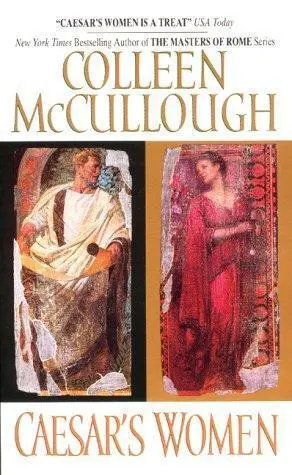
- Название:4. Caesar's Women
- Автор:
- Жанр:
- Год:неизвестен
- ISBN:нет данных
- Рейтинг книги:3 / 5. Голосов: 1
-
Избранное:Добавить в избранное
- Отзывы:
-
Ваша оценка:
4. Caesar's Women: краткое содержание, описание и аннотация
Предлагаем к чтению аннотацию, описание, краткое содержание или предисловие (зависит от того, что написал сам автор книги «4. Caesar's Women»). Если вы не нашли необходимую информацию о книге — напишите в комментариях, мы постараемся отыскать её.
4. Caesar's Women — читать онлайн бесплатно полную книгу (весь текст) целиком
Ниже представлен текст книги, разбитый по страницам. Система сохранения места последней прочитанной страницы, позволяет с удобством читать онлайн бесплатно книгу «4. Caesar's Women», без необходимости каждый раз заново искать на чём Вы остановились. Поставьте закладку, и сможете в любой момент перейти на страницу, на которой закончили чтение.
Интервал:
Закладка:
My dearest brother, I have fallen ill in Aenus, and I fear for my life. Whatever is the matter, and none of the local physicians seem to know, I worsen every day. Please, dear Cato, I beg you to come to Aenus and be with me at my end. It is so lonely, and no one here can comfort me as your presence would. I can ask to hold no hand dearer than yours while I give up my last breath. Come, I beg of you, and come soon. I will try to hang on. My will is all in order with the Vestals, and as we had discussed, young Brutus will be my heir. You are the executor, and I have left you, as you stipulated, no more than the sum of ten talents. Come soon.
When informed that Cato needed emergency leave immediately, Governor Marcus Rubrius put no obstacles in his path. The only advice he offered was to go by road, as late autumn storms were lashing the Thracian coast, and there had already been several shipwrecks reported. But Cato refused to listen; by road his journey could not take less than ten days no matter how hard he galloped, whereas the screaming winds from the northwest would fill the sails of a ship and speed it along so swiftly he could hope to reach Aenus in three to five days. And, having found a ship's captain rash enough to agree to take him (for a very good fee) from Thessalonica to Aenus, the feverish and frantic Cato embarked. Athenodorus Cordylion and Munatius Rufus came too, each man accompanied by only one slave. The voyage was a nightmare of huge waves, breaking masts, tattered sails. However, the captain had carried extra masts and sails with him; the little ship ploughed and wallowed on, afloat and, it seemed to Athenodorus Cordylion and Munatius Rufus, powered in some inscrutable way out of the mind and will of Cato. Who, when harbor was reached at Aenus on the fourth day, didn't even wait for the ship to tie up. He leaped the few feet from ship to dock and began running madly through the driving rain. Only once did he pause, to discover from an astonished and shelterless peddler whereabouts lay the house of the ethnarch, for there he knew Caepio would be. He burst into the house and into the room where his brother lay, an hour too late to hold that hand while Caepio knew he was holding it. Quintus Servilius Caepio was dead. Water pooling around him on the floor, Cato stood by the bed looking down at the core and solace of his entire life, a still and dreadful figure bleached of color, vigor, force. The eyes had been closed and weighted down with coins, a curved silver edge protruded between the slightly parted lips; someone else had given Caepio the price of his ferry ride across the river Styx, thinking Cato would not come. Cato opened his mouth and produced a sound which terrified everyone who heard it, neither wail nor howl nor screech, but an eldritch fusion of all three, animal, feral, hideous. All those present in the room recoiled instinctively, shook as Cato threw himself onto the bed, onto dead Caepio, covered the dreaming face with kisses, the lifeless body with caresses, while the tears poured until nose and mouth ran rivers as well, and those dreadful noises erupted out of him time and time again. And the paroxysm of grief went on without let, Cato mourning the passing of the one person in his world who meant everything, had been comfort in an awful childhood, anchor and rock to boy and man. Caepio it had been who drew his three year old eyes away from Uncle Drusus bleeding and screaming on the floor, turned those eyes into the warmth of his body and took the burden of all those ghastly hours upon his six year old shoulders; Caepio it had been who listened patiently while his dunce of a baby brother learned every fact the hardest way, by repeating it endlessly; Caepio it had been who reasoned and coaxed and cajoled during the unbearable aftermath of Aemilia Lepida's desertion, persuaded him to live again; Caepio it had been who took him on his first campaign, taught him to be a brave and fearless soldier, beamed when he had received armillae and phalerae for valor on a field more usually famous for cowardice, for they had belonged to the army of Clodianus and Poplicola defeated thrice by Spartacus; Caepio it had always, always been. Now Caepio was no more. Caepio had died alone and friendless, with no one to hold his hand. The guilt and remorse sent Cato quite mad in that room where Caepio lay dead. When people tried to take him away, he fought. When people tried to talk him away, he just howled out. For almost two days he refused to move from where he lay covering Caepio, and the worst of it was that no one no one! even began to understand the terror of this loss, the loneliness his life would now forever be. Caepio was gone, and with Caepio went love, sanity, security. But finally Athenodorus Cordylion managed to pierce the madness with words concerning a Stoic's attitudes, the behavior fitting to one who, like Cato, professed Stoicism. Cato got up and went to arrange his brother's funeral, still clad in rough tunic and smelly sagum, unshaven, face smeared and crusted with the dried remains of so many rivers of grief. The ten talents Caepio had left him in his will would be spent on this funeral, and when no matter how he tried to spend all of it with the local undertakers and spice merchants, all he could procure amounted to one talent, he spent another talent on a golden box studded with jewels to receive Caepio's ashes, and the other eight on a statue of Caepio to be erected in the agora of Aenus. "But you won't get the color of his skin or his hair or his eyes right," said Cato in that same hard harsh voice, even harsher from the noises his throat had produced, "and I do not want this statue to look like a living man. I want everyone who sees it to know that he is dead. You will craft it in Thasian marble of solid grey and you will polish it until my brother glitters under the light of the moon. He is a shade, and I want his statue to look like a shade." The funeral was the most impressive this small Greek colony just to the east of the mouth of the Hebrus had ever seen, with every woman drawn into service as a professional mourner, and every stick of aromatic spice Aenus contained burned upon Caepio's pyre. When the obsequies were over, Cato gathered up the ashes himself and placed them in the exquisite little box, which never left his person from that day until he arrived in Rome a year later and, as was his duty, gave the box to Caepio's widow. He wrote to Uncle Mamercus in Rome with instructions to act on as much of Caepio's will as was necessary before he himself returned, and was quite surprised to find he didn't need to write to Rubrius in Thessalonica. The ethnarch had most correctly notified Rubrius of Caepio's death the day it happened, and Rubrius had seen his chance. So with his letter of condolences to Cato there arrived all Cato's and Munatius Rufus's possessions. It's nearly the end of your year of service, chaps, said the governor's scribe's perfect handwriting, and I wouldn't ask either of you to come back here when the weather's closed in and the Bessi have gone home to the Danubius for the winter! Take a long vacation in the East, get over it the right way, the best way. "I will do that," said Cato, the box between his hands. "We will journey east, not west." But he had changed, as both Athenodorus Cordylion and Titus Munatius Rufus saw, both with sadness. Cato had always been a working lighthouse, a strong and steady beam turning, turning. Now the light had gone out. The face was the same, the trim and muscular body no more bowed or cramped than of yore. But now the hectoring voice had a tonelessness absolutely new, nor did Cato become excited, or enthused, or indignant, or angry. Worst of all, the passion had vanished. Only Cato knew how strong he had needed to be to go on living. Only Cato knew what Cato had resolved: that never again would he lay himself open to this torture, this devastation. To love was to lose forever. Therefore to love was anathema. Cato would never love again. Never. And while his shabby little band of three free men and three attendant slaves plodded on foot down the Via Egnatia toward the Hellespont, a freedman named Sinon leaned upon the rail of a neat little ship bearing him down the Aegaean before a brisk but steady winter wind, his destination Athens. There he would take passage for Pergamum, where he would find the rest of his bag of gold. Of that last fact he had no doubt. She was too crafty not to pay up, the great patrician lady Servilia. For a moment Sinon toyed with the idea of blackmail, then he laughed, shrugged, tossed an expiatory drachma into the briskly foaming wake as an offering to Poseidon. Carry me safely, Father of the Deep! I am not only free, I am rich. The lioness in Rome is quiet. I will not wake her to seek more money. Instead, I will increase what is legally mine already.
Читать дальшеИнтервал:
Закладка:
Похожие книги на «4. Caesar's Women»
Представляем Вашему вниманию похожие книги на «4. Caesar's Women» списком для выбора. Мы отобрали схожую по названию и смыслу литературу в надежде предоставить читателям больше вариантов отыскать новые, интересные, ещё непрочитанные произведения.









Обсуждение, отзывы о книге «4. Caesar's Women» и просто собственные мнения читателей. Оставьте ваши комментарии, напишите, что Вы думаете о произведении, его смысле или главных героях. Укажите что конкретно понравилось, а что нет, и почему Вы так считаете.