Курт Воннегут - Player Piano (Utopia 14)
Здесь есть возможность читать онлайн «Курт Воннегут - Player Piano (Utopia 14)» весь текст электронной книги совершенно бесплатно (целиком полную версию без сокращений). В некоторых случаях можно слушать аудио, скачать через торрент в формате fb2 и присутствует краткое содержание. Год выпуска: 1969, Издательство: Panther Science Fiction, Жанр: Современная проза, на английском языке. Описание произведения, (предисловие) а так же отзывы посетителей доступны на портале библиотеки ЛибКат.
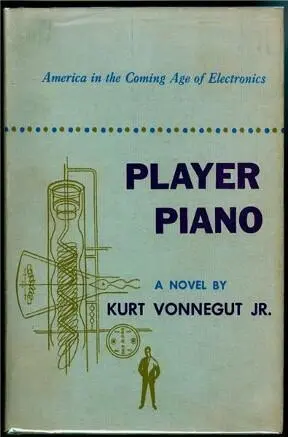
- Название:Player Piano (Utopia 14)
- Автор:
- Издательство:Panther Science Fiction
- Жанр:
- Год:1969
- ISBN:нет данных
- Рейтинг книги:3 / 5. Голосов: 1
-
Избранное:Добавить в избранное
- Отзывы:
-
Ваша оценка:
Player Piano (Utopia 14): краткое содержание, описание и аннотация
Предлагаем к чтению аннотацию, описание, краткое содержание или предисловие (зависит от того, что написал сам автор книги «Player Piano (Utopia 14)»). Если вы не нашли необходимую информацию о книге — напишите в комментариях, мы постараемся отыскать её.
But this book is about another point in history, when there is no more war, and . . .
Player Piano (Utopia 14) — читать онлайн бесплатно полную книгу (весь текст) целиком
Ниже представлен текст книги, разбитый по страницам. Система сохранения места последней прочитанной страницы, позволяет с удобством читать онлайн бесплатно книгу «Player Piano (Utopia 14)», без необходимости каждый раз заново искать на чём Вы остановились. Поставьте закладку, и сможете в любой момент перейти на страницу, на которой закончили чтение.
Интервал:
Закладка:
Katharine's phone rang. "Yes?" She turned to Paul. "A Doctor Finnerty is at the gate and wants in."
"If it's just to shoot the bull, tell him to wait until late this afternoon."
"He says he wants to see the plant, not you."
"All right; let him in."
"They're shorthanded at the gate," said Katharine. "One of the guards is down with flu. What'll they do about an escort for him?"
The few visitors that did get admitted to the Ilium Works were taken about by guides, who only incidentally pointed out the wonders of the place. The guides were armed, and their main job was to see that no one got close enough to vital controls to knock them out. The system was a holdover from the war, and from the postwar riot period, but it still made sense. Every so often, antisabotage laws notwithstanding, someone got it into his head to jimmy something. It hadn't happened in Ilium for years, but Paul had heard reports from other works - reports of a visitor with a crude bomb in a briefcase in Syracuse; of an old lady in Buffalo stepping from a group of sightseers to jam her umbrella into some vital clockwork. . . . Things like that still happened, and Kroner had stipulated that visitors to plants should be watched every second. The saboteurs had come from every walk of life - including, in at least one hushed-up instance, the brass. As Kroner had said, you never could tell who was going to try it next.
"Oh, what the hell, let Finnerty in without an escort," said Paul. "He's a special case - an old Ilium man."
"The directive said no exceptions," said Katharine. She knew all of the directives - and there were thousands of them - cold.
"Let him roam."
"Yessir."
Bud Calhoun watched the interchange with far more interest than it merited, Paul thought. It was as though they had been putting on an absorbing drama. When Katharine hung up she mistook his gaze for adoration and returned it warmly.
"Six minutes," said Bud.
"Six minutes for what?" said Katharine.
"Six minutes foah nothin'," said Bud. "It took thet long to get a man in through the gate."
"Well?"
"Three of you tied up for six minutes - you two and the guard. Eighteen man minutes in all. Hell, it cost over two bucks to let him in. How many people come to the gate a year?"
"Ten a day, maybe," said Paul.
"Twenty-seven hundred and fifty-eight a year," said Katharine.
"And you pass on each one?"
"Katharine usually does," said Paul. "That's the biggest part of her job."
"At a dollah a head, thet's twenty-seven hundred dollahs a year," said Bud reproachfully. He pointed at Katharine. "This is ridiculous! If policy is iron-clad, why not let a machine make the decisions? Policy isn't thinkin', it's a reflex. You could even build a gadget with an exception for Finnerty and still get away foah less than a hundred dollahs."
"There are all sorts of special decisions I have to make," said Katharine defensively. "I mean, all sorts of things come up that require more than routine thought - more than any old machine could do."
Bud wasn't listening. He held his palms apart, marking the size of the box being born in his imagination. "Either a visitor is a nonentity, a friend, an employee, small brass, or big brass. The guard presses one of five buttons in the top row on the box. See it? Either the visitor is sight-seein', inspectin', makin' a personal call, or here on business. The guard pushes one of four buttons in thet row. The machine has two lights, a red one for no, and a green one for yes. Whatever the policy is, bingo! - the lights tell him what to do."
"Or we could tack a memo about policy on the guardhouse wall," said Paul.
Bud looked startled. "Yes," he said slowly, "you could do thet." It was clear he thought it was a pretty drab man who would think much of that solution.
"I'm mad," said Katharine, her voice small. "You have no right to go around saying a machine can do what I do."
"Aw, now honey - there wasn't anything personal in it."
She was crying now, and Paul slipped into his office and shut the door.
"Your wife's on the phone," said Katharine brokenly on the intercom set.
"All right. Yes, Anita?"
"Have you heard from Kroner?"
"No. I'll let you know if I do."
"I hope he had a good time last night."
"He did - or firmly believes he did."
"Is Finnerty there?"
"In the plant somewhere."
"You should see the bathroom."
"I saw it in the making."
"He had four cigarettes going, and forgot about every one of them. One on top of the medicine cabinet, one on the window sill, one on the top of the john, and one on the toothbrush rack. I couldn't eat my breakfast. He's got to go."
"I'll tell him."
"What are you going to tell Kroner?"
"I don't know yet. I don't know what he's going to say."
"Pretend I'm Kroner and I've just said, sort of casually, 'Well, Paul, the Pittsburgh spot is still open.' Then what do you say?"
This was the game she never tired of - one that took every bit of Paul's patience to play. She was forever casting herself as a person of influence and making Paul play dialogues with her. There would then be a critique, in which his responses were analyzed, edited, and polished by her. No real dialogues ever came close to her phantasies, which served chiefly to show how primitive a notion she had of men of affairs and of how business was done.
"Go on," she prodded.
"Pittsburgh, eh?" said Paul. "Holy smokes! Wow!"
"No, now, I'm serious," she said firmly. "What will you say?"
"Darling, I'm busy now."
"All right; you think it over and call me back. You know what I think you should say?"
"I'll call you back."
"All right. Goodbye. I love you."
"I love you, Anita. Goodbye."
"Doctor Shepherd is on the phone," said Katharine.
Paul picked up the now moist instrument again. "What's the matter now, Shep?"
"There's an unauthorized man in Building 57! Get the guards down here."
"Is it Finnerty?"
"An unauthorized man," said Shepherd stubbornly.
"All right. Is it an unauthorized Finnerty?"
"Yes - but that's beside the point. It makes no difference what his name is. He's roaming around without an escort, and you know how Kroner feels about that."
"I gave him permission. I know he's down there."
"You're putting me in a sweet spot."
"I don't get you."
"I mean I'm responsible for these buildings, and now you're telling me to ignore very specific orders from Kroner. Am I supposed to be left holding the bag if word gets out?"
"Look, just forget it. It's all right. I'll take the responsibility."
"In other words, you order me to let Finnerty go through unescorted."
"Yes - that's it. I order you."
"O.K., I just wanted to make sure I had it straight. Berringer wondered about it, too, so I had him listen in."
"Berringer?" said Paul.
"Yeah!" said Berringer.
"Just keep this under your hat is all."
"You're the boss," said Berringer flatly.
"All squared away now, Shepherd?" said Paul.
"I guess. And are we to understand that you've authorized him to make drawings, too?"
"Drawings?"
"Layouts."
At this point Paul realized that his judgment had been pushed into the background by more emotional matters, but he decided it was too late to do anything about it gracefully. "Let him do what he wants. He may come up with some useful ideas. All right?"
"You're the boss," said Shepherd. "Isn't that right, Berringer?"
"He's the boss," said Berringer.
"I'm the boss," said Paul, and he let the telephone clatter into its cradle.
Bud Calhoun was still trying to patch things up with Katharine in the next office. His voice had become wheedling and penetrating. Paul could understand snatches of it.
Читать дальшеИнтервал:
Закладка:
Похожие книги на «Player Piano (Utopia 14)»
Представляем Вашему вниманию похожие книги на «Player Piano (Utopia 14)» списком для выбора. Мы отобрали схожую по названию и смыслу литературу в надежде предоставить читателям больше вариантов отыскать новые, интересные, ещё непрочитанные произведения.





![Курт Воннегут - Вампитеры, фома и гранфаллоны [litres]](/books/397997/kurt-vonnegut-vampitery-foma-i-granfallony-litre-thumb.webp)
Обсуждение, отзывы о книге «Player Piano (Utopia 14)» и просто собственные мнения читателей. Оставьте ваши комментарии, напишите, что Вы думаете о произведении, его смысле или главных героях. Укажите что конкретно понравилось, а что нет, и почему Вы так считаете.