Jeannette Walls - Half Broke Horses
Здесь есть возможность читать онлайн «Jeannette Walls - Half Broke Horses» весь текст электронной книги совершенно бесплатно (целиком полную версию без сокращений). В некоторых случаях можно слушать аудио, скачать через торрент в формате fb2 и присутствует краткое содержание. Жанр: Современная проза, на английском языке. Описание произведения, (предисловие) а так же отзывы посетителей доступны на портале библиотеки ЛибКат.
- Название:Half Broke Horses
- Автор:
- Жанр:
- Год:неизвестен
- ISBN:нет данных
- Рейтинг книги:5 / 5. Голосов: 1
-
Избранное:Добавить в избранное
- Отзывы:
-
Ваша оценка:
Half Broke Horses: краткое содержание, описание и аннотация
Предлагаем к чтению аннотацию, описание, краткое содержание или предисловие (зависит от того, что написал сам автор книги «Half Broke Horses»). Если вы не нашли необходимую информацию о книге — напишите в комментариях, мы постараемся отыскать её.
Jeannette Walls's The Glass Castle was "nothing short of spectacular" (Entertainment Weekly). Now she brings us the story of her grandmother – told in a voice so authentic and compelling that the book is destined to become an instant classic.
"Those old cows knew trouble was coming before we did." So begins the story of Lily Casey Smith, in Jeannette Walls's magnificent, true-life novel based on her no-nonsense, resourceful, hard working, and spectacularly compelling grandmother. By age six, Lily was helping her father break horses. At fifteen, she left home to teach in a frontier town – riding five hundred miles on her pony, all alone, to get to her job. She learned to drive a car ("I loved cars even more than I loved horses. They didn't need to be fed if they weren't working, and they didn't leave big piles of manure all over the place") and fly a plane, and, with her husband, ran a vast ranch in Arizona. She raised two children, one of whom is Jeannette's memorable mother, Rosemary Smith Walls, unforgettably portrayed in The Glass Castle.
Lily survived tornadoes, droughts, floods, the Great Depression, and the most heartbreaking personal tragedy. She bristled at prejudice of all kinds – against women, Native Americans, and anyone else who didn't fit the mold. Half Broke Horses is Laura Ingalls Wilder for adults, as riveting and dramatic as Isak Dinesen's Out of Africa or Beryl Markham's West with the Night. It will transfix readers everywhere.
Half Broke Horses — читать онлайн бесплатно полную книгу (весь текст) целиком
Ниже представлен текст книги, разбитый по страницам. Система сохранения места последней прочитанной страницы, позволяет с удобством читать онлайн бесплатно книгу «Half Broke Horses», без необходимости каждый раз заново искать на чём Вы остановились. Поставьте закладку, и сможете в любой момент перейти на страницу, на которой закончили чтение.
Интервал:
Закладка:
Every day Jim listened grim-faced to the weather report, hoping in vain for a forecast of rain, and then we’d go down and check the water level of Big Jim. The days were beautiful, with endless deep blue skies, but all that fine weather only gave us a desperate, helpless feeling as we stood there, watching the water level sink and sink until the bottom of Big Jim became visible. And then the water disappeared altogether and there was nothing but mud, and then the mud dried out with cracks so big you could stick your arm into them.
Early into the drought, Jim had sensed it coming on. He’d grown up in the desert, so he knew that one came along every ten or fifteen years, and he had culled the herd deeply, selling off steers and heifers and keeping only the healthiest breeding cattle. Even so, once the drought was in full swing, we had to bring in water. Jim and I hitched up the Conestoga wagon to the pickup and hauled it into Pica, a stop twenty miles away on the Santa Fe Railroad where they were shipping in water. We loaded old fuel drums with as much water as the Conestoga could hold and hauled it-the wagon’s suspension groaning under all that weight-back to the ranch, where we drained it into Big Jim.
We made that trip a couple of times a week. We darned near broke our backs loading those fuel drums, but we saved the herd, whereas many ranchers around us went bust.
The following August, the rains returned. And when they came back, they came with a vengeance, a terrific deluge the likes of which I’d never seen. We sat at our kitchen table, a long wooden thing with patterned linoleum nailed to the top, listening to the rain drum on the roof. Unlike other storms, this one didn’t peter out after half an hour. Instead, it kept raining and raining, striking the tin roof so loud and incessant that it began to get on my nerves. After a while Jim started worrying about Big Jim. If too much water flooded into the dam, he said, its walls might burst and we’d lose it all.
The first time Jim went out to check the dam, he reported back that it was holding, but an hour later, with the rain still coming down in sheets, he checked it again and realized that if nothing was done, it would give. He had a plan, which was to go out in the middle of the storm and dig furrows in the draws and the wash approaching the dam, to drain off the water before it reached Big Jim. To dig the furrows, he was going to harness old Buck, our Percheron draft, to the plow.
Jim had on his horsehide duster, waterlogged and dripping. I put on my canvas coat and we headed out into the rain, which was coming down so furiously that within moments it had worked its way past my turned-up coat collar, down my sleeves, and was soaking through my shoes. I felt it trickling all over me, and even before we got to the barn, I had reached the point where you give up trying to stay dry.
The barn was dark from the storm, and we couldn’t find the harness, which no one had used in years. Old Jake, who had sprained his good foot falling off a horse and was hobbling around worse than ever, started getting panicky at the idea of the dam giving out and washing away the cattle, but I told him to hush his mouth. We all knew what was at stake, and if we were going to save the ranch, we needed clear heads.
What we could do, I said to Jim, was hitch the plow to the pickup. If he handled the plow, I could drive. Jim liked the idea. Old Jake was useless, so we left him to fret in the barn, but we brought the kids with us. The water out in the yard was more than ankle-deep by then, the rain coming down so hard that the force of it practically knocked Rosemary to the ground. Jim scooped her up in his arms. I followed with Little Jim, who was still a baby, grabbing a wooden carton so we’d have something to keep him in, and we sloshed out to the Chevy.
At the equipment shed, Jim jumped out and threw the plow, together with some ropes and chains, into the pickup bed. Once we reached the wash above the dam, we rigged up the plow to the Chevy’s hitch, and I got behind the wheel, putting Little Jim in the carton on the floor so he wouldn’t slide around too much.
I looked in the rearview mirror, but the rain was splattering so hard on the window that Jim was just a blur. I had Rosemary stand up on the seat and stick her head out the window and take directions from him. Jim was gesturing and shouting, but the rain was making such a racket that it was hard to figure out what he wanted.
“Mom, I can’t hear him,” Rosemary said.
“Do the best you can,” I said. “That’s all anyone can do.”
I needed the pickup to creep along at a walking pace, but the Chevy wasn’t geared to go that slow, and it kept stalling and lurching, jerking the plow out of Jim’s hands and sending Rosemary tumbling off the seat and into Little Jim’s box. Making matters worse, the earth around the dam was that godforsaken malpais rock, and the tires would spin on it, then catch, and we’d pop forward.
We knew we didn’t have much time, and Jim and I were both cussing like sailors while Rosemary, her hair plastered, scrambling back onto the seat every time she was knocked off, did her best to read Jim’s gestures and shouts and relay them to me. Finally, I figured out that by engaging the clutch, easing up on it ever so slightly, then reengaging it, I could send the truck forward just a few inches at a time, and that was how we got the job done, digging four furrows off the sides of the wash that drained the rising water away from the dam.
It was still raining furiously. Jim heaved the plow into the pickup bed and climbed in beside me. He was as wet as if he’d fallen into a horse trough. Water sloshed in his boots and dripped from his hat and sopping horsehide coat, pooling on the seat.
“We did a good job-good as we could,” he said. “If she breaks, she breaks.”
SHE DIDN’T BREAK.
While our place was spared, not everyone fared as well. The rains washed away a few bridges and several miles of railroad track. Ranchers lost cattle and outbuildings. Seligman was flooded, several houses were swept off, and the rest had mud lines five feet high, which was so astounding that no one wanted to paint over them. For years afterward, folks who’d lived through the storm pointed out those mud lines in a combination of disbelief and pride. “Water come clean up to there,” they’d say, shaking their head.
But a few hours after the rain stopped, the plateau turned bright green, and the next day the ranch was covered with the most spectacular display of flowers I had ever seen. There were crimson Indian paintbrushes and orange California poppies, white mariposa poppies with their magenta throats, goldenrod and blue lupines and pink and purple sweet peas. It was like a rainbow you could touch and smell. All that water must have churned up seeds that had been buried for decades.
Rosemary, who was ecstatic over it, spent days collecting flowers. “If we had this much water all the time,” I told her, “we might have to break down and give this ranch some greenhorn name like Paradise Plateau.”
VI TEACHER LADY
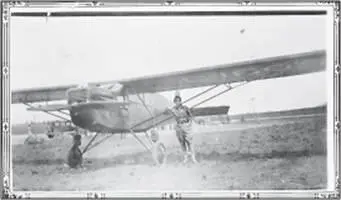
Lily Casey Smith before a flying lesson
THE WATER WE BOUGHTduring the drought cost a fortune, but the Poms knew that ranching was a long-term proposition only for people with wallets fat enough to tough out the bad times and then make a killing in the good. They actually saw the drought, and all the bankruptcies it was causing, as a buying opportunity. So did Jim. As much land as we had, he realized that if the ranch was going to make it through the next drought, we needed even more land-land with its own water. He convinced the investors to buy the neighboring ranch, called Hackberry. It had some hilly terrain with a year-round spring, and out on the flat range, there was a deep well with a windmill that pumped water up to the cattle troughs.
Читать дальшеИнтервал:
Закладка:
Похожие книги на «Half Broke Horses»
Представляем Вашему вниманию похожие книги на «Half Broke Horses» списком для выбора. Мы отобрали схожую по названию и смыслу литературу в надежде предоставить читателям больше вариантов отыскать новые, интересные, ещё непрочитанные произведения.









Обсуждение, отзывы о книге «Half Broke Horses» и просто собственные мнения читателей. Оставьте ваши комментарии, напишите, что Вы думаете о произведении, его смысле или главных героях. Укажите что конкретно понравилось, а что нет, и почему Вы так считаете.