Rosamunde Pilcher - September
Здесь есть возможность читать онлайн «Rosamunde Pilcher - September» весь текст электронной книги совершенно бесплатно (целиком полную версию без сокращений). В некоторых случаях можно слушать аудио, скачать через торрент в формате fb2 и присутствует краткое содержание. Жанр: Современная проза, на английском языке. Описание произведения, (предисловие) а так же отзывы посетителей доступны на портале библиотеки ЛибКат.
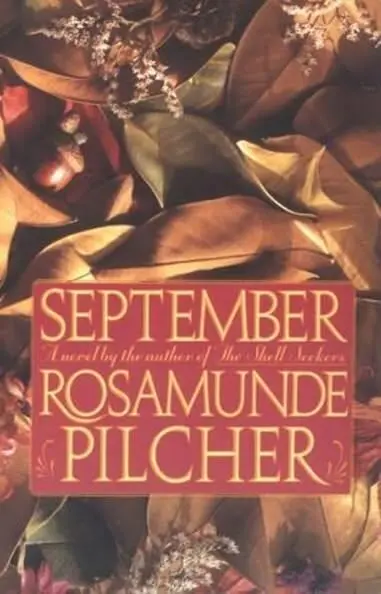
- Название:September
- Автор:
- Жанр:
- Год:неизвестен
- ISBN:нет данных
- Рейтинг книги:5 / 5. Голосов: 1
-
Избранное:Добавить в избранное
- Отзывы:
-
Ваша оценка:
September: краткое содержание, описание и аннотация
Предлагаем к чтению аннотацию, описание, краткое содержание или предисловие (зависит от того, что написал сам автор книги «September»). Если вы не нашли необходимую информацию о книге — напишите в комментариях, мы постараемся отыскать её.
September — читать онлайн бесплатно полную книгу (весь текст) целиком
Ниже представлен текст книги, разбитый по страницам. Система сохранения места последней прочитанной страницы, позволяет с удобством читать онлайн бесплатно книгу «September», без необходимости каждый раз заново искать на чём Вы остановились. Поставьте закладку, и сможете в любой момент перейти на страницу, на которой закончили чтение.
Интервал:
Закладка:
He led the way, stepping off the stony surface of the road and into the high heather, using his stick as a third leg to get him through the thick of it. Conrad followed, observing his host's painful progress but making no offer to assist. After a little, they came to an outcrop of granite, weathered by a million years of exposure, crusted with lichen and jutting like some ancient monolith from its deep bed of heather. Its natural shape provided a place to sit and a not-very-comfortable back rest against which to lean but, settled, they achieved some shelter from the worst of the wind.
The dogs had been ordered to heel, but the younger one was not as disciplined as her mother, and as Archie made himself as comfort-able as he could, and reached for his field-glasses, she scented game, bolted off in high excitement and put up a covey of grouse. Eight birds exploded out of the heather only yards from where they sat. Go-Back Go-Back they called, sailing down into the depths of the glen, jinking beneath the skyline, settling far below, disappearing.
Conrad, in amazed delight, watched their flight. But Archie snarled at the dog, and, drooping with shame, she returned to his side, leaning her head against his shoulder and apologizing profusely. He put his arm around her and drew her close, forgiving her small misdemeanour.
"Did you mark them?" he asked Conrad.
"I think so."
Archie handed over his glasses. "See if you can find them."
With the field-glasses to his eyes, Conrad searched. Distance sprang into detail. In the deep clumps of heather at the foot of the glen, he scanned painfully for the vanished birds, but could see no trace, mark no movement. They had gone. He gave the glasses back to Archie.
"I never imagined I'd see grouse so close."
"After a lifetime, they never fail to amaze me. So wily and brave. They can fly at eighty miles an hour, and use every trick to outwit a man with a gun. They're the most demanding adversaries, which is why they provide such incomparable sport."
"But you shoot them…"
"I've shot grouse all my life. And yet, as I grow older, I shoot less frequently and, I must admit, with some reservation. My son Hamish, so far, has shown no qualms, but Lucilla hates the whole business and refuses to come out with me." He sat hunched in his ragged old coat, with his good leg drawn up and his elbow resting on his knee. His worn tweed cap was pulled low over his forehead, shading his eyes against the fitful blasts of sunlight. "She feels very strongly that they are wild birds, and so part of God's creation. By wild, I mean that they are self-perpetuating. It is impossible to rear them as one might rear pheasants, because to put chicks from a hatchery out onto these moors would mean instant and certain death from predators."
"What do they feed on?"
"Heather. Blaeberries. But mostly heather. Because of that, a well-keepered moor is regularly burnt in strips. By law, burning is controlled. It's only allowed during a few weeks in April, and if you haven't burnt by then, it has to be left for another year."
"Why do you burn?"
"To encourage new growth." He pointed with his stick. "You can see the black strips on the Mid Hill where we burnt this year. The longer heather is left to give the birds good protective cover."
Conrad gazed in some bewilderment at the rolling miles all about him. "It's a hell of a lot of land for what seems to me an awfully few birds."
Archie smiled. "It does appear to be a bit of an anachronism, in this day and age. But if it wasn't for the great sporting estates in Scotland, enormous tracts of land would become neglected, or decimated either by intensive farming of some sort or other, or else commercial forestry."
"Is planting trees such a bad thing?"
"It's a touchy subject. The Scots pine is our indigenous tree, not
Sitka spruce from Norway, nor lodge-pole pine from North America. And it depends on how well the woodland is husbanded. But a tightly packed stand of Sitka spruce destroys the breeding ground of upland birds because they won't nest within nine hundred yards of it. It harbours too many predators-foxes and crows. And I'm not simply talking about grouse but redshank and golden plover and curlews as well. And other forms of wildlife. Bugs, insects, frogs, adders. And plantlife. Harebells, cotton-grass, rare mosses and fungi, bog asphodel. Properly cared for, the moor is a power-house of rational ecology."
"But isn't the image of the rich guy on the grouse moor blasting away at the birds the subject of some ridicule?"
"Of course it is. The chinless aristocrat loading his gun with ten-pound notes. But I believe that image is fading, as even the greenest of politicians becomes aware th^t the link between country sports and conservation is of immense importance if the basic ecosystem of the Highlands is going to survive."
They fell silent. Stealthily, that silence was filled with small sounds, as seeping water will fill a void. The faint piping and drumming of the wind. The whisper of the distant burn, running in spate. Across the glen, scattered over the side of the hill, sheep grazed, moved, bleated. And as these sounds filled the quiet, so Conrad, at ease with his companion, found himself pervaded by tranquillity, a peace of mind that he had forgotten even existed.
Maybe this was wrong. Maybe after what had taken place last night, he should be suffering agonies of remorse and guilt. But his conscience was dormant, even self-satisfied.
"I feel like shit," he had told Virginia, "because I want you."
And he had felt guilty, aching with the physical need to make love to another man's wife, behind that other man's back, and in that other man's house. But he could do little to quench his desire, and even less when it became perfectly clear that Virginia's need for comfort and love was just as great as his own. It had been, for him, a night of joyous release after months of enforced celibacy. And for her, perhaps an assuagement of loneliness and a last impetuous taste of lost youth.
Last night, coming to Balnaid, she had become shy, keeping
Conrad at arm's length with her hostessy busy-ness, aware as a young animal of potential danger. But this morning, she was composed. He had woken late, having slept more deeply than he had for months, and found her gone. Dressed, he made his way downstairs and discovered Virginia in the kitchen cooking breakfast, perking coffee, talking to the two spaniels. She still looked pale, but far less strained, and greeted him with a smile. Over bacon and eggs, they talked of trivial matters, and he respected her reticence. Perhaps it was better that way, with neither of them indulging in heart-searching analysis, nor trying to rationalize the events of the previous evening.
A one-night stand. For Virginia, perhaps, that was it. Conrad could not be sure. For himself, he simply felt deeply grateful to the fates that had flung them together at a time when both were vulnerable, bereft, and deeply in need of each other. Matters had taken their own course in a natural progression as basic as breathing.
No regrets. For Virginia he had no real worry. For himself, he only knew that twelve years ago he had been in love with her, and now he could not be too certain that anything had changed.
A movement caught his eye. A buzzard appeared, floating in the sky, then began its descent, spiralling in flight. A second later, another covey of grouse burst from the heather half-way down the hill and flew southward, at amazing speed, with the wind on their tails. The two men watched them go.
Archie said, "I hoped we'd see more birds. We're shooting this glen tomorrow. Driving over the butts."
"Will you be there?"
"Yes. It's about all I can manage, provided I can get myself to the bottom butt. It's one of the things I really regret, not being able to walk the hill any longer. Those were the best days; walking up with a few friends and half a dozen dogs. Now just a thing of the past."
Читать дальшеИнтервал:
Закладка:
Похожие книги на «September»
Представляем Вашему вниманию похожие книги на «September» списком для выбора. Мы отобрали схожую по названию и смыслу литературу в надежде предоставить читателям больше вариантов отыскать новые, интересные, ещё непрочитанные произведения.






Обсуждение, отзывы о книге «September» и просто собственные мнения читателей. Оставьте ваши комментарии, напишите, что Вы думаете о произведении, его смысле или главных героях. Укажите что конкретно понравилось, а что нет, и почему Вы так считаете.