Rosamunde Pilcher - September
Здесь есть возможность читать онлайн «Rosamunde Pilcher - September» весь текст электронной книги совершенно бесплатно (целиком полную версию без сокращений). В некоторых случаях можно слушать аудио, скачать через торрент в формате fb2 и присутствует краткое содержание. Жанр: Современная проза, на английском языке. Описание произведения, (предисловие) а так же отзывы посетителей доступны на портале библиотеки ЛибКат.
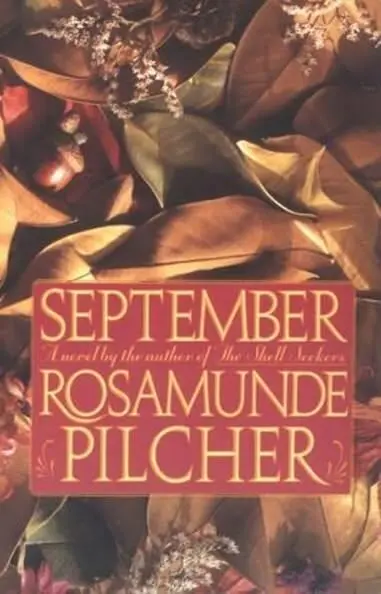
- Название:September
- Автор:
- Жанр:
- Год:неизвестен
- ISBN:нет данных
- Рейтинг книги:5 / 5. Голосов: 1
-
Избранное:Добавить в избранное
- Отзывы:
-
Ваша оценка:
September: краткое содержание, описание и аннотация
Предлагаем к чтению аннотацию, описание, краткое содержание или предисловие (зависит от того, что написал сам автор книги «September»). Если вы не нашли необходимую информацию о книге — напишите в комментариях, мы постараемся отыскать её.
September — читать онлайн бесплатно полную книгу (весь текст) целиком
Ниже представлен текст книги, разбитый по страницам. Система сохранения места последней прочитанной страницы, позволяет с удобством читать онлайн бесплатно книгу «September», без необходимости каждый раз заново искать на чём Вы остановились. Поставьте закладку, и сможете в любой момент перейти на страницу, на которой закончили чтение.
Интервал:
Закладка:
She said, "I'm sorry, Henry."
Racked with huge sobs, he did not reply. She sat on his bed. "It was a silly thing to suggest. Daddy suggested it to me, and I thought it was silly then. I had no right even to mention it to you. Of course you won't go with Isobel. You'll come with me. I'll take you in the car."
She waited. After a bit, Henry rolled onto his back. His face was swollen and tear-stained, but he seemed to have stopped crying.
He said, "I don't mind so much about Hamish, but I want you."
"I'll be there. Perhaps we'll take Hamish with us. It would be kind. Save Isobel a journey."
He sniffed. "All right."
"Edie's coming back after lunch. She said she'd like to spend the afternoon with you. She wants you to draw her a picture."
"Have you packed my felt pens?"
"Not yet."
He put out his arms, and she gathered him up and held him close, rocking him gently, pressing kisses onto the top of his head. After a bit, he emerged from beneath his duvet, and they found a handkerchief and he blew his nose.
It was not until then that she remembered Edmund's message. "Daddy wanted you to ring him up. He's at the office. You know the number."
Henry went to her bedroom to do this, but Virginia had left it too late and Edmund had already gone.
The playroom was peaceful and warm. Sun poured through the wide windows, and the breeze sent the wistaria branches tapping at the panes. Henry sat at the big table in the middle of the room, and drew. Edie was on the window-seat, stitching the last of the name-tapes onto his new socks. In the mornings, for work, Edie wore her oldest clothes and a pinafore, but this afternoon she had turned up looking quite smart, and had put on her new lilac cardigan. Henry felt flattered, because he knew that she was keeping it for best. As soon as she arrived, she had set up the ironing-board, and ironed the morning's load of washing, fresh from the line. This was now stacked, crisp and folded, on the other end of the table, and emanated a pleasant smell.
Henry laid down his felt pen and searched in his pen-box, making scrabbling sounds. He said, "Bother."
"What is it, pet?"
"I want a Biro. I've drawn people with balloons coming out of their mouths, and I want to write what they're saying."
"Look in Edie's bag. There's a pen in there."
Her bag was on the chair by the fireside. It was large, made of leather, and bulged with important things: her comb, her fat housekeeping purse, her Old Age Pension book, her Post Office Savings book, her rail-card, her bus pass. She didn't have a car, so she had to go everywhere by bus. Because of this she had a timetable, a little booklet, "Relkirkshire Bus Company." Henry, rooting for the pen, came upon this. It occurred to him, out of the blue, that it might be a sensible and useful thing to own. Edie probably had another at home.
He looked up at Edie. She was intent on her sewing, her white head bowed. He removed the booklet from her bag and slipped it into the pocket of his jeans. He found the Biro, closed her bag, and went back to his work.
Presently, Edie asked, "What would you like for your tea?"
He said, "Macaroni cheese."
Dermot Honeycombe's antique shop stood at the far end of the village street, beyond the main gates of Croy, and at the foot of a gentle slope that leaned between the road and the river. Once it had been the village smithy, and the cottage where Dermot lived, the blacksmith's house. Dermot's cottage was painfully picturesque. It had tubs of begonias at the door, latticed windows, and a thickly thatched roof. But the shop was much as it had always been, with walls of dark stone and blackened beams. Outside was a yard of cobbles where once the patient farm horses had stood, waiting to be shod, and here Dermot had set up his shop sign, an aged wooden cart, painted blue, with dermot honeycombe antiques emblazoned tastefully on its side. It was an eye-catching gimmick, and brought in much casual trade. It was also useful for tying dogs to. Virginia clipped the leads onto the spaniels' collars, and knotted the ends around one of the cartwheels. The dogs sat, looking reproachful.
"I shan't be long," she told them. They thumped their stumpy tails, and their eyes made her feel like a murderer, but she left them and went across the cobbles and in through the door of the old smithy. Here Dermot sat, in his paper-piled birdcage of an office. He was on the telephone but spied her through the glass, raised a hand, and then reached out to turn on a switch.
Within the shop, four dangling bulbs sprang to light, doing a little to alleviate the gloom, but not very much. The place bulged with every sort of junk. Chairs were piled on tables, on the tops of chests of drawers. Huge wardrobes towered. There were milk churns, jelly pans, stacks of unmatched china, brass fenders, corner cupboards, curtain rails, cushions, bundles of velvet, threadbare rugs. The smell was damp and musty, and Virginia knew a small frisson of anticipation. Visits to Dermot's were always something of a lottery because you never knew-and neither did Dermot-what you might, by chance, turn up.
She moved forward, edging her way between the tottering stacks of furniture, with the wary caution of a pot-holer. Already, she felt marginally more cheerful. Browsing was a comforting therapy, and
Virginia allowed herself the self-indulgence of putting Edmund, the morning's traumas, and tomorrow, all out of her mind.
A present for Katy. Her eye wandered. She priced a chest of drawers, a wide-lapped chair. Searched for the silver mark on a battered spoon, poked through a box of old keys and brass doorknobs, turned the pages of a dignified old wreck of a book. Found a lustre cream jug, and wiped the dust from it, searching for chips or cracks. There were none.
She was joined by Dermot, finished with his telephone call.
"Hello, my dear."
"Dermot. Hello."
"Looking for something in particular?"
"A present for Katy Steynton." She held up the lustre jug. "This is sweet."
"It's a pet, isn't it? The Garden of Eden. I love that dark gentian blue." He was a rotund, smooth-faced man of mature years, but strangely ageless. His cheeks were pink, and his fluffy pale hair airy as dandelion down. He wore a faded green corduroy jacket, much adorned with drooping poachers' pockets, and had a red-spotted kerchief tied in a jaunty knot around his neck. "You're the second person I've had in today looking for something for Katy."
"Who else has been here?"
"Pandora Blair. Popped in this morning. Lovely to see her again. Couldn't believe it when she walked through the door. Just like old times. And after all these years!"
"We had lunch at Croy yesterday." Virginia thought about yesterday, and knew that it had been a good day, the sort they would all remember when they were old and there was nothing much left to do but reminisce. It was the time when Pandora came home from Majorca, and Lucilla was there and some young Australian. Can't remember his name. And we played croquet. And Edmund and Pandora sat in the swing seat, and Pandora went to sleep, and we all teased Edmund for being such a boring companion. "That's the first time I'd met Pandora."
"Of course. Amazing. How the years fly by."
"What did she buy for Katy? I mustn't get the same."
"A lamp. Chinese porcelain, and I'd made the shade for it myself. White silk, lined in palest pink. Then we had a cup of coffee and caught up on all the news. She was ever so sad when I told her about Terence."
"I'm sure." Virginia was afraid that Dermot's eyes were about to swim with tears, and went on hurriedly, "Dermot, I think I'll have this jug. Katy can use it either for cream or flowers, yet it's pretty enough on its own."
"Don't think you could find anything nicer. But stay for a bit. Have a snoop around…"
Читать дальшеИнтервал:
Закладка:
Похожие книги на «September»
Представляем Вашему вниманию похожие книги на «September» списком для выбора. Мы отобрали схожую по названию и смыслу литературу в надежде предоставить читателям больше вариантов отыскать новые, интересные, ещё непрочитанные произведения.












Обсуждение, отзывы о книге «September» и просто собственные мнения читателей. Оставьте ваши комментарии, напишите, что Вы думаете о произведении, его смысле или главных героях. Укажите что конкретно понравилось, а что нет, и почему Вы так считаете.