Rosamunde Pilcher - September
Здесь есть возможность читать онлайн «Rosamunde Pilcher - September» весь текст электронной книги совершенно бесплатно (целиком полную версию без сокращений). В некоторых случаях можно слушать аудио, скачать через торрент в формате fb2 и присутствует краткое содержание. Жанр: Современная проза, на английском языке. Описание произведения, (предисловие) а так же отзывы посетителей доступны на портале библиотеки ЛибКат.
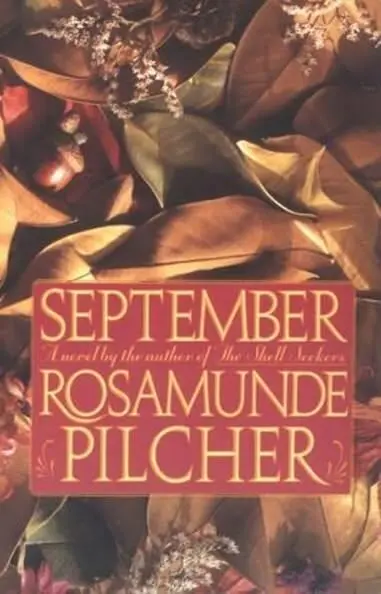
- Название:September
- Автор:
- Жанр:
- Год:неизвестен
- ISBN:нет данных
- Рейтинг книги:5 / 5. Голосов: 1
-
Избранное:Добавить в избранное
- Отзывы:
-
Ваша оценка:
September: краткое содержание, описание и аннотация
Предлагаем к чтению аннотацию, описание, краткое содержание или предисловие (зависит от того, что написал сам автор книги «September»). Если вы не нашли необходимую информацию о книге — напишите в комментариях, мы постараемся отыскать её.
September — читать онлайн бесплатно полную книгу (весь текст) целиком
Ниже представлен текст книги, разбитый по страницам. Система сохранения места последней прочитанной страницы, позволяет с удобством читать онлайн бесплатно книгу «September», без необходимости каждый раз заново искать на чём Вы остановились. Поставьте закладку, и сможете в любой момент перейти на страницу, на которой закончили чтение.
Интервал:
Закладка:
"Did Daddy come to the wedding?"
"Oh, yes, he came. He and Archie were old, old friends. He had to be there. But he came on his own."
She had finished the table-cloth. Now she was onto her best blouse, easing the point of the iron into the gathered bit on the shoulder. That looked even more difficult than ironing pillowcases.
"Tell me about the house in London."
"Oh, Henry, do you not weary of all these old tales?"
"I like hearing about the house."
"All right. It was in Kensington, in a row. Very tall and thin, and what a work. The kitchens in the basement and the nurseries right up at the top of the house. It seemed to me that I never stopped climbing stairs. But it was a beautiful house, filled with precious things. And there was always something going on-people calling, or dinner parties, and guests arriving through the front door in their fine clothes. Alexa and I used to sit on the turn of the stairs and watch it all through the bannisters."
"But nobody saw you."
"No. Nobody saw us. It was like playing hide-and-seek."
"And you used to go to Buckingham Palace…"
"Yes, to watch the Changing of the Guard. And sometimes we took a taxi to Regent's Park Zoo and looked at the lions. And when Alexa was old enough, I walked her to school and dancing class. Some of the other children were little Lords and Ladies, and what a toffee-nosed lot their Nannies were!"
Little Lords and Ladies and a house filled with precious things. Edie, Henry decided, had had some marvellous experiences. "Were you sad to leave London?"
"Oh, Henry, I was sad because it was a sad time, and the reason for leaving was so sad. A terrible tragedy. Just think, one man driving his car far too fast and without thinking of any other body on the road, and in a single instant Edmund had lost his wife and Alexa her mother. And poor Lady Cheriton her only child, her only daughter. Dead."
Dead. It was a terrible word. Like the snap of a pair of scissors cutting a piece of string in two and knowing that you could never, ever put the piece of string together again.
"Did Alexa mind?"
" 'Mind' is not the word for such a time of bereavement."
"But it meant that you could come back to Scotland."
"Yes." Edie sighed and folded her blouse. "Yes, we came back. We all did. Your father to work in Edinburgh and Alexa and I to live at Balnaid. And things gradually got better. Grief is a funny thing because you don't have to carry it with you for the rest of your life. After a bit you set it down by the roadside and walk on and leave it resting there. As for Alexa, it was a new life. She went to Strathcroy Primary, just as you do, and made friends with all the village children. And your Granny Vi gave her a bicycle and a wee Shetland pony. Before very long you'd never have known she ever lived in London. And yet every holiday, when she was old enough to travel on her own, back she went to stay a little while with Lady Cheriton. It was the least we could do for the poor lady."
Her ironing was finished. She turned off the iron and set it in the grate to cool, and then folded up her ironing board. But Henry did not want to stop this fascinating conversation.
"Before Alexa, you looked after Daddy, didn't you?"
"That's what I did. Right up to the day when he was eight years old and went away to boarding-school."
Henry said, "I don't want to go to boarding-school."
"Oh, come away." Edie's voice turned brisk. She was not about to have any teary nonsense. "And why not? Lots of other boys your own age, and football and cricket and high jinks."
"I won't know anybody. I won't have a friend. And I shan't be able to take Moo with me."
Edie knew all about Moo. Moo was a piece of satin and wool, remains of Henry's cot blanket. It lived under his pillow and helped him to get to sleep at nights. Without Moo he would not sleep. Moo was very important to him.
"No," she admitted. "You won't be able to take Moo, that's for certain. But nobody would object if you took a teddy."
"Teddies don't work. And Hamish Blair says only babies take teddies."
"Hamish Blair talks a lot of nonsense." *
"And you won't be there to give me my dinner."
Edie stopped being brisk. She put out a hand and ruffled his hair. "Wee man. We all have to grow up, move on. The world would come to a standstill if we all stayed in the same place. Now"-she looked at her clock-"it's time you were away home. I promised your mother you'd be back by six. Will you be all right on your own, or do you want me to come a bit of the way with you?"
"No," he told her. "I'll be all right on my own."
6
Edmund Aird was nearly forty when he married for the second time, and his new wife Virginia was twenty-three. She hailed not from Scotland but from Devon, the daughter of an officer in the Devon and Dorset Regiment who had retired from the Army in order to run an inherited farm, a considerable spread of land between Dartmoor and the sea. She had been brought up in Devon, but her mother was American, and every summer she and Virginia crossed the Atlantic in order to spend the hot months of July and August in her old family home. This was in Leesport on the south shore of Long Island, a village facing out over the blue waters of the Great South Bay to the dunes of Fire Island.
The grandparents' house was old, clapboard, large and airy. Sea breezes blew through it, stirring filmy curtains and bringing indoors the scents of the garden. This garden was spacious and separated from the quiet, tree-shaded street by a white picket fence. There were decks furnished for outdoor living, and wide porches screened for coolness and sanctuary from bugs. But its greatest charm was that it adjoined the country club, that hub of social activity with its restaurants and bars, golf course, tennis courts, and enormous turquoise swimming pool.
It was a world away from damp and misty Devon, and the annual experience gave the young Virginia a polish and sophistication that set her apart from her English contemporaries. Her clothes, purchased during mammoth Fifth Avenue shopping sprees, were both sleek and trendy. Her voice held a trace of her mother's charming drawl, and returning to school with her groomed blonde head and her long, slender American legs, she was a source of much wonder and admiration and, inevitably, on the receiving end of a good deal of malicious envy.
Early on she learned to cope with this.
Not particularly scholastic, her passion was the open air and any sort of outdoor activity. In Long Island she played tennis, sailed, and swam. In Devon she rode, hunting every winter with the local foxhounds. As she grew up, young men flocked to her side, pole-axed by the sight of her in hunting gear astride some enviable horse, or flying expertly about the tennis court in a white skirt that barely covered her bottom. At Christmas dances they clustered like bees around the proverbial honey-pot. When she was home, the telephone constantly rang, was constantly for her.'Her father complained but secretly he was proud. In time, he stopped complaining, and installed a second telephone.
Leaving school, she went to London and learned to work an electric typewriter. This was extremely dull, but as she had no particular talent nor ambition, it seemed to be the only thing to do. She shared a flat in Fulham and did temporary jobs, because that way she was free to come and go whenever a pleasant invitation came her way. The men were still there but now they were different men: older, richer, and sometimes married to other women. She allowed them to spend enormous sums of money on her, take her out to dinner and give her expensive presents. And then, when they were at their wit's end with unrequited lust and devotion, she would without warning disappear from London-to spend another blissful summer with her grandparents, or head for a house party in Ibiza, or a yacht on the west coast of Scotland, or Christmas in Devon.
Читать дальшеИнтервал:
Закладка:
Похожие книги на «September»
Представляем Вашему вниманию похожие книги на «September» списком для выбора. Мы отобрали схожую по названию и смыслу литературу в надежде предоставить читателям больше вариантов отыскать новые, интересные, ещё непрочитанные произведения.












Обсуждение, отзывы о книге «September» и просто собственные мнения читателей. Оставьте ваши комментарии, напишите, что Вы думаете о произведении, его смысле или главных героях. Укажите что конкретно понравилось, а что нет, и почему Вы так считаете.